How can the same "master regulatory" protein mTOR recognize different sets of targets to separate nutrient and growth factor signals?
Thrilled to share our new paper, in which we reveal how mTORC2 recognizes Akt.
🧵 on our new paper in Science:
https://t.co/PSZWMsEYbn
Yet another beautiful piece of structural and biochemical work led by by friend, colleague, and @MGHMedicine resident @mlvalenstein! Thrilled to have contributed in a small way to this important study. Congrats to @plalgudi11, @DMSabatini, Kacper, et al.
https://t.co/CewerS1AN6
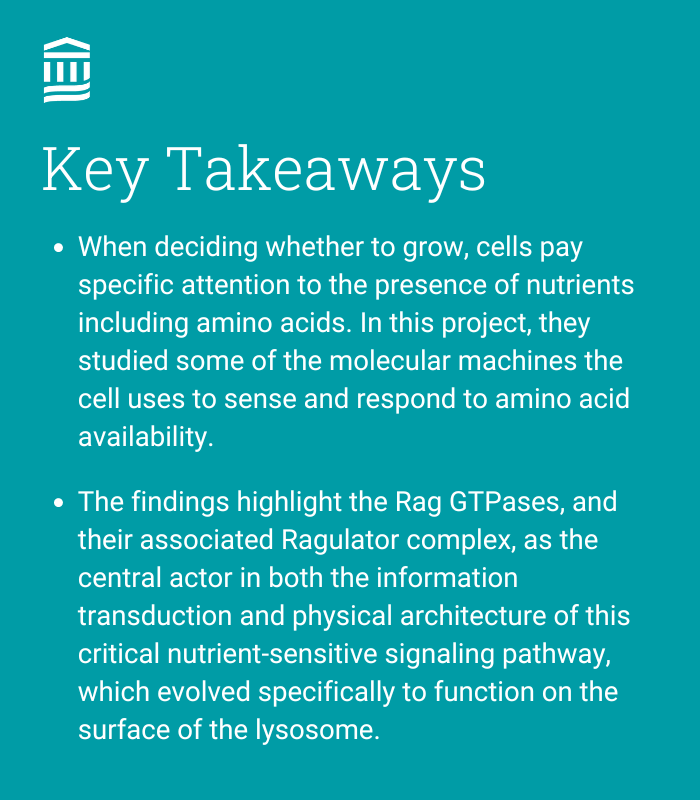
In this week’s @Nature, we report that nutrients do not activate mTORC1 through degradation of GATOR1 component DEPDC5. Other molecular events signal the presence of amino acids to this essential growth pathway!
https://t.co/TrkxOFnfI5
It will be exciting to explore how they function in specific lysosomal and lysosome-related compartments.
Congrats to all involved, particularly @plalgudi11 and @XinGu0317!
Read more here: https://t.co/ClfdBa3yje (2/2)
Out in @PNASNews now, we find that the Rag-Ragulator heptamer anchors the GATOR supercomplex to the lysosome. Our results highlight the complex role the Rags play in regulating mTORC1 activation and lysosomal homeostasis (1/2)
The @mghmedres Stanbury program attracts and trains top physician-scientists. At this year's summer retreat, @MGHMedicine family member @RWalensky shared her insights on matters relevant to her tenure as @CDCgov Director.
You catch more flies with leucine! Congratulations to @XinGu0317 and team for revealing that nutrient sensing by mTORC1 influences dietary choices in Drosophila! Read it to see what the buzz is all about!🪰🍎 https://t.co/24p0c5spAY