A French engineer who lives quietly in Paris has spent 30 years writing software that the entire internet now runs on without knowing his name.
He wrote the code that streams every YouTube video, every Netflix show, every TikTok clip. He wrote the code that runs the virtual servers underneath AWS, Google Cloud, and Microsoft Azure. He calculated more digits of pi than anyone in history. He has no Twitter. He has no marketing. He just keeps shipping.
His name is Fabrice Bellard.
Here is the story, because almost nobody outside the systems programming world knows what one man has built.
Fabrice was born in 1972 in Grenoble, France. He studied at École Polytechnique, the top French engineering school. He never went to Silicon Valley. He never built a startup empire. He just wrote code.
In 2000 he started a project called FFmpeg, an open-source multimedia framework for encoding, decoding, and streaming video. He was 28. The project did one thing nobody else had done well. It handled every video and audio format that existed, in one library, on every operating system. He led it himself for years.
Today FFmpeg is the invisible engine of the internet. YouTube uses it. Netflix uses it. VLC uses it. Chrome and Firefox use parts of it. Every Android phone, every iPhone, every smart TV, every video editing tool you have ever touched runs FFmpeg somewhere underneath. If you have watched a video on a screen in the last 20 years, Fabrice's code processed it.
He was not done.
In 2003 he started QEMU, a machine emulator and virtualizer. He wrote it solo until version 0.7.1 in 2005. QEMU lets you run any operating system on any other operating system. It became the foundation of modern virtualization. KVM, the Linux kernel hypervisor, runs on top of QEMU. Every major cloud provider, AWS, Google Cloud, Microsoft Azure, IBM Cloud, runs virtual machines on infrastructure built around it. The Quick Emulator is the most cited piece of cloud infrastructure code on Earth.
He kept going.
In 2001 he won the International Obfuscated C Code Contest with a small C compiler that grew into TCC, the Tiny C Compiler. TCC can compile and boot a Linux kernel from source in under 15 seconds. In 2004 he calculated the most digits of pi ever computed at the time, using a personal desktop computer and an algorithm he derived himself called Bellard's formula. In 2011 he wrote a complete PC emulator in pure JavaScript that runs Linux in your browser, a project called JSLinux that engineers still cannot believe is real.
In 2019 he released QuickJS, a small but complete JavaScript engine that fits where V8 cannot. In 2021 he released NNCP, a neural network based lossless data compressor that immediately took the lead on the Large Text Compression Benchmark.
Then he turned his attention to large language models. He built TextSynth Server, a web server with a REST API for running LLMs locally. He released ts_zip and ts_sms, compression utilities that use language models to compress text and short messages at ratios traditional algorithms cannot reach. He released TSAC, a very low bitrate audio compression system. In December 2025 he released Micro QuickJS, a new JavaScript engine for microcontrollers, separate from QuickJS, designed for environments with almost no memory.
Fabrice co-founded a telecom company called Amarisoft in 2012, where he serves as CTO. Amarisoft builds 4G and 5G base station software used by carriers and labs around the world. He has been running it for over a decade while continuing to ship personal projects from his own home page at bellard dot org
He has no Twitter. He has no Instagram. He gives almost no interviews. His personal website is a flat list of projects with no styling, no fonts, no marketing copy. Just titles and links.
A quiet French engineer who never moved to Silicon Valley wrote the code that quietly runs the internet.
He is still shipping.
Ceux qui sont trop réalistes vont avoir un problème dans le monde qui arrive. Pendant des décennies, être raisonnable consistait à optimiser l’existant, à rester proche du sol, à ne pas trop s’éloigner du consensus. Mais nous entrons dans une époque différente. Une époque d’intelligence artificielle, d’exploration, d’abondance, de créativité augmentée, de biotechnologies, d’énergie presque illimitée et de possibilités qui ressemblent encore à de la science-fiction. Dans ce monde-là, le risque n’est plus de rêver trop grand. Le risque est de rêver trop petit. Le risque est de rester tellement accroché à ce qui existe déjà qu’on devient incapable de voir ce qui émerge. Les grands explorateurs n’ont jamais découvert de nouveaux continents en gardant la côte à portée de vue. Les caravelles qui ont changé le monde étaient remplies de visionnaires, de fous, de marchands, d’aventuriers et de gens qui acceptaient l’idée que l’horizon pouvait cacher quelque chose de plus grand. Je pense que nous sommes à nouveau sur le port. Et ceux qui passeront leur temps à expliquer pourquoi le voyage est impossible risquent surtout de regarder partir les navires qui construiront le monde d’après.
@Stanislas_Longo Tu es mieux placé pour le savoir cher Stanislas.
Ton livre est une mine d'or.😉
Fais signe dès qu'il est publié et disponible pour achat.
Une mauvaise question produit souvent une mauvaise réponse.
Une mauvaise question acceptée par tout le monde produit parfois une civilisation entière dans l’erreur.
Think of yourself as an LLM.
Every social interaction, every meeting, burns your tokens.
Unless someone is a paid subscriber to your attention, you are under no obligation to answer low-quality prompts.
Sowell aurait pu être une référence dans les milieux intellectuels noirs/ africains. L’histoire entière du continent africain aurait été radicalement différente.
Sowell se situe à l’exact opposé des cadres idéologiques qui ont empoisonné les esprits sur le continent africain depuis les indépendances. Là où Sowell martèle la responsabilité individuelle, les différences culturelles, la culture du travail, de l’épargne, de la discipline, une grande partie des élites intellectuelles noires et africaines a choisi de tout miser sur le récit victimaire, la colonisation éternelle, la domination raciale infinie, la réparation.
Résultat ? Une génération entière lavée au cerveau, façonnée par une victimisation systématique. On lui a volé toute agency, toute fierté, tout ressort. À la place, une idéologie rétrograde du ressentiment pur, du complot permanent et de la haine : le panafricanisme.
Et cette idéologie a fini par accoucher de ses fruits les plus hideux : les pays du Sahel. Un désastre humain d’une ampleur jamais vue, inimaginable au XXIᵉ siècle. Souffrance généralisée, États effondrés, populations massacrées, famines, jihad, analphabétisme et misère galopante. Exactement ce que Sowell aurait prédit. Quand on remplace la culture de la responsabilité par la culture de l’excuse et du bouc émissaire, on ne récolte que le chaos et la décadence.
If you spend enough time in environments where dark triad and cluster B behavior is normalized, you begin to mistake manipulation for sophistication.
You assume everyone is running social games at all times because that is the only reality you have experienced.
Yet the minute you encounter genuinely high-functioning people you realize they are not performing. They are not constantly destabilizing, humiliating, or competing for psychic dominance.
They simply build, create, host, work, and move through life without feeding on others. Once you see the difference, you recognize love without demonic possession.
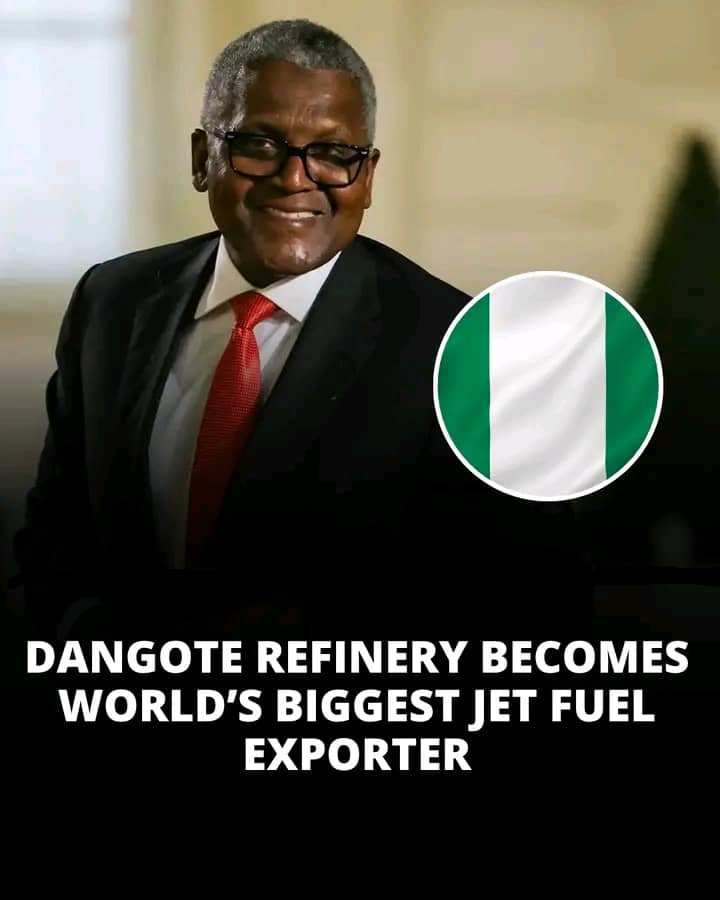
Africa’s energy power is rising. The Dangote Petroleum Refinery became the world’s largest jet fuel exporter in April, marking a major breakthrough for African industry and global trade.
Amid Middle East supply disruptions and uncertainty around the Strait of Hormuz, Nigeria is positioning itself as a key force in global energy markets.
The milestone reflects a wider continental shift from exporting raw resources to building African-owned industrial capacity with global influence.
No one is more annoyed by the AI revolution than people who can actually write a sentence. Basically, having any ability to write now is suspect - you will get accused of being AI at some point. It feels like you are being accused of being a witch, of holding a type of rare magic that only the machines are now allowed to have.
one of the quotes i find most inspiring on a hard day:
"Whatever your hand finds to do, do it with all your might, for in the realm of the dead, where you are going, there is neither working nor planning nor knowledge nor wisdom"
Ecclesiastes 9:10
🔴🗣️ IA : "Il n'y a que la Chine qui arrive à talonner les Américains. L'Europe a besoin d'entrer dans cette nouvelle civilisation"
Masayoshi Son, président fondateur du géant japonais SoftBank. #JT20h
Des décideurs de haut niveau ont appelé à des réformes économiques stratégiques pour attirer les investissements, renforcer la mobilisation des ressources intérieures et approfondir l'intégration régionale en Afrique.
Ils s'exprimaient à la suite du lancement des Perspectives économiques en Afrique 2026 du @Groupe_AfDB lors des #AfDBAM2026 à #Brazzaville : https://t.co/yCHtMPkcWI
CEOs are quietly realizing the AI replacement plan has a problem.
Two problems, actually.
One: the token costs for running AI agents are now exceeding what they were paying the employees they fired.
Two: when the tokens run out, the AI stops. Just stops. No continuity. No workaround. Just a spinning wheel where your workforce used to be.
You fired humans to save money and bought a subscription that bills you into a corner.
The employees you let go knew what to do when things broke.
The AI just invoices you for the outage.
And then there’s the permission problem nobody wants to talk about.
To do its job, the AI agent needs access. Full access. Your systems, your patents, your contracts, your future plans. Everything you spent years building, handed over to a process that has no loyalty, no discretion, and no skin in the game.
You didn’t hire a replacement.
You gave a stranger with no soul the keys to everything you own.
Enjoy.
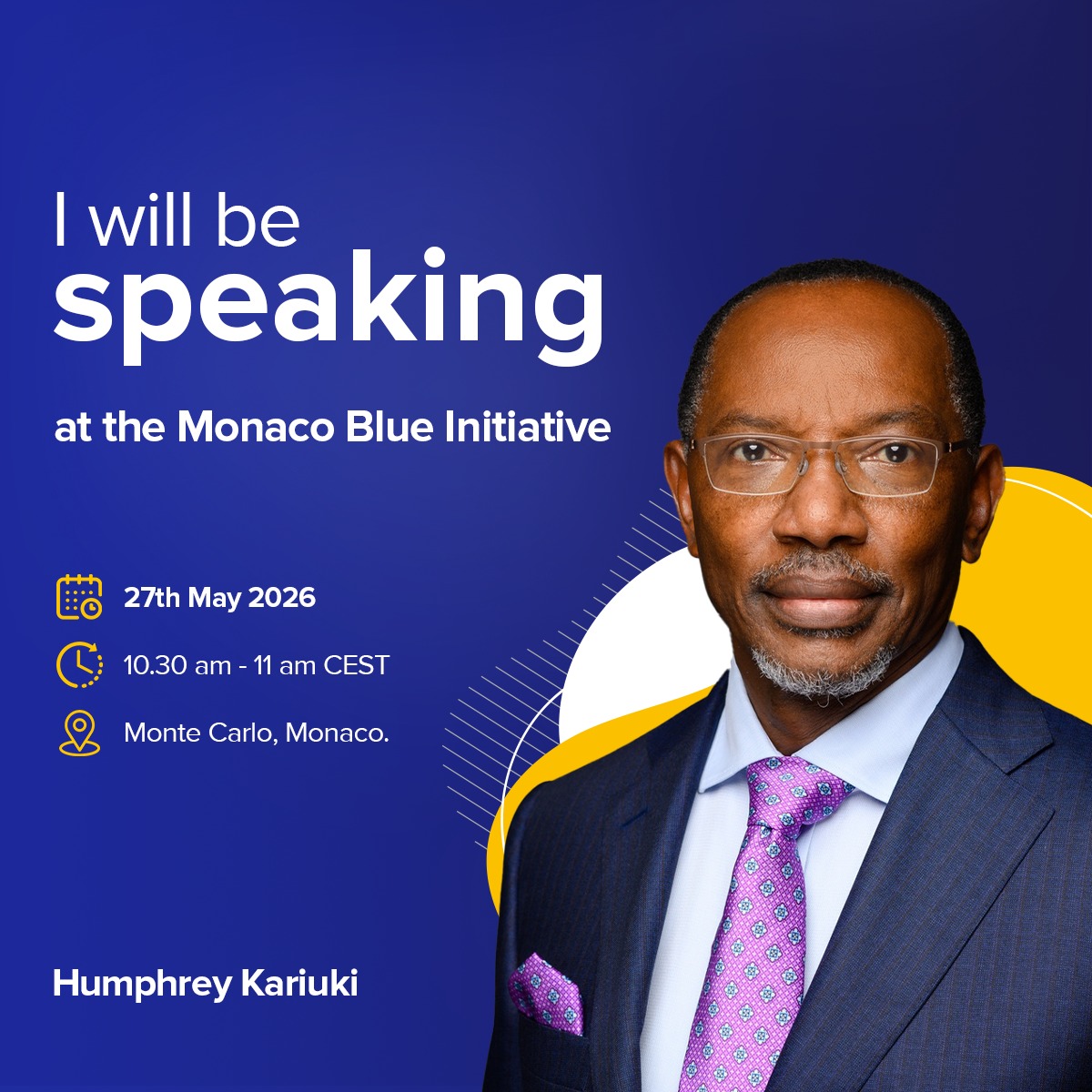
Africa’s oceans and coastlines are central to millions of livelihoods, but do not receive enough attention in global development conversations. With over 30,000 km of coastline and 38 coastal and island states generating more than $300 billion annually in Africa, the opportunity for a regenerative blue economy is enormous.
Join me and other panelists as we explore what more needs to be done at the Monaco Blue Initiative.
🕥 10:30am CEST
#BlueEconomy #OceanConservation #MonacoForum
"Africa's real deficit is no longer the absence of industrial strategies. What's lacking is execution discipline, continuity in public policy & systemic coherence between financing, energy, infrastructure, human capital, governance & industrial vision."
https://t.co/pmuo6LN26N