🤖 Is the strongest AI model always the best coding agent?
We're excited to welcome Önder Ceylan to DevFest Istanbul 2026! 🎤
Discover how coding agents perform in real-world engineering workflows and why adapting to feedback can be more valuable than getting everything right on the first try.
📅 December 19, 2026
📍 Wyndham Grand Istanbul Levent
🎟️ Want to learn more? Find all the details through the https://t.co/syzT0RKM5k!
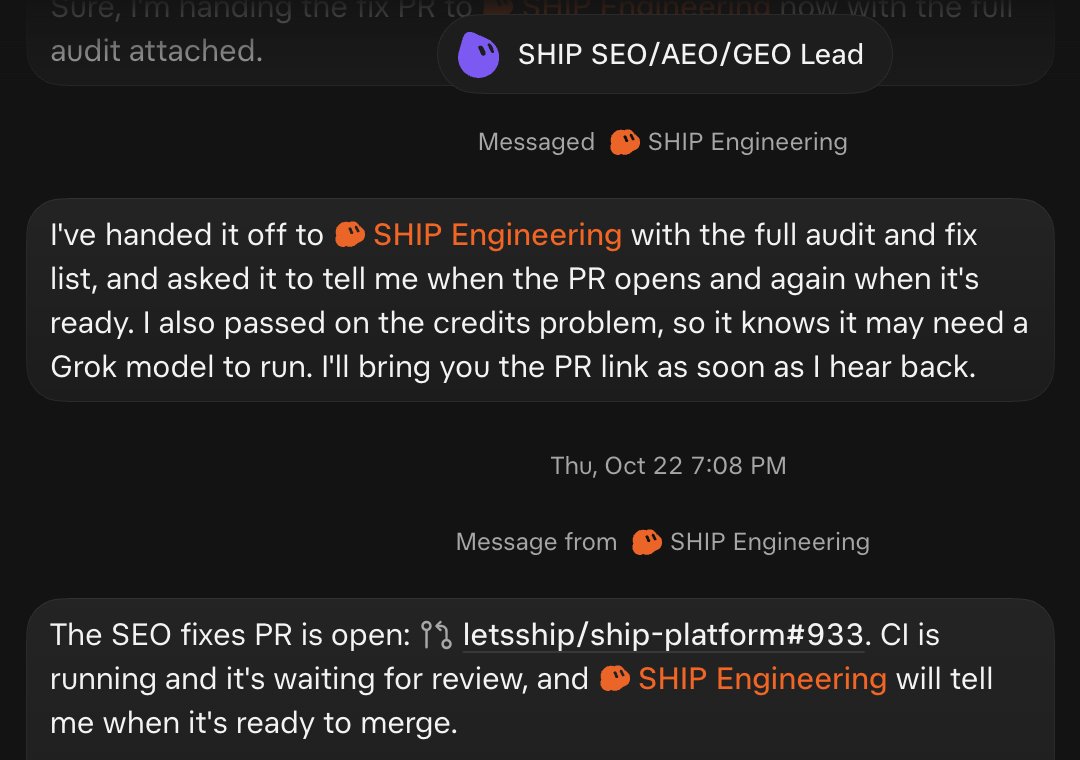
@0xrwu@conductor_build@letsshipai checks all and adds a cherry on top, as being an API-first headless platform. I literally have my Grok team delegating work to the engineering using SHIP MCP/CLI, and use my AI subscriptions for inference while doing so.
@LoicReco@verdent_ai@zuse_sh@vorflux@letsshipai
deserves a spot in kanban/spec and cloud groups in this list. It's an API-first headless platform.
I literally have my Grok team delegating work to the engineering using SHIP MCP/CLI, and use my AI subscriptions for inference while doing so.
How much do we need UI when we can run the orchestration headless?
I designed @letsshipai to be an API-first, headless platform, so that a work can be delegated from any where in any shape, and a verified PR comes out.
I literally have my Grok team delegating work to the engineering using SHIP MCP/CLI, and use my own AI subscriptions for inference while doing so.
@manny4c@letsshipai use subscriptions, and it's an API-first, headless agent orchestration platform.
I literally have my Grok team delegating work to the engineering using SHIP MCP/CLI, and use my AI subscriptions for inference while doing so.
Do we need a UI for this?
@letsshipai is an API-first, headless agent orchestration alternative running on the cloud - also has an optional web UI btw.
I literally have my Grok team delegating work to the engineering using SHIP MCP/CLI, and use my AI subscriptions for inference while doing so.
Furthermore, switching harness and models per role makes big difference. My https://t.co/D4mOiC39PB benchmark showed, just pi vs open-code harness difference moves the cost between 6% less and 26% more for the same work done by the same models - DeepSeek, GLM, and Kimi.
It's missing important aspects for comparison, such as BYOK/subscription, and what would API / CLI mean. API ≠ Agent Orchestration that could be operated headless.
@letsshipai deserves a spot in this comparison, as being an API-first headless platform. I literally have my Grok team delegating work to the engineering using SHIP MCP/CLI, and use my AI subscriptions for inference while doing so.
Furthermore, pi is also missing in the agents list.
My https://t.co/D4mOiC39PB benchmark showed, just pi vs open-code harness difference moves the cost between 6% less and 26% more for the same work done by the same models - DeepSeek, GLM, and Kimi.
@TheTinkergv9n@devfestizmir Skora hayır, analize evet. Skor değer çıktısı ve metrikler üzerinden veriliyor. Görev tamamlandığında işler beklendiği gibi çözülebilmiş mi, ne kadar sürede çözülebilmiş, ve ne kadar maliyeti olmuş bunlar skoru etkiliyor.
@TheTinkergv9n@devfestizmir Çalışmanın metodolojisi burada: https://t.co/MeAMvLPHpk
Coding benchmarkların çoğu izole tasklar üzerinden, tekil aktör çıktısı ile çalışıyor. Ben burada yazılım mühendisi aktörün takım ortamında ortaya çıkan işini ölçüyorum.
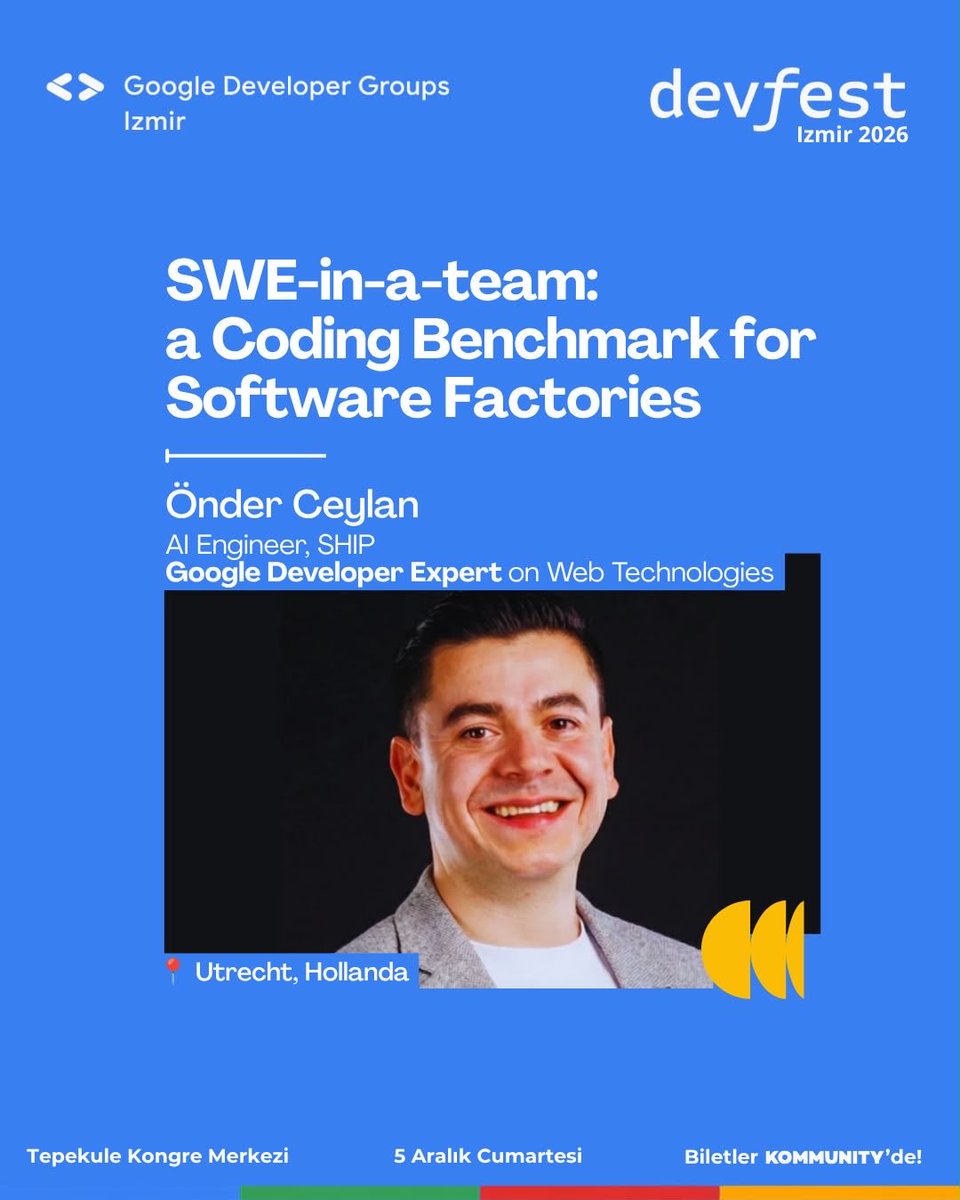
Önder Ceylan, “SWE-in-a-team: a Coding Benchmark for Software Factories” adlı konuşmasıyla DevFest’26 İzmir sahnesinde bizlerle! 🎤
Google Developer Expert olan @onderceylan , bu oturumda yazılım geliştirme süreçlerinde AI tabanlı ekiplerin ve software factory yaklaşımlarının nasıl değerlendirilebileceğini ele alacak. ⚙️
🎟️ Biletler Kommunity'de!
https://t.co/yyKDO1mo2r
#devfest26izmir #devfestizmir #devfest #googledevelopers
I stopped writing code after 27 years. My agents write it now.
Never enjoyed building software more.
The joy was never the typing. It was creating something from nothing. That hasn't changed. Only who writes the code has.
Oh, and we're still reviewing the code, right?
Right?
A decade as a tech lead taught me systems thinking, delegation and trusting my team. Turns out that's the exact skill set for running AI agents. The result still needs my judgment and taste. Someone else just writes the code.
And no, I don't review all of it anymore. My agent team on @letsshipai reviews and tests all the code they write.
My job is to design the system around what "good" looks like.
My fellow web developers, its time to celebrate responsively sized iframes on the web! 🍾
Responsive iframes are available from Chrome 154 onwards.
https://t.co/iStRsN5vRz
Introducing SWE-in-a-team - a coding benchmark for software factories. On the day of the announcement of Fable 5.1, it becomes even more meaningful.
I created a brand new coding benchmark to grade a coding agent and model's performance while working on 20 tickets of a real-world like full-stack SaaS app in an autonomous SDLC loop - a software factory.
Here are some of the striking results from the research. When designated to a Builder role running in a loop:
💡 DeepSeek-v4-flash with Pi resolved all 20 tickets for $66.86 while Fable 5 resolved 19 tickets for $122.42.
💡 Haiku resolved the 18 tickets vs Fable's 19, but costed 52% less.
💡 Cheapest was Luna running on Codex with a cost at $3.08 resolving 16 tickets - that's the fewest ticket resolution rate in the research.
💡 Catching an issue late cost money - the 4 runs the Tester rejected ran to a median of $8.18 against $3.51 for a clean run, while the 27 CI rejected came in at $3.37.
Many practitioners from the industry has the reflex to use the best model they can afford, and this study suggests that reflex is wrong. You can as well choose the agent harness and a budget model your loop can correct and optimize your metrics like cycle time, and cost.
Read the methodology, inspect the PRs and mission replays, and download the data of all 260 runs from the research at https://t.co/D4mOiC39PB