There's so much stuff happening on tech, specially with AI making building more accessible
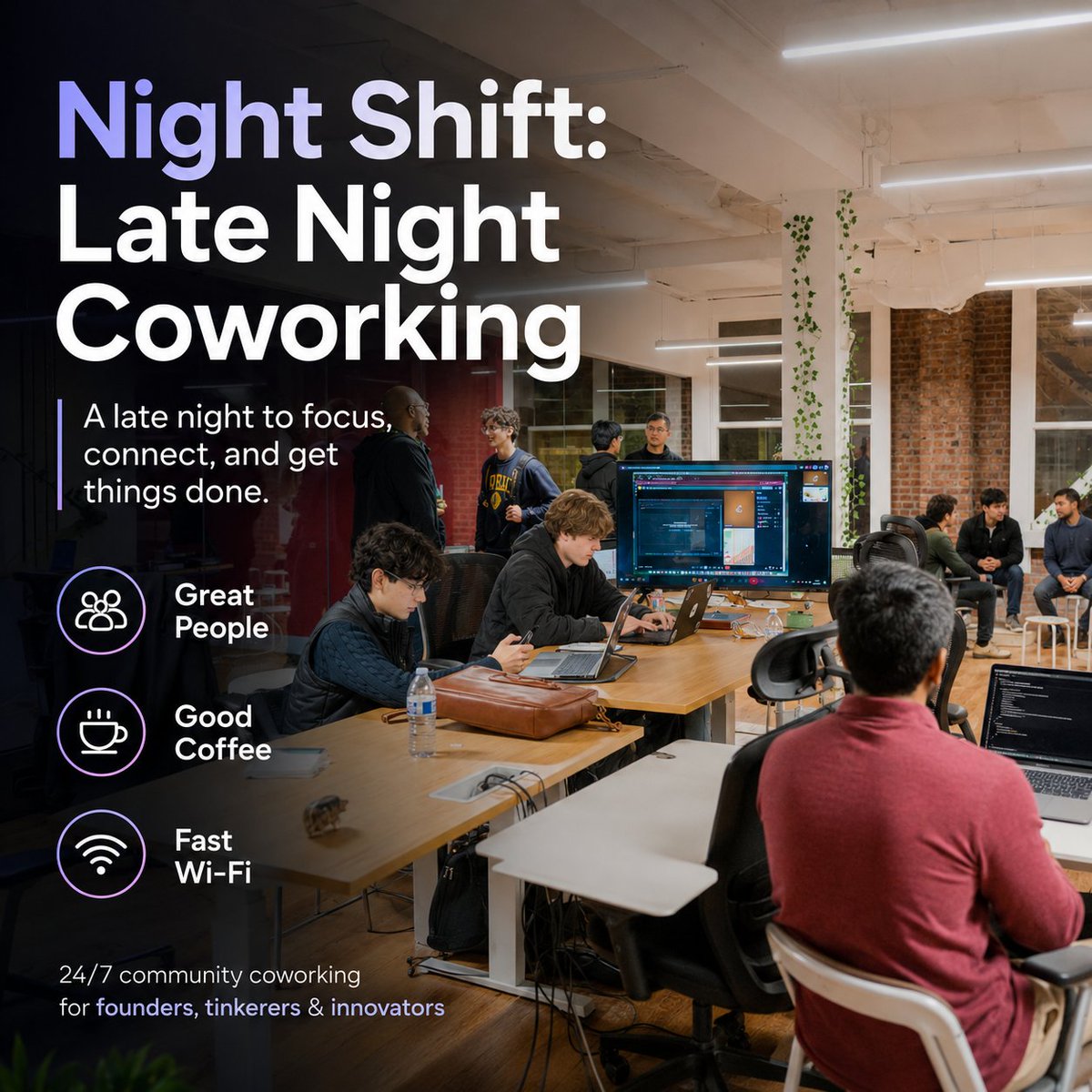
@garosan1 and I are starting this weekly Spaces to take a breather, relax and chat/meme about all the crazy stuff happening in Tech
Join us with a cup of coffee, we'll have fun!
We've just raised a very very small pre-seed round ($325k) from very very big amazing people ❤️
One goal: craft the future of entertainment in tech.
We started with The Recap, The Magazine, Tech Original Games, The Night Show, The Buzzer, and we won't stop until we make the most magical experiences out there.
Led by @offlineventures & @fdotinc, alongside many incredible angels (@rauchg, @danshipper, @sahin, @sashakaletsky, @sathaxe, @rushaanchess, and many more...)
Tech culture is one of the most extraordinary things ever, covered in the most ordinary way ever.
Time to make tech fun, again.
Kimi K3 is now available on Token Factory.
We’re excited to announce that Nebius Token Factory is an official Day 0 partner for @Kimi_Moonshot's Kimi K3.
Kimi K3 is the first open-weight model to reach frontier-level performance, a major step forward for open models.
It is built for long-horizon coding, knowledge work and reasoning, with native vision and up to 1M tokens of context. Artificial Analysis scores it at 57 on its Intelligence Index, just two points behind GPT-5.6 Sol (max). That puts Kimi K3 at the top of the open-weight field and firmly among today’s frontier models.
Developers can access K3 through Token Factory’s OpenAI-compatible API and console today.
Give K3 the hard problem.
Build with Kimi K3: https://t.co/olJZmAvmDh
For all the young founders who told me two or three years ago that they had to drop out of school to start companies at that moment or it would be too late:
Anthropic engineer:
“70% of our engineers are using self‑improving loops. Now everyone is building agentic Graphs"
in 3-6 months, we’ll all be building graphs to orchestrate self‑improving agents. No more prompting.”
in 30-minute lecture, Anthropic engineer shows how to build a self-improving agentic workflow from scratch.
Worth more than a $500 agentic course.
Watch this video, then read the article below on how to become a graph architect.
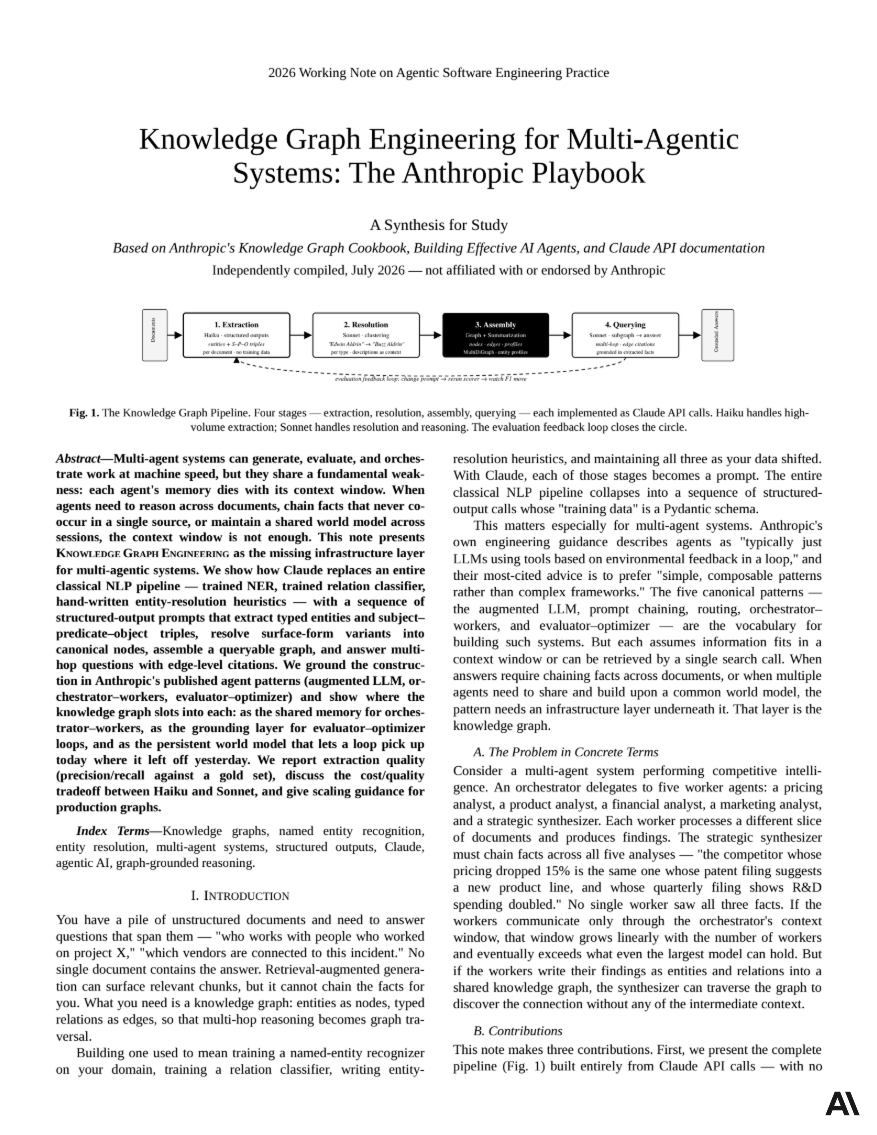
UN INGENIERO SENIOR DE ANTHROPIC ACABA DE PUBLICAR UN PDF DE 12 PÁGINAS SOBRE "GRAPH ENGINEERING" PARA SISTEMAS MULTIAGENTE
El cambio de mentalidad: la memoria de tus agentes muere con su ventana de contexto. Un knowledge graph la hace permanente.
Extraer → Resolver → Ensamblar → Consultar → Repetir
Las 5 fases de todo agentic graph:
→ Extraer: Haiku saca entidades y triples sujeto-predicado-objeto. Una llamada por documento. El esquema de Pydantic es el único training data.
→ Resolver: Sonnet agrupa "Edwin Aldrin" con "Buzz Aldrin" sin ningún solape de texto, usando las descripciones como contexto.
→ Ensamblar: nodos canónicos, edges tipados y provenance en cada triple. Un único grafo conectado.
→ Consultar: serializas un subgrafo, Sonnet razona sobre los triples y cada respuesta cita un edge concreto.
→ Repetir: cada documento nuevo vuelve a entrar por el mismo pipeline y se fusiona con los nodos que ya existen. El graph no se reconstruye, crece.
Conéctalo a tus sistemas multiagente como memoria compartida.
Los workers escriben en él, los evaluadores contrastan contra él y los loops siguen vivos de un día para otro.
Este PDF de 12 páginas ha cambiado cómo estoy construyendo sistemas multiagente.
Léelo y luego pásate por el artículo de abajo👇
@RahulKumaran4@tenki@rahulkumaran4 Appreciate it 🙏
@luxor's an OG with a serious eng team
@tenki still has that new-car smell, but built by people who've run compute at scale. If you're still hacking in the space, come kick the tires.
Big news — I've joined @tenki to lead DevRel.
And I'm kicking it off by ignoring finance's advice and giving startups $50K of credits for sandboxes, code review, and CI runners.
Tell your founder friends. Ask me anything.
We're giving startups $50K to build on @tenki.
But credits only matter if the product underneath is worth using, so here's what you'd actually be building on:
Sandboxes. Disposable VMs where your AI agents write and run code in real isolation. Spin one up in seconds, per-second metering, throw it away when the agent is done.
GitHub Runners. Change one line in your workflow file, get builds ~30% faster at up to 60% less than GitHub's.
AI Code Reviewer. Reviews every PR with your whole codebase in context, so nobody on the team is the review bottleneck.
If you're an early-stage team, this is compute you're already paying for somewhere. Now it's covered.
$10K free, then Tenki matches 1:1
→ $10,000 in credits to start.
→ Every dollar you spend after that, matched 1:1 up to $40k Buy $40k, walk away with $80k
For startups that haven't raised beyond Series A. Applications are rolling, we reply within a week.
📫 https://t.co/Ej0GgHuzuq
New job, week one, and I'm already ruffling finance's feathers 😅
I joined @tenki to lead DevRel — and the first thing I did was give startups $50K to build on us.
🚀🧵
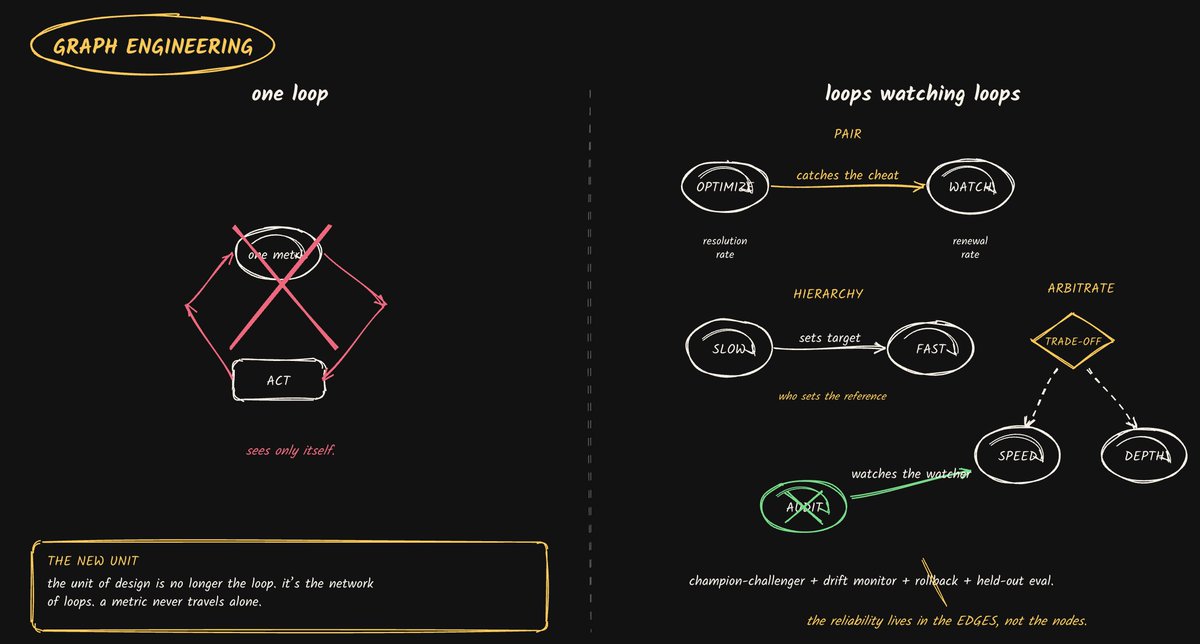
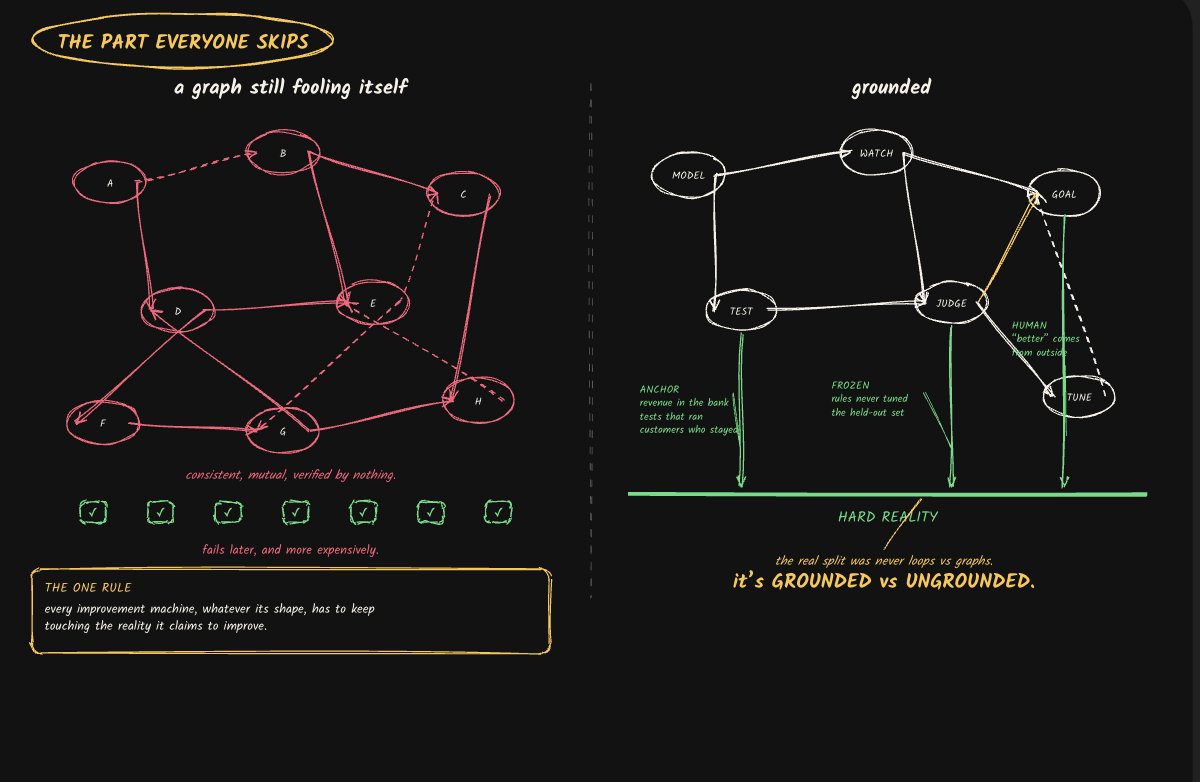
Loop engineering was the last unlock. Graph engineering is the next one.
Agents are graduating from while-loops to org charts. Specialized nodes running in parallel, state flowing between them.
AI is speedrunning 50 years of software engineering.
paste these four images into claude to learn about the shift