Prediction markets are no longer one mechanism, they’re becoming a design space.
over the next few weeks, I'll break down 7 prediction market primitives, one by one:
1. Binary Markets
2. Event Contracts
3. Scalar Markets
4. Decision Markets
5. Multiverse Markets
6. Information Markets
7. Continuous Markets
Each one exists because a different type of belief needs a different market structure.
Beliefs have different shapes, Markets should too!
ETH's fair value: $4,829 vs spot $3,034
12 valuation models. 59% undervalued?
https://t.co/Xy1P17EYbd dashboard by @hashed_official and @simonkim_nft is showing what most miss , the gap between price and fundamentals.
@IBWofficial#IBW2025
1/ Money markets sit at the core of DeFi's capital stack, surpassing $120B in deposits and approaching $50B in outstanding loans.
We analyzed the competitive dynamics of the lending landscape, focusing on the top 8 money markets.
This is what we found... 🧵
Current AI automation breaks every time software updates.
$CODEC is the hottest crypto x AI x robotics platform right now, solving this pain point.
Everything you need to know about @codecopenflow and why so many are talking about it.
Can you guess our first keynote speaker for #IBW2025?🪷
We’re giving away 1 FREE ticket to the biggest web3 conference of the year! Here’s how to enter:
1️⃣ Tag who you think is taking the keynote stage
2️⃣ Follow @IBWOfficial
3️⃣ Retweet this post
Take your best shot, IBW Conference ticket could be just one guess away! 🎟️
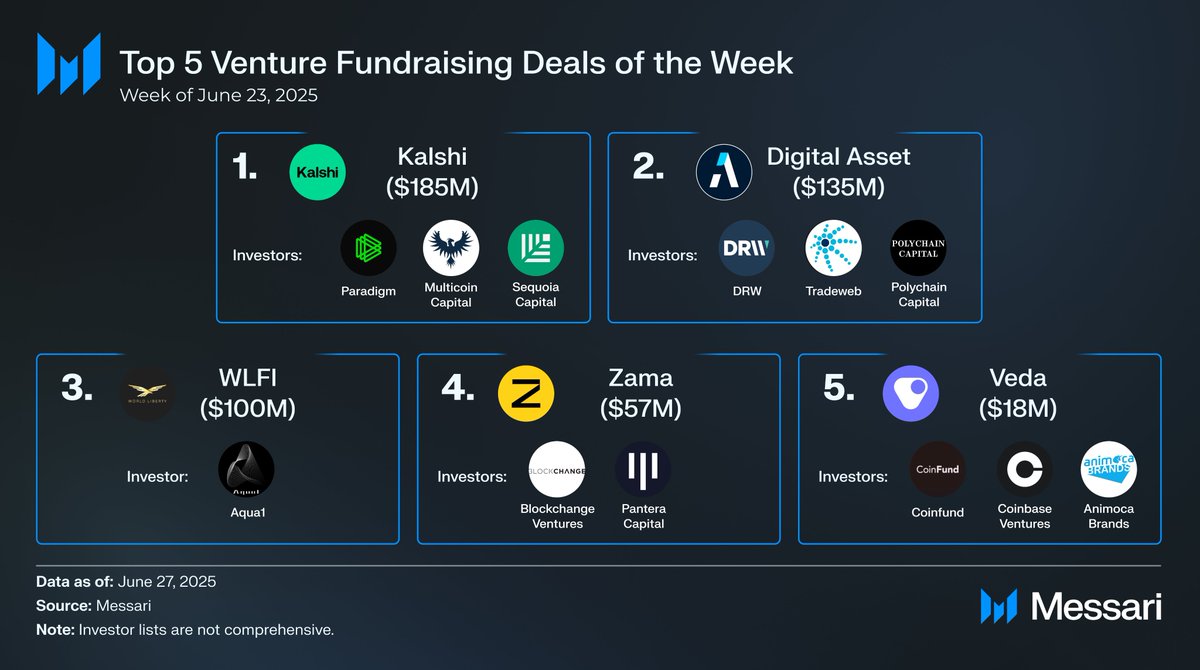
The State of Crypto VC
Some insights for founders into the current state of crypto fundraising and some of my personal prediction on the future of crypto venture capital
👇
I'd be happy to store my crypto gains in Gold stables during longer-term crypto uncertainty or bear runs vs. USD stables.
Especially as DXY is down by 10% since January.
Last cycles it wasn't an option but now gold-backed stablecoins hit a $1.9B market cap.
PAX Gold and Tether's each have ~$840M MC.
Yet, their onchain liquidity is... not great not terrible..
Trading $1m USDC on Cowswap with 0.76% slippage.
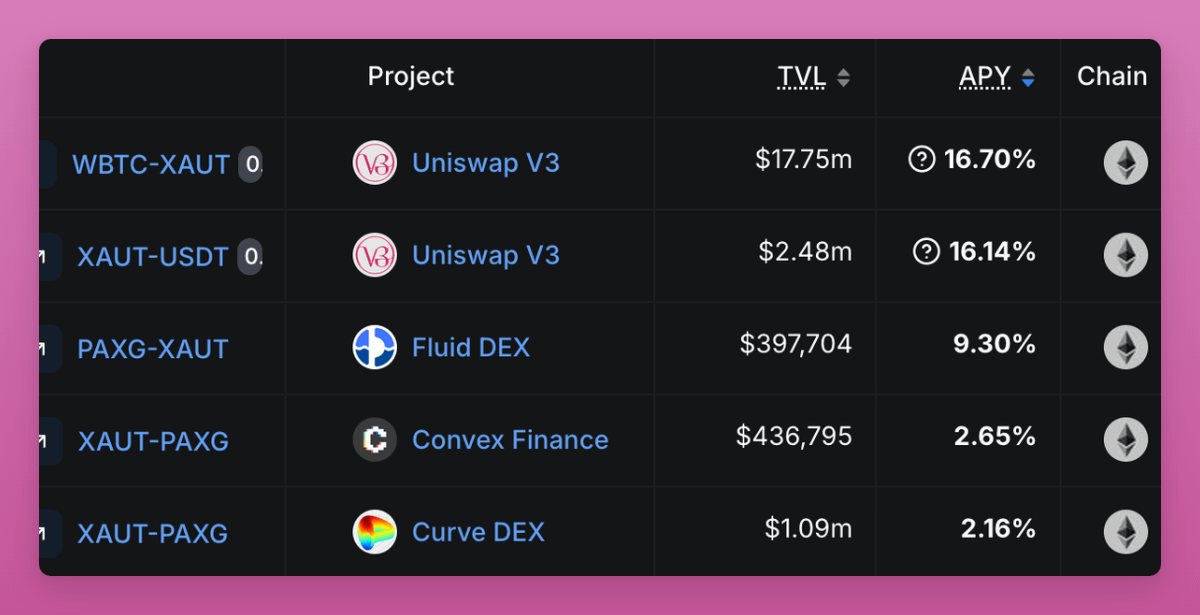
Still, liquidity is improving as more DeFi protocols add them as collateral:
- Fluid supports both with 9.3% yield
- Aave just voted to Temp check to onboard XAUt
- Curve supports XAUt-PAXG LP with 2% yield
But how fast can they grow?
Problem: fiat backed stablecoins earn interest from U.S. Treasuries but gold has no yield.
Instead, both Paxos and Tether charge a 0.25% issuing and redeeming fees (although Paxos fees depend on amounts).
So profitability depends on their issuance/redemption fees.
Obviously, the higher the MC of gold stables, the more transactions will happen thus higher fees are generating.
And they need them to get integrated into DeFi and trading platforms.
Anyone knows how much both issuers make from Gold stables?
btw, fun fact: both issuers hold physical gold, not ETFs. Tether holds it in Switzerland vaults while Paxos in London.
Stablecoins are the next logical evolution of closed-loop payment networks
Historically, large merchants like Starbucks and Target built out their own internal payment networks in an attempt to circumvent fees paid to card networks and banks
Users upload funds onto their app → the merchant monetizes this “float” by investing it into liquid low-risk assets on the back-end → the merchant simply updates their internal ledger when the funds are spent
Given this model meaningfully improves their bottom-line, merchants have historically subsidized adoption with rewards
However, the tradeoff with closed-loop networks has always been interoperability — my Starbucks dollars aren’t fungible with my Target dollars given they exist on two independent payment networks
This has hamstrung the adoption of closed loop networks as users need to on and off-ramp into independent apps each time they want to spend
Blockchains and stablecoins however fundamentally change this
As open and programable networks, Amazon, Walmart and Target could each issue their own interoperable stablecoins
In other words, my Amazon dollars, Starbucks dollars, and Target dollars would all exist in the same wallet on the same open network (perhaps an even better model would be a consortium)
Said differently, stablecoins rails offer merchants all the benefits of having their own closed-loop payment network — float income, evading fees — with the same benefits of operating on an open network — interoperability
Stripe, Shopify, OpenAI, X, Amazon and Walmart are realizing that blockchains are credibly neutral infrastructure that allow them to own more of the payments stack themselves
While the incentives are there for merchants, the open question is whether consumers will overcome the path-dependent inertia of card payments







![stacy_muur's tweet photo. Think: research desk, alpha feed, and onchain executor merged into one.
@Infinit_Labs [Product report] ↓ https://t.co/euGlKexrnP](https://pbs.twimg.com/media/GtfNQacagAAL3I9.jpg)


