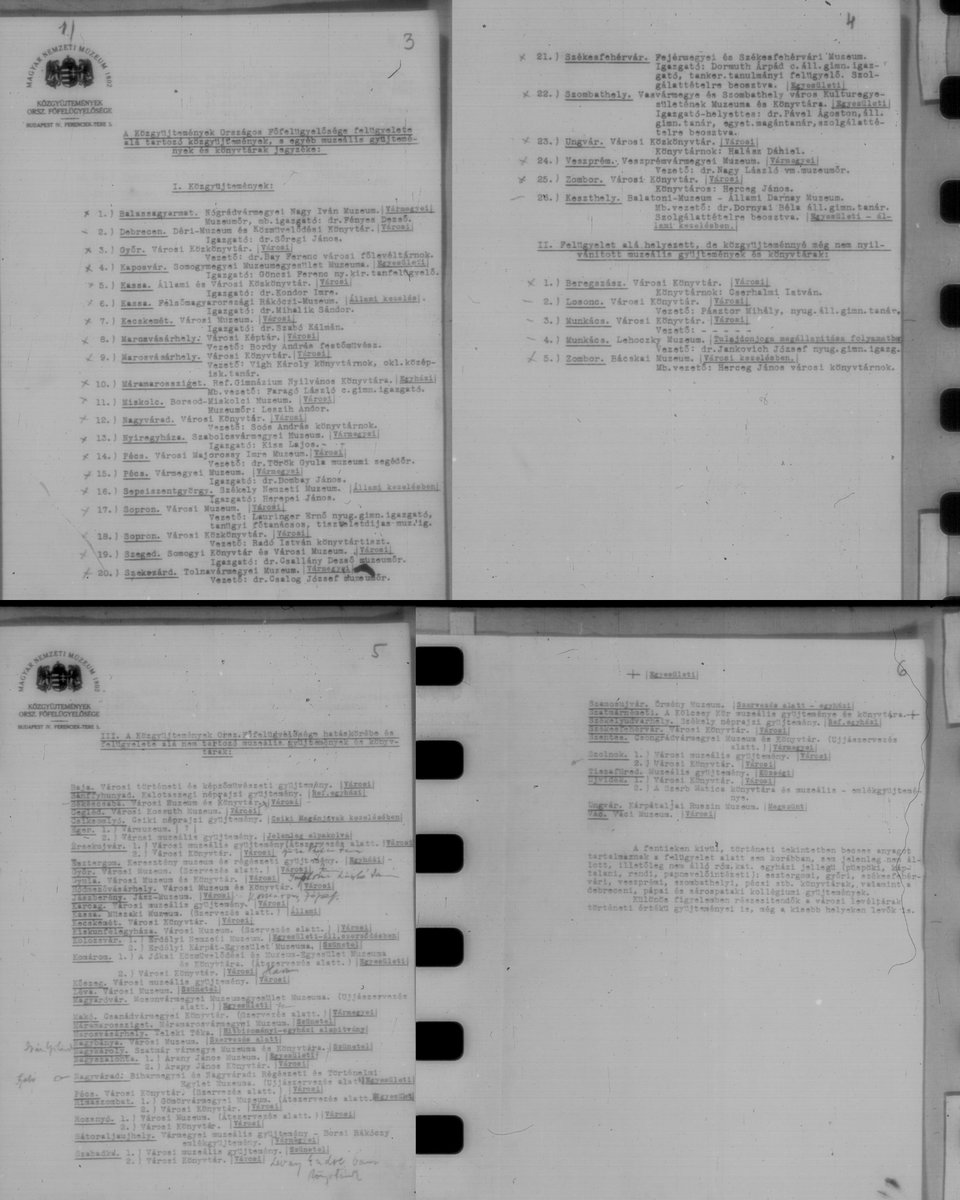
🕯 The Verso Didn’t Lie: A 1944 Seizure Record and the Painting That Named Its Owner
An official Hungarian archival inventory records the forced transfer of artworks from the Herzog Palace at Andrássy út 93, Budapest, to the Szépművészeti Múzeum — the property of widow Sváb Sándorné. The eleventh entry reads:
“11./ Glatz O.: Erdélyi falu, olaj, vászon, 65 × 92 cm.”
Erdélyi falu — Transylvanian Village. Oil on canvas. 65 × 92 cm.
🎨 The Artist
Oszkár Glatz (1872–1958) was a leading figure of the Nagybánya artists’ colony — trained under Simon Hollósy, active in the circle that transformed Hungarian painting in the early 20th century. His Transylvanian landscapes and genre scenes, combining Impressionist light with strong compositional structure, were among the most sought-after works of their generation. The Magyar Nemzeti Galéria included this painting in its 1996 centenary exhibition of Nagybánya art.
🔍 The Match — and the Verso
A painting documented at Kieselbach Aukciósház corresponds closely to this inventory entry:
Glatz Oszkár, Hegyi tanya (Erdély határán, Tanya a Törcsvári szorosban), c. 1906
Oil on canvas, 64 × 90 cm
Kieselbach 64th Autumn Auction, Lot 79, 18 September 2020
Starting price: 15,000,000 HUF / Estimated: 20–40 million HUF
https://t.co/f5Fcjfjfa7
The artist, medium, and subject are exact matches. The dimensions — 65 × 92 cm in the 1944 inventory versus 64 × 90 cm in the auction record — differ by a single centimeter in each direction, within normal variance for wartime handwritten measurements.
What distinguishes this case is the physical evidence on the painting itself. The verso bears a handwritten inscription: “Sváb Sándorné tulajdona Andrássy út 93” — Property of Mrs. Sándor Sváb, Andrássy út 93. The auction catalogue confirms the Herzog/Sváb provenance explicitly. The inventory document records the seizure from that same address. These are not inferences — they are the same address, the same owner, the same painting. The work was sold at auction in September 2020 and is now in private hands.
🧾 The Victim
Irén Herzog — widow Sváb Sándorné — came from one of Hungary’s most prominent Jewish industrial and cultural families. The Herzog collection assembled at Andrássy út 93 was among the most significant private art collections in Hungary. In 1944 it was seized, catalogued, and transferred to state museum custody under Decree 1830/1944.
⚖️ Wider Context
The broader Herzog collection remains one of the largest partially unresolved Holocaust-era restitution cases in Hungary, with formal claims across U.S. and Hungarian courts spanning decades. This painting does not appear among the 40 works named in the Herzog family’s landmark De Csepel v. Republic of Hungary lawsuit — which reached the U.S. Supreme Court. Whether it was recovered by the family, held privately, or has been circulating unrecognized outside formal restitution proceedings is not established in any public record.
📢 A Call for Transparency
We ask the Szépművészeti Múzeum to publish the full 1944 Herzog/Sváb intake ledger for this inventory page, including any internal museum records, depot notations, and chain-of-custody documentation for all items on this reel.
Under the Washington Principles on Nazi-Confiscated Art and the HEAR Act, full disclosure of wartime intake records is not optional — it is the foundation of just and fair resolution.
The painting named its owner eighty years ago. What remains is not a question of evidence — it is a question of will.
#HEARAct #WashingtonPrinciples
@WJRORestitution@ClaimsCon@nytimesarts@CathyHickley@WorldJewishCong@SCOTUSblog@neal_katyal@danabrams@USAmbHungary@brand_arthur@raydowd@NicholasMOD@jerrysaltz@AmbHerzog@AJCGlobal
The New York City Bar Association elected a new president on May 19 during its annual meeting—Fordham Law Dean Emeritus Matthew Diller, a renowned legal educator for more than three decades. via amNewYork (@amNewYork)
https://t.co/GQF1951kYW
🏛️ THE “BLESSING CHRIST” CASE FILE — FROM A 1944 HOLOCAUST SEIZURE CRATE TO BUDAPEST’S MUSEUM OF FINE ARTS
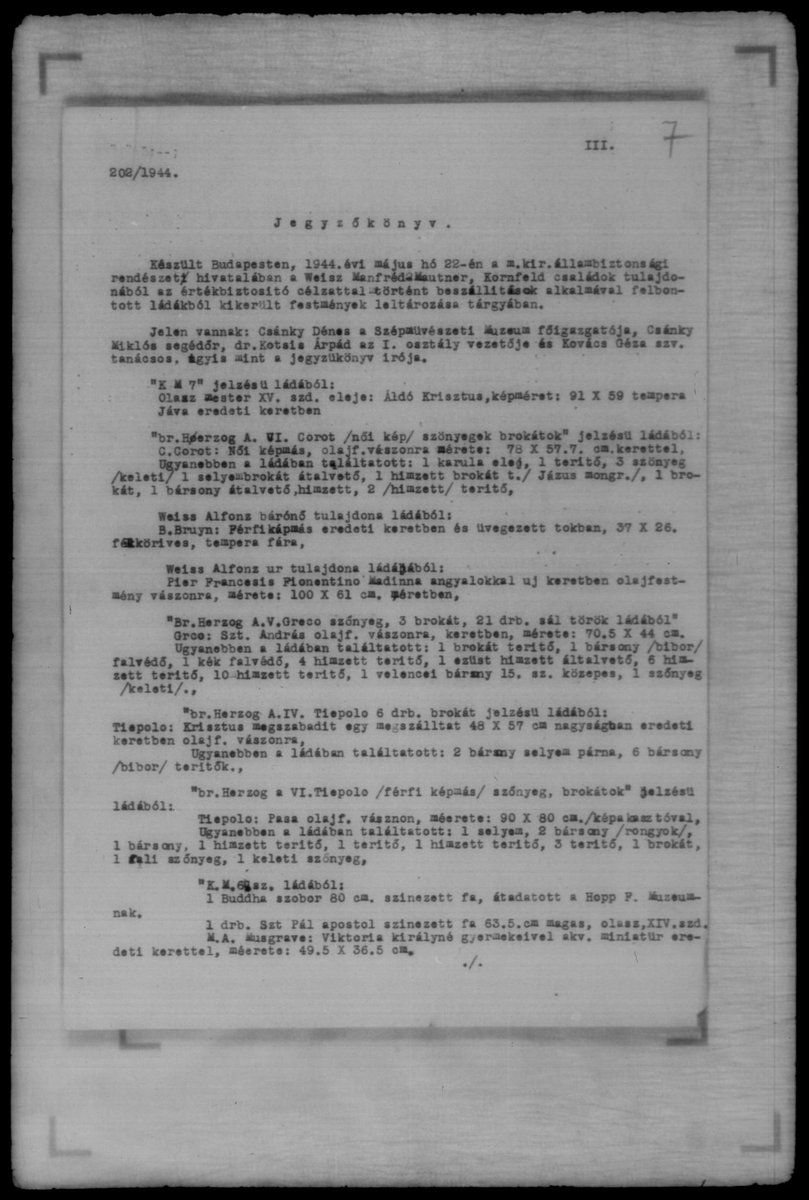
📜 On May 22, 1944, amid the systematic dispossession and destruction of Hungary’s Jewish community, the Budapest State Security Police compiled protocol 202/1944 K.B. — a bureaucratic inventory documenting artworks removed from the interconnected Herzog, Weiss, Mautner, and Kornfeld collections, among the most important private art holdings in Central Europe.
Within the inventory for crate “K M 7” appears the following entry:
“Olasz Mester XV. szd. eleje: Áldó Krisztus, képméret: 91 × 59, tempera, jó eredeti keretben.”
(“Italian Master, early 15th century: Blessing Christ. Painted surface: 91 × 59 cm. Tempera, in good original frame.”)
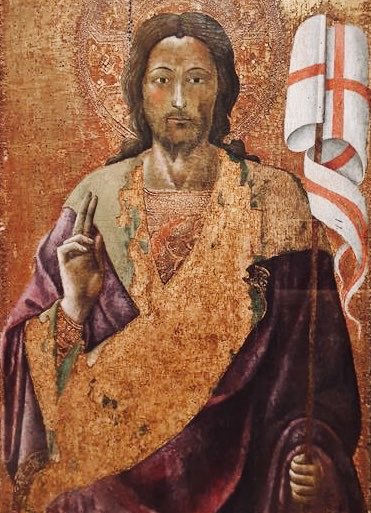
Eighty years later, a strikingly corresponding Renaissance panel remains in the collection of the Szépművészeti Múzeum (Museum of Fine Arts, Budapest).
🖼️ THE MODERN MUSEUM OBJECT
Alvaro Pirez d’Évora
(Portuguese-born painter active in Italy, ca. 1410–1434)
Title: A feltámadt Krisztus (“The Risen Christ” / “Risen Christ Blessing”)
Inventory no.: 51.801
Date: ca. 1430–1435
Medium: Tempera and gold on ash wood panel
Painted surface: 90.5 × 59.6 cm
Museum records:
Hungarian: https://t.co/WhBhA9Hbnn
English: https://t.co/rUpgQJtKum
📊 THE EVIDENCE OF CORRESPONDENCE
This is not simply a general thematic similarity. Multiple archival and physical identifiers converge with unusual precision:
• Dimensions:
1944 protocol: 91 × 59 cm
Museum painted surface: 90.5 × 59.6 cm
(a variance of millimeters consistent with wartime handwritten inventories versus modern cataloguing standards)
• Subject & iconography:
1944 inventory: “Áldó Krisztus” (“Blessing Christ”)
Museum title: “The Risen Christ” depicted in blessing gesture before a gold ground
• Medium & format:
Both records describe an early Renaissance tempera devotional panel
• Chronology & attribution:
1944 protocol: “Italian Master, early 15th century”
Museum attribution: Alvaro Pirez d’Évora, active in Italy ca. 1410–1434
• Collection context:
Published museum scholarship references prior association with the Sammlung Moritz Kornfeld (Budapest) — directly overlapping the same confiscation network documented in protocol 202/1944 K.B.
Taken together, these factors create one of the strongest unresolved correspondence profiles yet identified within the surviving 1944 seizure archives.
👤 THE FAMILIES BEHIND THE COLLECTION
The Herzog, Weiss, Mautner, and Kornfeld families stood at the center of Hungary’s cultural and industrial life before the Holocaust. Their collections contained Renaissance panels, Old Masters, sculpture, decorative arts, and major modern works.
In 1944, these collections were systematically inventoried, sealed, transferred, and absorbed into state-controlled custody under the euphemistic language of “protective safeguarding.”
Protocol 202/1944 K.B. survives as evidence of that cultural destruction.
🕯️ THE PAINTING
Alvaro Pirez d’Évora — also known as Álvaro di Pietro — was a Portuguese-born painter active in Tuscany during the early Renaissance.
The painting depicts the standing Christ in blessing posture against a luminous gold background and may once have formed part of a larger devotional ensemble or altarpiece.
Museum curator Dóra Sallay has published research on the work in the 2020 exhibition catalogue Alvaro Pirez d’Évora: A Portuguese Painter in Italy on the Eve of the Renaissance.
⚖️ THE PROVENANCE GAP
The Szépművészeti Múzeum’s public entry for inv. 51.801 currently omits:
• the 1944 confiscation protocol
• Holocaust-era seizure and ownership history
• wartime custody records
• the object’s transfer pathway into museum holdings
No public record has yet been identified naming this specific work in the ongoing Herzog restitution litigation.
The convergence of match factors makes this one of the most significant unresolved cases identified to date from protocol 202/1944 K.B.
The momentum to identify stolen works and reunite them with rightful owners is growing across the country, but the AfD could hamper these efforts.
https://t.co/pdAEyGkH8T @raydowd@BnaiBrith
🚗🏭 Detroit, Ford, and the Ideology Behind the Inventories
Not a Missing Painting — Something More Disturbing
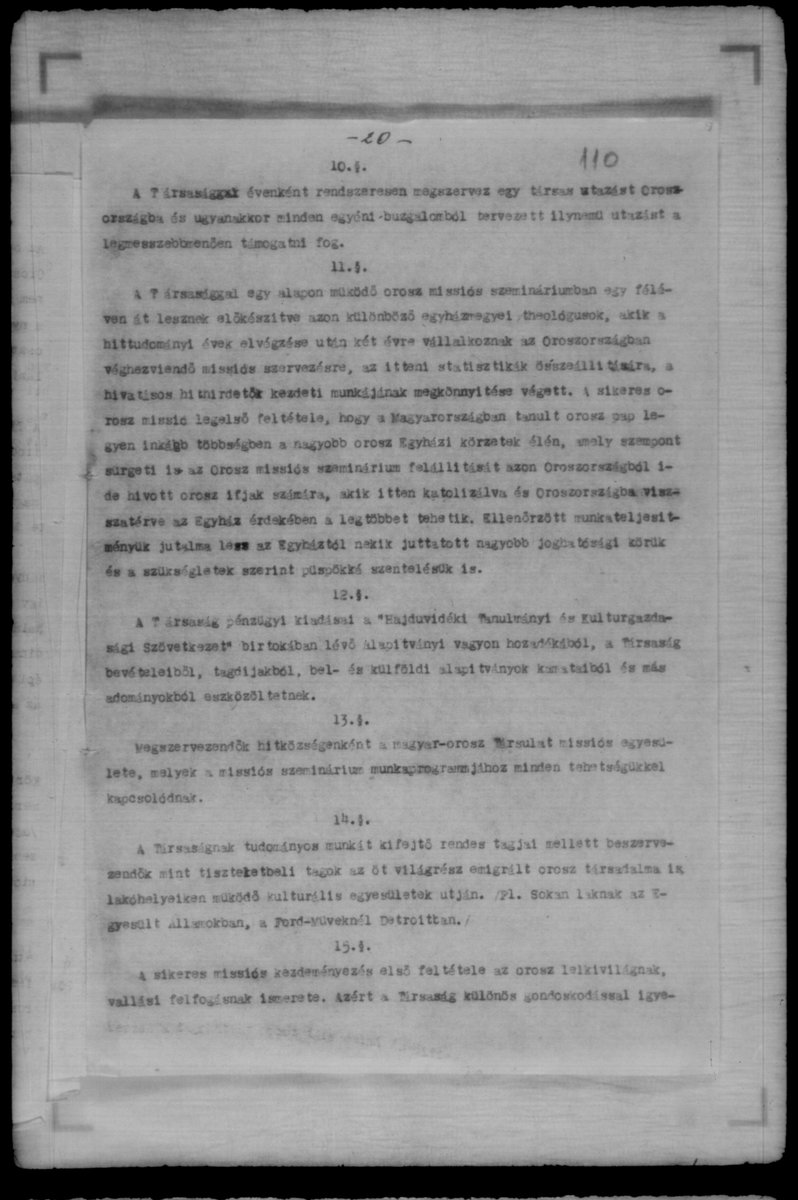
Reel 144, slides 530–556 do not list a missing painting. They reveal something else: the ideological machinery surrounding Hungary’s 1944 seizure bureaucracy.
The document proposes a “Hungarian General Cultural-Economic Association” named after P. Bíró Ferenc S.J., a major Hungarian Jesuit organizer. His ideas are invoked to argue that Catholics must enter — and reshape — business, finance, factories, banks, hotels, schools, shops, publishing, and public economic life. On the surface, it sounds like economic renewal. The reality is much darker.
⚠️ Economic “Renewal” as Replacement
Earlier pages in the same file portray Jews as controlling Hungarian wealth, commerce, the press, art, literature, fashion, entertainment, and culture. The proposed solution was not coexistence. It was replacement: a Christian-national economic order designed to push Jews out of public, commercial, and cultural life.
That is why these pages matter for Holocaust art recovery. Before there were inventories, there was ideology. Before Jewish artworks were reported, sealed, removed, and stolen, Jewish property had already been recast as a “national problem.” Once that lie became official state policy, mass theft could be disguised as administration.
🌍 The Unexpected Detroit Line
Then the file takes an unexpected turn. The author proposes a Hungarian-Russian Scientific Society to study Russian language, psychology, church history, and émigré networks for future Catholic mission work.
And in §14, one sentence jumps off the page: many Russian émigrés, the document says, lived in the United States — specifically, “at the Ford works in Detroit.” 🚗🏭🇺🇸
This does not make it a Ford art-looting file. It does something subtler: it places Detroit and Ford’s industrial world inside the imagination of a wartime Hungarian Catholic-national network.
🏛️ The Michigan Irony
And here lies the historical irony. Eighty years later, the truth hidden in these Hungarian records is being brought to light in Michigan.
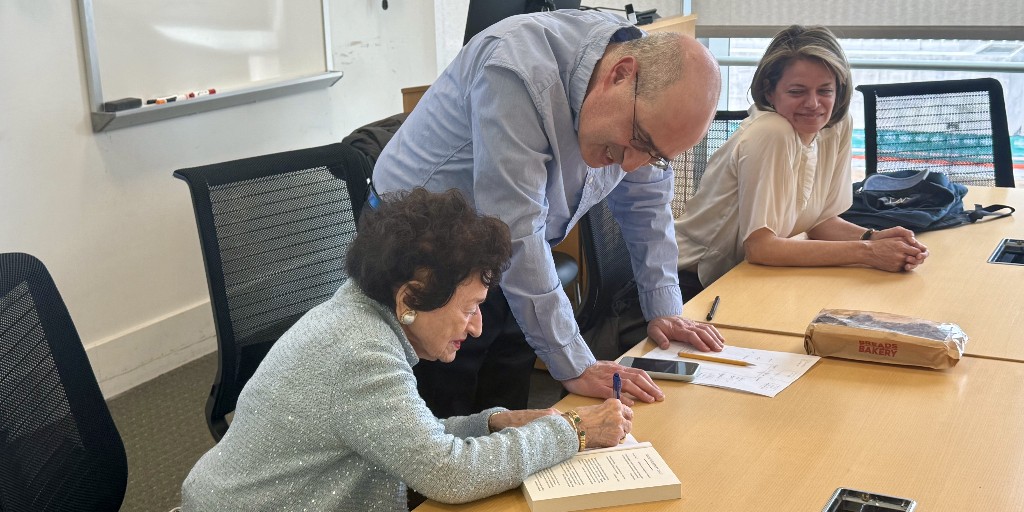
Clara Garbon-Radnoti — a Hungarian Holocaust survivor, archivist, translator, and co-founder of the Holocaust Art Recovery Initiative — made her life in Michigan. She spent years analyzing these wartime Hungarian microfilms at what is now the @HolocaustMI in Farmington Hills.
The wartime document looked toward Detroit’s Ford works as part of a global network of influence. Today, HARI works from Michigan ito expose the paper trail, restore memory, and recover the truth.
🔍 The Real Michigan Connection
🗺️ Detroit appears unexpectedly in wartime Hungarian files.
🚗 Ford’s factories appear as a point of reference in a 1944 transnational plan.
🕯️ Clara Garbon-Radnoti survived the Holocaust and built her life in Michigan.
🏛️ The Zekelman Holocaust Center preserved the microfilm reels.
📜 HARI was founded in Michigan to expose what the 1944 bureaucracy tried to bury.
The art-seizure files are not just about objects. They are about the worldview that made seizure possible — and the survivors, archivists, and advocates who refuse to let that worldview have the last word.
Theft was preceded by theory. Restitution begins by exposing both.
#HolocaustArtRecovery #ProvenanceResearch #ArtRestitution #Detroit #WWIIHistory #ArchivalDiscoveries #HARI #HEARAct #HenryFord
@WJRORestitution@HolocaustMuseum@USAmbHungary@CohnHaddow@hnlupovitch@jfederations@WorldJewishCong@Pontifex@BCCAntisemitism@antisemitism@StandWithUs@NYCCTaskForce@HolocaustUK@UNHOP@NaziLootedArt@NewsHourArts@nytimesarts@artnet@_Auto_History_@edbolian@Yair_Rosenberg@skestenbaum@pawel_sawicki@AuschwitzMuseum@yadvashem@HistoricDetroit@DHSDetroit@SHDetroit@DrHelenFry@aroberts_andrew@SpitfireFilly@authordlewis@RealTimeWWII@HardcoreHistory@WW2Facts@DavidKertzer@geraldposner@yahadinunum@ncph
Why did the US State Department's JUST Act report conceal that Europe's courts do not permit Holocaust victim families to assert claims against private holders of Nazi lootedart? Read my article to learn more.
https://t.co/Rg0sb3ycPc
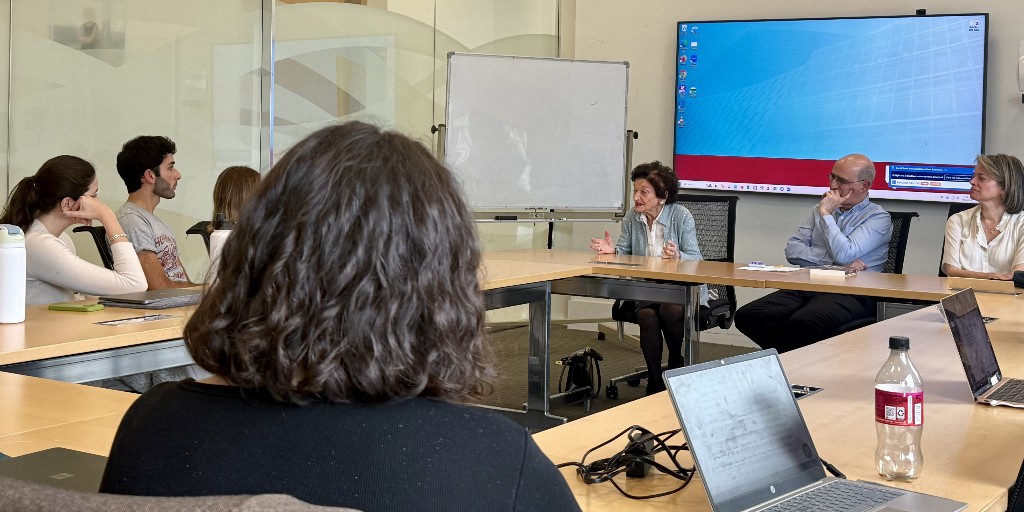
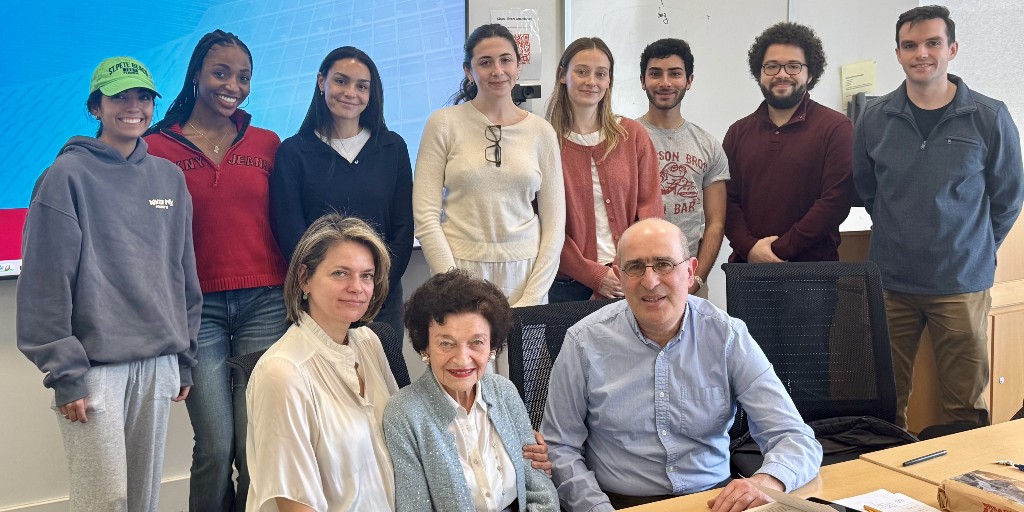
Fordham Law Adj. Prof. Gideon Taylor’s class, “Human Rights: Coming to Terms with Historical Justice Through Reparations,” had the chance to speak with 95-year-old Holocaust survivor Elizabeth Bellak & her daughter, Alexandra, during the final week of spring classes.
@ClaimsCon
🔵🏺 Is a 1944 Seizure File the Missing Link to a Painting in a Private Hungarian Collection?
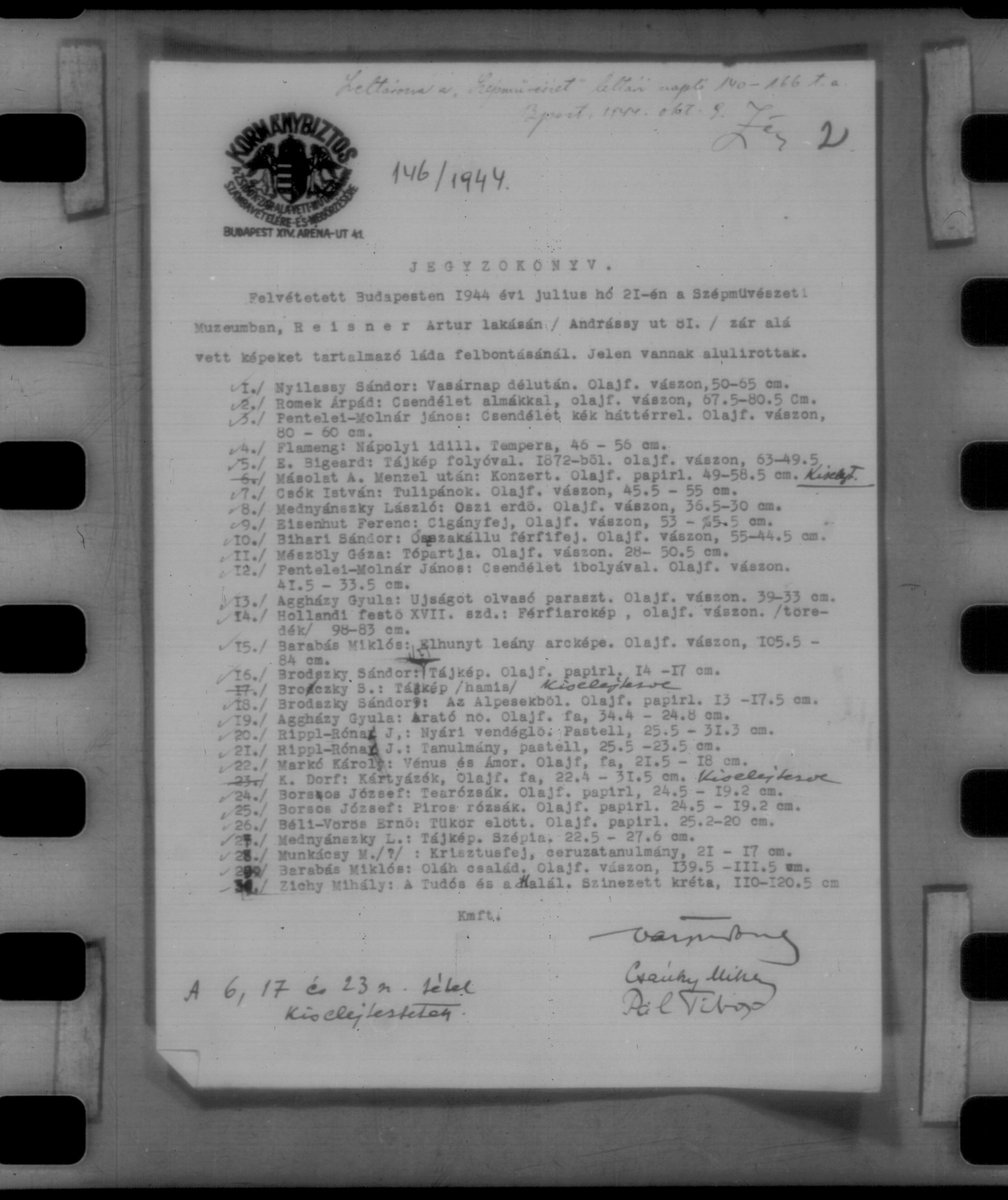
21 July 1944. Andrássy út 81, Budapest.
At the Szépművészeti Múzeum — the Museum of Fine Arts, Budapest — officials opened a sealed crate of paintings taken from the residence of Artur Reisner.
Item #3 in the official Jegyzőkönyv reads:
“Pentelei-Molnár János: Csendélet kék háttérrel. Olajf. vászon, 80 × 60 cm.”
Translation:
János Pentelei-Molnár — Still Life with Blue Background. Oil on canvas, 80 × 60 cm.
That is a remarkably specific lead: artist, subject, blue-background description, medium, and exact dimensions.
The strongest public candidate @ArtRecoveryInit has found is:
Pentelei-Molnár János — Fehér porcelánok kék háttérrel
White Porcelains with Blue Background
1910s
Oil on canvas
80 × 60 cm
Listed publicly in the Boda József Collection
The match profile:
Artist: János Pentelei-Molnár — exact match
Dimensions: 80 × 60 cm — exact match
Medium: oil on canvas — exact match
Subject: blue-background still life — direct correlation
The title shift is not a contradiction.
A clerk in 1944 wrote the plain identifying phrase: still life with blue background.
A later title gives the more specific subject: white porcelains with blue background.
That may be ordinary cataloguing refinement. It may also make a 1944 seizure trail harder to see unless the records are placed side by side.
That is why the file matters.
Artur Reisner was not making an ordinary museum deposit. His paintings were taken from his Andrássy út residence, placed under seal, and processed during the 1944 confiscation of Jewish property in Hungary.
And because this crate was opened at the Museum of Fine Arts, the museum is the logical place to begin the custody trail.
If this is the same painting, the public issue is straightforward: how did a work recorded in a sealed wartime crate at the Museum of Fine Arts later appear in a private Hungarian collection? Was it returned, released, sold, transferred, deaccessioned, or otherwise separated from the Reisner seizure file?
We ask the Szépművészeti Múzeum, relevant Hungarian cultural authorities, and any current custodian of the painting to publish the provenance file for Fehér porcelánok kék háttérrel, including:
1️⃣ the 1944–1945 custody trail for Reisner inventory item #3;
2️⃣ any postwar return, release, sale, transfer, or deaccession records;
3️⃣ any documentation showing how the painting entered the Boda József Collection; and
4️⃣ any internal comparison with the 21 July 1944 Reisner protocol.
If there is a separate provenance chain, publish it. If not, the 1944 Reisner inventory remains a serious lead. Either way, the file should answer the question.
#Holocaust #ProvenanceResearch #NaziLootedArt #ArtRestitution #PenteleiMolnár #Hungary1944 #WashingtonPrinciples #HEARAct
@nytimesarts@WJRORestitution@USAmbHungary@raydowd@ahistoryinart@Telexhu@UNESCO
My article Taking the Profit Out of War is getting positive feedback. If you are interested in the intersection of international law and pillaging of artworks during wartime, please check it out. https://t.co/Rg0sb3ycPc
⚖️ HEAR Act of 2025 Signed Into Law: A Major Shift for Holocaust Art Restitution
Today marks a decisive development in the effort to recover art and cultural property stolen during the Holocaust.
The bipartisan HEAR Act of 2025 permanently strengthens the original 2016 law, ensuring that claims in U.S. courts are judged on the merits of the evidence—not dismissed by the passage of time or technical defenses like laches or international comity. For survivors and heirs, this fundamentally changes the legal landscape.
At the Holocaust Art Recovery Initiative (@ArtRecoveryInit), this moment is not abstract.
Over the past year, our work has focused on the 1944 Hungarian seizure records stored at @HolocaustMI —primary-source inventories documenting, line by line, the forced confiscation of artworks and cultural property from Jewish families. These are precise records naming individuals, addresses, artists, and specific titles. What was once buried in microfilm is now documented, organized, and publicly accessible.
📂 These records do more than preserve memory—they establish evidence.
🏛️ This law ensures that evidence can now be heard.
The timing is especially significant on this Holocaust Remembrance Day (Yom HaShoah). As Hungary enters a new political era following yesterday’s elections, the strengthened HEAR Act provides families with a viable legal pathway in U.S. courts, connecting historical documentation with present-day remedies.
More than 80 years after these seizures, the barriers have shifted. The evidentiary record is clearer, and the legal framework is stronger. The HEAR Act of 2025 ensures that justice for Holocaust cultural theft no longer has an expiration date.
By removing the legal shields of the past, the law finally allows the truth of a family’s legacy to outweigh procedural loopholes. Where the historical record is clear, the art world must now meet it with the same transparency—honoring both the evidence and the families to whom these pieces belong. 🕯️
#HEARAct #HolocaustArtRecovery #Restitution #ProvenanceResearch #NaziLootedArt #Hungary #ClaraGarbonRadnoti
A New Era for Hungary—A New Opportunity for Justice 🇭🇺⚖️
Hungary voted for change yesterday. Now comes a real test of whether that change will include justice.
With Viktor Orbán’s concession and Péter Magyar’s Tisza party winning a sweeping mandate, a historic opening has emerged. This is the clearest opportunity in decades to confront one of Hungary’s unfinished moral debts: the restitution of art and cultural property seized from Hungarian Jews in 1944.
The evidence is no longer missing. @ArtRecoveryInit has posted hundreds of examples on @X (with key assistance from @grok).
Through the work of @HolocaustMI and @WJRORestitution, 180 digitized microfilm reels containing more than 160,000 frames are now online. These records provide a documented map of persecution and looting, identifying specific works and tracing the machinery of seizure that moved them into official custody.
The standard is already clear, yet the action is non-existent.
While 34 countries have endorsed the 2024 Best Practices, Hungary has continued to evade its responsibilities. For too long, systematic provenance research has been ignored, and the path to restitution has been intentionally blocked by legal and bureaucratic barriers.
Our call to action for the incoming government:
1️⃣ Endorse the 2024 Best Practices immediately.
2️⃣ Establish an independent, transparent restitution process.
3️⃣ Publish a searchable provenance database for all public collections.
4️⃣ Negotiate claims in good faith where the historical record is clear.
5️⃣ Drop bad faith and procedural opposition to heir recovery efforts under the HEAR Act.
This is not about rewriting history. It is about finally refusing to keep it buried.
Let this new chapter for Hungary be defined by the courage to do what is right. 🏛️🕯️
#HolocaustRestitution #HungaryElections2026 #ArtRecovery #HARI #Justice #PéterMagyar #TiszaParty #WashingtonPrinciples #ProvenanceResearch #HEARAct
@magyarpeterMP@SecRubio@USAmbHungary@ClaimsCon@UNESCO@vonderleyen@JohnCornyn@RepLaurelLee@RepJerryNadler@SenBlumenthal@MikeJohnson@nytimesarts@CathyHickley@ZacharyHSmall@artnet@444hu@Telexhu
A new Fordham Law Review article written by Fordham Law graduate Raymond Dowd '91 JD (@raydowd), "Taking the Profit Out of War: Why International Law Requires Restitution of Nazi-Looted Art," offers further measures to achieve restitution of lost artworks.
https://t.co/YeiQaph2CX
A new Fordham Law Review article written by Fordham Law graduate Raymond Dowd '91 JD (@raydowd), "Taking the Profit Out of War: Why International Law Requires Restitution of Nazi-Looted Art," offers further measures to achieve restitution of lost artworks.
https://t.co/YeiQaph2CX
Art, Memory, and the Holocaust: From 1944 Records to the HEAR Act
After over 600 documented posts, @ArtRecoveryInit closes this public series with a clear sense of what has been accomplished — and what remains unfinished.
Our work developed into detailed archival casework drawn from 1944 seizure inventories preserved on microfilm at @HolocaustMI (Reels 143, 144, 145, and related files), and digitized by the @WJRORestitution.
Those wartime documents record Jewish families by name and address alongside artists, titles, materials, and dimensions. In case after case, those entries align with postwar museum holdings, auction records, and private collections where provenance remains incomplete or undisclosed. Our posts rested on transcription, comparison with modern records, and a consistent call for full institutional disclosure, expert review, and publication of 1944–1946 intake and accession records.
These records are surviving fragments of a displaced cultural map — echoes of lives interrupted by state seizure.
Representative match candidates documented include:
Isenbrandt — Triptych wings (Saint John the Baptist and Saint Jerome), 87 × 31 cm (exact) — Herzog collection, 19 June 1944 — Szépművészeti Múzeum inv. 9047/b–c.
Giampetrino — Christ Carrying the Cross, 62 × 49 cm (exact) — Herzog collection, 14 June 1944 — Szépművészeti Múzeum inv. 58.2.
Renoir — Portrait of a Young Woman, 56 × 47 cm (near-exact) — Baroness Ilona Kiss (Herzog family), 8 June 1944 — Szépművészeti Múzeum inv. 435.B.
Gerrit Dou — Leiden Civic Guard Officer (Alabárdos), 66 × 51 cm (exact) — Dr. Surányi Miklós, June 1944 — Szépművészeti Múzeum inv. 62.10.
Bruyn the Elder — Portrait of Petrus von Clapis, 37 × 26 cm (exact) — Weiss Alfonz bárónő, May 1944 — Szépművészeti Múzeum inv. 50.754.
Corot — Lady with Daisies, 78 × 57.7 cm (near-exact) — Br. Herzog A. — Magyar Nemzeti Galéria inv. 501.B.
Iványi Grünwald — Öreg hegedűs, 81 × 48 cm — Munther collection, May 1944 — Magyar Nemzeti Galéria inv. 59.118T.
Ruysch — Floral Still Life, 107 × 82 cm (near-exact) — Csetényi Ilona — National Museum of Women in the Arts, Washington, D.C., inv. 1986.282.
Key collections documented include the Kaszab family (50+ objects, among them works by Ligeti, Csók, and Markó the Younger), the Weiser Miklós collection (Thorma János and Maticska Jenő), and the Herzog Palace group (including Tiepolo’s Apotheosis of Aeneas, now at Harvard’s Fogg Museum, Acc. 1949.76). Families from the 101-page Szeged dossier — Szilárd, Fabó, Grünwald, Lázár, Révai, Winter, and others — follow the same pattern: detailed 1944 inventories, fragmented postwar trajectories, and provenance that remains publicly unaccounted for.
The 1944 inventories were never created for historical reckoning. Yet today they function as precisely that: a structured evidentiary framework through which loss, movement, and institutional responsibility can be traced.
The bipartisan HEAR Act of 2025 would extend and strengthen the existing framework by removing its sunset provision and narrowing procedural barriers that have prevented claims from being heard on the merits. What these posts collectively document is the persistent presence of unresolved history that the HEAR Act’s passage would finally allow courts to reach.
To the many families whose names appear across these inventories, what was once recorded as administrative seizure now stands as enduring proof of cultural loss awaiting resolution.
Thank you to every reader, researcher, journalist, and supporter who engaged with this work. The documentation remains public, citable, and available for continued scholarship and review. These records are the foundation of future restitution. The law can remove barriers in court; the archive preserves the evidence.
We close this series not because the work is finished, but because the evidence is now firmly in public view. The ledger is open. The responsibility is now shared.
🐑 From the Herzfeld Seizure File to the National Gallery Wall?
A June 1944 Herzfeld seizure inventory records a Pállik Béla sheep painting measured at 70 × 91 cm among works taken during the wartime liquidation of a Jewish family collection.
Today, the Magyar Nemzeti Galéria holds Pállik Béla, Bárányok tavaszi öröme, inventory FK4810, catalogued at 70 × 95 cm.
Museum record: https://t.co/1BPOmsxp1S
That is not proof by itself. But it is a serious, document-answerable match signal.
Artist: Pállik Béla
Subject: a sheep painting — archival shorthand like “Kosok” versus a later curatorial title like Bárányok tavaszi öröme
Dimensions: 70 cm exact on one side; 91/95 cm is consistent with period sight-size measurement versus later full-canvas cataloging
Context: this was not an isolated loss. It arose from the forced wartime liquidation of the Herzfeld collection.
What remains publicly unanswered is the bridge between the June 1944 seizure record and FK4810 today.
Under the Washington Principles, fair and equitable solutions begin with transparency.
That means publishing the relevant 1944–1946 accession and deposit ledgers, transfer records, renumbering notes, and object-file material for FK4810, including any verso images, labels, stamps, chalk numbers, or seals.
The 1944 inventory is the map.
The museum holds the destination.
Transparency is not a courtesy; it is an obligation. We call on the Magyar Nemzeti Galéria to bridge the gap between this 1944 seizure and their modern collection. The record is clear—it’s time for the provenance to be, too.
#HolocaustArt #ProvenanceResearch #WashingtonPrinciples #OpenTheArchives #HEARAct
@SecRubio@WhiteHouse@JohnCornyn@SenBlumenthal@RepLaurelLee@RepJerryNadler@artnet@nytimesarts@hyperallergic@brand_arthur@raydowd@MuseumSecurity@DailyClassicArt@ArtyArtHistory@TalentedHungar1@Telexhu@444hu@ahistoryinart@guardianculture@bbcarts@cnni
📚🇺🇸 An American Poetry Anthology, Stolen in Budapest in 1944 — and Never Returned
In 1944, a Nazi-aligned Hungarian government seized a Jewish scholar’s library of over 4,500 books.
One of them was an anthology of American poetry, compiled by one of America’s most celebrated literary figures.
It has never been returned.
📜 THE 1944 RECORD
Dr. Gáspár Endre was a Jewish scholar in Budapest. In June 1944, under Decree 1830/1944 M.E., his entire private library was confiscated and transferred to state custody.
His collection — meticulously inventoried on microfilm (attached) — included works by Shakespeare, Joyce, Keats, Kipling, Byron, Pearl S. Buck, and Endre Ady.
Entry #3203 reads:
“Conrad Aiken – American Poetry 1671–1928”
This is the 1929 Modern Library edition: a landmark anthology spanning over 250 years of American verse — from Anne Bradstreet to Walt Whitman, Emily Dickinson, Edgar Allan Poe, T. S. Eliot, Ezra Pound, and E. E. Cummings.
An August 1944 receipt records its transfer to the Győrffy István Collegium in Budapest.
There is no public record it was ever returned.
🇺🇸 WHY THIS MATTERS TO AMERICA
Conrad Aiken was a Pulitzer Prize-winning American poet, novelist, and critic — one of the defining literary voices of the 20th century. The anthology he compiled is a monument to American literary identity: the full arc from the earliest colonial poets to the modernist revolution.
That book ended up on a Nazi-era seizure list in Budapest.
It was taken from a man who valued it enough to own it — a Jewish intellectual in Central Europe who reached across an ocean for American poetry, only to have it stripped away by the state.
This is not only a Hungarian story. It is an American one.
The Holocaust Expropriated Art Recovery Act (HEAR Act) exists because cases like this remain unresolved. Cultural property — books, art, objects of intellectual life — was stolen systematically and has never been fully accounted for. American institutions, American legislators, and American readers have a stake in what happens next.
🔎 CHECK YOUR SHELVES
Records show that many looted books were not destroyed. They were redistributed — into institutions, private collections, and secondhand markets.
If you locate a copy of American Poetry 1671–1928 (Conrad Aiken, Modern Library, 1929), look for:
• Bookplates or ownership stamps (e.g., Győrffy István Collegium)
• Handwritten inscriptions or signatures (Dr. Gáspár Endre)
• Hungarian library or institutional markings from the 1940s
You may be holding a piece of this story.
📣 OUR OBLIGATION
The records survived. The inventory is precise. The chain of custody is documented.
What is missing is the will to act.
@ArtRecoveryInit calls for:
1️⃣ Full archival access to records documenting the seizure and transfer of Dr. Endre’s library
2️⃣ Provenance review of institutional holdings that may include these volumes
3️⃣ Engagement with researchers and potential heirs
4️⃣ International cooperation — including from American institutions — to address unresolved Holocaust-era cultural losses
🕯️ HISTORY IS NOT FINISHED
The 1944 inventories are not abstractions. They are administrative records of dispossession — line by line, volume by volume, person by person.
Dr. Gáspár Endre reached for American poetry. It was taken from him.
That is the outstanding problem. Restoring it — even in part, even in record — is our obligation.
@POTUS@VP@marcorubio@JohnCornyn@SenBlumenthal@RepLaurelLee@RepJerryNadler@nytimesarts@nytimesbooks@librarycongress@tedcruz@bookcritics@POETSorg@AmPoetryReview@Poetry_Society@washingtonpost@ForeignPolicy@SmithsonianMag@MonumentsMen@lauder_ronald@raydowd@AIPAC@SenFettermanPA
#Holocaust #Books #CulturalHeritage #HEARAct #AmericanPoetry #MuseumEthics #poet #Budapest #ConradAiken #USA
🖼️🕯️ The Révai Rippl-Rónai: Why is ‘Girl in a Green Dress’ Still Hiding in the Hungarian National Gallery?
This is a direct, document-to-object match. The 1944 seizure record of the Révai family’s collection aligns perfectly with the Rippl-Rónai pastel held today by the Hungarian National Gallery.
📜 THE 1944 RECORD
From the official wartime protocol documenting the seizure of the Révai collection (Kelenhegyi út 21, Budapest), confiscated under Decree 1830/1944 and transferred to the Szépművészeti Múzeum:
“Zöldruhás nő pasztell, papírlemez 43,5 × 32,5 cm”
— József Rippl-Rónai
(“Woman in a green dress, pastel on paperboard, 43.5 × 32.5 cm”)
The Magyar Nemzeti Galéria’s own 1997–2001 Évkönyv republishes this same entry—slightly expanded but unchanged in substance—as:
“Zöldruhás nő (Zöldruhás leány). Pasztell, papírlemez; 43,5 × 32,5 cm”
(“Woman in a green dress (Girl in a green dress), pastel on paperboard; 43.5 × 32.5 cm”)
In other words, the museum’s own scholarly publication preserves the exact wording, medium, and dimensions from the 1944 seizure record—quietly confirming the continuity between the wartime inventory and the work held today.
🖼️ THE WORK TODAY — Hungarian National Gallery
Zöldruhás leányka (Girl in Green Dress)
József Rippl-Rónai · 1901
Pastel on paper · 43 × 32 cm
Signed lower left: Rónai
Inventory no. 54.433
Collection: 19th–21st Century Collection / Painting Department
Currently not on display.
🔗 https://t.co/SeYtFhaH36
🔍 ALIGNMENT - all key identifiers.
• Artist — identical, never shifted
• Title — consistent across the 1944 inventory, the Évkönyv, and the current museum record
• Medium and support — pastel on paper, exact in both records
• Dimensions — 43.5 × 32.5 cm (1944) vs. 43 × 32 cm (today). A 0.5 cm variance is entirely normal when comparing a wartime field measurement with a modern sight size taken under glass or after conservation
• Institutional path — the 1944 record explicitly documents transfer to the same museum system where the work remains today
• Independent confirmation — the museum’s own publication reproduces the original entry with the same data
There is no better alternative candidate that fits this combination.
⚠️ THE PROVENANCE GAP
The museum’s public entry for Inv. No. 54.433 contains no ownership history prior to 1945 — no donor, no acquisition route, no mention of the Révai collection.
The inventory number itself suggests a post-war formal accession, likely in the 1950s, when works already held in state custody were administratively absorbed into permanent collections. This was a pattern, not an anomaly.
That absence is not neutral. Under the Washington Principles on Nazi-Confiscated Art, provenance gaps of this kind create an obligation to investigate and disclose.
👤 THE VICTIMS
The Révai family were established Budapest collectors whose home was systematically inventoried and emptied in 1944 under state authority because they were Jewish. Their collection included numerous works by major Hungarian artists, recorded in precise detail.
📣 CALL FOR TRANSPARENCY
Magyar Nemzeti Galéria must:
1️⃣ Publish the full 1944 Révai inventory and transfer documentation
2️⃣ Release the complete accession file and any back-of-work documentation — labels, stamps, markings — for Inv. No. 54.433
3️⃣ Disclose any provenance research conducted since the 1997–2001 Évkönyv
4️⃣ Add a public note acknowledging the 1944 seizure context
5️⃣ Engage with researchers and potential heirs in line with international standards
🕯️ JUSTICE IS NOT OPTIONAL
This pastel was never "lost." It was systematically seized, measured, and transferred through official channels. In line with the Washington Principles, silence is no longer an option. It is time for full disclosure and formal restitution.
#HEARAct @marcorubio@nytimesarts@JohnCornyn@SenBlumenthal@RepLaurelLee@RepJerryNadler@WorldJewishCong@nytimesarts@raydowd@lauder_ronald@USAmbHungary@MayaKadosh