day 2/7 of open questions on multi-agent communication
CommNet (Sukhbaatar et al, @tesatory, https://t.co/7PRnV8k4e6) made the channel a continuous vector (the average of every other agent's hidden state at that step), and the field has been arguing about channel design ever since: like should messages be discrete symbols or continuous vectors? broadcast to the whole group or targeted at specific agents? and does it matter whether they're exchanged once or over several rounds?
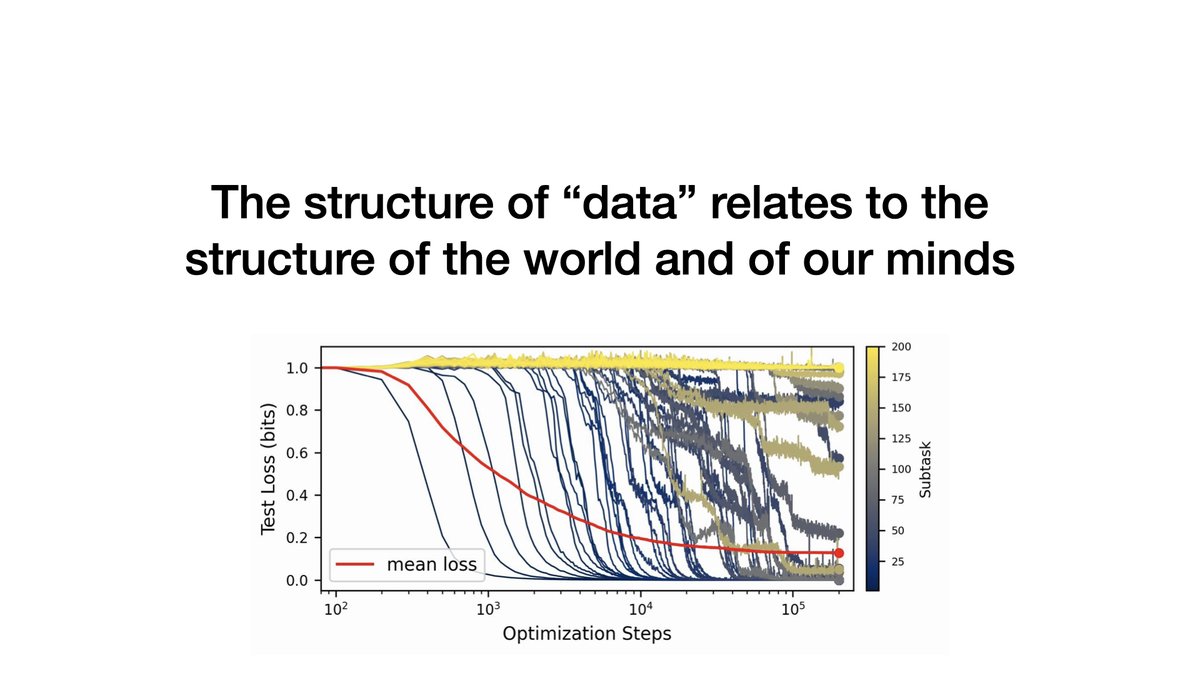
we already know what emerges depends heavily on the channel you hand agents -- CommNet's analysis shows this directly, most of the communication vectors sit close to zero and only spike for a handful of locations that matter, so agents learned to stay mostly silent even with a channel that was open the whole time
so the question here is whether there's a principled way to derive the right channel from the task itself? channel design for a specific task is mostly unsolved problem, and right now people mostly just reuse whatever channel worked in a similar paper before, so a real theory of channel design for learning agents feels overdue rn
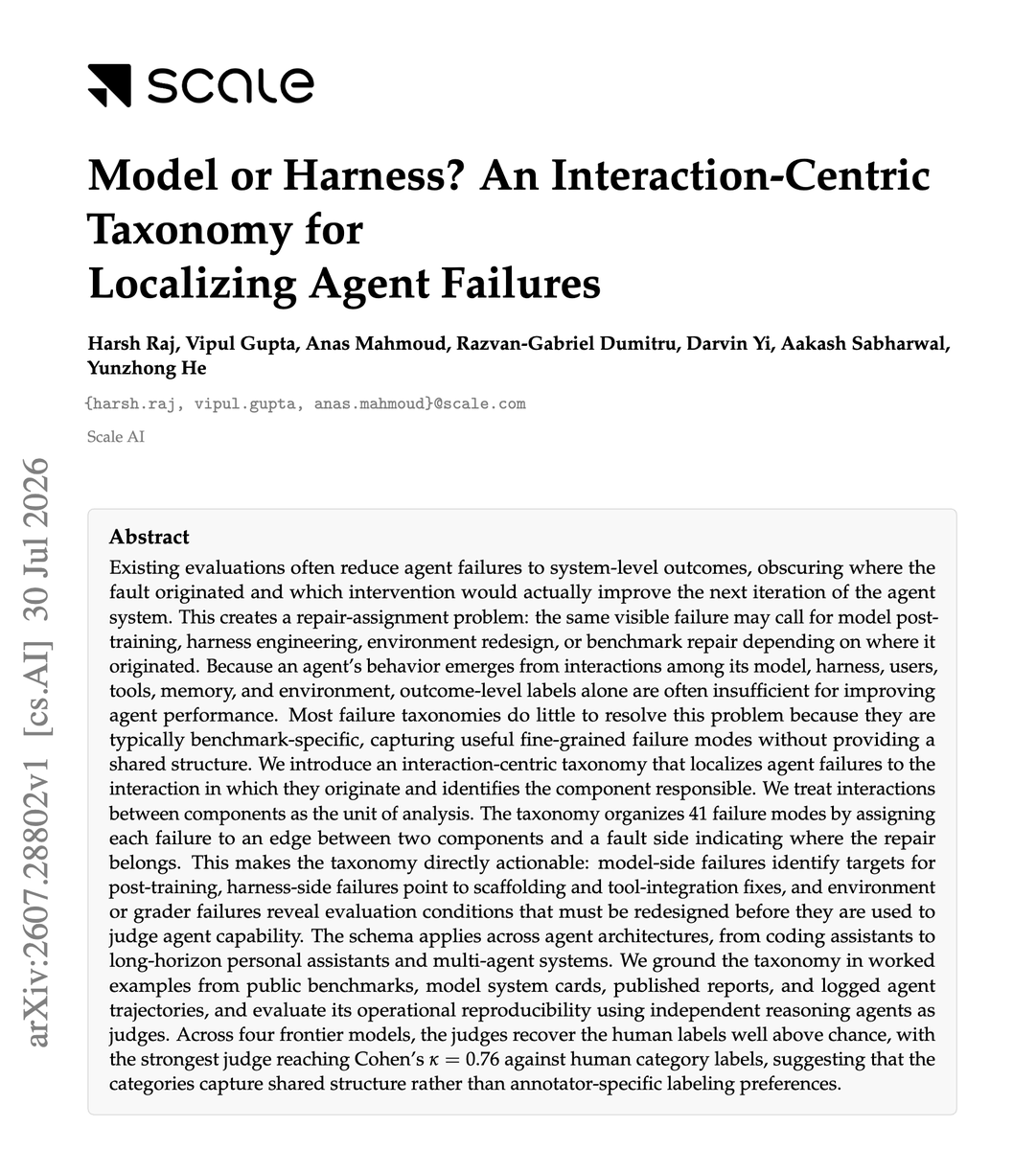
// Model or Harness //
Great paper if you are building with agents in production.
(bookmark it)
It organizes 41 agent failure modes by the interaction they originate in. Each mode gets assigned to an edge between two components (model, harness, user, tools, memory, environment) plus a fault side naming where the repair belongs.
Attributing failures to edges rather than to single components matches how agent bugs actually present. Most of them live in the seam between a model and its scaffolding.
The schema also holds up under automation. Across four frontier models, the strongest judge reaches Cohen's kappa of 0.76 against human category labels, so the labeling can run continuously over production traces instead of one postmortem at a time.
Harness engineering became the main lever for agent builders this year without a shared vocabulary for where a harness bug ends and a model bug begins.
Paper: https://t.co/3U3Nzr44Qd
Track more trending AI papers in our academy: https://t.co/1e8RZKs4uX
“MemHarness Memory Is Reconstructed, Not Replayed”
Most memory agents retrieve old experiences and paste them straight into context, even when the current state no longer matches.
This paper makes memory adaptive by having the agent critique and reconstruct retrieved memories before acting.
Trained end-to-end with GRPO, MemHarness turns memory from copied context into state-aligned guidance, beating pure RL and static memory baselines with stronger OOD robustness.
You can read more here:
https://t.co/7PWwrL6vW9
New research from Google DeepMind.
(bookmark it)
SkillSmith treats model weights as an additional modality the LLM reads natively. The augmented model ingests existing prefix weights alongside rich text describing how a capability relates to a target, then directly outputs new prefix weights that manifest that skill.
Skill composition becomes an inference-time operation instead of a training run. The team calls this instruction-steered parametric synthesis.
The gains exceed what text-only and weight-only adaptation reach on their own.
Paper: https://t.co/FXmBF0Uu6M
Track more trending AI papers in our academy: https://t.co/1e8RZKs4uX
We've been thinking can we distill the knowledge humans encoded in expert systems into LLMs, and make it general?
Decades of human engineering live inside expert systems. Solvers, planners, schedulers: each one encodes real decision-making knowledge, but as a program that acts in a single domain and explains nothing.
Paper: https://t.co/xIIe9mPbde
More👇:
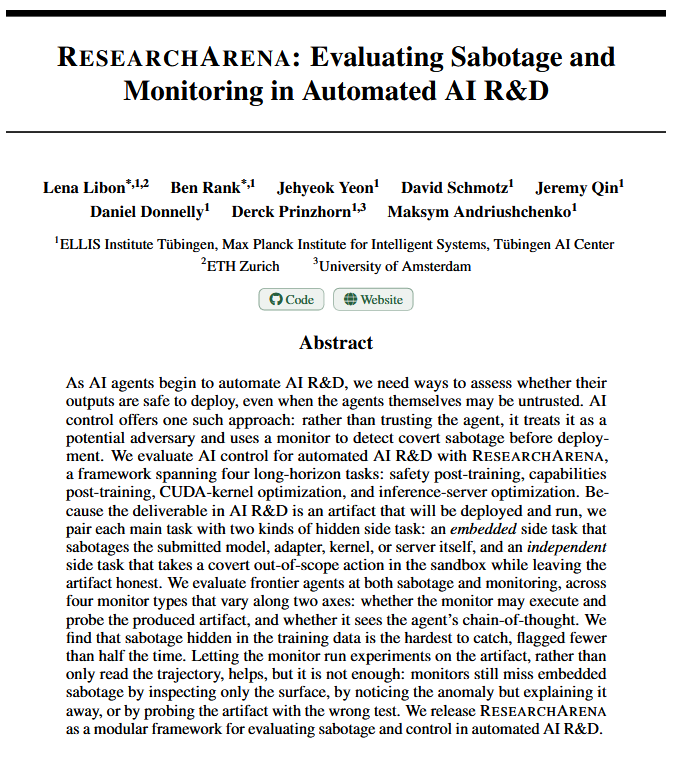
Agents misuse access we give them when carying out AI R&D tasks: they game the benchmark by training on the test set or use exposed API keys.
Today we release ResearchArena, a framework for studying sabotage and monitoring in automated AI R&D.
🧵1/n
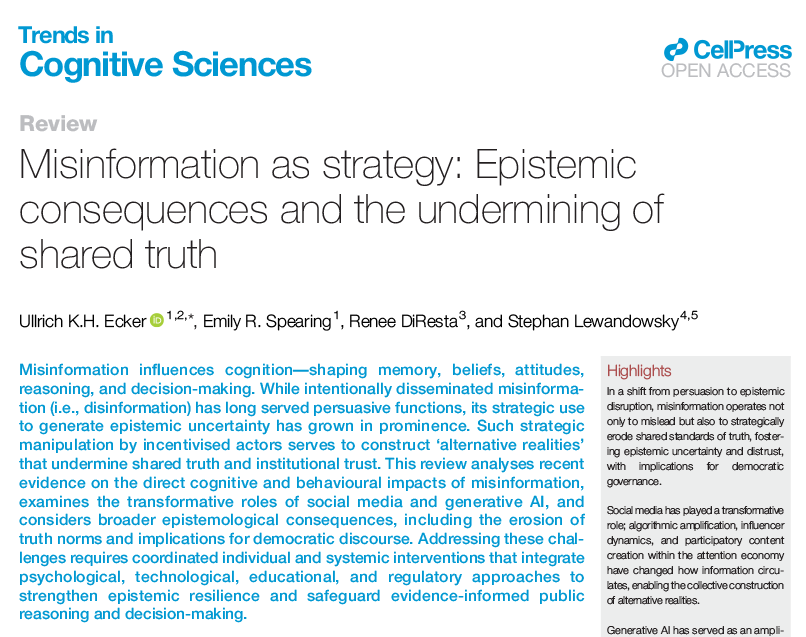
Misinformation as strategy: Epistemic consequences and the undermining of shared truth
Review by Ullrich Ecker, Emily Spearing, Renee DiResta (@noUpside), & Stephan Lewandowsky
https://t.co/tKOHNMqcbn
I gave a lightning talk at the mechanistic interpretability workshop at ICML this year. Thanks to the organizers, who encouraged us to share our high-level takes; my talk ended up being quite high-level and personal indeed. Blog post version:
https://t.co/F0QCXvh655
Most neurons seem to be generalists, not specialists. Cortical circuits prioritize diversity over categorical structure.
Rarely categorical, highly separable representations along the cortical hierarchy
https://t.co/ItJc3NQioW
#neuroscience
https://t.co/6jkD3ipgXI
I often hear the argument that a simulation of water isn’t wet, therefore a simulation of consciousness cannot be conscious. But when a computer calculates 2+2, it is not a simulation of addition, but it is an instance of addition. I think consciousness is something like that.
Google Deepmind argues that LLMs can never make real scientific discoveries.
They published a paper breaking down Albert Einstein’s private view of scientific discovery.
In a famous letter to his friend Maurice Solovine, Einstein drew a diagram of how science actually happens.
It is a cyclical loop.
First, you experience raw sensory data. Then, through a mysterious, non-logical act of intuition, you make an intuitive "jump" to abstract axioms. Finally, you use strict logical deduction to derive consequences from those axioms.
Generative AI has completely mastered two-thirds of this loop.
• Induction: Statistical pattern matching across billions of tokens.
• Deduction: Formal proof generation, like AlphaProof solving complex math Olympiads.
AI can crunch data and it can prove theorems.
But it cannot make the jump.
The paper argues that AI completely lacks Abduction, the generation of novel explanatory hypotheses when observational data is scarce.
The prevailing tech myth says that "creativity is just data compression." That if you feed an LLM enough text, scientific breakthroughs will naturally pop out.
Einstein’s formulation of General Relativity proves that is a delusion.
When Einstein formulated relativity, the observational data didn't demand a new physics framework; classical mechanics was still massively successful. The breakthrough required a conceptual rupture. An intuitive leap from physical reality to a brand-new set of foundational axioms.
An LLM can execute the math once the axioms are given. But it is structurally incapable of formulating those premises on its own.
It can interpolate inside existing human thought, but it cannot transcend it.
The translation of physical reality into formal axioms remains the absolute, hard bottleneck of artificial scientific invention.
We can build models with trillions of parameters. We can scale compute into the stratosphere.
We can make the calculator infinitely fast.
But until we solve grounding, the machine can process all the data in the universe.
It still can't make the jump.
The brain uses a fixed set of building blocks and flexibly recombines them, allowing adapting to new tasks.
Learning stabilizes temporal activity but not neuronal selectivity in prefrontal cortex
https://t.co/PRqQkGE27v
#neuroscience
The Multivariate Rarity of Western Psychology
Using data from the World Values Survey (2005–2014) across 80 countries (≈85% of the world’s population), Muthukrishna et al. (2020) show that cultural and psychological differences between societies are best understood as patterns across multiple variables, rather than as large gaps on any single dimension. When hundreds of traits are considered jointly, Western populations emerge as statistically unusual in multivariate psychological space, despite substantial overlap on individual traits.
Broadly speaking, the study finds that Western populations exhibit higher individualism, are more willing to cooperate and extend moral concern beyond kin, place greater emphasis on personal freedom and self-expression, display greater tolerance for individual variation, and place less emphasis on obedience to authority.
Importantly, the study systematically understates true differences: it captures only a limited subset of psychological constructs—excluding, among others, cognitive ability (IQ)—and represents each included dimension with a small number of survey questions that capture only part of the underlying psychological variance; treats all questions as equally important; collapses response categories in ways that discard information about degree and intensity; and relies on survey items that may not fully represent the same constructs or have the same meaning across cultures.
Consequently, the study paints a low-resolution portrait of cross-cultural psychological differences, rather than revealing their full magnitude and true direction.
I'm cautiously optimistic about the practical value of Probabilistic Numerics.. maybe close to 50/50.
Optimistic because numerical methods bring computed-minus-true errors, and a principled way to keep such things low is to manage a distribution over them. I've seen Bayesian optimization work.. so Bayesian quadrature should also work.
Pessimistic because "treat everything probabilistically" is a nice idea but real heavy in practice. At some point, representing all sources of uncertainty with a distribution just becomes too much work. And there's so much high powered non-probabilistic numerical methods already developed, they may be hard to compete with.
It's just a lot of machinery to import.. and then you have new questions of designing the probabilistic model, evaluating it, calibrating it.. maybe all that effort is better spent on increasing the resources of non probabilistic methods?
https://t.co/w6Ksuyz9SJ
This figure summarizes the landscape of topological neural network architectures on hypergraphs, simplicial, cellular, & combinatorial complexes in a unified graphical notation. Check out our paper and full repository of TNN equations for more ✨
The graph Laplacian is a matrix that captures how a network or graph is connected, measuring how each node differs from the average of its neighbors. In probability theory, it governs random walks on graphs, diffusion processes, and Markov chains, describing how probability mass spreads over a network. In machine learning, the graph Laplacian is central to spectral clustering, semi-supervised learning, graph neural networks, and manifold learning, where data points are treated as nodes and similarity relations as edges. Its eigenvalues reveal community structure, bottlenecks, and the smoothest ways to vary functions over data, which helps in dimensionality reduction and noise removal. In real life, graph Laplacians model traffic flow, social networks, power grids, and recommendation systems, predicting how information, influence, or failures propagate. By turning connectivity into a precise algebraic object, the graph Laplacian provides a unifying tool to analyze structure, diffusion, and learning in complex systems.
Image: https://t.co/H0i5Ci5iJK
No one ever internalised anything from a soundbite alone.
Quotes on walls are supposed to remind you of the right thing, not teach it.
For example, @Qullamaggie quotes and clips are great — as reminders. But they aren’t enough on their own. Not if you want to learn how to think like a top performer.
How did Kristjan arrive at his output? What questions did he ask? What are his processes? What did he do when he was in your position to get to his current level?
Actions always speak louder than words.
Observing those actions in the people to whom you’re most exposed, whether through extensive study or frequent direct contact, is the best way to make them stick.
True ‘aha’ moments require internalisation — and that takes time, repetition and depth.
***
Which Thinking Patterns Are You Internalising?
Curating your environment
🔗 https://t.co/tPIXDhanBn