ProteoArk is a web-based tool that offers a range of computational pipelines for comprehensive analysis and visualization of mass spectrometry-based proteomics …
Source: ACS Publications https://t.co/17GL7ETzm3
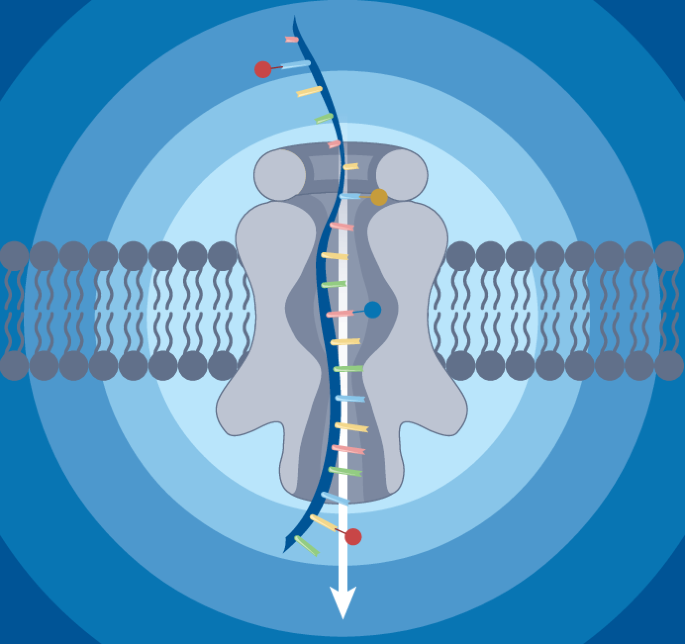
I just sequenced a human genome to 30× coverage entirely at home.
As far as I know, this is the first time this has been done.
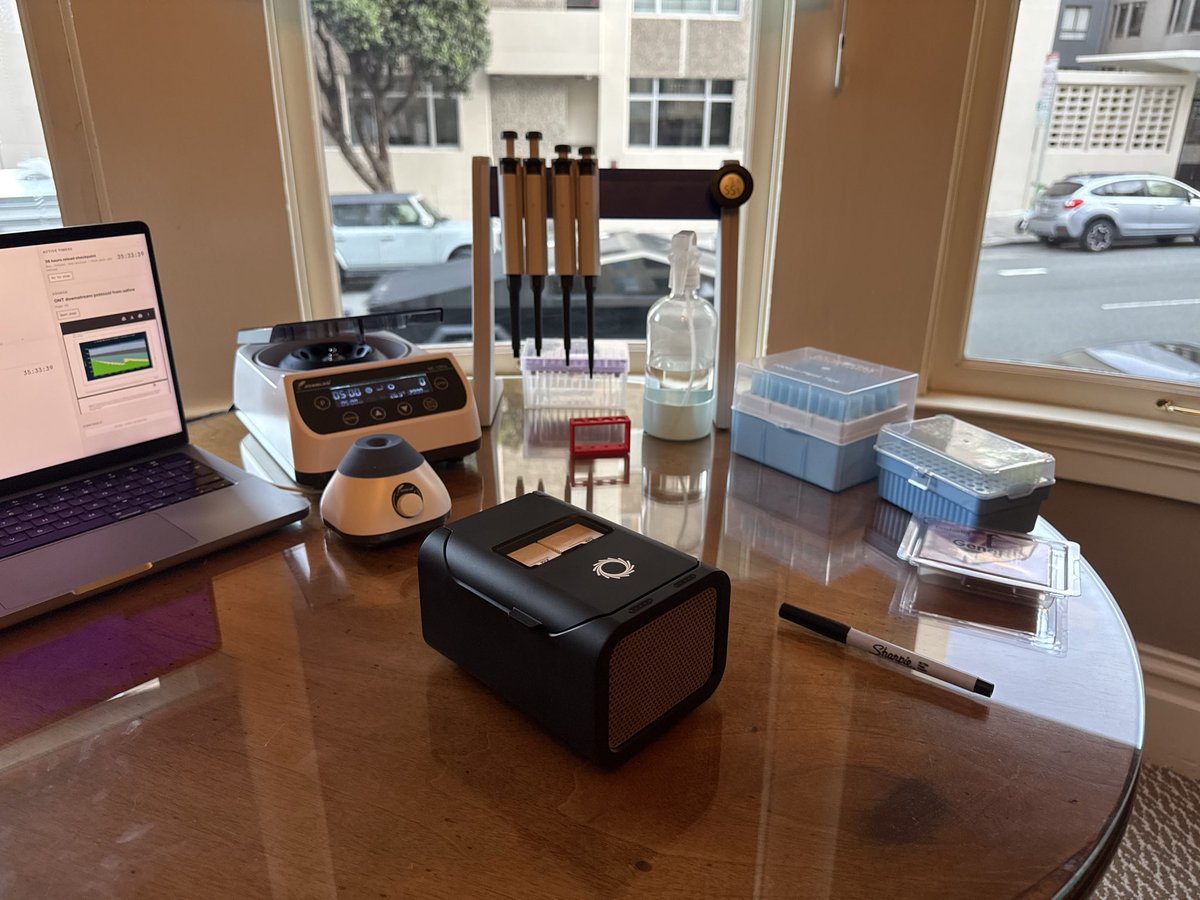
I didn’t step foot in a lab once. Every step - from saliva collection, to running the sequencer - took place in a single room with a dining table + kitchenette.
Six weeks ago, I had never done wet lab biology before.
I used an Oxford Nanopore P2 Solo - the only commercially available sequencing device portable enough to do 30x human genome sequencing at home.
Biggest takeaway - I could build something that combined software, hardware, and molecular biology far faster than I thought was possible.
I can name >100 specific instances where AI helped me solve a technical problem that would previously have blocked me because I lacked access to a domain expert.
For example: how do I save my sequencing run when my DNA extraction yield is 4x lower than I need it to be, and I have this limited set of reagents to hand?
To make this work, I had to navigate multiple disciplines:
- writing software to monitor sequencing runs and orchestrate remote GPU infra for basecalling
- learning + executing 5 hour long molecular biology protocols
- building a hardware device to quantify DNA concentration
Apologies for the hyperbole, but I feel super lucky to be living in 2026.
A few weeks ago I decided to sequence a human genome to 30x at home.
Then I actually did it. And I did it really quickly.
New UniProt Webinar – Join us to learn about the proteomes resource.
Proteomes in UniProt – explore and analyse the proteome resource.
15.00 (BST) Thursday 18th June.
Registration is free but essential: https://t.co/IZ7DlaKq45
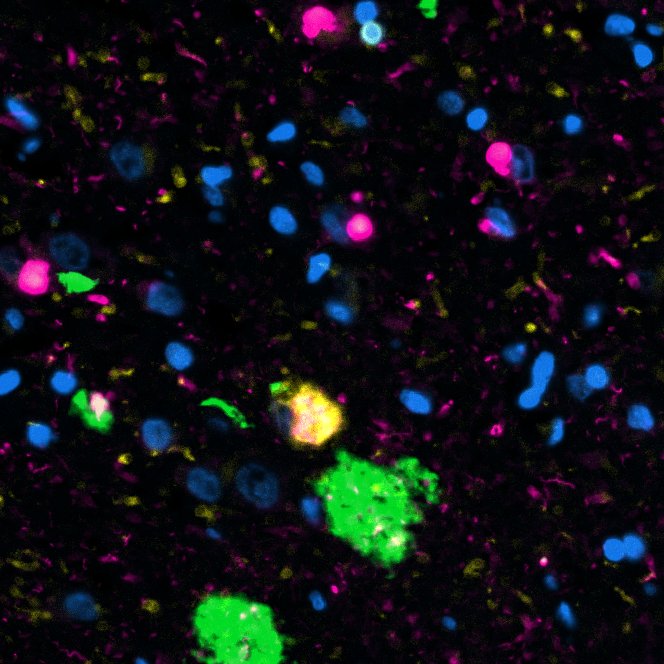
Inflammation drives nearly every major disease—cancer, heart disease, and autoimmune conditions. Yet we've never been able to watch and understand how it progresses in living tissue.
We're funding 15 projects to build real-time molecular tools to change that.
Learn more ➡️ https://t.co/o73euX9kIp
Researchers used lasers to encode quantum information into a single molecule of carbene—a first step toward a molecular quantum computer.
Learn more: https://t.co/UpD19VUSDF
The potency of a class of RAF kinase inhibitors is found to depend on cancer cell signaling activity, and MEK inhibitors can be reengineered to sensitize RAF kinases to inhibitors for synergistic RAF-MEK inhibitor combinations
https://t.co/1m5SMPWP0C
Meta-analyzing Olink data from SCALLOP (1,194 proteins) and UK Biobank (1,463 proteins), we now have the largest publicly available (N=78,664) pQTL resource for the plasma proteome
👉5,040 significant cis- & 19,698 trans-pQTLs for 1,116 proteins
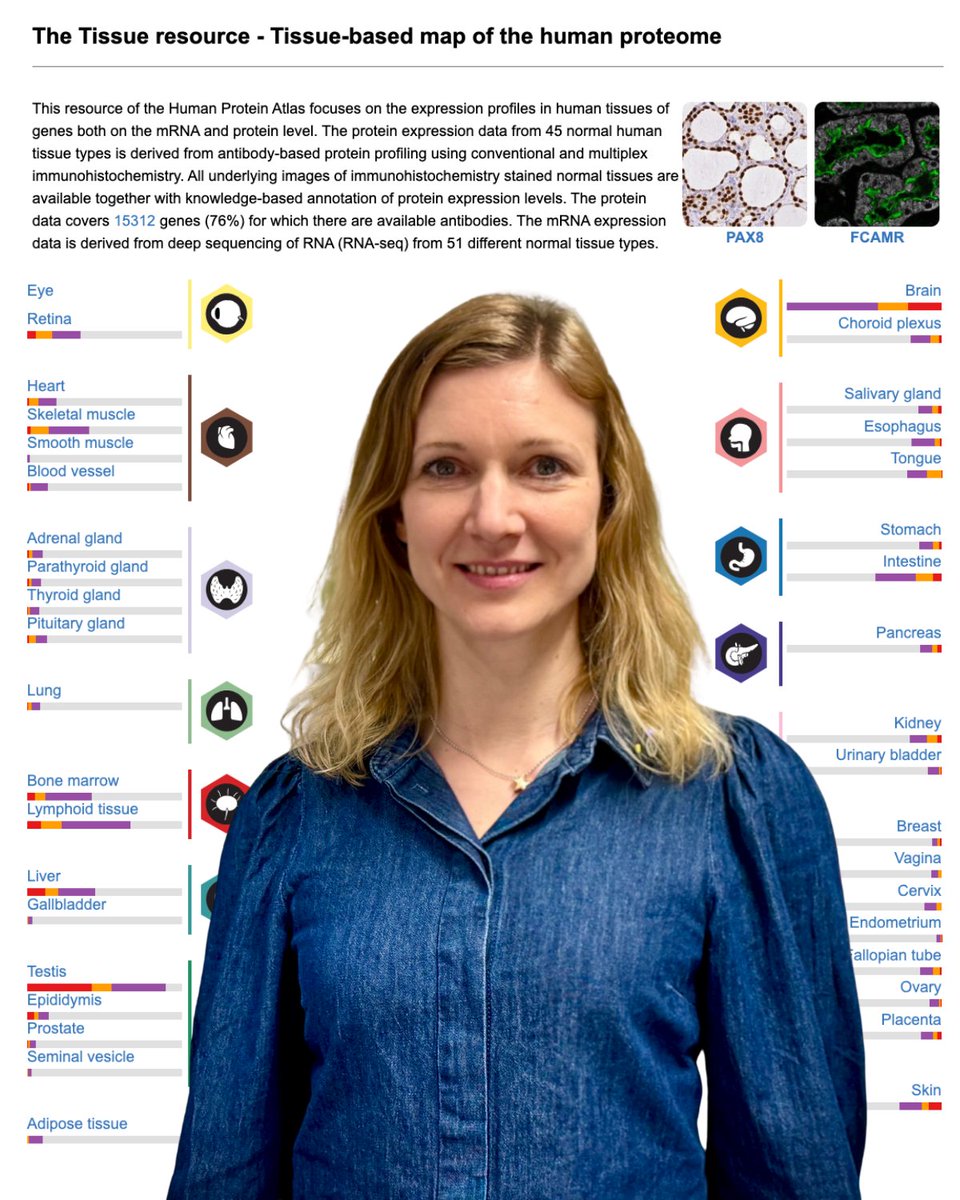
The Human Protein Atlas welcomes GeneTex’s recent announcement formalizing a collaborative relationship with the Human Protein Atlas. Collaborations with Atlas Antibodies, NCI-CPTC, Thermo Fisher Scientific, and Absea Biotech are also acknowledged.
https://t.co/e9FyVbFpuC
We’re hiring a Postdoc in the Henderson Lab @ Van Andel Institute!
Join our team studying neurodegenerative disease across scales (molecular → circuits). Flexible, high-impact projects and strong mentorship.
Apply: https://t.co/QJFXnmLiIy
Please share!
A team led by Dr. John Heymach has been selected to receive the LCRF | Boehringer Ingelheim Team Science Award on Innovative Therapeutic Strategies to Understand and Treat Lung Cancers Harboring HER2 Mutations – a $1.5M award. https://t.co/U2yoXCaioz
#LungCancer #LungCancerResearch
Choosing the right research model is critical to advancing rigorous, reproducible science.
Learn how NIH supports the use of New Approach Methodologies (NAMs), including organoids, computational models, and real-world data: https://t.co/5k0gKBFZT5
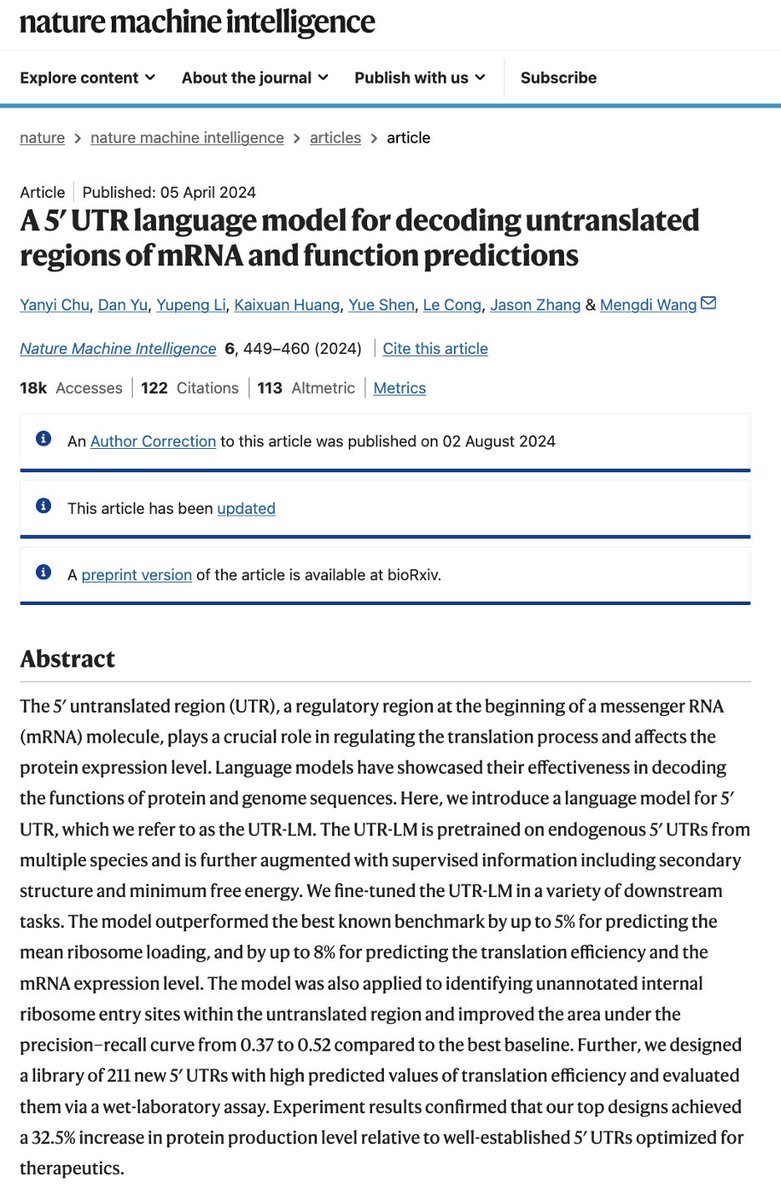
Can we program cells like computers — using RNA?
Two years ago, our group trained the first language model to decode the regulatory grammar of 5′ UTRs in mRNA, published in Nature Machine Intelligence.
Today, we’re excited to share the next step, also in Nature Machine Intelligence:
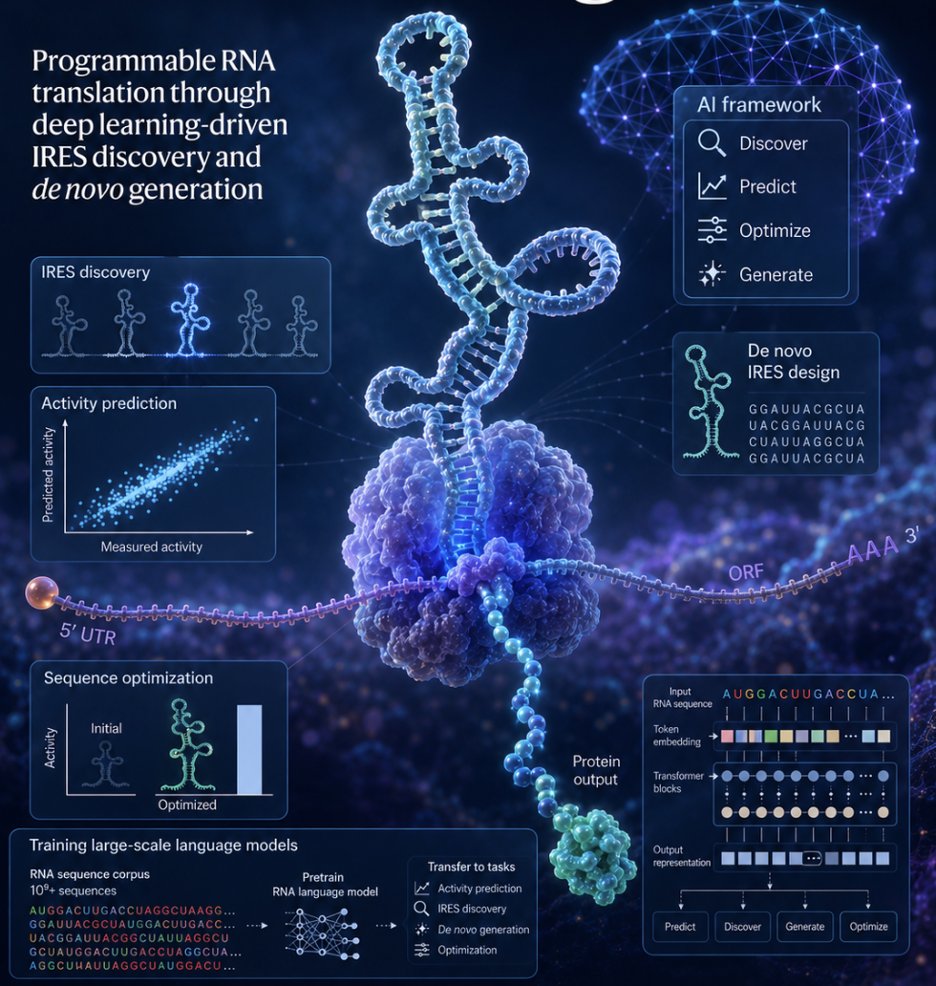
“Programmable RNA translation through deep learning-driven IRES discovery and de novo generation.”
We built an AI engine to discover, predict, optimize, and generate IRES elements — RNA control modules that regulate translation initiation.
This brings us closer to programmable RNA systems that control when, where, and how strongly proteins are produced inside cells.
AI is no longer just helping us read biology.
It is beginning to help us write it and harness it.
The future of computing may not only run on silicon — it may also run inside living cells.
#AIForBiology #LLM #AI4S #AI #RNA #MachineLearning #Bioengineering
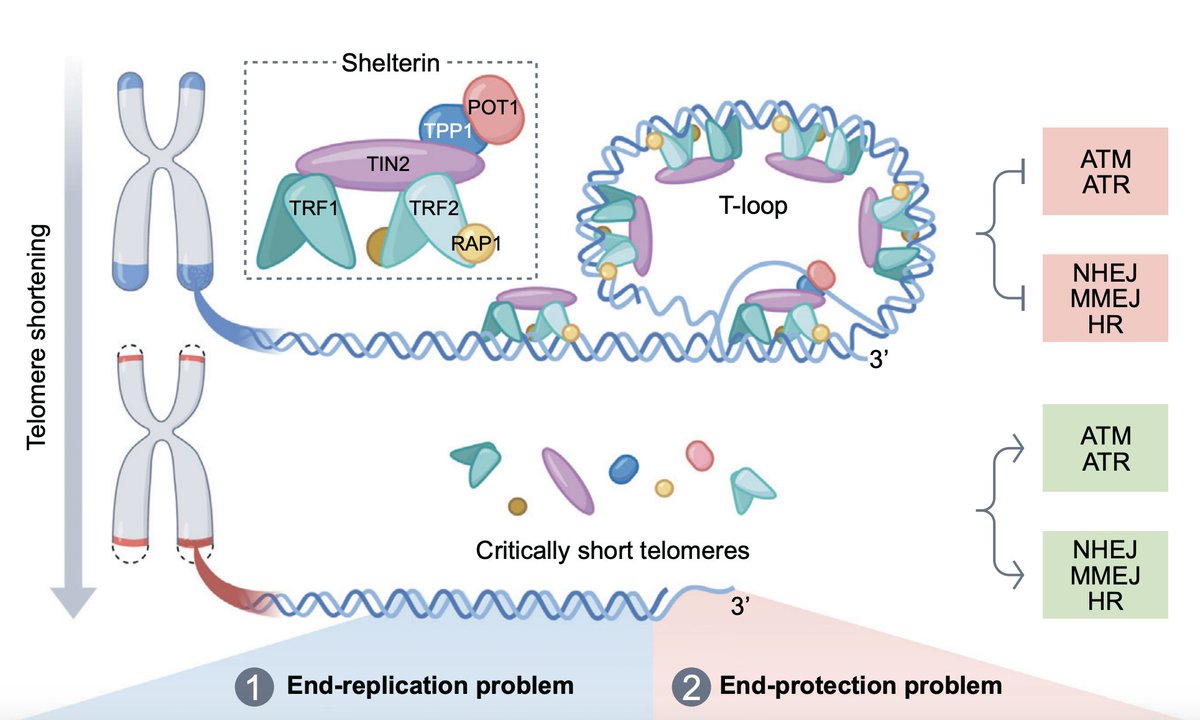
Our review is now live @TrendsCellBio. We discuss how the DNA repair pathways c-NHEJ, MMEJ, and HR intersect at mammalian telomeres and the consequences for chromosomal instability. https://t.co/TTstou5YZW