For the first time, "The Handbook of Social Psychology," the most authoritative guidebook to our field, is FREE to read, download, and share. https://t.co/tRdqsyPXeP.
🚨 PUB ALERT🚨 Erica and I are excited to have this out in PSPB. It is extra special because the origins of this project were me watching Kathy Phillips and @ProfAkinola exude authenticity not because they were powerful but because they were respected.
https://t.co/qiN5CUPyFi
We are working hard on next year's program 🦾. In the meantime, thanks to our fantastic presenters, we have many resources that you can access through our website.
Watch our #workshops and listen to our #podcasts 😘 https://t.co/PCjCU7r4em
#ethnography#qualitativeresearch
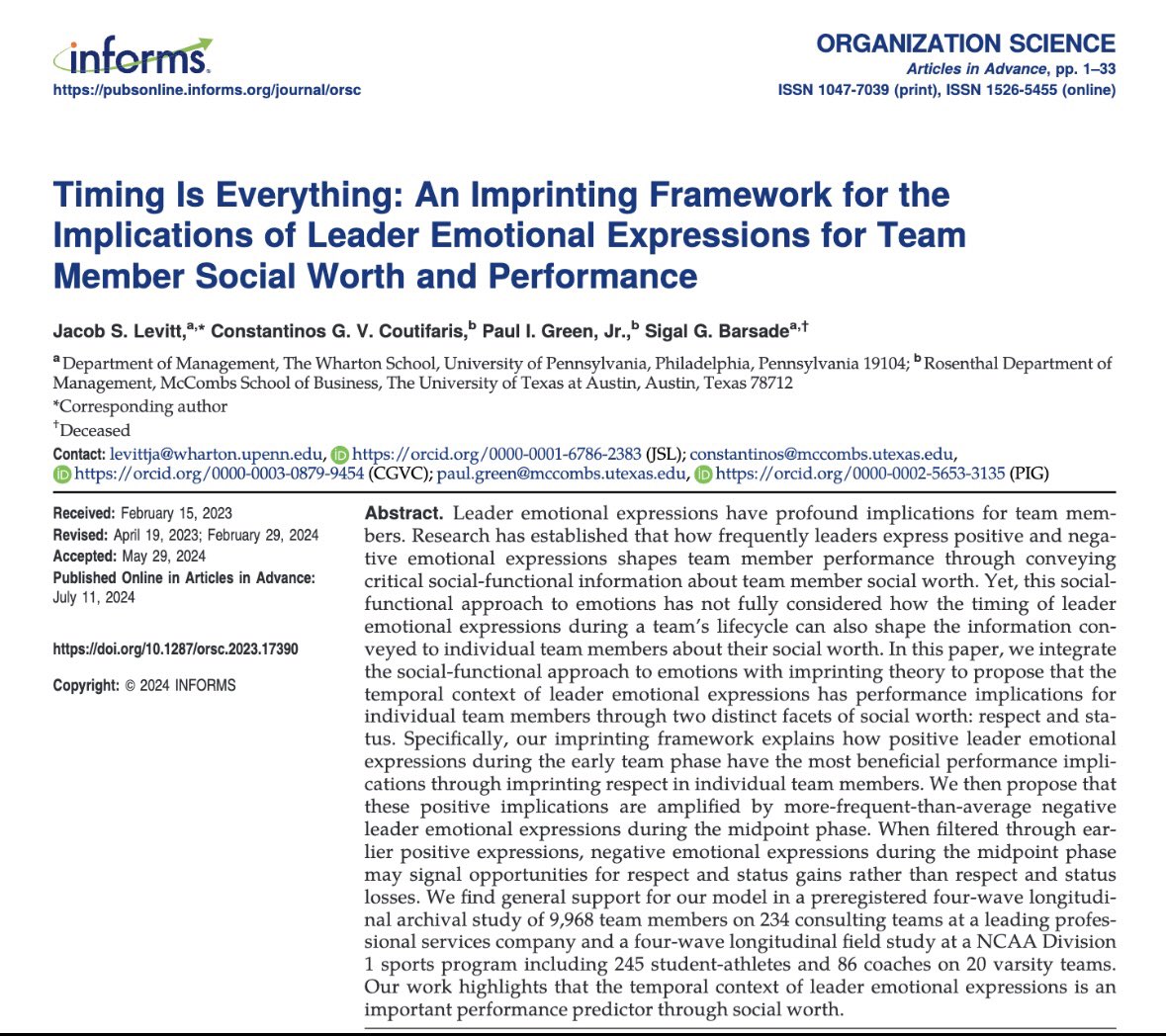
NEW @OrganizationSci with @coutifaris, @paulgreenjunior, and @BarsadeSigal
For leader emotions, timing is everything
We find that WHEN a leader expresses an emotion may be as important as which emotions they express for team member social worth and performance
Excited to see this come out!
Grateful for the opportunity to learn a lot while working with some of my favorite people 😊
Identity in and of Organizations: Docents’ Guide Through the Academy of Management Journals | Academy of Management Collections https://t.co/Gqadwjqz6a
Once, we ran a study on Prolific and a participant wrote on Reddit that the study “Felt like I was losing the will to live.” I went on the Prolific Subreddit (24k members!) and asked what matters. Here is what they told me. A thread on happier participants and better studies 1/9
My new @sciam piece on why giving actionable feedback, instead of simply correcting or praising the work, can help people thrive! This kind of feedback, which I call 'Agentic Feedback', can be particularly valuable for marginalized groups.
https://t.co/2BnlSGx08o
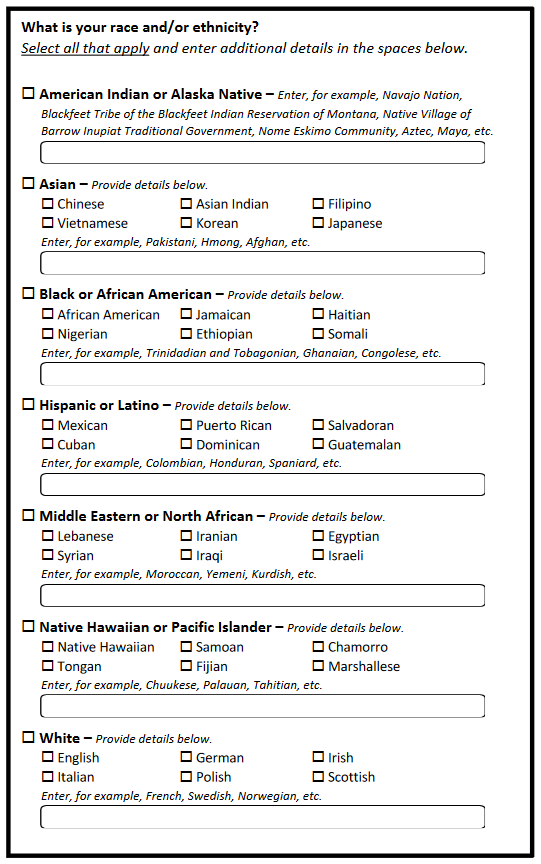
BREAKING: The #2030Census and federal surveys are getting new checkboxes for “Middle Eastern or North African” & “Hispanic or Latino” after White House’s @OMBPress approved the first changes to U.S. government standards on racial & ethnic data since 1997
https://t.co/m9rdcwnyBz
Fantastic piece by Marten Scheffer on the forgotten half of thinking:
".. taking walks, reading things unrelated to your research, and hanging out with strangers in a campus pub should be considered part of the serious process of thinking .."
https://t.co/q9P8Tets6j
New article in @HarvardBiz about the challenges that come when organizations flatten hierarchies and decentralize authority, with the fabulous @EricAnicich. We examine structural and people dynamics that get in the way and offer advice on how to intervene in them. Link below.
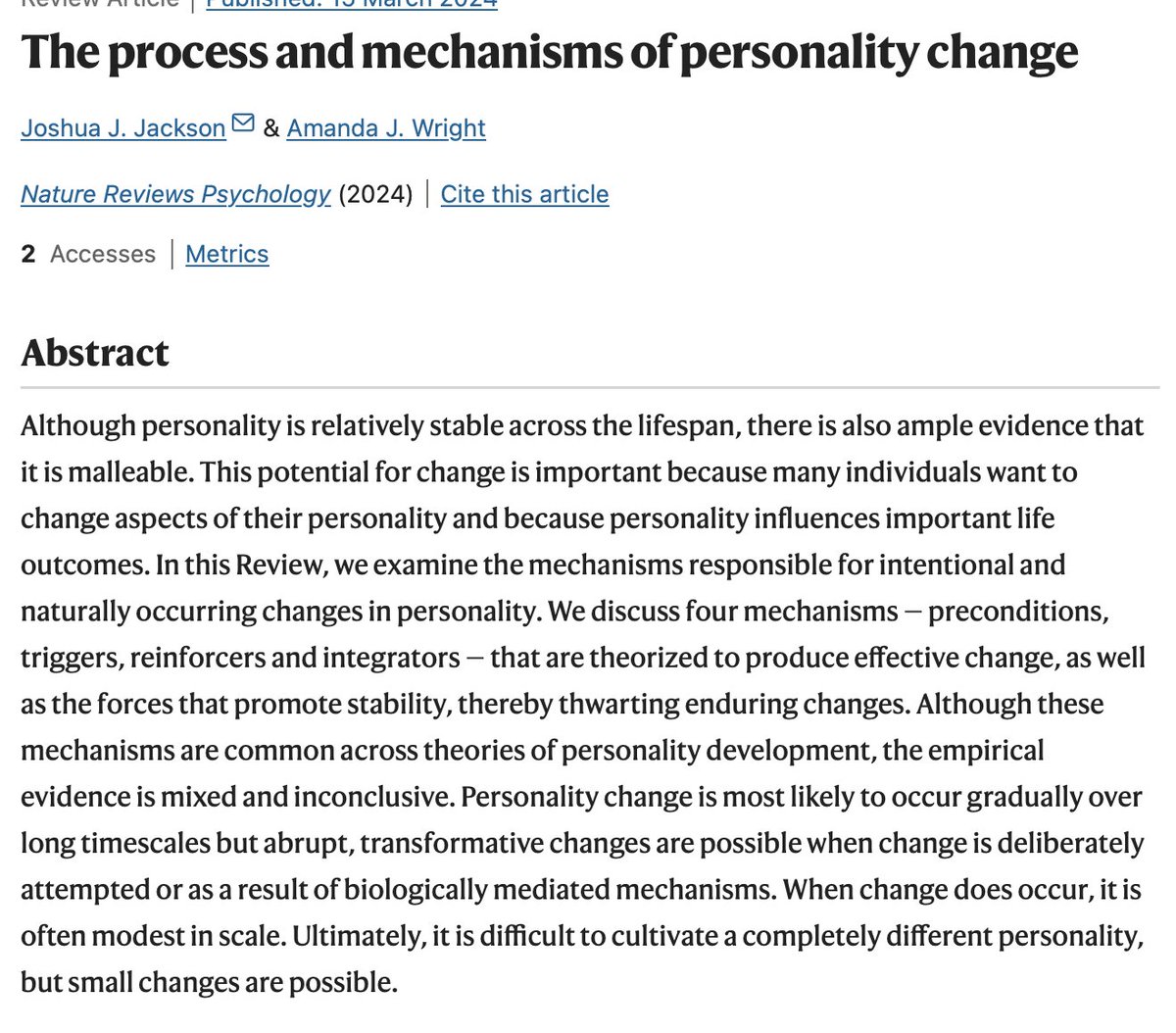
"Ultimately, it is difficult to cultivate a completely different personality, but small changes are possible" Exciting new personality change review in @NatRevPsych by @jackson_josh_ @aj_wright19 https://t.co/1eSxR4PsMU
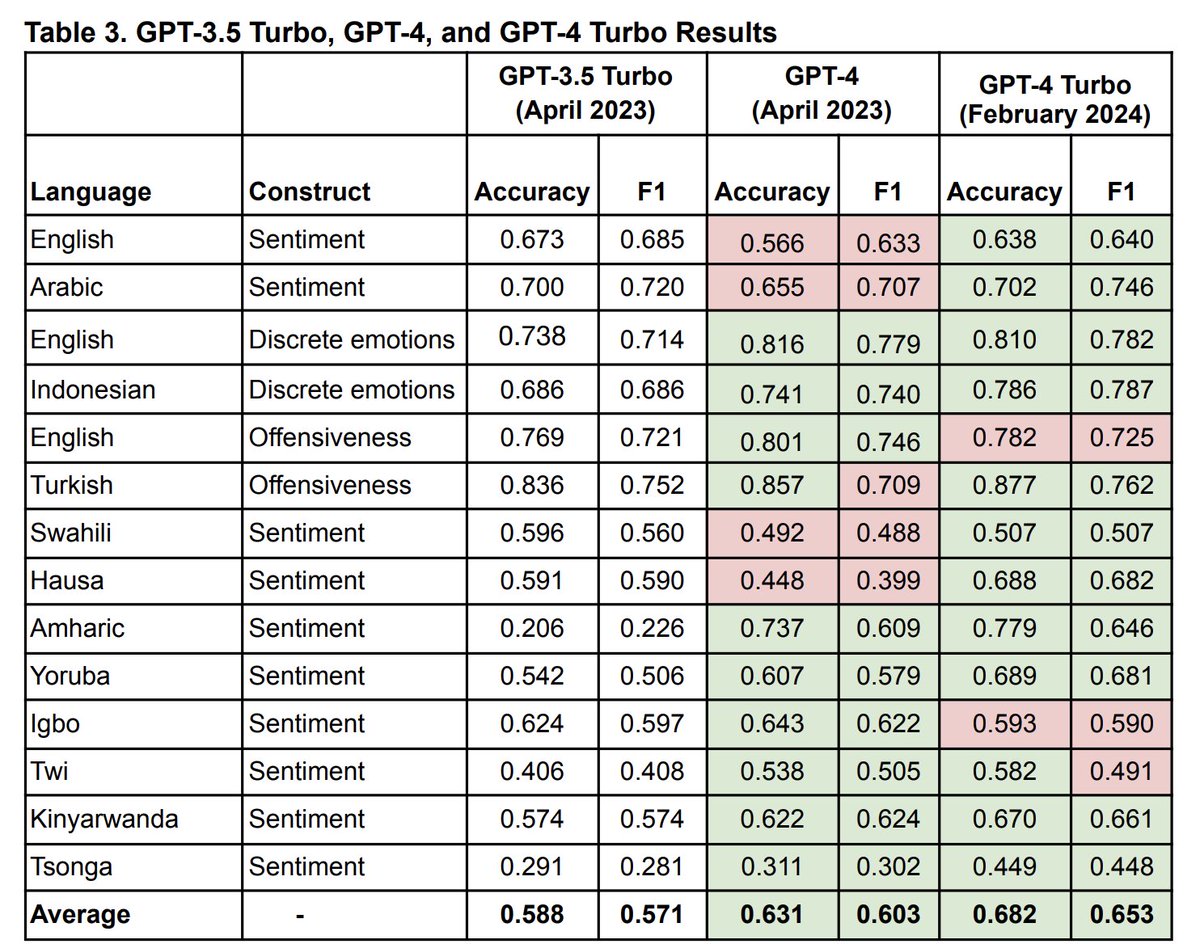
We have updated our pre-print on using GPT for text analysis.
Our most exciting new finding: GPT-4 Turbo (the updated GPT-4 model released this January) is even better than the prior version of GPT-4 at detecting psychological constructs in text:
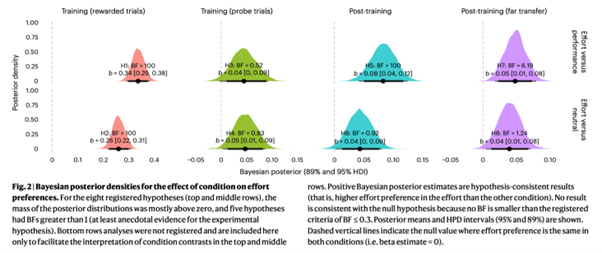
🚨Out in Nature Human Behaviour🚨
Effort is costly--how can we learn to value doing effortful things? Reward effort, not outcomes/performance!
Our registered report (w/ @hauselin@j_a_westbrook) shows people can learn to prefer doing effortful tasks https://t.co/Wt5Wpr28Xr /1
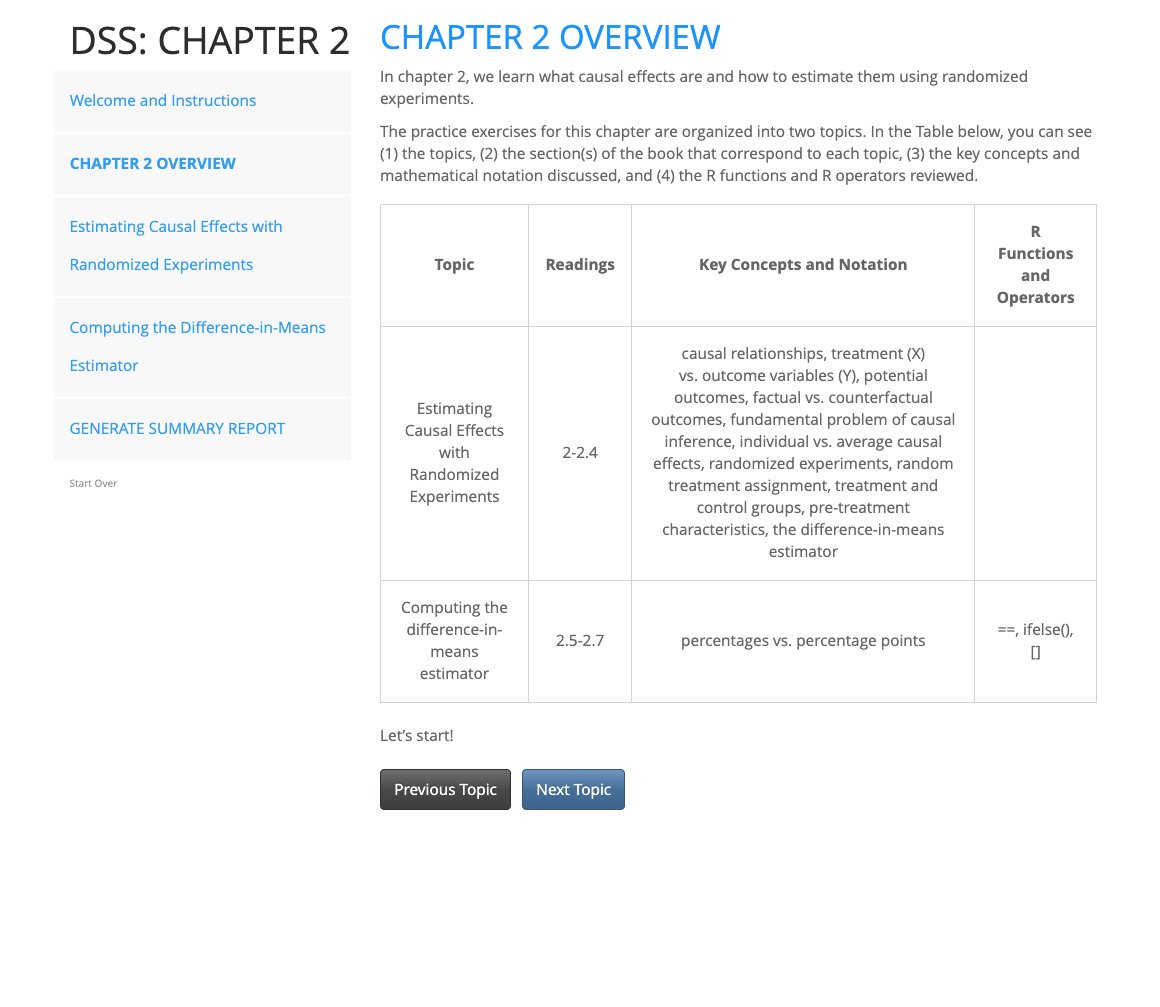
Teaching or learning stats and R?
I'm creating self-graded practice exercises so that students can test their understanding of the material without the help of an instructor.
I just created some related to how to estimate causal effects using randomized experiments ...
#rstats
In press @OrganizationSci with Natalie Croitoru and @BA_Helgason .
Employees want to act in ways they see as morally appropriate, but legal regulations don’t always align with personal moral preferences.
Ooo, cool: new work from @bureaulab showing how organizational structures (aka bureaucracy) actively shapes the expertise of the people working in it - creating and hiding it, for ex.
Another interesting aspect of organizational friction, @work_matters!
https://t.co/GjIdD4s3xd
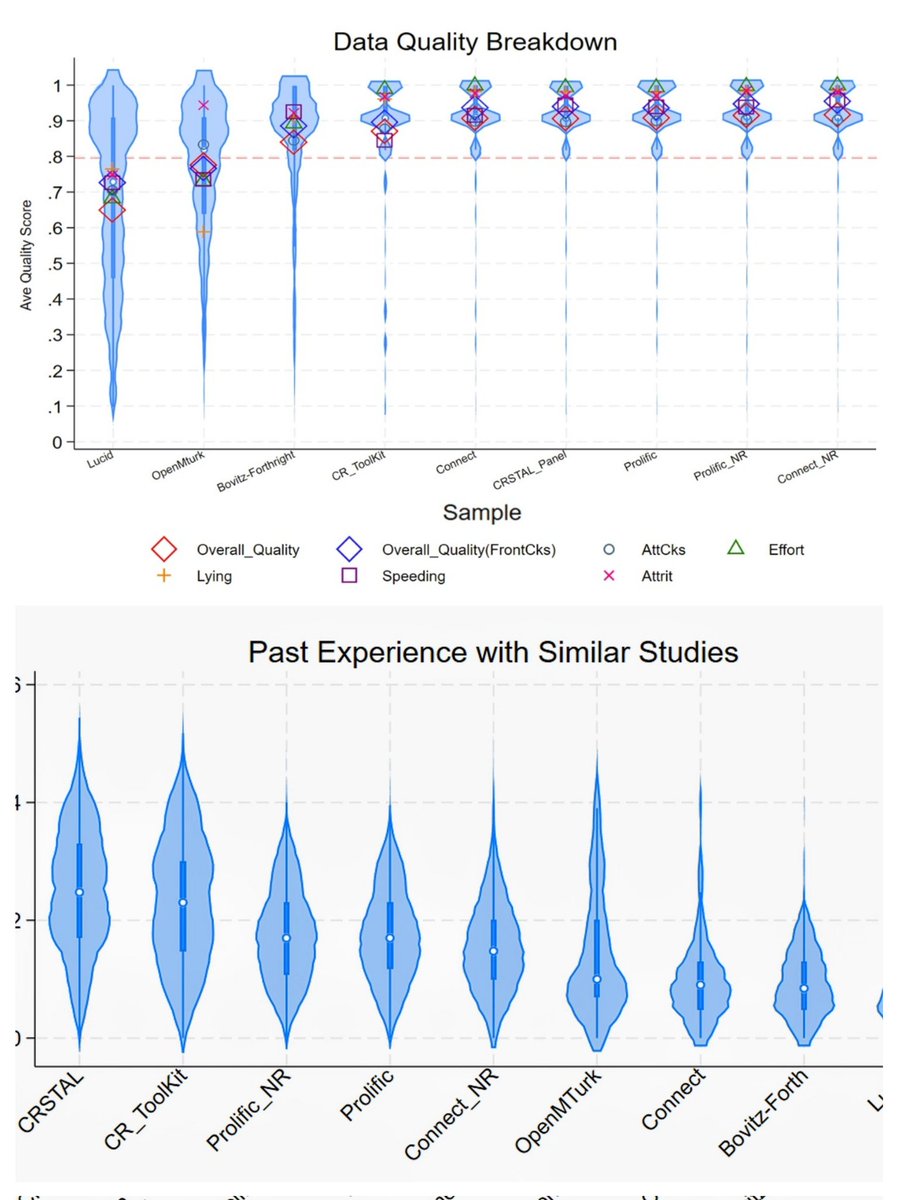
🚨WP🚨
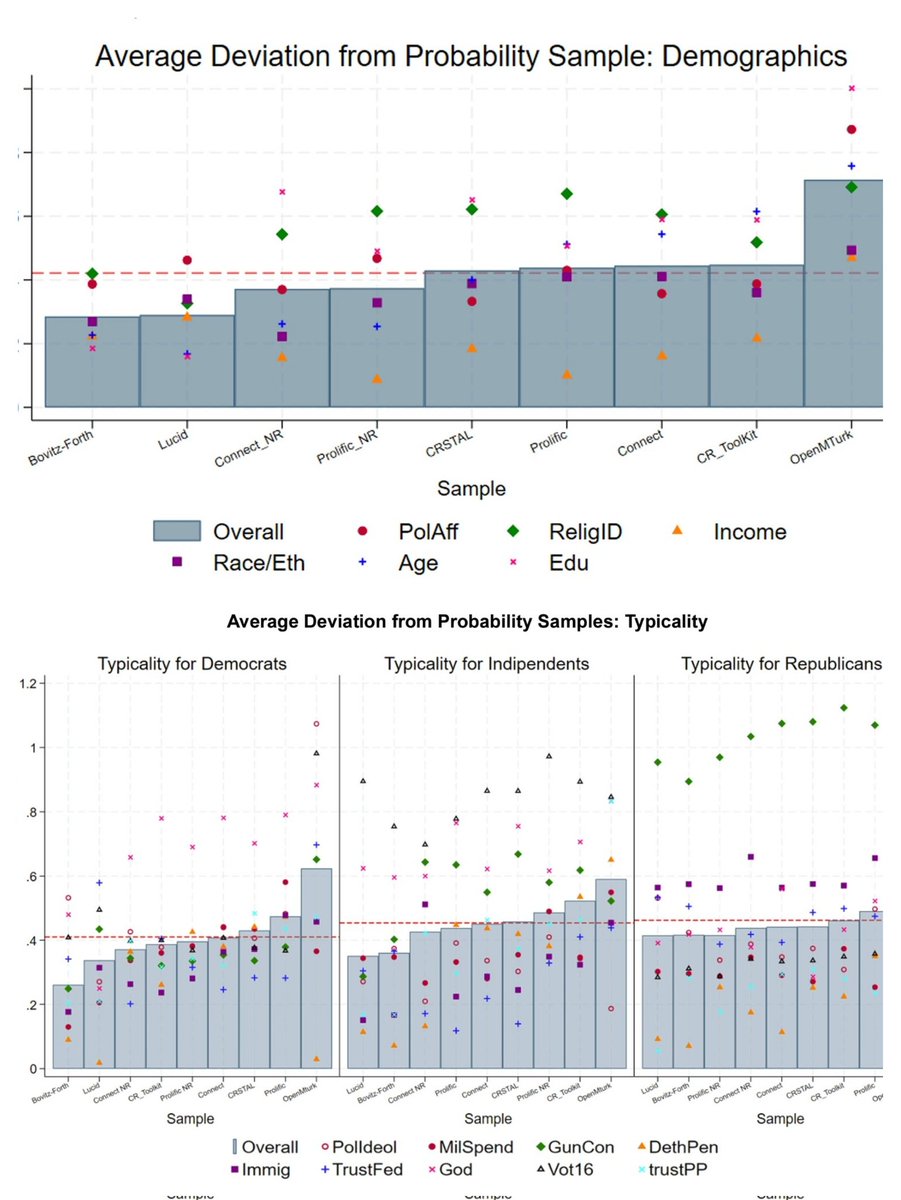
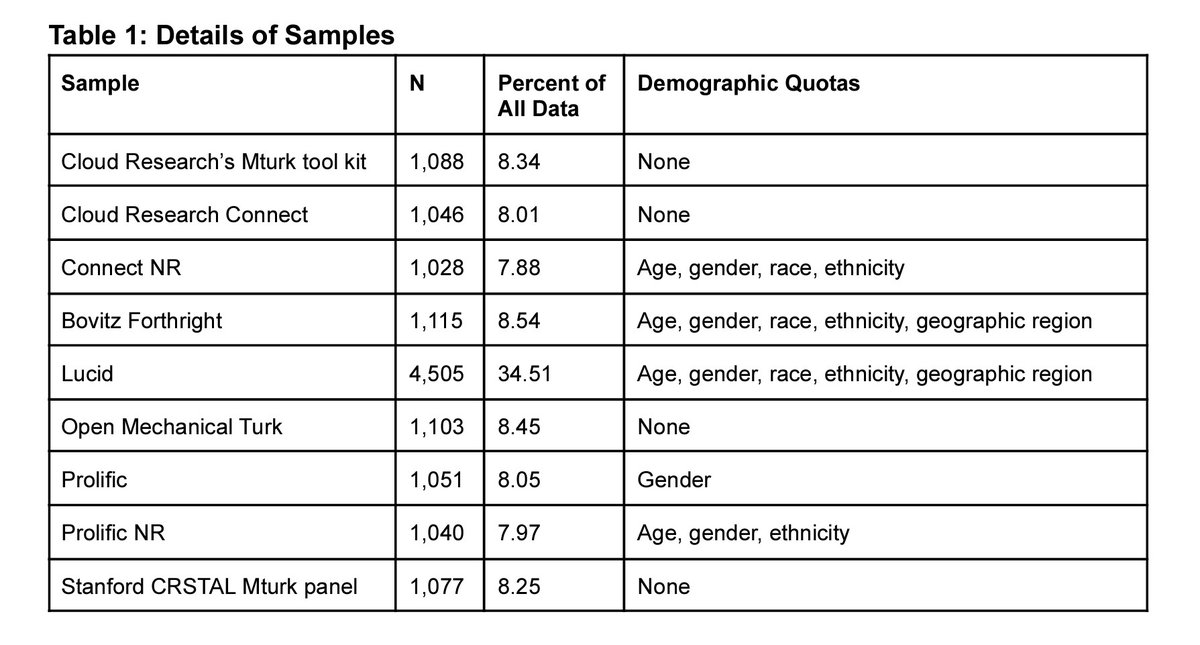
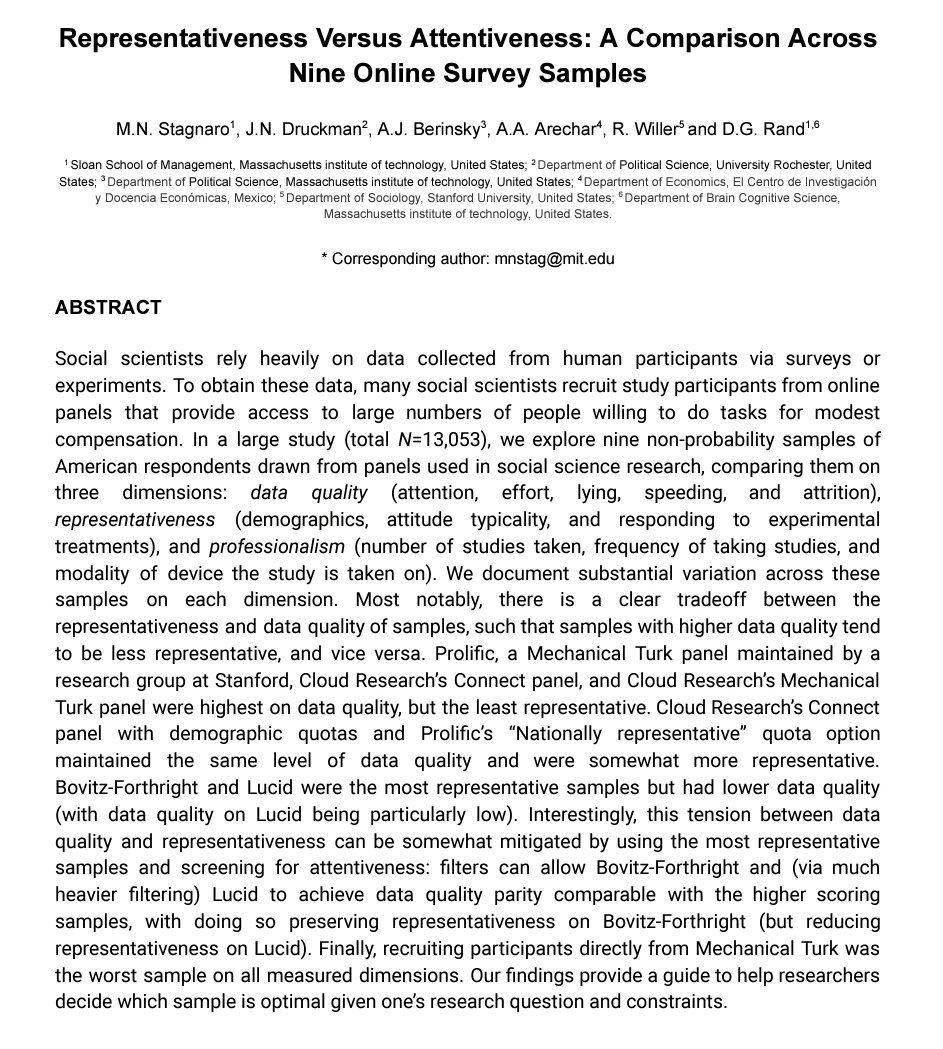
We test 9 online samples and find clear tradeoffs between attentiveness and representativeness - which sample is best depends on research q and priorities. For social/political qs I rec Bovitz/Lucid, for complex designs I rec Cloud/Prolific. https://t.co/dcK1uhTb1v
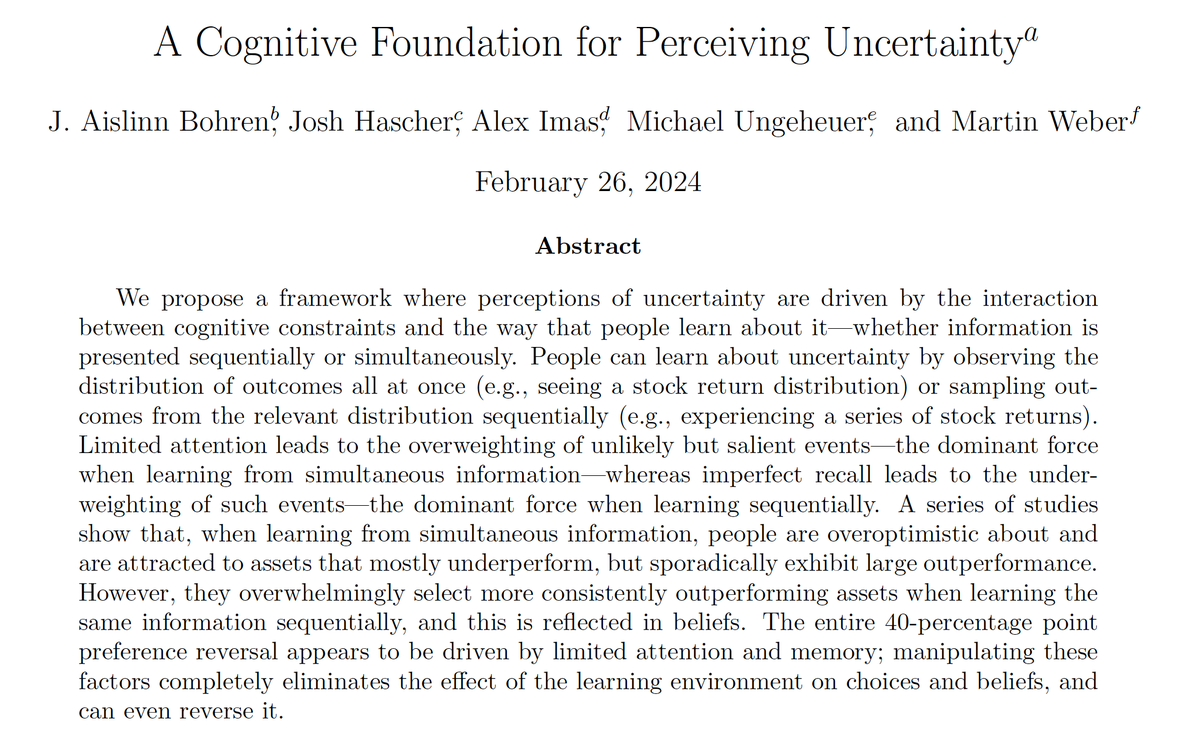
Why do people sometimes seem to overweigh rare events, and other times ignore them? Why do those w/ access to same information end up with different beliefs about the risk they face?
We present model + evidence for how people perceive uncertainty🧵1/9
https://t.co/NRHJILLe2Q