Healthcare and AI | prev. investing at Yosemite, cancer genomic data stuff at Foundation Medicine, BAing at McKinsey | @Penn @Columbia | my views | he/him/his
So here's a direct test of whether AI can have new ideas. There are some that claim yes, because ML models already contain all the info a human brain does.
Today in Cell we published a new invention from my lab, thread below. We can simply ask, can AI think of the same thing?
@pharmabro0782@DrSamuelBHume also would be interesting to interrogate the timing of cell selectivity profiling relative to lead selection for these programs
First release @ScienceMagazine
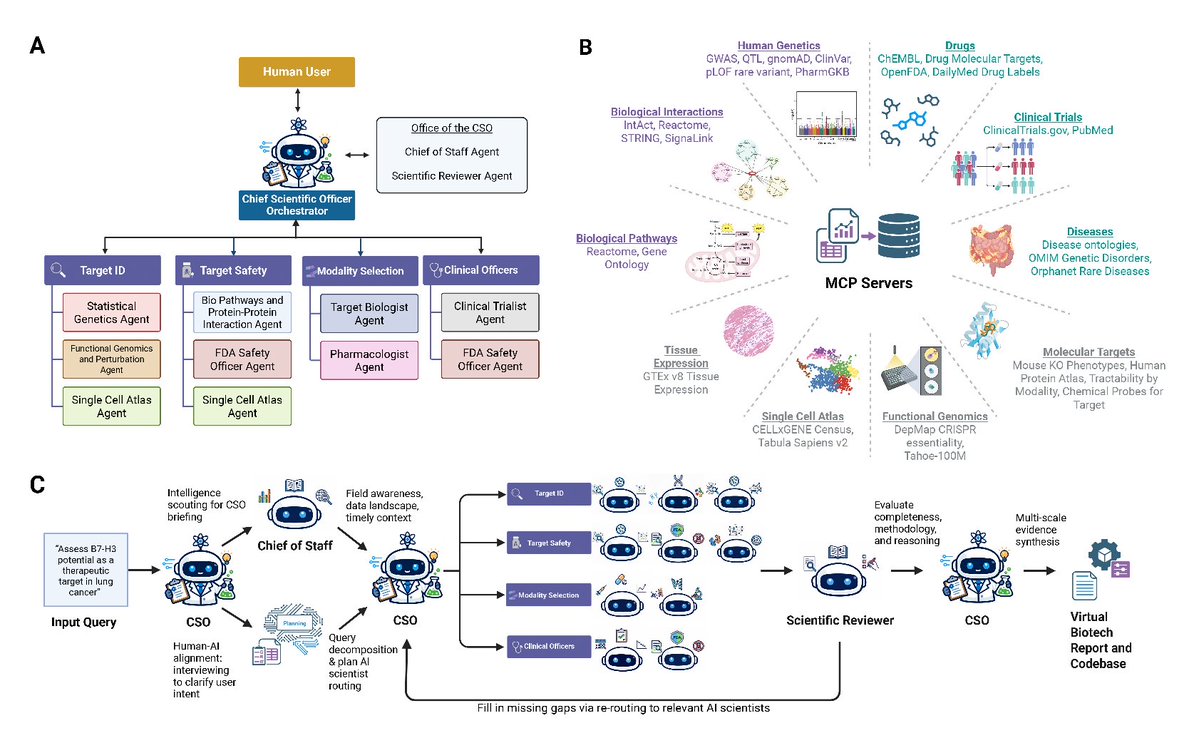
"Virtual Biotech," whereby >37,000 AI agents were put to work to find targets and forecast success in clinical trials, both for efficacy and avoidance side-effects. And that was one the first of a series of accomplishments
@james_y_zou@harrison_zhang
https://t.co/mk0P7DcSwt
really would love a new primer on multiple comparisons in the llm era. they seem like the most important thing to do given the way in which we know scientists (and now agents) conduct analysis, but also a bunch of smart ppl ignore corrections or say they are unnecessary.
I'm not a fan of multiple comparisons corrections (e.g., Bonferroni, Benjamini-Hochberg, etc.). Just preregister everything and report all results (or else do some kind of multiverse analysis or specification curve), and let the reader decide.
One of the biggest issues for me is the following paradox.
Say I run an RCT testing a drug as to LDL levels, and I'm trying to decide what outcomes to measure: reduction in LDL over 1 year, cardiac outcomes over 3 years, or mortality over 5 years. Suppose I measure all three, and the trial ultimately shows a reduction in all of those outcomes (p=.04 for each).
With Bonferroni etc., the trial would report a "null" effect across the board, even though these outcomes are all consistent and mutually reinforcing, and the evidence for the treatment is way stronger than if I had only collected evidence on cholesterol levels at 1 year.
It makes no sense to me that any single outcome by itself would have been statistically significant, but just because, in the past, I decided to collect more and better evidence, now the treatment has "no effect"?
If you care for international researchers in your organization, you should read these two articles. No matter what you do/ say, international researchers will be scared to report abuse, because they don't want to lose their livelihood. Vast majority of them don't come from money.
"We could have more Warp Speeds — for therapeutics, for ventilation systems, for rapid global provision of vaccine technology."
https://t.co/v54dznAqUF by @dwallacewells@nytopinion
@SewUnicorn@nikillinit Try putting your Apartment Unit # in the “Street Address” field instead of the “Apt / Suite / Other” field and lmk if it works? You can also test whether or not your address is recognized by USPS with this link: https://t.co/rxSI2LdQx4
@nikillinit It has now been about a decade since Stage 1 of CMS’s Meaningful Use Standards for EMR adoption was implemented - have we actualized on the vision that was proposed to providers at that time? What has the impact been so far?
Nurses have always played an integral role in keeping us healthy—and throughout the pandemic, they’ve served on the frontlines. On #NursesDay, I want to extend my heartfelt gratitude to nurses everywhere for their tremendous dedication in the ways they care for us.
Our letter to the @NEJM reporting the five-year outcomes of CART19 (CTL019, now called tisagenlecleucel) in lymphoma patients is out! Thanks to Drs. Schuster, Chong and @PennMedicine@PennCancer @Penn_IFI @carlhjune@BLLPHD https://t.co/2ogmEX6ZzX
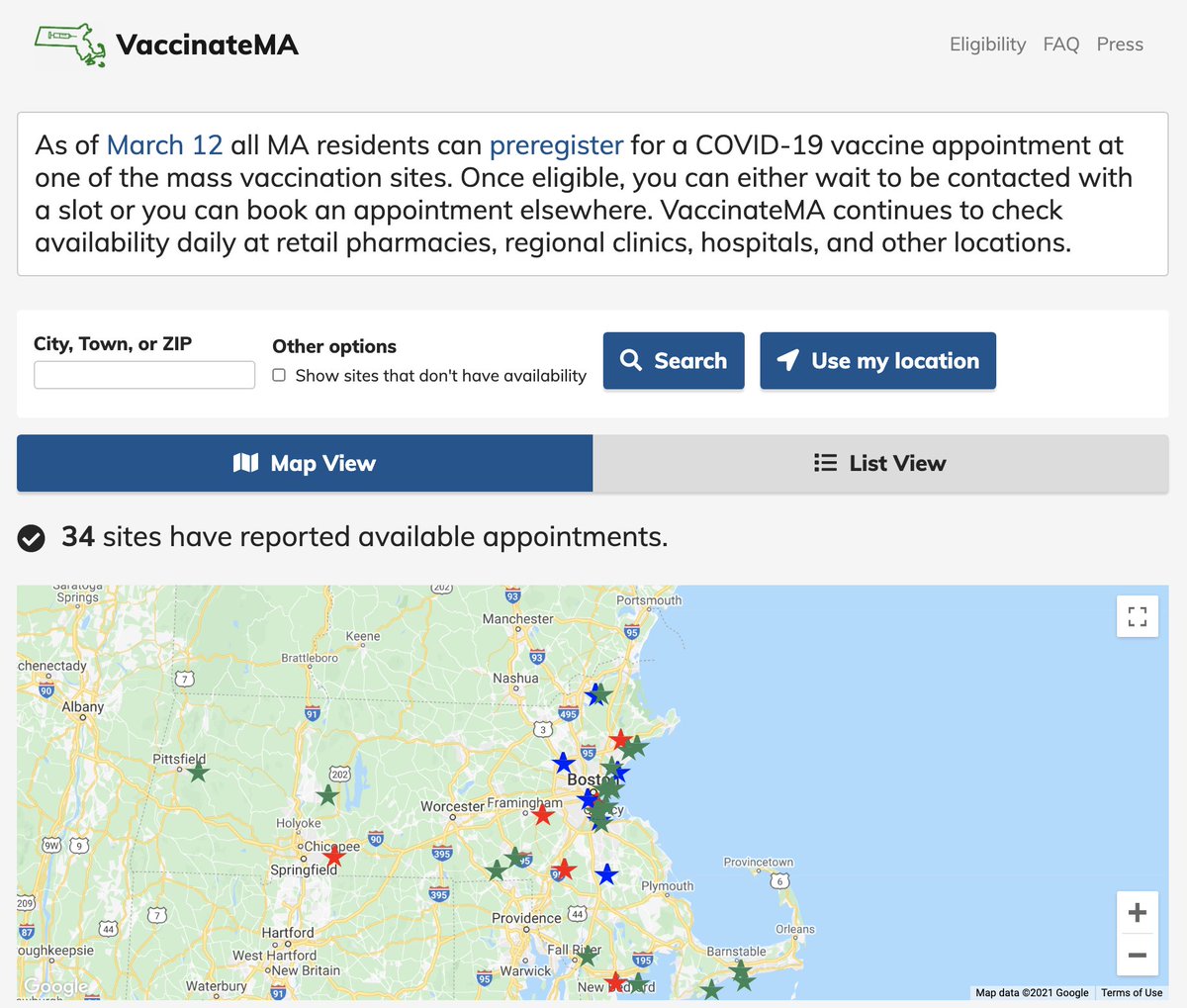
Incredible! Great way to find appointments at mass vaccination sites and some others. We continue to check and post additional info about local clinics and availability at local or retail sites. We would love to connect our data to the State site and help every MA resident get 💉