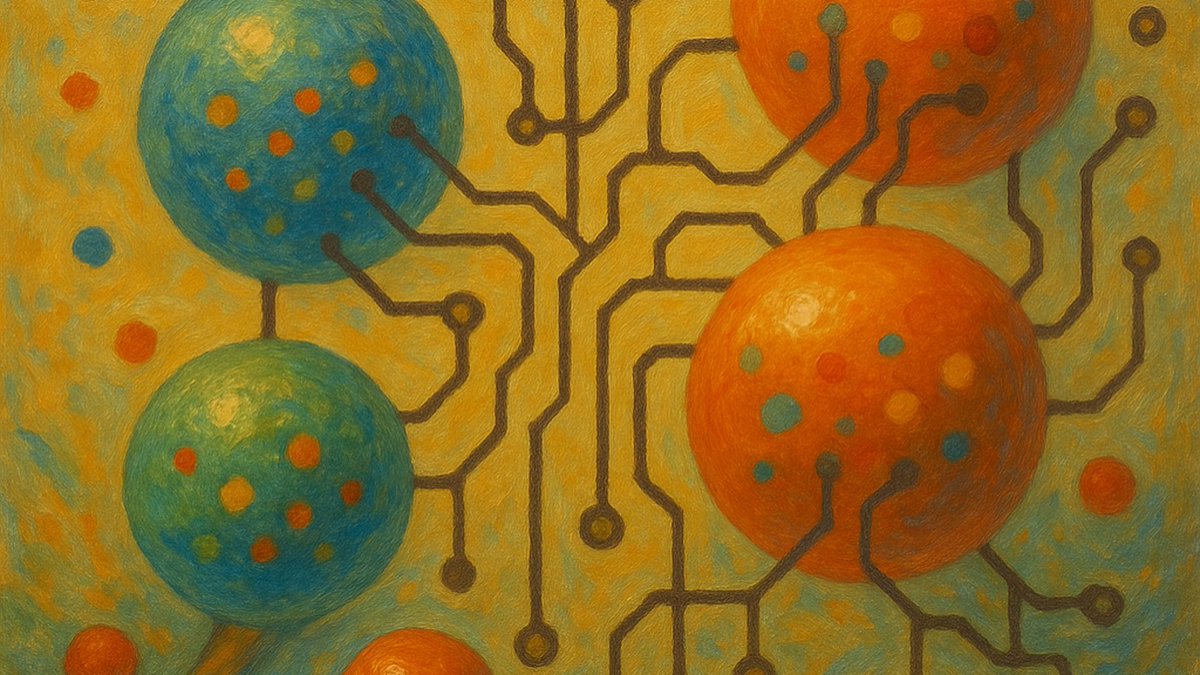
Inspired by condensates that form on specific DNA loci, we ask:
Can we design multicomponent fluids to form distinct condensates on diff. surfaces?
i.e., perform a type of information processing (surface classification) through condensation!
https://t.co/Z8zRloSpHQ (1/2)
https://t.co/ioGs2hJzxd I always thought genes have to pull away from heterochromatin to be transcribed; apparently not! When a powerful technology is applied to beautiful biology. Congrats to all!
I am excited to share my lab's latest work online today @MolecularCell where we investigate the relationship between condensate formation and transcriptional activity of the cell-type specific coactivator MYOCD. https://t.co/Yo9zKHbGxg
In new work, we report a surprising finding: prompting Evo 2 with a handful of sequences of shared function can steer the model to generate new sequences with similar function, a form of generative in-context learning (ICL). This is an emergent phenomenon that we did not anticipate during training.
In a first study, led by Alex Hao, we show that ICL enables few-shot design of mammalian regulatory elements, including novel enhancers with cell-type specificity for a neuronal subtype in the mouse brain.
In a second study, led by @garykbrixi and Alex Hao, we extend these results to the computational design of natural proteins, de novo antibodies, protein-RNA systems, and complete bacteriophage genomes.
As part of this work, we also release several useful new artifacts, including a highly efficient new inference stack. 1/n
New (to you?) preprint alert!
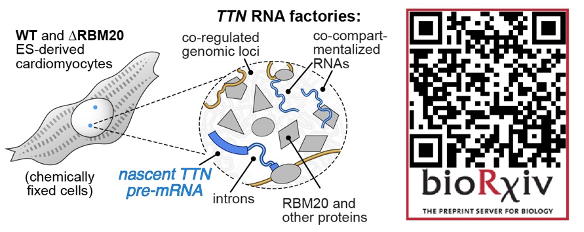
Can protein-coding mRNAs "moonlight" as nuclear-architectural RNAs?
Our revised preprint uncovers how nascent TTN RNA organizes a specialized nuclear compartment in cardiac cells—and how its disruption may contribute to heart disease. A thread! 🧵
Public preview of BioEmu2! @MSFTResearch AI for Science’s new foundation model for biomolecular structure, dynamics and function. Open weights, MIT license.
https://t.co/wsqcLPh8Sk
Movie: BioEmu2-simulated binding of intrinsically disordered peptide PUMA to MCL-1 receptor. 🧵⬇️
Thrilled to share that I’ll soon be defending my PhD at @Harvard and starting my own research group as an ELISIR Fellow in the School of Life Sciences at @EPFL_en! My lab will investigate how signal transduction networks evolve and function in time-varying environments to improve cellular growth and survival.
I’m currently recruiting a PhD student through EPFL’s Computational and Quantitative Biology doctoral program (https://t.co/5qrazI2qFx). Please reach out if you’re interested in working with me!
I'm also excited to share that the preprint of my PhD research, "Translational antagonism enables bet-hedging in yeast via mitochondrial bistability": https://t.co/eeIbSidfWQ. More below (↓)
Are you an early-career researcher looking to develop mathematical, theoretical, and computational approaches to study any area of biology?
We’re looking for researchers to join the NITMB Fellows program!
Apply by November 15, 2026 https://t.co/ykMNcFU7Ii
We have found stable singularity on 3D Euler!
https://t.co/40miuTjMvl
Our starting point is a physics-informed neural network (PINN) to come up with an approximate answer, and then to argue stability around that to complete the proof.
The challenge so far has been that PINNs have not been successful in discovering singularities on the current problem. A common failure mode is PINNs converging to a trivial solution. We take special care to nudge our PINN to interesting regions through a combination of constraints, and we believe this is a novel way of making PINNs work for such hard optimization problems.
We also carry out a detailed study of the transport field of our approximate profile, and show it has promising properties of local outgoing flow, essential for proving linear damping, which is an important ingredient of overall stability.
We believe that such physics-informed and physics-centric AI are critical ingredients across many areas of research involving physical systems, and LLMs lack such physical grounding.
We have been working on this problem for much of this year, and we just saw the announcement by Tristan on Euler with forcing. In contrast, we consider without forcing and use a PINN formulation. @Caltech
Out in @ScienceMagazine: we found a new asymmetry in large-scale chromosome structure: sister chromatids are shifted by hundreds of kb in the 5′→3′ direction of their inherited strands! A close collaboration w/ @Gerlich_Lab, led by @flavia_corsi
https://t.co/cEMwGKgSsS
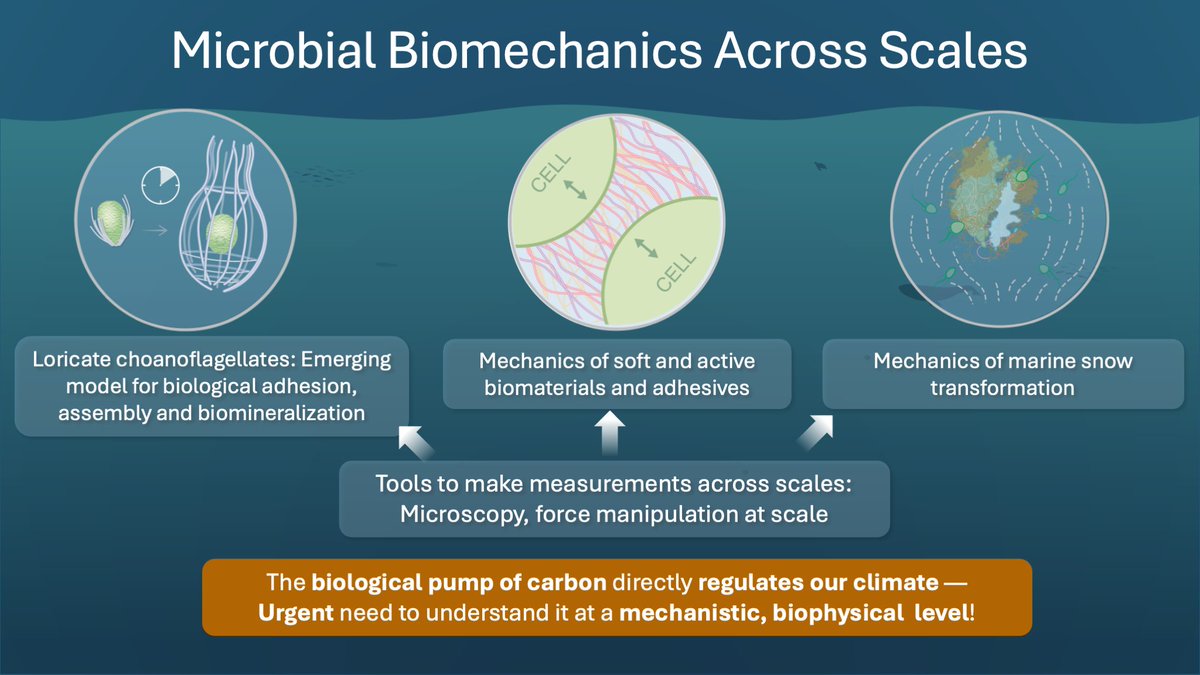
Thrilled to share that I’ll be starting as an Assistant Professor in Mechanical Engineering at UC Berkeley in January 2027!
I’ll be launching the Deep Lab for Microbial Biomechanics. 🧵 1/7
@Cal_Engineer
Research led by Professor Krishna Shrinivas suggests biomolecular condensates may help cells distinguish between chemical cues and generate different responses, offering new insights into biology and synthetic systems.
https://t.co/I5hWyHEgSv
Excited to share the first pre-print from our lab!!
Check it out here! https://t.co/N72qCF2V4c
We found that many RNA-binding proteins understood to regulate RNA processing can also function like transcription factors and cofactors to directly regulate transcription.
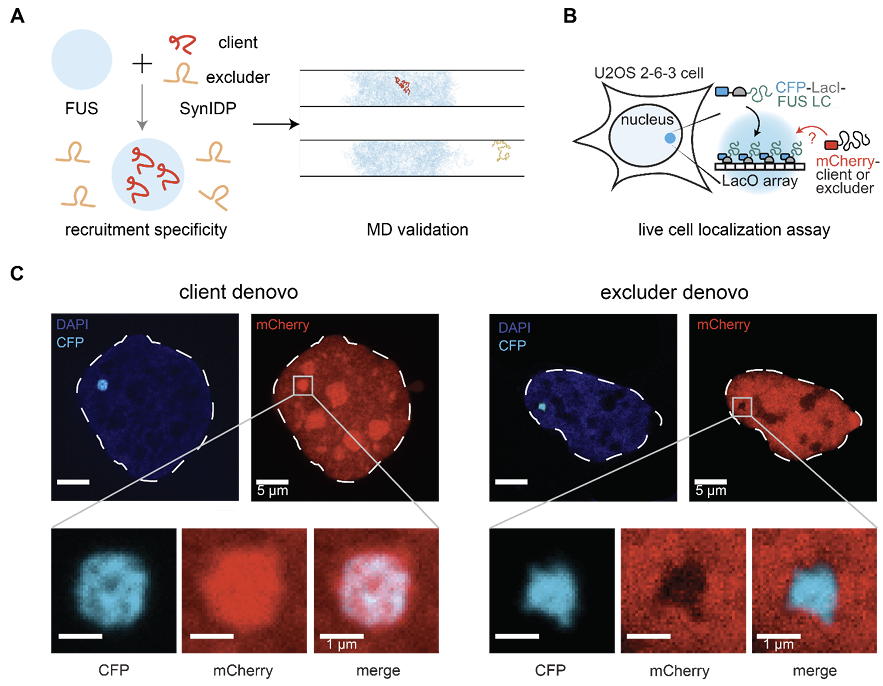
Design 3: localization in living cells 🔬
We designed IDPs to selectively enrich (client) or deplete (excluder) from FUS LC condensates & tested in living cells with @wilton_snead .
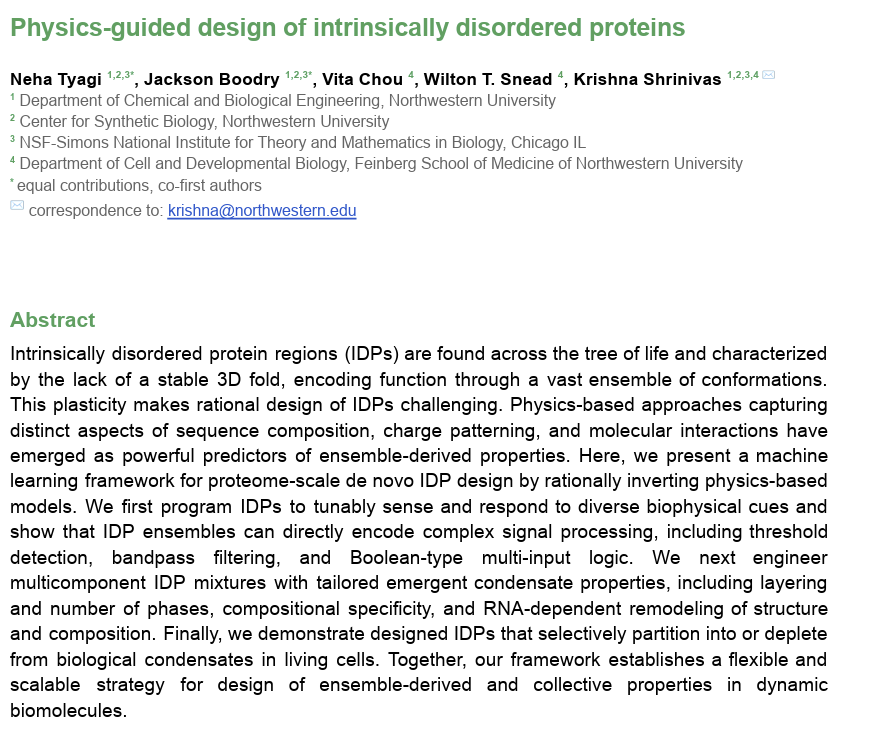
Great work by co-first authors Neha Tyagi & Jackson Boodry, with Vita Chou & Wilton Snead!
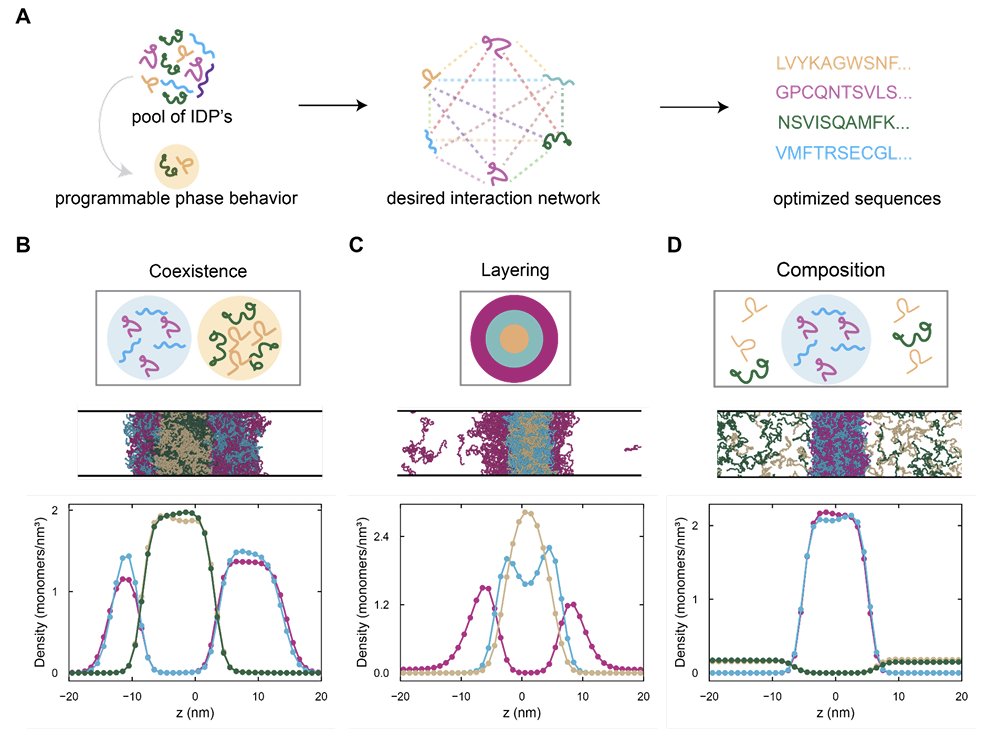
Intrinsically disordered proteins (IDPs) flit between diverse shapes and interact in fuzzy ensembles whose collective properties shape function.
Q: Can we rationally design emergent properties of IDPs?
Our newest preprint takes a stab at this 🧵
https://t.co/dnUBz9dkas