Our latest article was highlighted on @AGU_Eos The Landslide Blog, https://t.co/fv4fhONt9H
Many thanks to @davepetley for summarizing this study and increasing its visibility.
I want to emphasize that I have long appreciated his contributions to the field of landslides as a landslide scientist. Thanks @davepetley
I am very happy to share that I received funding from @ERC_Research to study sediment transport and weathering across floodplains - Looking forward to starting the project next year, following a parental leave. #ERCStG
🚨 New research by C. Rosca et al. in STOTEN! 🚨 "Isotopic and trace element record of changing metal source contributions to tropical freshwater Lake Naivasha (Kenya)"
https://t.co/JlD1JOC4Dq 🥳🥳🥳
Published today @ScienceMagazine: Scale-dependent fracture energy as simple explanation for earthquakes observed across all scales with implications for earthquake nucleation & multi-fault rupture cascades with @BeyondTremors@KadekPalgunadi@Prof_QuakeMod
https://t.co/LAHAAJnGBu
Following a resolution and majority vote by EGU’s Council, the Union President has been dismissed. For more information please visit the EGU website: https://t.co/chRYNtIXwN
The M4.8 earthquake that just struck New Jersey is the largest event in the catalog for this map area.
Seeing huge numbers of felt reports! Typically, East Coast quakes are felt over wider areas than West Coast ones due to...
First day of @LMU_Geology geological mapping course in Las Negras, SE Spain. We map Miocene volcanic rocks of Cab de Gata and Carbonates. @simkuebler, @Alinalysator, Beth Kahle, David Munoz and me.
Working on induced/triggered seismicity and planning to come to beautiful Vienna for the #EGU24 meeting in April? Consider submitting your abstract by January 10th to our session with @Yu69345690@RebeccaSeismo@ap_rinaldi and Victor Vilarrasa. https://t.co/jSjo53RlOr
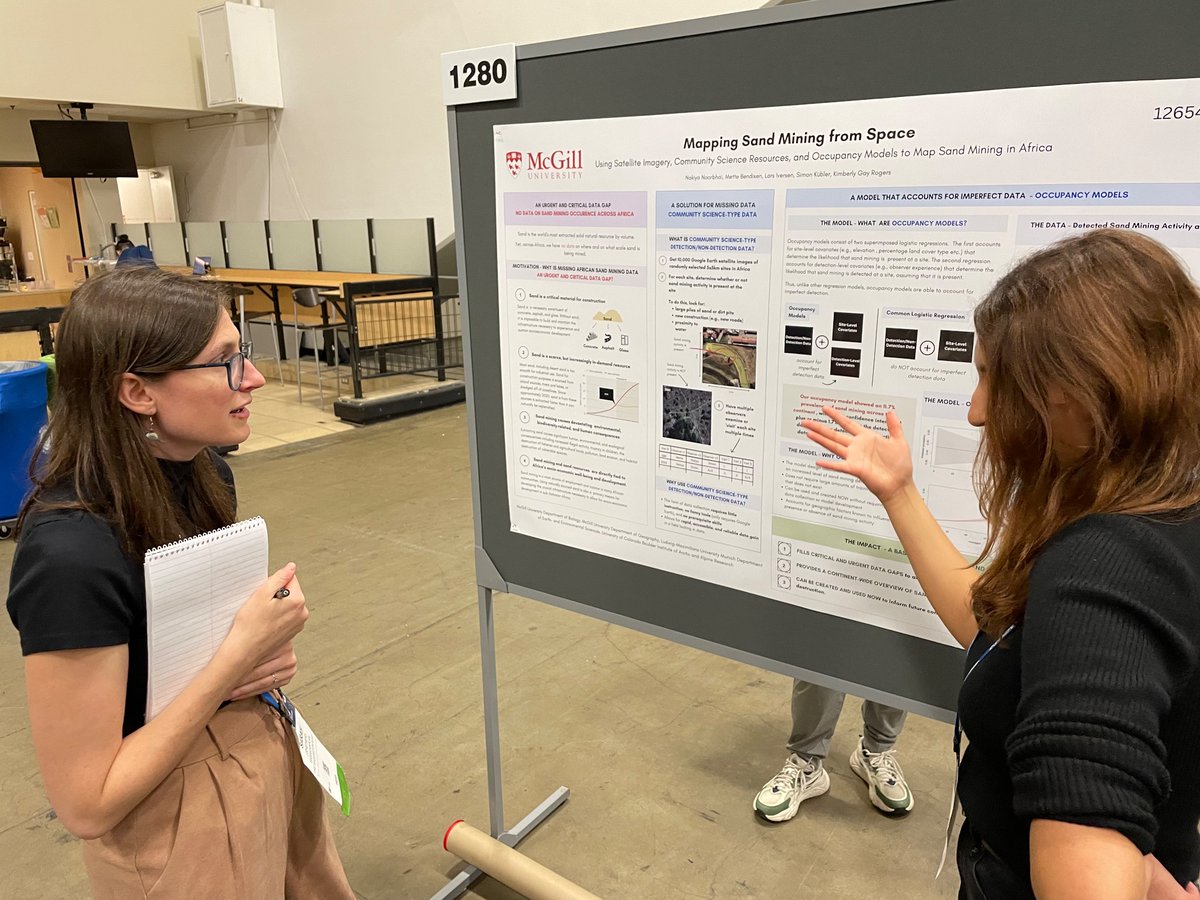
If you’re at #AGU2023 and interested in sand mining, go check out presentation GC33J-1280 this afternoon by PhD student Nakiya Noorbhai @mcgillgeography on “Mapping sand mining from space - Using satellite imagery, citizen science and spatial occupancy models”
🚨New Research Alert!🌍New study by Carena et al. on the 2023 Pazarcık earthquake, now open access in #Tectonics, exploring the historical and paleoseismological seismic record of the East Anatolian Fault System.
🔗https://t.co/Va6JLolj3X @FriedrichAnke@Verdex7@LMU_Geology"
Call for papers: Special Issue on “Earthquakes and active tectonics in regions of slow lithospheric deformation: towards a re-evaluation of Stable Continental Regions (SCRs)”
https://t.co/G2zkExra7B
📢Please consider submitting an abstract to our #EGU24 session!
Decoding the environmental archives of the East African Rift System: Interdisciplinary approaches to linking climate and human interactions during the past and the present
@EuroGeosciences
https://t.co/7hADyAhhL7
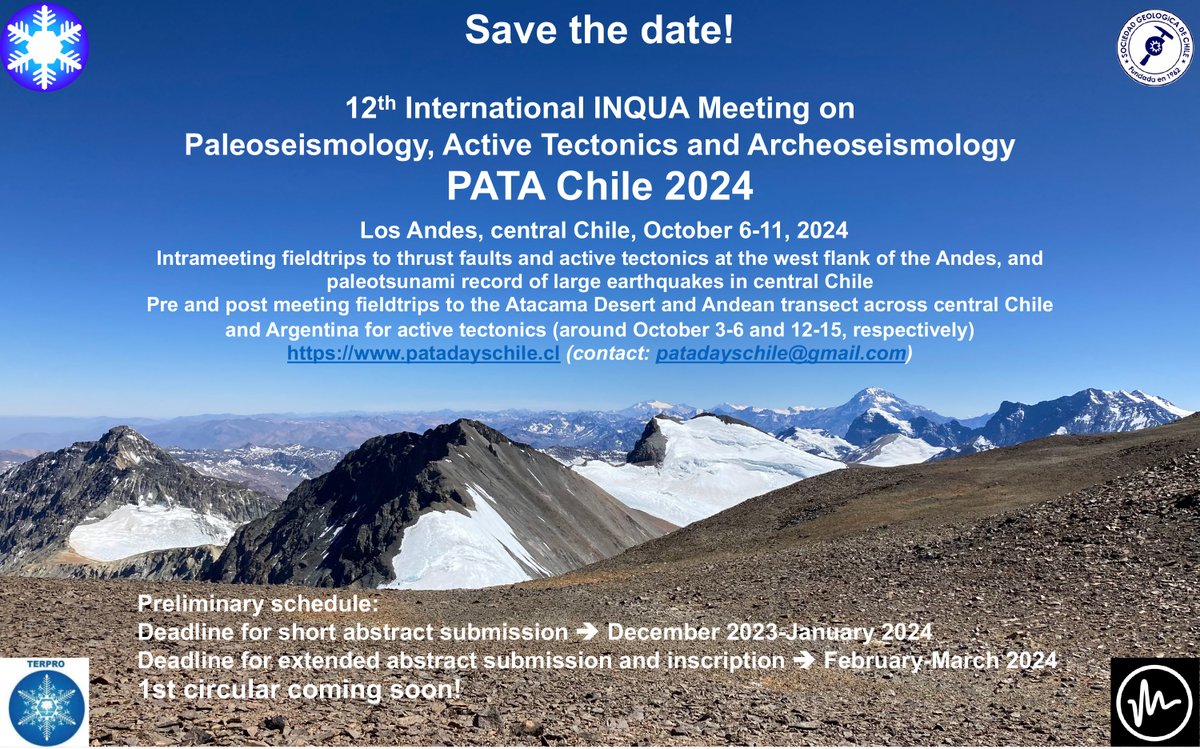
Save the date! 12th International INQUA Meeting on Paleoseismology, Active Tectonics and Archeoseismology #PATAChile2024 1st circular coming soon! @paleoseismicity @UChile_Geologia@Sismos_UCHILE
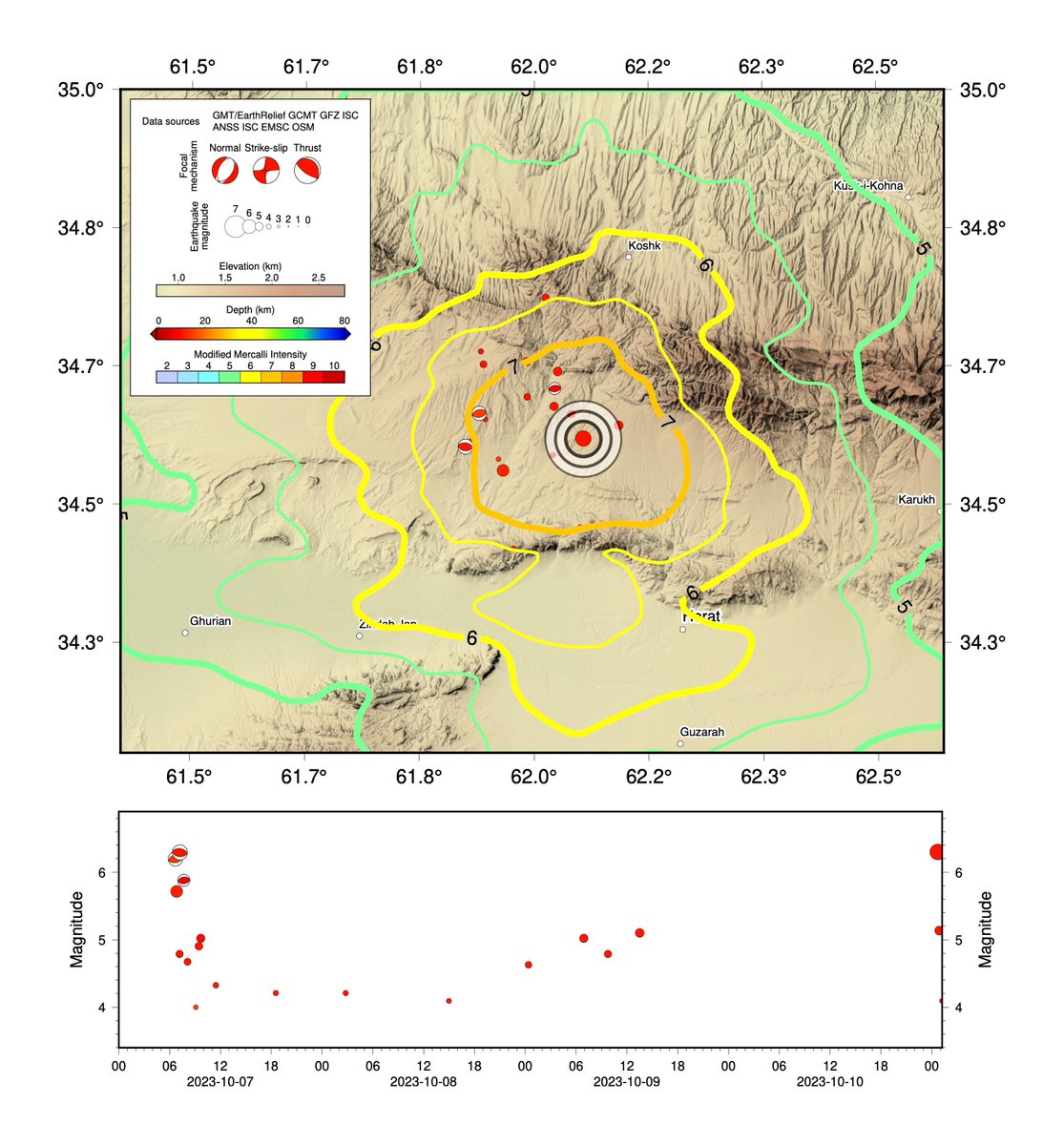
#Afghanistan. Widespread damage observed 25km NW of #Herat city.
Based on seismic intensities from USGS & @WorldPopProject: ~ 660,000 people were exposed to strong to very strong shaking in Herat Province.
▶️https://t.co/NpoQMzXcmp
Another M6.3 earthquake occurred in Afghanistan just now - part of the same sequence. Given what we know about the damage caused by the first two events, this is Not Good.
https://t.co/ESAtbpouVV
A M5 earthquake struck eastern Slovakia earlier today - the largest earthquake in the country in almost a century, felt up to 400 km away.
Three ~M5 earthquakes occurred near here in 1778 & 1779 - possibly similar to the recent quake.
Read more on our blog! Link in my bio.