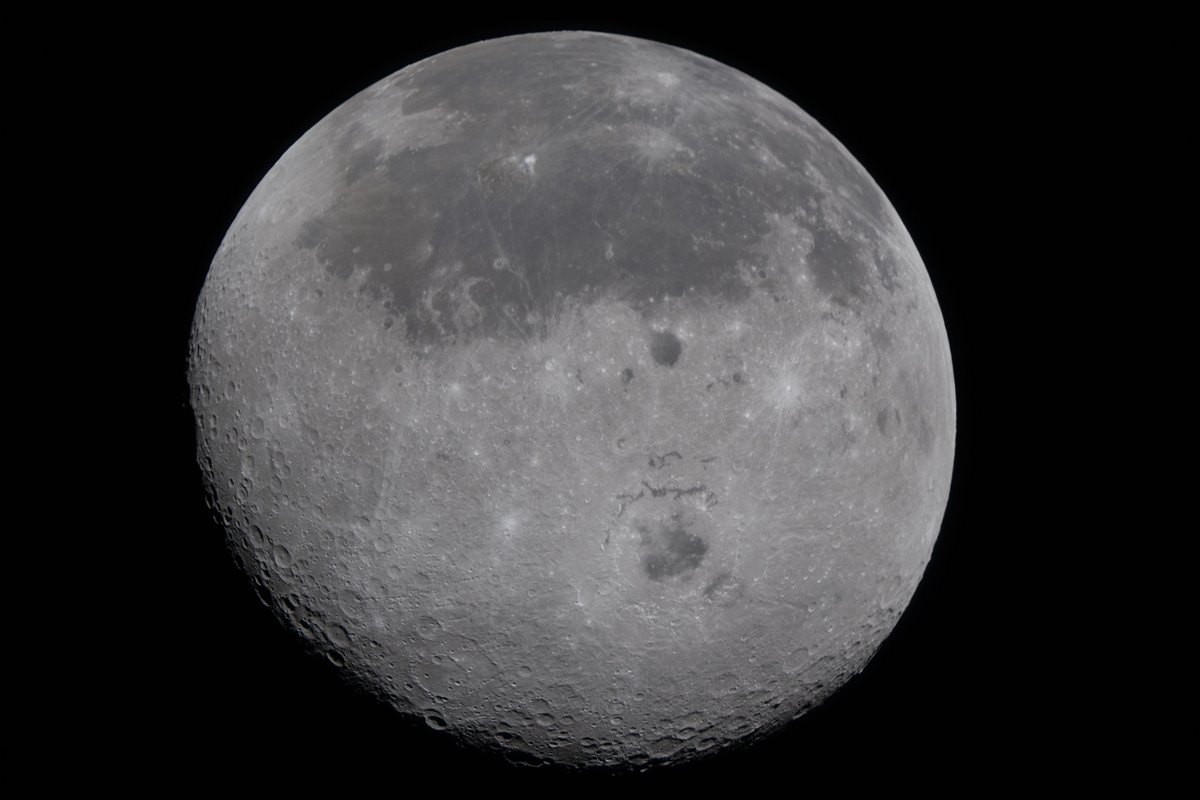
About 2-weeks after #sunset at the South Pole, our winter overs Michel and Anjali are getting some great views of the darkening skies. Here SPT and DSL are being backlight by a nearly full moon. #Antarctica@NSF@doescience
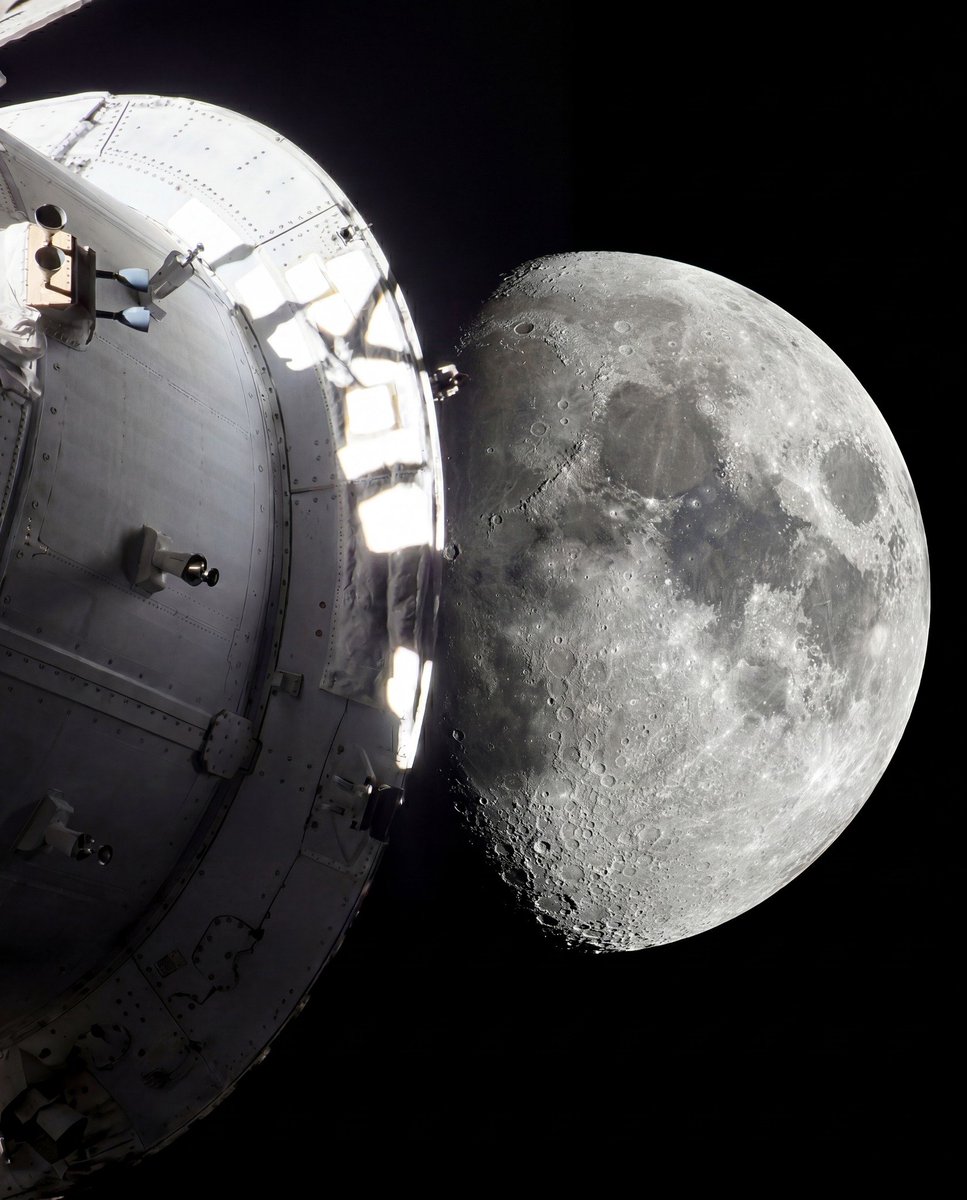
Approaching the near side of the Moon.
The Artemis II astronauts have surpassed the record for the distance from Earth at 1:56 ET (1756 UTC). This record was previously set during the Apollo 13 mission when the astronauts traveled 248,655 miles from Earth. The Moon continues to grow larger and larger in the windows of the Orion spacecraft as the Artemis II mission gears up to observe the far side. The astronauts are predicted to make their closest approach of the Moon around 7:02pm ET (2302 UTC).
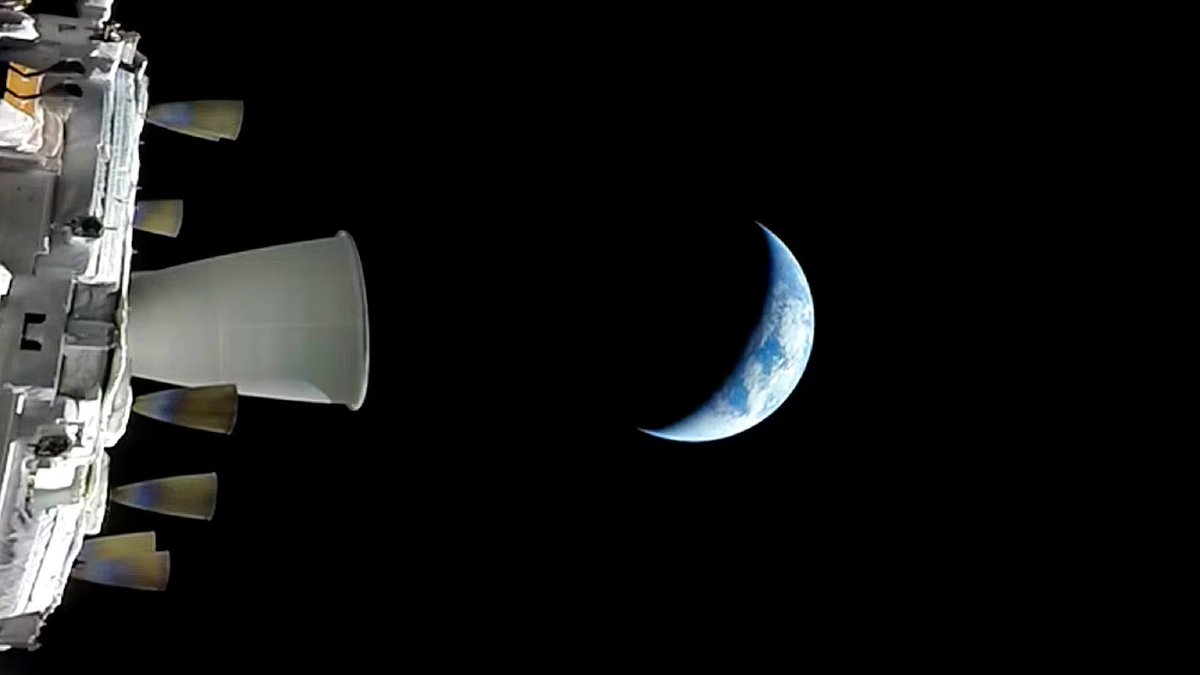
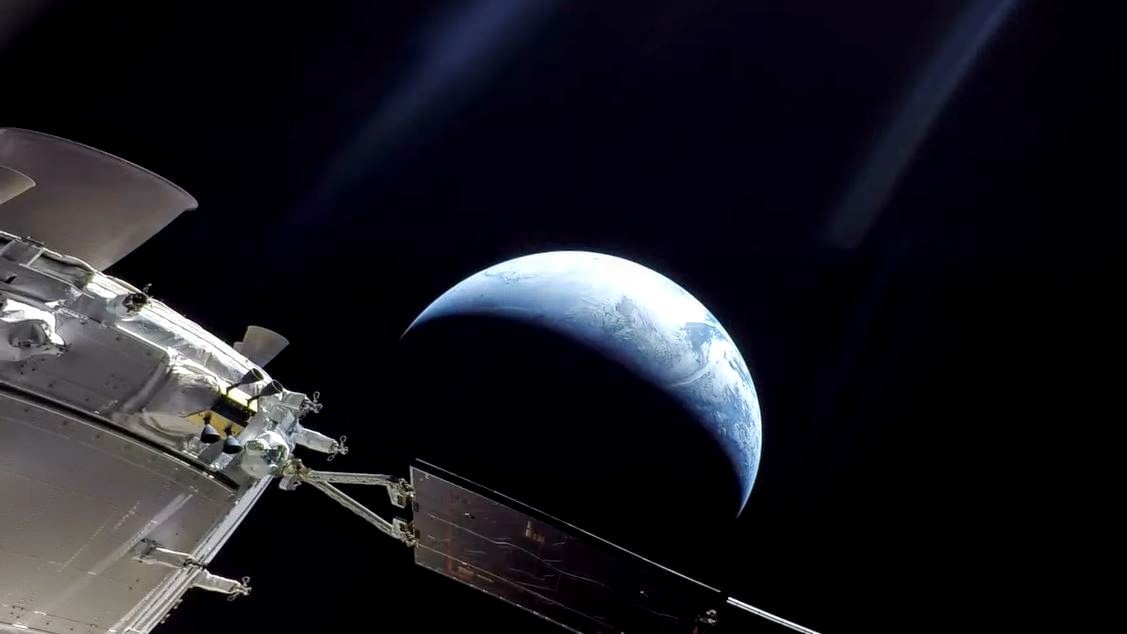
STUNNING🚨: Artemis II crew captured a stunning image of Earth this morning from 41,000 miles away.
The first time since 1972 that humans have seen a crescent Earth in full.
Liftoff.
The Artemis II mission launched from @NASAKennedy at 6:35pm ET (2235 UTC), propelling four astronauts on a journey around the Moon.
Artemis II will pave the way for future Moon landings, as well as the next giant leap — astronauts on Mars.
For the first time in history, a woman is venturing to the Moon.
NASA astronaut Christina Koch is set to make that milestone on NASA's Artemis II mission — a daring ~10-day journey that will send four astronauts on a voyage around the Moon and farther from Earth than any woman has ever traveled before.
Serving as mission specialist aboard the Orion spacecraft, Koch will help test critical life support, navigation, and communication systems as the crew travels hundreds of thousands of miles into deep space.
She already holds the record for the longest single spaceflight by a woman — 328 days aboard the International Space Station — and in 2019, she took part in the first all-female spacewalk.
Since the Apollo era, nearly 90% of astronauts have been men. Artemis II represents not only a leap in technology, but a profound shift in who gets to explore the cosmos.
“If there’s something to celebrate, it’s that we are at a time when anyone who has a dream gets to work equally hard to achieve that dream,” Koch said. “If we’re not going for all and by all, we’re not truly answering humanity’s call to explore.”
We're going around the Moon. Come watch with us. Artemis II's four-astronaut crew is lifting off from @NASAKennedy on an approximately 10-day mission that will bring us closer to living on the Moon and Mars. The launch window opens at 6:24pm ET (2224 UTC). https://t.co/X27QJejNDt
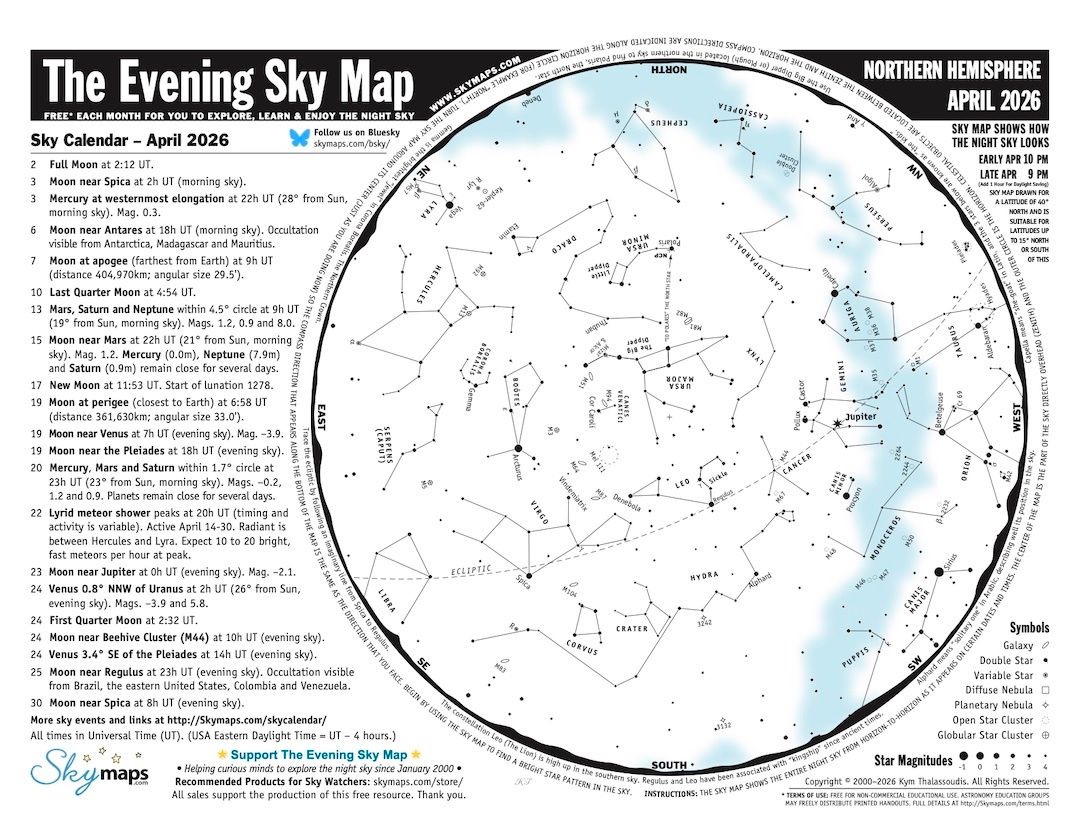
🌟 The April 2026 edition of The Evening Sky Map (PDF) is now available for download at https://t.co/a75xBxMPnJ. The PDF features easy-to-use sky maps for the northern & southern hemispheres, and for the equatorial regions. Please share, and enjoy exploring the Universe!
#space
You’ll see it called the Pink Moon in the media. The Moon won’t actually turn pink unfortunately.
The Moon will reach its Full Moon phase at 10:11 am on Thursday, April 2nd, and it'll rise above the eastern horizon at 6:06 pm AWST.
The name comes from North American Indigenous traditions, referring to the blooming of wildflowers like phlox, which paint the landscape pink during early spring in the Northern Hemisphere. These Moon names were widely popularised in the 1930s when the Old Farmer’s Almanac in the US published traditional names used by Algonquin peoples of north-eastern North America, which were later adopted by colonial Americans.
🌕 Other names for April’s Full Moon include:
• Sprouting Grass Moon 🌱
• Egg Moon 🥚
• Fish Moon 🐟
• Paschal Moon ✝️ (used to determine the date of Easter)
So, if the skies are clear, head outside with the kids and watch the Moon rise big, bright, and glowing… even if it’s not quite pink 😉
#Perth #WA #perthnews #wanews #communitynews #space #spacenews #astronomy #astronomynews #westernaustralia #perthlife #perthgram #perthhappenings #astrophotography #lunarphotography #moonphotography #astronomicalevent #pinkmoon #pinkmoon2026 #moon #fullmoon #luna #moonlovers #astrophoto #stargazing #perthobservatory #perthobs
Can you spot the biggest constellation in the sky? 🐉
April is a great time to find Leo, Ursa Major, Hydra, and more ✨ We picked 8 constellations to look for this month — with bright stars, skywatching tips, and an April night sky map.
Learn more: https://t.co/p12LgOI0lH
#Stargazing #Astronomy #NightSky #Constellations #StarWalk
The Artemis II astronauts placed a micro SD card carrying the names of 5.6 million people (who submitted them online between last September and March 27) inside Rise, their zero-gravity indicator, earlier today
🌎🌕🙂
This glowing beauty is the barred spiral galaxy IC 486, which lies on the edge of the constellation Gemini (the Twins) 🧑🤝🧑 around 380 million light-years from Earth.
The subtle variations in colour across this galaxy have been captured in this Hubble image – a pale centre dominated by older stars, bluish regions in the surrounding disc where younger stars shine, and the intense white glow of its active galactic nucleus!
Read more here: https://t.co/Qkwy8y9UIx
📷 @ESA / @Hubble_Space & @NASA , M. J. Koss, A. J. Barth, N. Bartmann (ESA/Hubble)
🎶 Stellardrone - Billions and Billions
It looks like the weather is currently 80% GO for the launch of Artemis II on April 1st. The primary concerns are the Cumulus Cloud Rule, Thick Cloud Layers Rule, and ground winds.
In the event of a 48-hour delay, the weather forecast drops to 75% GO.
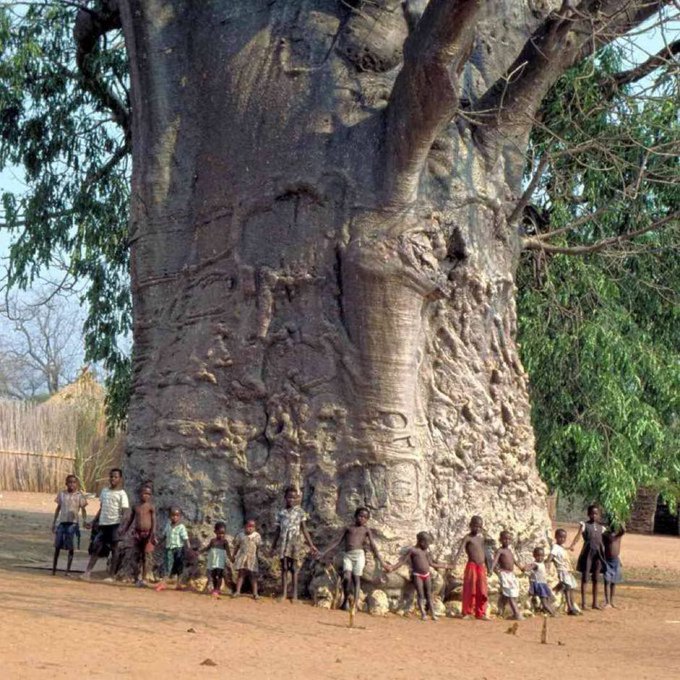
This 2,000 year old tree is located t Zwigodini Village of Mutale in Limpopo, South Africa.
Venda people call it, “Muri Kunguluwa”, which means, “The Tree That Roars”. The tree actually makes a roaring sound when the wind blows through its branches.
It is also called, “The Tree Of Life”, because it serves as a source of life to the animals and the community that lives around it. 80% of its trunk consists of water and it can hold up to 4,500 liters, making it a water source for the community and the animals.
Elephants eat the bark. Baboons eat the fruit. Leaves can also be eaten. Birds, bees, fruit bats and bush babies nest in the tree. Humans use the dried fruit powder in drinks, as a source of vitamins, antioxidants and minerals. The bark can be used to make rope, baskets, mats, cloth and paper.
It also holds a spiritual significance for African people. In ancient times, leaders and elders would hold meetings under huge baobab trees, to discuss important matters. They believed that the spirit of the baobab would help them make wise decisions.
Only 6 days left until the launch of the Artemis II spacecraft! 🚀
The return to the Moon is just around the corner.
To follow the mission with us and @SETIInstitute, click here: https://t.co/eSGbHUbJZA
Picture made from an image taken by Unistellar's Community member Patrick Huth.
Time is running out to fly your name around the Moon!
The Artemis II mission is launching no earlier than April 1. Now is your last chance to submit your name to be flown aboard the Orion spacecraft alongside four astronauts: https://t.co/vyLCuDWQtq
Our #HubbleTopImage features a young star rebelling against its parent cloud!
There is nothing peaceful about star forming region Sh 2-106. A devilish young star, named S106 IR 😈 lies in it and ejects material at high speed, disrupting the gas and dust around it. S106 IR is in the final stages of its formation – it will soon quieten down by entering the main sequence, the adult stage of stellar life.
For now, it remains embedded in its parent cloud, but it is rebelling against it. The material spewing off the star gives the cloud its hourglass shape!
Read more: https://t.co/R8fpR1jaKX
#HubbleTopImage
📷 @NASA & @ESA