@RealWaKhan Everyone should apply for these jobs and get it rather than going in a frenzy - there is barely any fraud at these levels .. fraud is at low salary possibly. It takes a lot to crack these tech jobs and everyone is welcome ..but don’t mock the nerds in high school and cry later.
We'll be spending a lot more time trying to understand the outputs of language models. A few thoughts, tips & tricks:
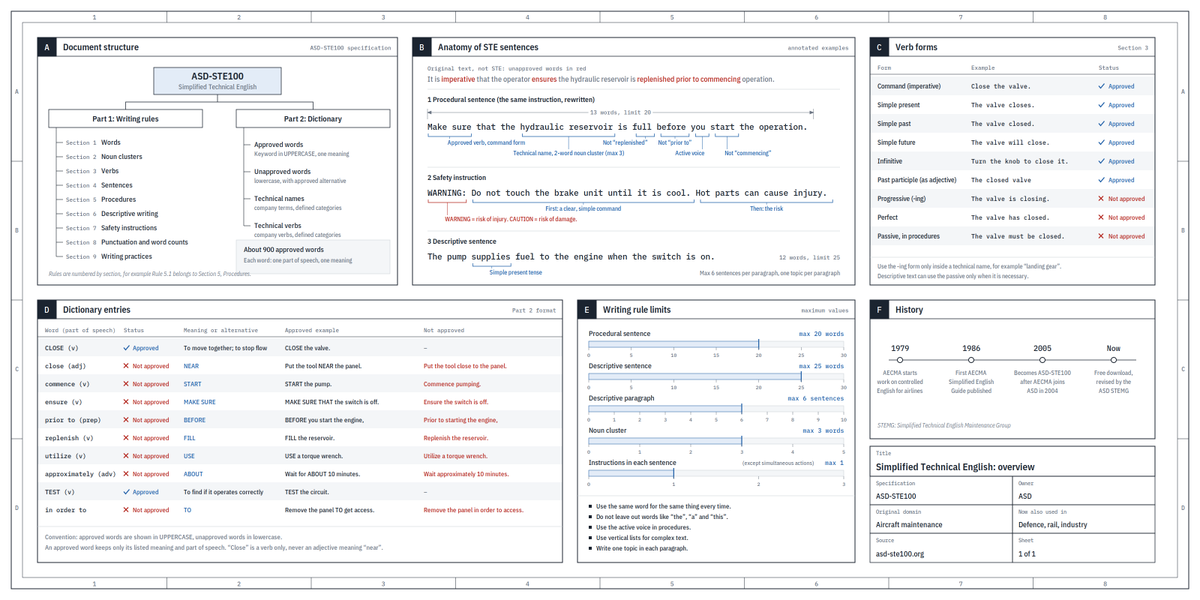
Writing. Something I've had success with: Ask your LLM to explain something in ASD-STE100, it's a controlled language specification originally developed for aerospace maintenance documentation. LLMs well-versed in this language and it comes with heavy constraints on clean writing style that I often find a lot more readable. Sometimes I've tried to soften it a bit e.g. ask for "80% of the way to ASD-STE100" because the spec is quite stringent. But even better:
Diagrams / images. Instead of writing, ask your LLM to create a diagram. These can be a lot easier to process, parse, and understand. But even better:
Web pages. Ask for output "in HTML" to get a beautiful, interactive webpage. LLMs are getting really good at frontend and can create beautiful experiences, animations, etc. But even better:
Explainer videos. The output format I am most bullish on is fully custom / bespoke explainer videos generated on any arbitrary topic. Experiment with things like "Create a 3b1b style video explainer on X. Use my ElevenLabs API key for audio narration". (you'd need an API key for the latter or you can ask your LLM to find you decent free alternatives that use your local compute). This is actually starting to work!
In summary:
- As LLMs get better, they will do more and more of the legwork autonomously, and a lot more of our work will rise up the abstractions into oversight and understanding.
- Luckily, LLMs can help here too because as intelligence and code are increasingly abundant, you can ask for large, custom, discardable software artifacts (e.g. web apps, video explainers) that would have never made sense to create before. Push the boundaries here and you'll be surprised.
Finally Saw A Reel Of Someone Who Speaks my Language.
This is the Kind Of Humiliation Required.
As I said before, Social media will continue being a Kryptonite for Indians.
Days are not far when Countries start making Travel Visa’s tougher & Immigration is already Tough now.
कुछ दिन पहले IAS से त्यागपत्र दिया था और आपके मन में कई सवाल छोड़ दिए थे। अपनी बात इस वीडियो में कह द��� है। अगर आपको लगे कि य�� आपकी भी बात है, तो 9198956957 पर whatsapp मैसेज करिए।
@dmuthuk For most doctors money is a byproduct - not the primary goal ..else u cannot invest so many years and continue to serve patients ..so talking about wealth like this actually makes their achievements smaller ..many Indians have 10M plus ..not just doctors .
I usually don't comment on politicians' posts. Making an exception for a timeline. Dates and quotes only.
2022:
- @KenPaxtonTX tells the Supreme Court "The University of Texas was wrong" to use race in admissions
- @tedcruz leads a brief signed by @JohnCornyn and 80 other Republicans: race-conscious admissions "inflict a heavy toll on Asian-American students"
2023:
- @GregAbbott_TX signs a ban on DEI offices at state universities
- The Supreme Court rules their way. UT stops considering race
Since then:
- Texas law auto-admits the top of every high school class by rank, as it has since 1997; this year, the cutoff is the top 5%
- 90% of freshmen must be Texans by law
- 4% of undergrads are international per @UTAustin's 2025-26 Common Data Set
9/13/2026:
- @bofrench, Republican nominee for Railroad Commissioner, posts a photo of South Asian students at UT and calls it "the problem"
- As of writing this post, two students in the photo have spoken to reporters. Both are US citizens
9/14/2026:
- Asked about it on the Mark Davis Show, French says letting UT administrators "select their preferred groups of people" is racism
- His fix - "prioritize Americans"
Race-blind admissions were requested and delivered. Changing who is in that photo would require bringing back affirmative action, which the Cruz-Cornyn brief called "unconstitutional on its face" and French even said letting UT administrators "select their preferred groups of people" is racism
Sources:
- Paxton brief ("The University of Texas was wrong"): https://t.co/6yYvrrOfCI
- Cruz-Cornyn brief, filed 5/9/2022, both quotes and signer list: https://t.co/Ptys9ZTw2S
- SB 17, signed June 2023: https://t.co/1xRkDNTWRx
- Top 5% rule: https://t.co/Ux0gAUsCzT
- 4% international undergrads, UT Common Data Set 2025-26: https://t.co/8XfFWFIisO
- The students in the photo: https://t.co/AwBLTQpLoO
- Mark Davis Show quotes: https://t.co/BGo0cNSjld
- "Prioritize Americans": https://t.co/seKKtVbRBf
Thanks to @vedantnair__ for inspiring me to post
If you want espionage + political intrigue + intelligence agencies + conspiracies, Add these 30 excellent picks to Your watchlist;
1. The Americans 🇺🇸 — Deep-cover Soviet spies living as an American family
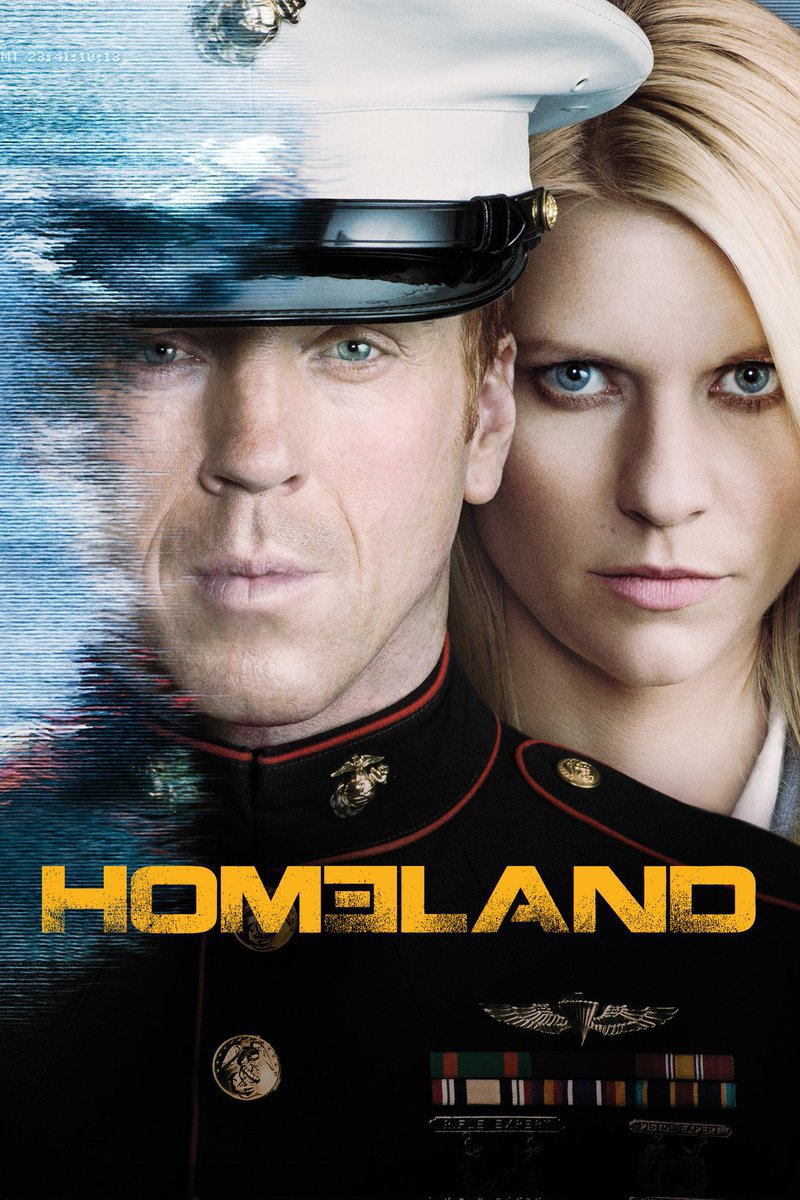
2. Homeland 🇺🇸 — CIA operations, terrorism, politics and psychological warfare.
3. The Night Agent 🇺🇸 — FBI agent uncovers a conspiracy reaching the highest levels of government.
4. Slow Horses 🇬🇧 — MI5 agents, espionage failures and political conspiracies.
5. The Bureau (Le Bureau des Légendes) 🇫🇷 — Realistic French intelligence and deep-cover operations.
6. Fauda 🇮🇱 — Undercover intelligence operations and Middle Eastern conflict.
7. The Spy 🇮🇱 — An Israeli agent infiltrates Syria under deep cover.
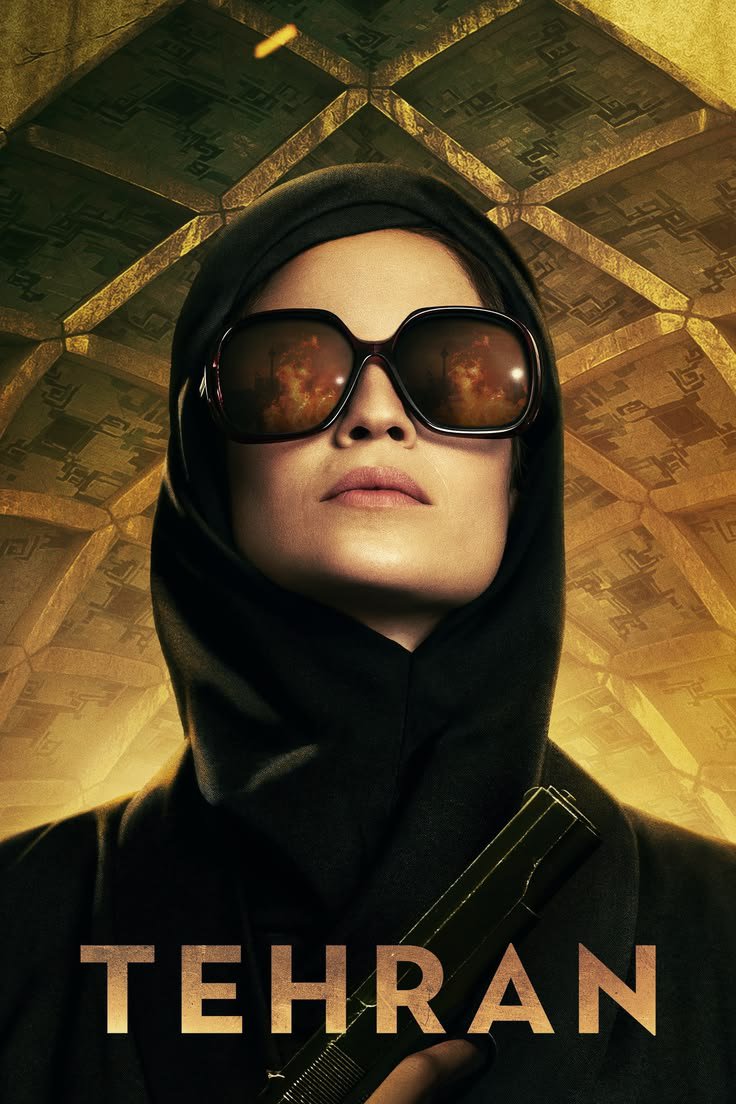
8. Tehran 🇮🇱 — Mossad operative infiltrates Iran during a dangerous mission.
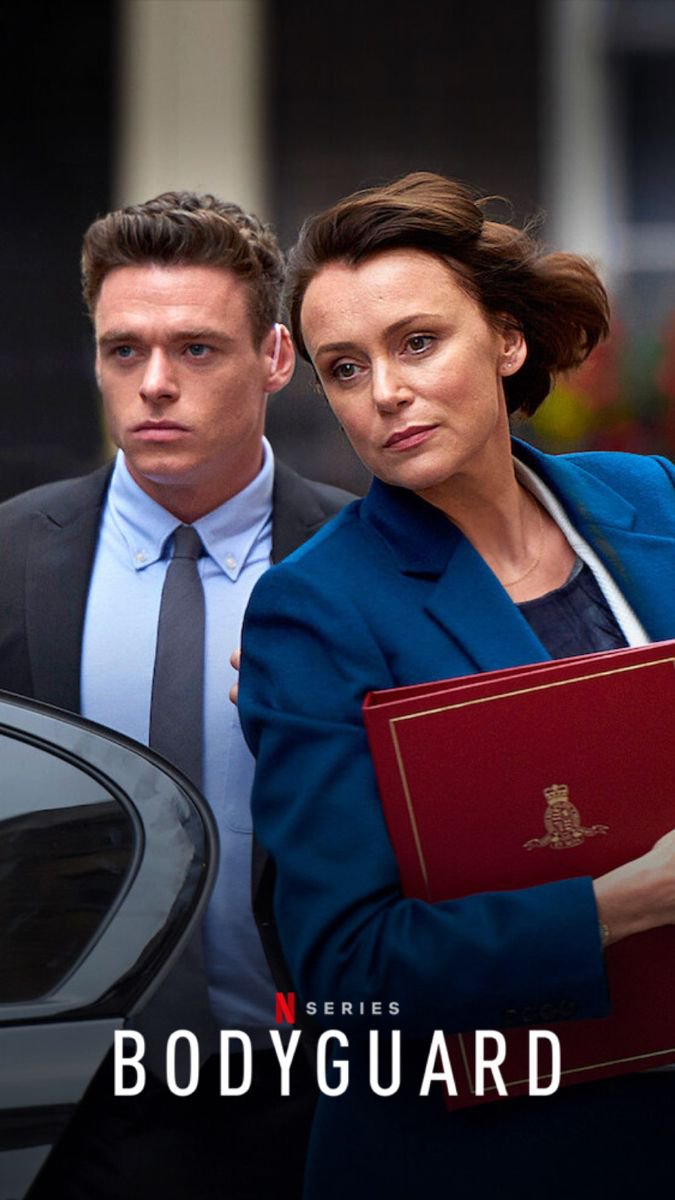
9. Bodyguard 🇬🇧 — Political assassination plots, terrorism and government secrets.
10. The Diplomat 🇺🇸 — International crises, political maneuvering and covert operations.
11. Jack Ryan 🇺🇸 — CIA intelligence, terrorism and geopolitical conspiracies.
12. Lioness 🇺🇸 — CIA special operations and covert missions.
13. The Little Drummer Girl 🇬🇧 — Cold War espionage and an elaborate intelligence operation.
14. Deutschland 83 🇩🇪 — East German spy infiltrates West Germany during the Cold War.
15. The Capture 🇬🇧 — Surveillance, intelligence manipulation and political conspiracies.
16. Condor 🇺🇸 — CIA analyst becomes the target of a deadly conspiracy.
17. The Looming Tower 🇺🇸 — Intelligence agencies and the events leading toward 9/11.
18. The Honourable Woman ��🇧 — International politics, espionage and Middle Eastern intrigue.
19. The Little Drummer Girl 🇬🇧 — High-level infiltration and Cold War intelligence games.
20. A Spy Among Friends 🇬🇧 — British intelligence, betrayal and Cold War espionage.
21. The Old Man 🇺🇸 — Former CIA operative dragged back into a dangerous geopolitical conspiracy.
22. The Recruit 🇺🇸 — CIA lawyer gets caught in international espionage.
23. Berlin Station 🇩🇪🇺🇸 — CIA officers deal with spies, leaks and political intrigue.
24. Rubicon 🇺🇸 — Intelligence analyst discovers a disturbing government conspiracy.
25. Treason 🇬🇧 — MI6 leadership, betrayal and political power struggles.
26. The Ipcress File 🇬🇧 — Cold War espionage and intelligence manipulation.
27. The Assets 🇺🇸 — CIA counterintelligence and the hunt for a Soviet mole.
28. The Company 🇺🇸 — CIA operations spanning the Cold War.
29. Patriot 🇺🇸 — Dark, unconventional espionage mixed with political intrigue.
30. Secret State 🇬🇧 — British government, corporate power and political conspiracy.
@JDVance They will stop hiring and just move the job offshore ..we lose taxes and economic activity along with that ..what r we doing reduce mass offshoring?
The Peter Principle is a theory that employees are generally promoted to their level of incompetence.
In 1974, the author of the Peter a principle explained how he first got the idea and what can be done about it
Stanford University charges $65,127 per year in tuition. A 4-year degree costs roughly $260,000 before room, board, and fees. The acceptance rate is 3.6%. For every 100 students who apply, 96 are told no.
Stanford has also published for free, online, accessible to anyone on Earth with an internet connection over 2,100 courses, the complete AI curriculum its graduate students use, hundreds of full lecture series on YouTube, one of the most comprehensive philosophy references ever written, a design thinking toolkit used by Google and Nike, medical school health courses, business strategy lectures from Stanford GSB, entrepreneurship resources from the university that produced Google, Netflix, Instagram, LinkedIn, and PayPal and research papers that have shaped entire industries.
A Stanford professor told a friend: "Most people think Stanford's knowledge is locked behind a $65,000/year gate. It's not. The gate is the degree the credential, the campus, the network, the diploma. The knowledge has been free for over a decade published on YouTube, Coursera, edX, and Stanford's own website. The same lectures I give to students who paid $65,000 are sitting on a YouTube channel with 4 million subscribers. Most people have never searched for them because they assumed a university this expensive would never give anything away."
She said: "Why would Stanford give it away?"
"Because the degree is the product not the knowledge. The knowledge is the marketing. A free Stanford course that changes your life is the best advertisement for a $260,000 degree. And the research the papers, the encyclopedias, the toolkits exists to advance human knowledge, not to generate tuition revenue. Stanford publishes freely because the mission has always been public. The price tag is for the credential. The education has been free since the moment they uploaded the first lecture."
He showed her 11 free Stanford resources most people don't know exist resources that replaced $3,000 in textbooks, $10,000 in professional workshops, and $100,000 in degree programs.
"Stanford's reputation is behind a gate. Stanford's knowledge is not."
Here are the 11 resources 🧵
Shekar Suman couldn’t have gotten anymore better than this on the issue of “Dimagi Naxal” that PM Modi has labelled all question askers, answer seekers, thinkers, all critiques and dissenters.
It’s the fear of getting exposed compels them to try to silence all those who differ and criticise them, otherwise why be afraid of questions⁉️
पहले पति तो ढंग से बन जाते, फिर होमियो के पति बन ने की कोशिश करते 🤦♀️🤷♀️🤷♀️
#DimagiNaxal
I’m excited to finally announce the newest edition my Stanford course 𝗧𝗵𝗲 𝗠𝗼𝗱𝗲𝗿𝗻 𝗦𝗼𝗳𝘁𝘄𝗮𝗿𝗲 𝗗𝗲𝘃𝗲𝗹𝗼𝗽𝗲𝗿. It has been 9 months in the making.
Last November, with the release of Claude Opus 4.5, coding agents experienced a step function improvement in capability. We all felt it. The LLMs were more powerful, could reason for longer, solve harder tasks.
This year’s iteration of my course reflects the 2026 metamorphosis of software engineering.
My core belief is simple: AI-native developers of the LLM era are going to become the most important members of any software organization. I have designed my course to train this next generation of engineers.
𝗪𝗵𝗮𝘁’𝘀 𝗱𝗶𝗳𝗳𝗲𝗿𝗲𝗻𝘁 𝘁𝗵𝗶𝘀 𝘁𝗶𝗺𝗲 𝗮𝗿𝗼𝘂𝗻𝗱
First, 85% of my Fall 2025 class material is being thrown out. The Fall 2026 syllabus reflects the core capabilities AI-native engineers must have: agent skills, advanced context engineering, MCP portals, agent-ready codebase principles, agentic code review, security, parallelizing background agents, software factories, and more.
Second, I am going to teach my students how to have software taste. Every student will be required to ship pull requests to production-grade, real-world codebases. The course is collaborating with the top open-source AI repos who will offer support and mentorship to students on how to meaningfully contribute to their projects.
This has never been done before in any university course so I am incredibly grateful to our OSS Partners: @browserbase, @HeyGen, @CopilotKit, @semgrep, @OpenHandsDev, @milvusio, @marimo_io, Pi, @crewAIInc, @warpdotdev, @vercel, @cmux, @arizeai, @UnslothAI, and @anyscalecompute.
𝗪𝗵𝗮𝘁’𝘀 𝘀𝘁𝗮𝘆𝗶𝗻𝗴 𝘁𝗵𝗲 𝘀𝗮𝗺𝗲
I’m fortunate to again have AI software engineering leaders and founders as guest speakers to share their learnings from building top coding agent products. Thank you to @leerob from @cursor_ai, @bcherny of @claudeai code, @EnoReyes of @FactoryAI, @silasalberti of @cognition, @0xine of @semgrep, Rajesh Bhatia of @Cloudflare , @amasad of @Replit, and @eladgil.
All resources will be available online. All classes will be available to the public.
9/22 on Stanford campus. See you in class.
https://t.co/wTokHyUMsz
American Tech has always had a big foreign born component.
Not exclusively - Edison, the Wrights, Noyce, Moore, Kilby, Jobs, Gates are all US born.
The pattern never changed - originally Scots and Germans, then Jews fleeing Hitler, then Hungarians fleeing Soviet tanks, then Taiwanese, Chinese, and Indians.
And one Irishman.
Old tech history:
Samuel Slater: built America's first factory (1790), called the father of the American Industrial Revolution. Born in Belper, England
Alexander Graham Bell: the telephone. Born in Edinburgh, Scotland
Andrew Carnegie: the American steel industry. Born in Dunfermline, Scotland
Nikola Tesla: the AC power system that electrified America. Born in Smiljan, in modern-day Croatia
Charles Steinmetz: chief engineering wizard of General Electric. Born in Breslau, Germany
David Sarnoff: built RCA and NBC, the tech empire of its day. Born in Uzlyany, in modern-day Belarus
Vladimir Zworykin: RCA's camera tubes that made broadcast television practical. Born in Murom, Russia
Igor Sikorsky: the helicopter. Born in Kyiv, in modern-day Ukraine
The Atomic Bomb
Albert Einstein: his letter to FDR launched the program. Born in Ulm, Germany
Leo Szilard: conceived the nuclear chain reaction and drafted that letter. Born in Budapest, Hungary
Enrico Fermi: built the first nuclear reactor. Born in Rome, Italy
Hans Bethe: head of the Theoretical Division at Los Alamos. Born in Strasbourg, then part of Germany
Edward Teller: Manhattan Project physicist, later father of the H-bomb. Born in Budapest, Hungary
Eugene Wigner: designed the plutonium production reactors. Born in Budapest, Hungary
John von Neumann: solved the implosion design, and the architecture inside every computer still bears his name. Born in Budapest, Hungary
The Moon Landing
Wernher von Braun: chief architect of the Saturn V. Born in Wirsitz, Germany
Kurt Debus: first director of Kennedy Space Center, ran the Apollo launches. Born in Frankfurt, Germany
Plus roughly 1,600 German engineers and scientists brought over in Operation Paperclip. The rocket team used to work for Hitlerwere
Silicon Valley, founding era through the internet boom
Eugene Kleiner: Fairchild Semiconductor founder, later Kleiner Perkins. Born in Vienna, Austria
Jean Hoerni: Fairchild founder whose planar process is why chips can be mass-produced at all. Born in Geneva, Switzerland
Mohamed Atalla: co-invented the MOSFET (1959), the most manufactured object in human history. Born in Port Said, Egypt
Dawon Kahng: the MOSFET's other co-inventor. Born in Seoul, Korea
Andy Grove: Intel employee No. 3 and the CEO who made it a colossus. Born in Budapest, Hungary
An Wang: core memory patents, Wang Laboratories. Born in Shanghai, China
Vinod Khosla: co-founded Sun Microsystems (1982). Born in Delhi, India
Andy Bechtolsheim: Sun co-founder, wrote Google's first check. Born in Bavaria, Germany
Vinod Dham: father of the Pentium at Intel. Born in Pune, India
Jerry Yang: co-founded Yahoo. Born in Taipei, Taiwan
Pierre Omidyar: founded eBay. Born in Paris, France
Sabeer Bhatia: co-founded Hotmail. Born in Chandigarh, India
Sergey Brin: co-founded Google. Born in Moscow, Russia
Silicon Valley Today: the founders
Elon Musk: founded SpaceX, co-founded PayPal and xAI. His rockets now carry American astronauts to orbit. Born in Pretoria, South Africa
Jensen Huang: co-founded Nvidia, now the most valuable chip company on earth. Born in Tainan, Taiwan
Peter Thiel: co-founded PayPal and Palantir. Born in Frankfurt, Germany
Max Levchin: co-founded PayPal. Born in Kyiv, Ukraine
Jan Koum: co-founded WhatsApp. Born in Kyiv, Ukraine
Steve Chen: co-founded YouTube. Born in Taipei, Taiwan
Jawed Karim: co-founded YouTube. Born in Merseburg, Germany
Eric Yuan: founded Zoom after being denied a US visa eight times. Born in Tai'an, China
Patrick and John Collison: co-founded Stripe. Born in Limerick, Ireland
Mike Krieger: co-founded Instagram. Born in Sao Paulo, Brazil
Tony Xu: co-founded DoorDash. Born in Nanjing, China
Apoorva Mehta: founded Instacart. Born in Jodhpur, India
Vlad Tenev: co-founded Robinhood. Born in Varna, Bulgaria
Ilya Sutskever: co-founded OpenAI, then Safe Superintelligence. Born in Nizhny Novgorod, Russia
Mira Murati: founded Thinking Machines Lab. Born in Vlore, Albania
Aravind Srinivas: co-founded Perplexity. Born in Chennai, India
Fei-Fei Li: godmother of AI, co-founded World Labs. Born in Beijing, China
Per NFAP's June 2026 study: 59% of America's 775 billion-dollar startups were founded or co-founded by immigrants, and India is the No. 1 country of origin, ahead of Israel and the UK