🔬🌾 RESEARCH SPOTLIGHT | CSIR–CIMAP
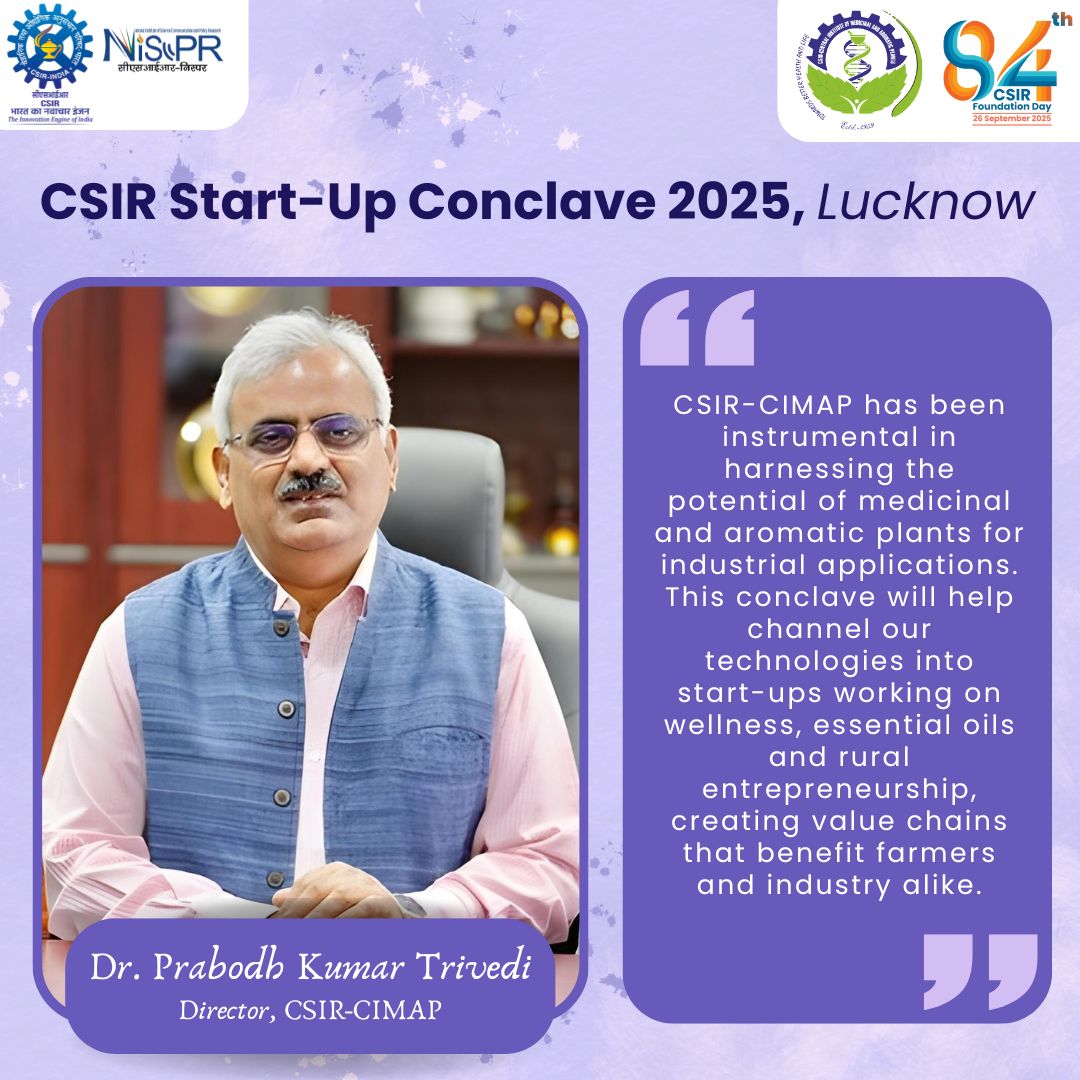
🎉 Heartiest Congratulations to Dr. Rakesh Shukla and his entire research team!
Congratulations on the publication of their research article in the prestigious Journal of Experimental Botany.
The study investigates the MYB14–UGT regulatory module and establishes its role in the biosynthesis of dammarane-type triterpenes in Bacopa monnieri, providing valuable insights into the molecular regulation of important bioactive compounds in medicinal plants.
🔗 Read the research article: https://t.co/yzaFMG3jG8
#CSIRCIMAP #ResearchExcellence #JournalOfExperimentalBotany #BacopaMonnieri #MedicinalPlants #PlantBiotechnology #ScientificAchievement
@PrabodhTrivedi@CSIR_IND@CSIRCIMAP@DrNKalaiselvi@DrJitendraSingh
MATTER OF GREAT PRIDE FOR INDIAN SCIENCE!
Ashoke Sen becomes the first Indian to win the prestigious Oskar Klein Medal (2026), jointly awarded by Stockholm University and the Nobel Committee for Physics of the Royal Swedish Academy of Sciences for his pioneering work in String theory.
https://t.co/dCJ1D9DVDs
String theory gives a unified description of all matter and the forces between them based on the postulate that the elementary constituents of matter are tiny one dimensional (string-like) objects instead of point particles. Sen’s breakthrough work has shown that multiple string theories are all different versions of a single underlying theory.
Incidentally, I met Ashok Sen for the first time, when both of us were elected as FRS (Fellows of Royal Society) in 1998. Ashoke ( nominated by Stephen Hawking himself) was young 42 yrs and
I was an oldie - 55 yrs though!
What struck me was Ashoke’s incredible simplicity. His wife Sumathi Rao has reportedly said that Ashoke bought his first suit and needed some assistance to wear his first tie for that prestigious 1998 FRS ceremony in London, when one signs in the same book that Sir Isaac Newton has signed.
A film made on the life and work of Ashoke Sen, when we at the
H K Firodia Award in Science & Technology honoured him in 2005 in Pune, will inspire all our budding scientists - showing how science & simplicity goes together.
https://t.co/XeCl4s35d6
We all feel so so proud Ashoke!
@PMOIndia@NITIAayog@PrinSciAdvOff@IndiaDST@CSIR_IND@ictstifr@PuneIntCentre@kvijayraghavan
A defense-inducible bidirectional promoter enables disease-resistance engineering in Arabidopsis without growth trade-off (Xiao-Xia Lin , Chong Li , Ben-Qiang Gong , Jun-Jie Liu , Lu-Yuan Zhu , Kehan Tao , Dandan Zhang , Jian-Feng Li) https://t.co/H8VI9oeRbU @ASPB#PlantSci
🎉 Congratulations to Dr. Rakesh Kumar Shukla & the research team on publishing "Phenylalanine-inducible OscWRKY7 regulates arogenate dehydratase-5 to alter phenylpropanoid metabolism in Ocimum sanctum" in Plant Physiology.
Overall, this study provides significant insights into the molecular mechanism underlying the regulation of phenylpropanoid metabolism in Ocimum sanctum. A notable contribution to plant science and molecular biology. 🌿📚
#PlantPhysiology #PlantScience #Research
https://t.co/IXrJSdTigS
@PrabodhTrivedi@CSIR_IND@DrNKalaiselvi@DrJitendraSingh
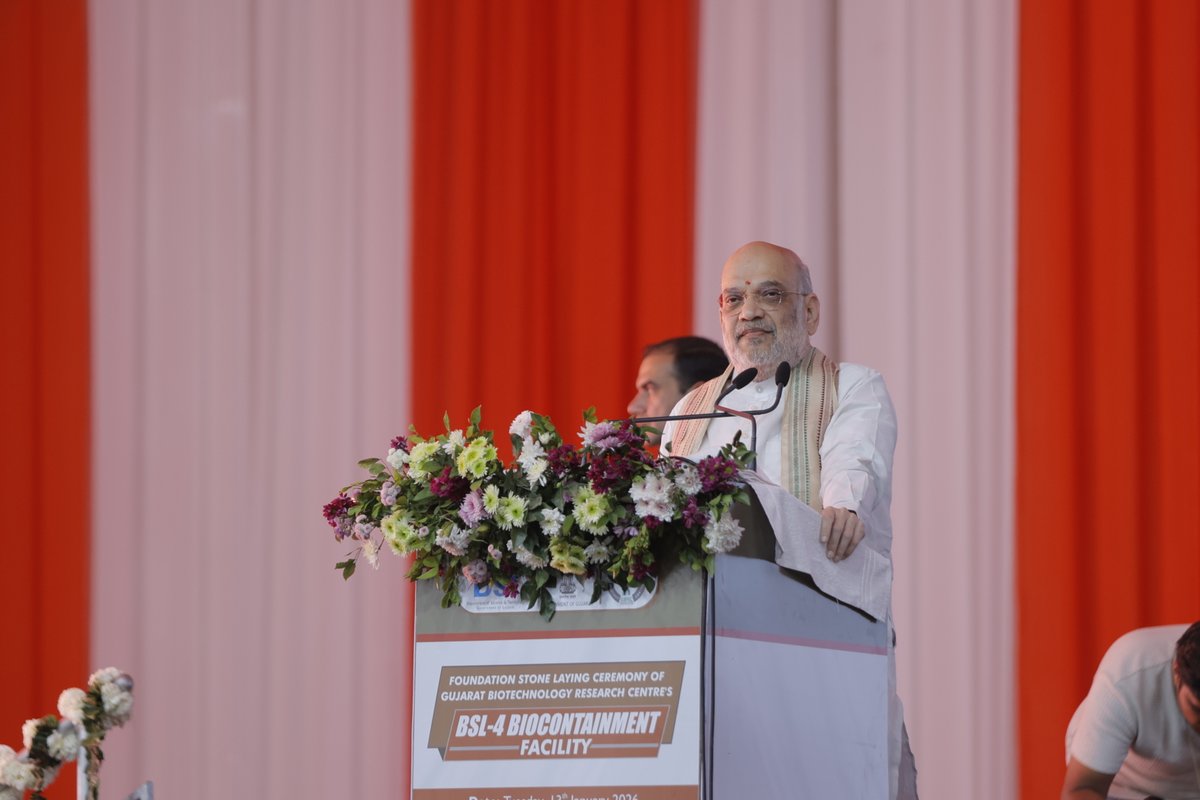
@AmitShah Union Home Minister, Minister of Cooperation lays foundation stone of India’s second BSL-4 Bio-Containment Facility in Gandhinagar.
The facility, being built at a cost of ₹362 crore over an area of 11,000 square meters, will be India’s second BSL-4 laboratory after the National Institute of Virology in Pune, and the first such high-level lab to be established by a state government. Once operational, it will enable Indian scientists to conduct research on highly infectious and deadly viruses in a secure environment and significantly reduce the country’s dependence on foreign laboratories for testing dangerous pathogens. @DrJitendraSingh@CMOGuj@rajesh_gokhale@GujBiotechUni@dstGujarat
For more details: https://t.co/AguI23GiMf
STAY WITH ME.
A few years ago, a patient was referred to me because he was diagnosed with complicated cirrhosis. He had an infection which led to a condition called hepatic encephalopathy (brain failure due to high ammonia levels). The treatment largely involved ammonia reducing therapies. One drug was central to this - Rifaximin - a non-absorbable antibiotic that reduced ammonia in the body. I prescribed him Rifaximin for 6 weeks and advised him follow-up.
He came back to me, not after six weeks, but in 4 weeks, this time, in liver coma (worst stage of brain failure - due to very high ammonia). He spent two days in the ICU and six days in total in the hospital. His hospital bill was close to INR 80,000. He had no insurance and his wife borrowed the money from neighbors and friends to clear hospital dues.
Upon questioning, I found that he was not taking the Rifaximin drug I had prescribed. He was only on the other two drugs (one, a syrup called lactulose for improving ammonia clearance in gut). I was furious, because the patient spent a whole week unecessarily in the ICU and wasted so much money that he never had - just because he was "not compliant" to my orders. I decided it was time for me to school him a bit.
But I was wrong. He was compliant. He had purchased Rifaximin and was on it. For 15 days. Thereafter, he could not afford it. He was an autorickshaw driver who shuttled school children every morning and evening. He could hardly make ends meet. He had two children of his own. The Rifaximin brand I prescribed him was 42 rupees per tablet. He had to consume two a day - which would mean 2520 rupees a month. He just did not have that money - so he skipped it - to not compromise on other important matters - childrens education and food.
He was confused and scared about opting for a cheaper version of Rifaximin because one, he was unsure about the quality of Rifaximin that was not prescribed by me and two, he was "scared" that I would scold him for buying a cheaper Rifaximin and if that got him into trouble.
I was confused and scared about prescribing a cheaper version of Rifaximin because one, I was unsure about the quality of Rifaximin that was not "a good promoted brand" and two, I was "scared" that his family would scold me for prescribing a cheaper Rifaximin and if that got him into trouble.
It is heartbreaking that many doctors still simply don’t trust generic medicines. Too often, they worry that these cheaper options are lower quality or might cause more problems than the big, famous brands. This fear leads them to prescribe expensive drugs instead, and the real tragedy is that it pushes vital healthcare out of reach for the ordinary people who need it most - like my patient.
This narrative, that generic drugs 'are never good' and that only big pharmaceutical marketed drugs are what works has been deeply ingrained into doctors and patients alike - I do not know by whom and since when. Looking back, these strong emotions were based on either opinions, testimonials or second- and third-hand information. Not evidence.
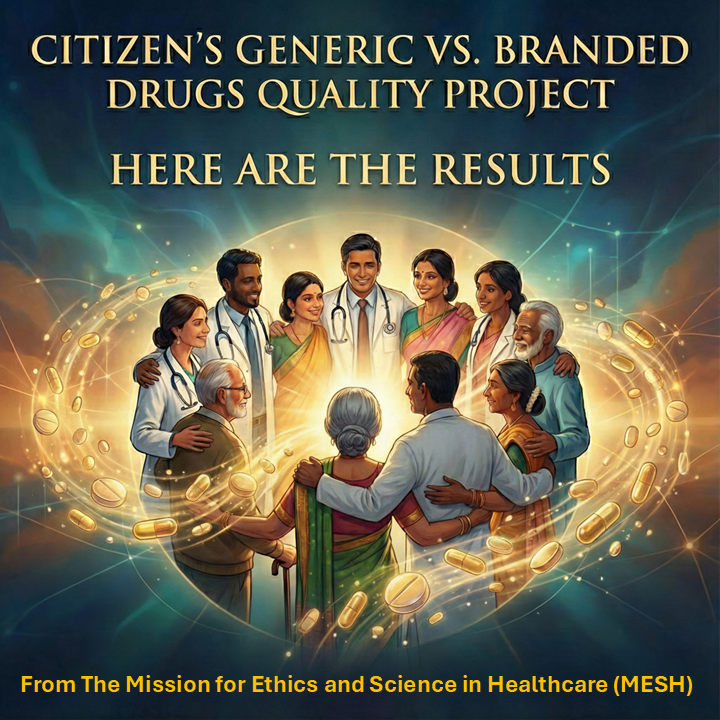
Like I said. Stay with me. This is life changing and will disrupt the drug market in India. Here are the results of The Citizens Generic vs. Brand Drugs Quality Project.
1/11
Champions of the World 💙🇮🇳
I’ve seen this dream for over two decades, to watch the Indian women lift that World Cup trophy.
Tonight, that dream finally came true.
From the heartbreak of 2005 to the fight of 2017, every tear, every sacrifice, every young girl who picked up a bat believing we belong here, it all led to this moment.
To the new champions of world cricket, you didn’t just win a trophy, you won every heart that ever beat for Indian women’s cricket. Jai Hind 🇮🇳
Exciting PhD Opportunity at @IiserMohali@DBS_IISERM
Our lab @sbslab_IISERM is looking for motivated and curious PhD students. Apply, if you’re passionate about understanding how plants🌱grow, adapt, and communicate with their environment, More details: https://t.co/pUUloHTvou
We are delighted to share our work on the role of small-peptide signalling in rice wound responses, now published in @cellrep.
We have uncovered the involvement of signal relay between PEPs and PSK peptide hormones.
So excited to see our research published in Nature Biotechnology! 🌿 We engineered pattern recognition receptor to overcome species barriers and boost crop immunity across diverse plants.
https://t.co/uBUvLWSJw4
Congratulation's Dr. Sumit Ghosh & team for research article published in New Phytologist, establishing a key step in the biosynthesis of 3-epimeric triterpenoids boswellic acids in Boswellia tree.
@PrabodhTrivedi@CSIR_IND@DrNKalaiselvi@DrJitendraSingh
https://t.co/rWfeUveXsg
Lab is expanding to a new horizon of imaging!
I am extremely proud of my grad student @julia_zheku Julia to take a lead on our new Vibratome and create this GORGEOUS 3D image of the radial section of wheat root.
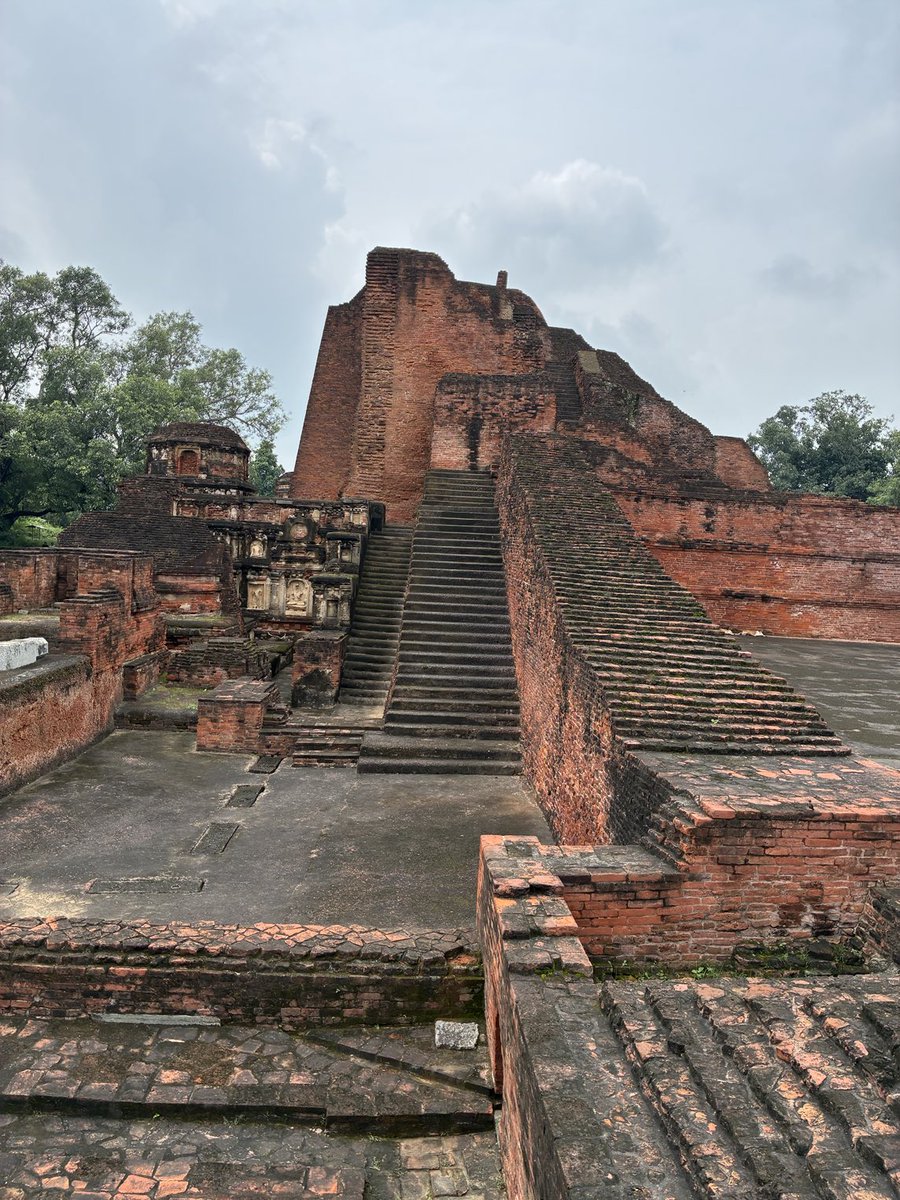
Visit to Nalanda University of past n present is a pilgrimage for all educationists across the globe. Visited the relics of Nalanda University to pay homage to all the Sages, Gurus n scholars who made this place a global destination of knowledge in all contemporary domains