I just released ReShiki v0.6.1, a free, open-source alternative to ChemDraw.
Chemical drawing, reinvented.
Built in Rust for macOS, Windows, and Linux. Draw molecules, build reaction schemes, and export figures.
Try it: https://t.co/CrYQ1alzHT
Scientists have determined the highest-resolution protein structure obtained to date.
Using advanced X-ray crystallography at EMBL Hamburg's P14 beamline, the team solved the structure of an archaeal protein at an astonishing 0.43 Ångström resolution.
https://t.co/loVtdOW4U8
We are now poised to:
Formalize all known Human Mathematics.
This is the modern equivalent of the Human Genome Project. or AlphaFold more recently, whereby all data of its kind is fully classified.
With sufficient funding and compute/tokens, a coordinated effort among academia, frontier labs, philanthropic organizations, and the federal government can formalize all Human Mathematics in the next year.
'TumorDressed' Allogeneic Dendritic Cells Trigger Personalized Anti-Tumor Cytotoxicity
A new iPSC-derived dendritic cell platform uses patient tumor material to prime T cells against multiple cancer targets
@RobertBlelloch@UCSF#IPMoncology#iPSC#tumors
https://t.co/7BaH2Q79MM
A new pharmacological strategy -- based on engineering protein surfaces -- just achieved major success against pancreatic cancer.
It points toward a much broader class of cancer therapies.
Yesterday, the FDA approved daraxonrasib (Rasonque), a drug that targets the RAS proteins driving most pancreatic cancers. What makes it especially fascinating is how it works.
Rather than simply finding a conventional pocket on RAS, daraxonrasib binds the chaperone protein cyclophilin A and uses it to create a new protein surface. This drug–cyclophilin complex then engages active RAS, forming a three-part complex that blocks RAS interactions with downstream effectors. Remarkably, the complex can also stimulate GTP hydrolysis, further suppressing RAS signaling.
This is chemical biology at its most powerful: a small molecule is not merely inhibiting a protein: It is engineering a new protein–protein interaction inside the cell to pharmacologically control a previously “undruggable” protein.
The clinical impact is already impressive: in a randomized phase III trial, median survival in metastatic pancreatic cancer increased from 6.7 to 13.2 months compared with standard chemotherapy.
🔷 Perhaps the most exciting aspect is what comes next. If we can pharmacologically engineer new protein surfaces and interactions, rather than being restricted to naturally occurring binding pockets, the universe of druggable proteins—and potentially the range of cancers we can treat—could expand dramatically.
A beautiful example of how understanding and engineering proteins can open entirely new therapeutic possibilities.
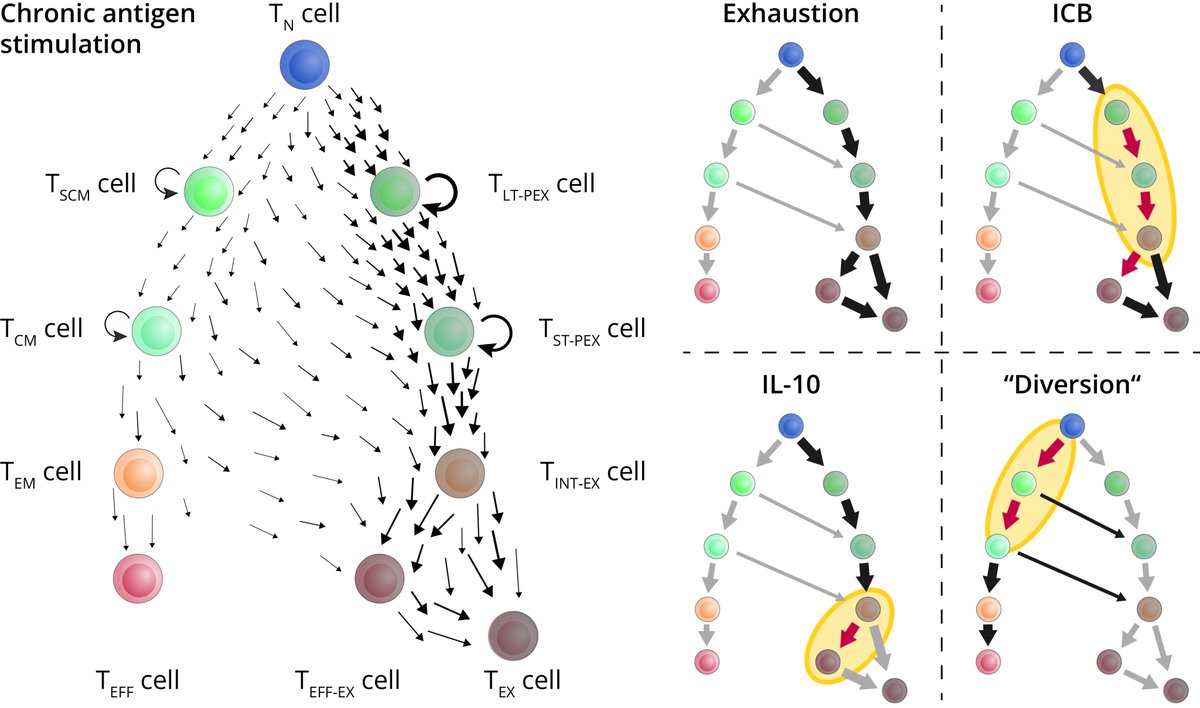
IL-10 gives exhausted CAR T cells a second breath: https://t.co/mAjrMdsxuc
Happy about the opportunity to comment on a recent study in @NatBiotech https://t.co/3bv2LUYbdA by @Tang_Lab_EPFL on the potential of IL-10 transgenic CAR T cells and the support by @TFITNESS_EU
Reductionism has been a powerful force for understanding fundamental aspects of complex systems, but its very success has blinded most biologists to its crippling inability to make sense of complex emergent dynamic systems. We have the tools now to noninvasively observe and perturb living cells in their stunning holistic complexity, but the tyranny of reductionism has reserved the most important tool of all, AI, to approaches (e.g., structural biology, genomics, and spatial transcriptomics) ill-suited to their practitioners stated goal of building "virtual cells". It's been very frustrating convincing the gatekeepers of large HPC clusters otherwise.
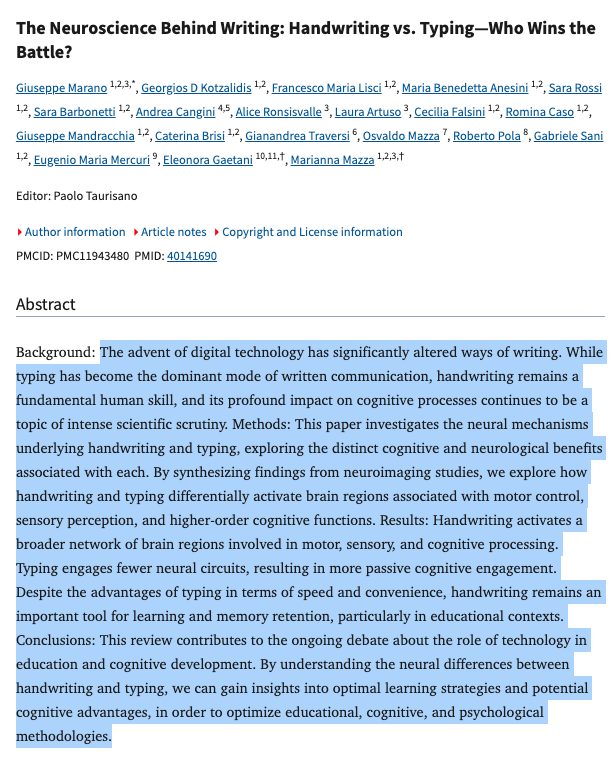
Your brain physically rewrites itself every time you pick up a pen.
Neuroscientists at Norwegian University scanned students' brains while they handwrote letters versus typing the same letters on a keyboard.
The results shattered decades of assumptions about how we process information.
Handwriting activated massive networks in the sensorimotor cortex, the visual processing centers, and the hippocampus simultaneously. Complex neural symphonies lit up across multiple brain regions, creating rich interconnected pathways between motor control, visual recognition, and memory formation.
Typing the same letters? The brain activity looked like someone had dimmed the lights across entire cognitive districts. The neural networks that flourished during handwriting simply went dark.
The difference?
When you form letters by hand, your brain constructs elaborate spatial maps of each character. The motor cortex learns the precise pressure, angle, and trajectory needed to create an 'A' versus a 'B.' Your visual system tracks the ink flowing from pen to paper in real time. Your parietal lobe integrates hand position with eye movement. Your hippocampus encodes not just what you wrote, but how the writing felt, where you paused, which words required more pressure.
Typing activates almost none of that circuitry. You press a key, a letter appears. The motor movement is binary. The visual feedback is uniform. The spatial relationship between thought and symbol gets mediated by a machine that standardizes every character into identical fonts and spacing.
Your brain treats these as fundamentally different cognitive tasks.
The evolutionary context makes this obvious once you see it. Human hands developed for manipulation, creation, and fine motor control over millions of years. We painted on cave walls, carved bone tools, and shaped clay vessels long before we invented written language. When writing emerged 5,000 years ago, it built on top of existing neural infrastructure that already connected hand movement with symbolic thinking.
Keyboards appeared 150 years ago. Touchscreen typing maybe 20 years ago. From an evolutionary timeline perspective, we started using them approximately yesterday. Our brains are still running ancient software that expects physical engagement with symbols.
That software produces dramatically different learning outcomes.
Students who take handwritten notes consistently outperform students who type the same information on memory tests, comprehension assessments, and creative applications of the material. The difference persists even when researchers account for typing speed, note length, and time spent studying.
The act of forming letters by hand forces deeper processing at the moment of information encounter. You cannot handwrite as fast as someone speaks, so your brain must actively filter, summarize, and prioritize information in real time. The motor effort required to form each word creates additional memory traces that typing does not generate.
Children who learn to write letters by hand develop reading skills faster than children who learn letters primarily through typing or screen interaction. The sensorimotor experience of creating letterforms helps their brains recognize those same letterforms when they encounter them in text.
Adults who handwrite shopping lists, daily schedules, or meeting notes remember the information better than adults who type identical lists into phones or computers. The spatial memory of where you wrote something on a page provides retrieval cues that digital text does not offer.
These findings collide directly with how education and work environments have evolved over the past two decades. Schools replaced handwriting instruction with typing classes. Offices converted from paper systems to fully digital workflows. Students take notes on laptops. Professionals draft documents on screens.
We optimized for speed and efficiency while accidentally severing the neural pathways that evolution spent millions of years developing.
The implications reach beyond memory and learning into fundamental questions about human cognition. If the physical act of forming symbols changes how your brain processes ideas, what happens to thinking itself when you remove the physical component?
Digital text is infinitely searchable, instantly editable, and perfectly shareable. But it may be creating brains that process information more superficially, store memories less durably, and connect ideas more weakly than brains that regularly engage in handwriting.
The neuroscience suggests we traded cognitive depth for technological convenience without realizing what we were giving up.
Some of the most innovative thinkers across history were obsessive handwriters. Darwin kept detailed handwritten journals. Einstein worked through complex theories in handwritten notebooks. Virginia Woolf wrote her novels by hand before transcribing them. Steve Jobs famously took handwritten notes during Apple meetings even as he was building the most advanced computers on Earth.
Perhaps they intuited something about the relationship between hand, brain, and insight that we measured in brain scanners but somehow forgot in practice.
Your pen is literally a cognitive enhancement device that activates neural networks digital keyboards cannot reach.
In April, a website that has been sued, blocked, deplatformed, and chased across thirty-seven domains over fifteen years quietly launched its own AI.
Sci-Hub is the largest unauthorized library of scientific papers in human history. Ninety-five million academic papers. Tens of millions of books. Built and maintained by a single Kazakhstani neuroscientist named Alexandra Elbakyan since 2011, funded by donations, hosted on whatever country's registrar will tolerate it that year, mirrored across torrents and IPFS and Telegram bots.
Elsevier sued. Sci-Hub stayed up. The American Chemical Society sued. Sci-Hub stayed up. India sued. Sci-Hub stayed up. Swedish registrar Njalla cut the .se domain in January. Sci-Hub stayed up at .al, .ru, .ee, .box, and a half-dozen .onion addresses the registrars cannot reach.
Now the library has built its own intelligence.
Sci-Bot launched in alpha in April. You ask it a research question. It answers, and it cites real papers from inside the corpus, with links that actually open the actual papers.
The bot does not hallucinate citations. It cannot, because it only draws from papers it actually holds. The same property that the venture-funded labs have spent four years and forty billion dollars trying to engineer back into their products is a free side effect of training the model on a library that contains the books.
Anthropic, OpenAI, Google, and Meta have all been sued in the past eighteen months for training their models on the same shadow libraries that Sci-Hub assembled. Meanwhile the corpus those scripts were pointed at, the corpus those models were trained on, the corpus the entire generative AI industry is built on, sat right there the whole time, free, with a search box on top.
The pirates beat them to it.
Sci-Bot was built on a corpus that was already free, by a team that asked no permission, charging no one, with the explicit position that the right to read scientific research is older than the cartel that decided to charge for it.
The same arithmetic the medieval guilds used to keep the printing trade in approved hands. The same arithmetic Pope Paul IV used in 1559 to publish the Index Librorum Prohibitorum. The same arithmetic the Stationers' Company used in seventeenth-century London.
Knowledge has always had a fence around it. The fence has always been guarded by men who did not write the books.
The library answers. We never asked permission. We never had to.
JUST IN: Skin exams are getting automated.
SquareMind just raised $18M to build a robotic system that scans your entire body and tracks every mole over time.
• Swan robot captures full-body dermoscopic images in minutes
• Tracks new and changing spots across visits
• Replaces spot-check exams with total skin coverage
• Creates a time-series record for earlier melanoma detection
• Plugs directly into dermatology clinics
Robotics is going to reshape healthcare.
I sequenced my genome at home, on my kitchen table.
I wrote up exactly how I did it - the equipment, protocol, theory, and cost:
https://t.co/Nkjqaho2zm
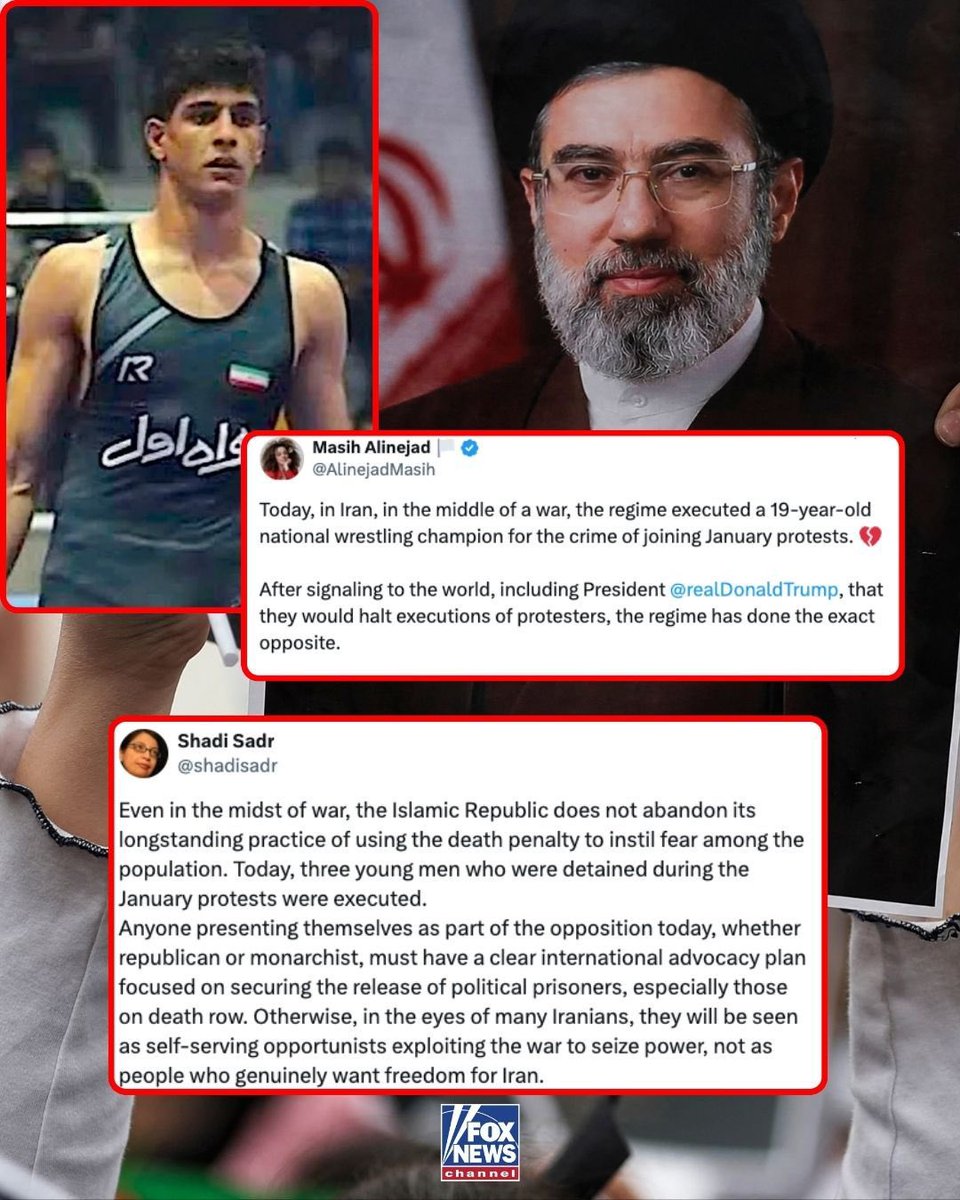
🚨PURE EVIL. BARBARIC REGIME. IRAN EXECUTES THREE INCLUDING 19-YEAR-OLD WRESTLING CHAMPION.
GOOD vs EVIL. RIGHT vs WRONG.
Three executions for the crime of wanting change. No fair trial. No justice. Just terror.
Saleh Mohammadi. 19. Bronze medalist. National wrestling team. Protested for freedom.💔
The regime’s charges: they killed two police officers. The reality, CCTV didn’t place them there. Families said they were home. Witnesses blocked from testifying. Confessions tortured out. No independent lawyers. Sham trials.
Court didn’t care. They hanged them anyway. First of hundreds more. The regime is dying. So it kills.
Then they hanged the 19 yr old wrestler with two other young men.😭
Mehdi Ghasemi. Saeed Davoudi.💔
This is what evil looks like when it runs a state.
That’s not diplomacy. That’s cowardice. There is no middle ground here.
You're either with the innocent or you're with the executioners.
https://t.co/faNRuKDRtm
Analysis of more than 1 million people shows that mental-health disorders fall into five clusters, each of them linked to a specific set of genetic variants
https://t.co/bqSmh8PNW6
Oncolytic viruses have the unique ability to selectively replicate within (and to destroy) cancer cells, offering a promising approach in cancer treatment.
A new Review summarises clinical progress, remaining challenges, & future research directions: https://t.co/EZUknzv4Ye
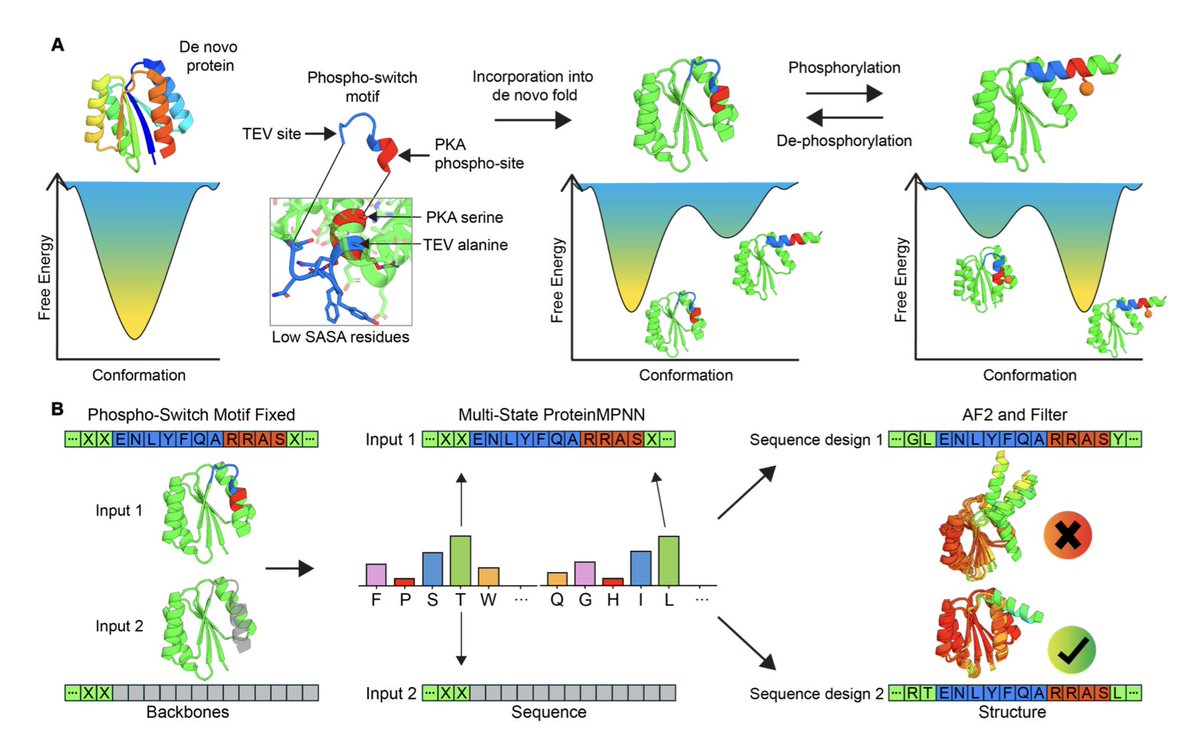
De novo design of phosphorylation-induced protein switches for synthetic signaling in cells
1. Researchers have developed a method to design synthetic proteins that can switch states in response to phosphorylation, mimicking natural cellular signaling mechanisms. This breakthrough could enhance our understanding of cellular signaling and has potential applications in synthetic biology.
2. The study introduces a novel approach to create minimal signaling networks using de novo protein components. These proteins can regulate transcription in a phosphorylation-dependent manner, demonstrating their functionality in cell-based systems.
3. The designed proteins were characterized biochemically and structurally, showing stability in both non-phosphorylated and phosphorylated states. This stability is crucial for their potential use in synthetic signaling cascades.
4. The researchers used multi-state ProteinMPNN and AlphaFold2 to design sequences compatible with both closed and open states. This computational approach allowed them to generate proteins that can dynamically switch states in response to phosphorylation.
5. The study also includes the design of conformation-specific binders that interact with the phosphorylated state of the proteins, enabling the creation of synthetic signaling pathways that can regulate gene expression.
6. The designed proteins were tested in a split transcription factor system, where phosphorylation-induced interactions drove the expression of a reporter protein. This demonstrates the potential for creating more complex synthetic signaling networks.
7. The researchers explored the generalizability of their approach by applying it to four different de novo folds, including a novel fold. This shows the potential for expanding this method to other protein topologies.
@befcorreia@SebastianMaerkl@Scheller123@leepaowan@YoungyoungdumbB
📜Paper: https://t.co/FPu0p4R9M3
#ProteinDesign #SyntheticBiology #CellularSignaling #Phosphorylation #DeNovoProteins
🧬La-Proteina🧬
The first generative model demonstrating accurate co-design of fully atomistic protein structures (sequence + side-chains + backbone) at scale, up to 800 residues, with state-of-the-art atomistic motif scaffolding performance - has just made its code open-source!
Learn more 🧵
For readers interested in cancer therapies, this Review in our September issue discusses molecular pathways and effector functions by which neutrophils modulate cancer progression, and considers tractable therapeutic targets
https://t.co/twDvRflrqT
https://t.co/YRTeroIkGT