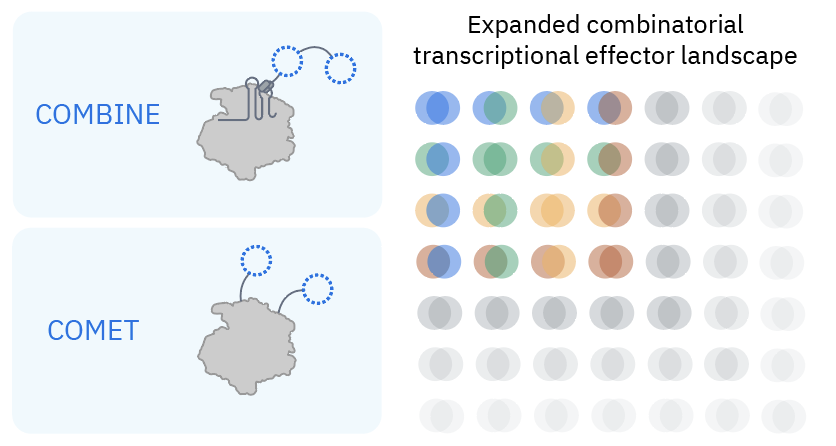
In back to back preprints from @arcinstitute, the labs of @LukeGilbertSF and @pdhsu present two distinct platforms (COMET and COMBINE) for systematically exploring combinations of protein domains, each of which yielded a diverse range of CRISPR-guided transcriptional effectors with features unique from CRISPRa/i. Both the platforms and the domain combinations have the potential to expand the toolbox for control of transcription and chromatin states and provide frameworks for screening combinatorial domains in other contexts.
Check out the preprints:
https://t.co/wTEXJuaT1H
https://t.co/8wtGyALPRE
How do past viral infections influence future viral diseases? We found that SARS-CoV-2 recovery protected from severe influenza A virus disease. But how come? There seemed to be some antigen-independent immunological memory going on..
Paper @ImmunityCP: https://t.co/9Lm2pR4MeJ
Excited to share our latest preprint. Lead by Sevi (@biosevi) we asked how transcription factors (TFs) with short and abundant motifs drive specific cell fates. Our test cases: Two bHLH factors that bind to seemingly similar E-boxes. 1/7 https://t.co/WPNx5LrIUJ
I am so happy to share our story on supercharging kinase degradation, now live on biorxiv! Thanks to everyone involved in this project. Check out the 🧵👇
🔬 Targeted Protein Degradation: A new adapter molecule expands the therapeutic potential around the cell's waste disposal system, CeMM PI @georg_e_winter's team published a new study in @NatureComms : https://t.co/znDQvb6DYK
Read more ➡️ https://t.co/ieUc9EdyDg
☕️In this issue: Kubicek & co report a method for multicolour tagging using genome-scale intron-targeting sgRNA libraries that, in combination with computer vision, enables the systematic detection of protein localization changes.
https://t.co/D97S3JrTth
Excited to share 2 preprints, together showing how mechanisms of a molecular glue & E3 ligase cancer mutations serendipitously converge to cause neomorphic protein degradation in distinct contexts. Highlights below: 1/17
#1: https://t.co/8UA8tJ2iti
#2: https://t.co/QOgfdXaxW7
Thank you very much to the Austrian Life Science Association ÖGMBT. It is a great honor to receive this award and wouldn't have been possible without the whole @georg_e_winter lab and our collaborators @alessiociulli@fischerlab1
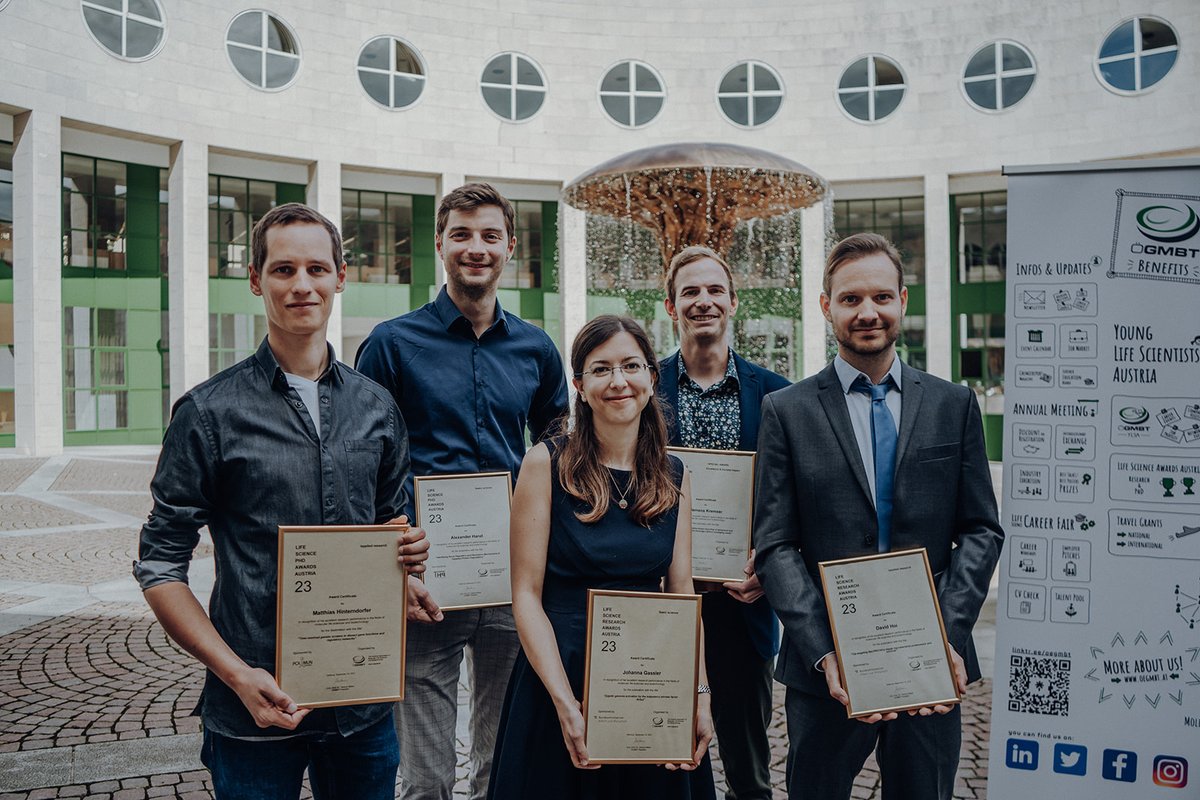
Congratulations to former CeMM PhD student @AlexanderHanzl & current postdoc Matthias Hinterndorfer (@_matthias_h), both from @georg_e_winter's group at #CeMM, for being awarded the prestigious ÖGMBT Life Science PhD Award Austria 2023! 🏆🎉
Today in @bioRxiv, we describe Click Editors (CEs) which combine DNA-dependent DNA polymerases, HUH endonucleases and RNA-programmable nickases for versatile genome editing without double-strand breaks 🧬. A study co-led with @connorjtou. A 🧵 (1/14):
https://t.co/lSO6Kk0Rk9
Delighted to share our spotlight on a beautiful paper by @alessiociulli and @georg_e_winter. Alex Hanzl and colleagues combined structural and biochemical techniques with deep mutational scanning to identify residues crucial for degrader activity. https://t.co/eZPbsILScR
Our paper on 14-3-3 proteins and their role in protein aggregation and phase separation is out! This paper represents the main PhD thesis work by my student Dmitri Segal. 1/ https://t.co/oCGBmHdrKS
Thrilled for our Orpinolide story to see the light of day! Huge thanks to the @georg_e_winter lab, Waldmann lab, @laraialab and everyone that contributed @HanaImrichova, @FabianFrommelt, @Laura_dta, Andrea, @CKagiou, Thomas, @CrisMayorRuiz, @gsf_lab and Sonja Sievers!
🧵👇
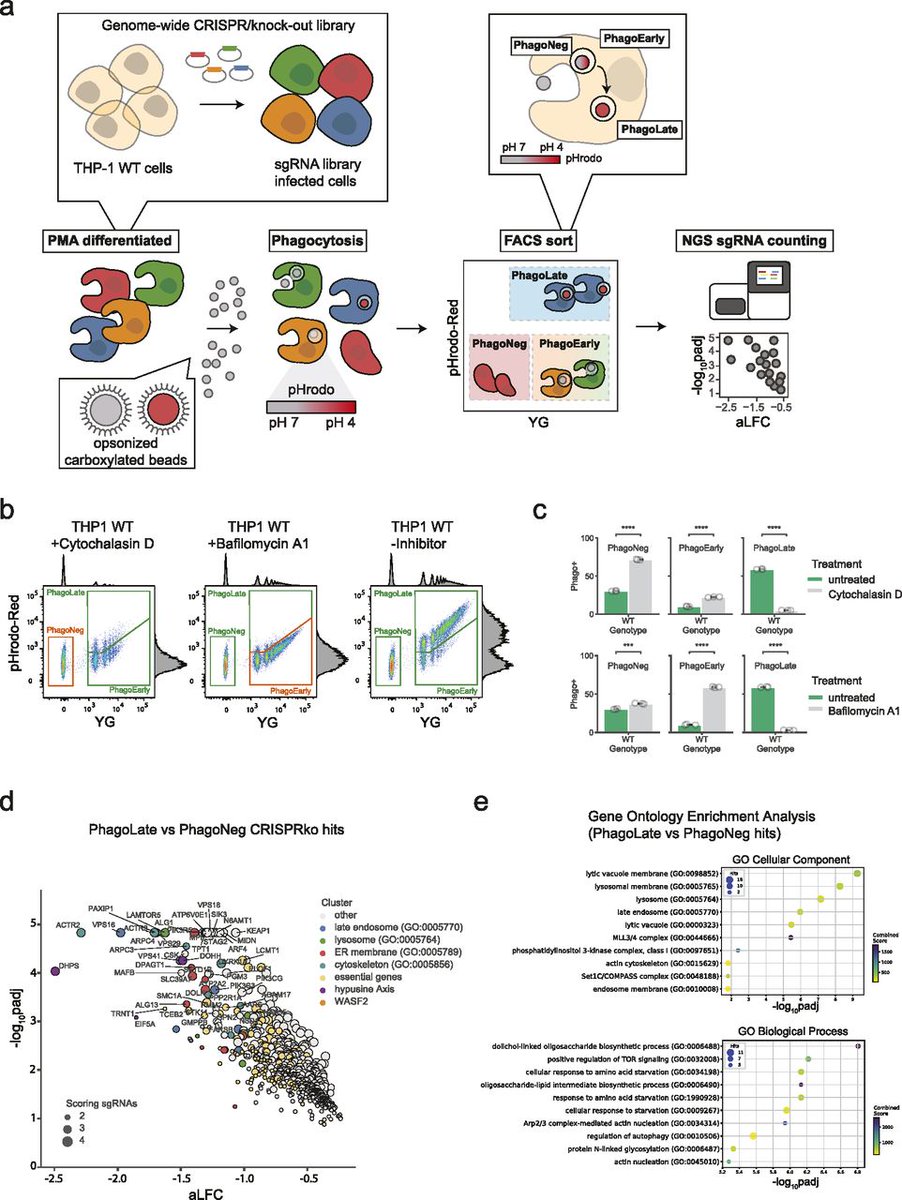
A paper from @cemm_news@gsf_lab@PEssletzbichler@giuliosf uses genome-wide FACS based reporter screening to generate a broad view of the molecular network regulating phagocytosis in human cells.
https://t.co/5AxS28jCdE
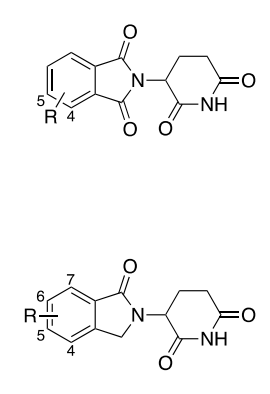
Our study on structural rationale for GSPT1 and IKZF1 degradation with close IMiD analogs just published. We looked at the effects of amino and hydroxy-substitutions on cellular CRBN engagement, IKZF1 and GSPT1 degradation.#thalidomide#CRBN#molecularglue https://t.co/9oNE1VQyh6