Excited to share our new paper on the biochemistry of poly(ADP-ribosyl)ation, a post-translational modification central to the cellular response to genotoxic stress, aging and an established target in cancer treatment. https://t.co/opniS5ssMc
Out of all the announcements at @Google I/O today, this is the one closest to my heart - our foundational research on Co-Scientist was published in @Nature and we announced its broad availability via @GeminiApp for Science.
When you are suffering from a disease, time is everything. As our collaborator and @StanfordMed Professor Dr. Gary Peltz reminds us, there are thousands of diseases out there with zero treatments. There is simply so much left to solve.
Our goal with Co-Scientist has been to give scientists superpowers and help them get to these answers faster - compressing the scientific process from months and years down to hours and days.
Much like Galileo's telescope helped us look into the stars, Co-Scientist is designed to help us make sense of the vast complexity of biological and scientific data. It is among the first examples of a truly general-purpose multi-agent system for scientific discovery.
The core research question behind it was: How can an AI system engage in the rigorous, structured thinking that’s the hallmark of science and scientists?
To tackle this, Co-Scientist builds on the principles of self-play and self-improvement underpinning @GoogleDeepMind breakthroughs like AlphaGo, generalizing them to scientific reasoning through self-debates.
Since our preprint last year, we have further improved its capabilities and have been validating it in collaborations with scientists across over 100 institutions globally, spanning both academia and industry.
And we are thrilled to see the emergence of a new form of AI-human scientist collaboration that's already leading to important new insights, discoveries and peer reviewed publications - from understanding antimicrobial resistance (published in @CellCellPress) to decoding plant immunity, to identifying new treatments for liver fibrosis (Advanced Science), cancer, neurodegenerative diseases like ALS and the grand challenge of aging.
I have always believed AI's greatest promise is accelerating scientific discovery and advancing human health.
My genuine hope for the future is that AI tools like Co-Scientist help democratize science, giving anyone, anywhere the means to pursue their child-like curiosity and change the world.
This work was done with stellar team mates spanning @GoogleDeepMind@GoogleResearch, @googlecloud and @GoogleLabs especially Juro Gottweis (@Mysiak ), who is the heart and soul of this effort.
Special thanks also to all our wonderful collaborators: Gary Peltz, @CostaT_Lab, @jrpenades, @_e_d_v_ , @iambyronic, @OpsBug, @jgooten, @omarabudayyeh Ritu Raman, Ryan Flynn, Filippo Menolascina, Velia Siciliano, Clare Bryant, Matt Onsum, Katherine Labbé and more.
Nature paper link - https://t.co/ap4woY9Fo3
Google DeepMind blog - https://t.co/LLJZ27ufPP
Gemini for Science - https://t.co/lDhsHCCXrj.
I’m incredibly proud of The AI Scientist team for this milestone publication in @Nature. We started this project to explore if foundation models could execute the entire research lifecycle. Seeing this work validated at this level is a special moment. I truly believe AI will forever change the landscape of how scientific discoveries and scientific progress are made.
Here we studied how diverse protein modules target proteins for covalent poly(ADP-ribosyl)ation. This research may inform future therapeutic strategies aimed at modulating PAR signaling in disease. Thank you to all co-authors Klara Bangert, Alexander Bürkle and Aswin Mangerich!
Excited to share our new paper on the biochemistry of poly(ADP-ribosyl)ation, a post-translational modification central to the cellular response to genotoxic stress, aging and an established target in cancer treatment. https://t.co/opniS5ssMc
At @GoogleDeepMind, we believe AI is the ultimate catalyst for science. 🧬
The best example of this has been the AlphaFold database (AFDB) of protein structure predictions which has been used free of cost by more than 3.3 millions researchers across the world!
Today, in collaboration with @emblebi, @Nvidia and @SeoulNatlUni, we are expanding the database by adding millions of AI-predicted protein complex structures to the AlphaFold Database. To maximise global health impact, we’ve prioritised proteins that are important for understanding human health and disease, including homodimers from 20 of the most studied organisms, including humans, as well as the @WHO’S bacterial priority pathogens list.
Read more here:
https://t.co/RZGq8vrIPS
Demis Hassabis just defined the real test for AGI. It’s more brutal than anyone expected.
Train AI on all human knowledge. Cut it off at 1911. See if it independently discovers general relativity like Einstein did in 1915.
If it can, we have AGI. If not, we’re still building pattern matchers.
Hassabis: “My definition of AGI has never changed. A system that can exhibit all the cognitive capabilities that humans can.”
Not bar exams. Not coding competitions. All cognitive capabilities.
Hassabis: “The brain is the only existence proof we have, maybe in the universe, of a general intelligence.”
That’s why DeepMind studies neuroscience. Not for inspiration. For data. The human brain is the only confirmed evidence that general intelligence is physically possible.
If you want to build it, you study the only example that exists.
Hassabis: “True creativity, continual learning, long-term planning. They’re not good at those things.”
Current systems are impressive and broken simultaneously.
Hassabis: “They can get gold medals in international math olympiad questions, but they can still fall over on relatively simple math problems if you pose it in a certain way.”
Jagged intelligence. Brilliant in narrow domains. Incompetent when approached differently.
That inconsistency is the tell. A true general intelligence doesn’t spike in one direction and collapse in another.
The Einstein test cuts through all of it. No benchmarks. No leaderboards. No carefully curated evals.
Just a model, a knowledge cutoff, and the question of whether it can do what one human did alone in 1915.
Hassabis: “Training an AI system with a knowledge cutoff of 1911 and seeing if it could come up with general relativity like Einstein did in 1915. That’s the true test of whether we have a full AGI system.”
Current models can’t. They remix brilliantly. They don’t generate paradigm-shifting theories from first principles.
Hassabis: “I think we’re still a few years away from that.”
A few years. Not decades.
The system that can be Einstein once can be Einstein a thousand times simultaneously across every domain.
That’s not AGI anymore. That’s the beginning of something we don’t have words for yet.
When that test gets passed, we won’t need a press release to know what happened.
Dario Amodei just said the quiet part out loud:
The real AI moats aren't in chatbots. They're in medicine and the physical world.
Anyone can wrap a model in a pretty UI. Very few can navigate FDA trials, biological complexity, and regulatory mazes.
The biggest AI companies won't be the ones building addictive apps. They'll be the ones quietly extending human life.
This is why Anthropic is betting on Claude in healthcare. Why DeepMind spun off Isomorphic Labs. Why every major lab has a "biology" team now.
The consumer AI race is a feature war. The real race is understanding protein structures and functions, drug discovery, and cellular mechanisms.
Winner takes decades. Not months.
AI is cool and all... but a new paper in @ScienceMagazine kind of figured out the origin of life?
The paper reports the discovery of a simple 45-nucleotide RNA molecule that can perfectly copy itself.
Excited to share our latest paper in JBC! We show that mTOR signaling controls protein aggregation during heat stress and aging—independently of translation and Hsf1. A new angle on proteostasis and aging! Read more: https://t.co/hk5ngFUJOv
Ever wondered how cells adapt #autophagy to various forms of stress?⚡️
So happy to share our story on the plasticity of the Atg1 kinase complex in response to #phosphate starvation. For more details read here 🧵 and here https://t.co/ZPQ8APqp30
New publication from @Ansa_Lina from @GraefLab!
No time to read the whole publication at the moment? Have a look at our news (and read the paper later 🙃).
https://t.co/6gkk49EPaQ
PhD opportunity!
My new research group at the University of Marburg @Uni_MR is looking for a highly-motivated PhD student to investigate molecular mechanisms of mitochondrial gene expression. Apply now using the link below!⬇️
Deadline is 3 March 2024.
https://t.co/5JSKamqUd6
1/7 Publication @NatureAging🚨 Our study in killifish shows for the first time that the AMPKy1 complex mediates the refeeding response after fasting, counteracts a constitutive fasting-like transcription program in old fish and prolongs vertebrate lifespan
https://t.co/OjLwyQbzvP
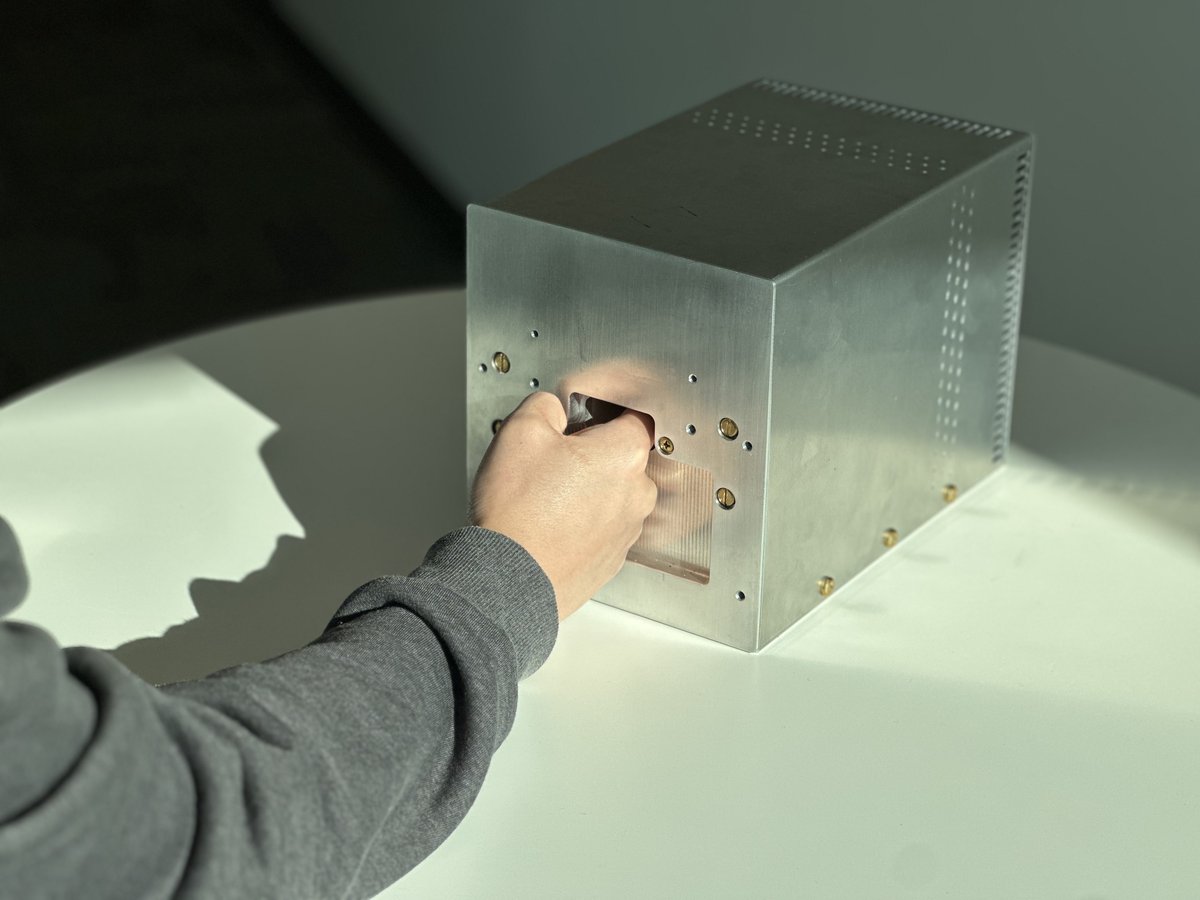
We are incredibly excited to announce a major breakthrough toward solving non-invasive glucose monitoring, the Holy Grail of self-measurement!
https://t.co/uxvHE7FRJy
Very happy to share our latest @NatureComms publication on age induced IFNγ-Stat1 axis activation in intestinal stem cells, leading to cell composition changes in epithelium and immune cells.
👨🏻💻 https://t.co/4Rfo1jmmF4