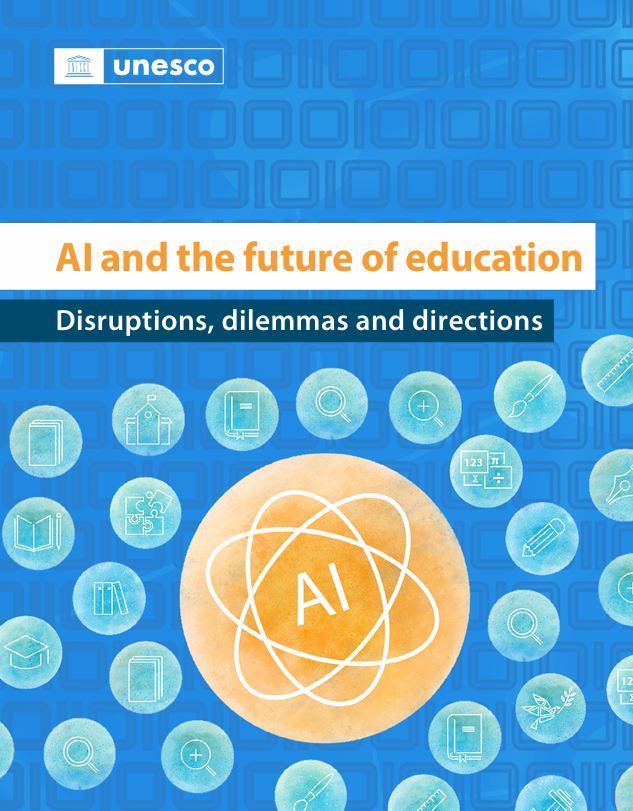
Artificial intelligence is changing education. But what does that mean for teachers?
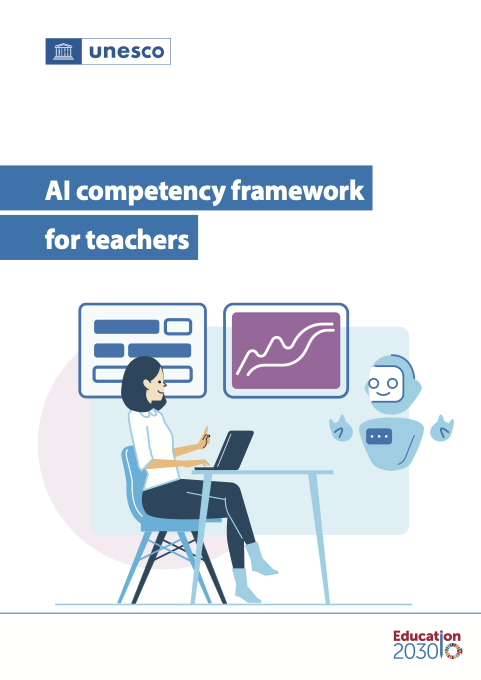
@UNESCO's AI Competency Framework for Teachers sets out 15 competencies across five key areas, including AI ethics, pedagogy and a human-centred approach.
The goal? To help teachers harness AI while keeping human agency and teachers’ rights at the heart of education.
📘 https://t.co/9Z9uOqRsC8 #WorldTeachersDay
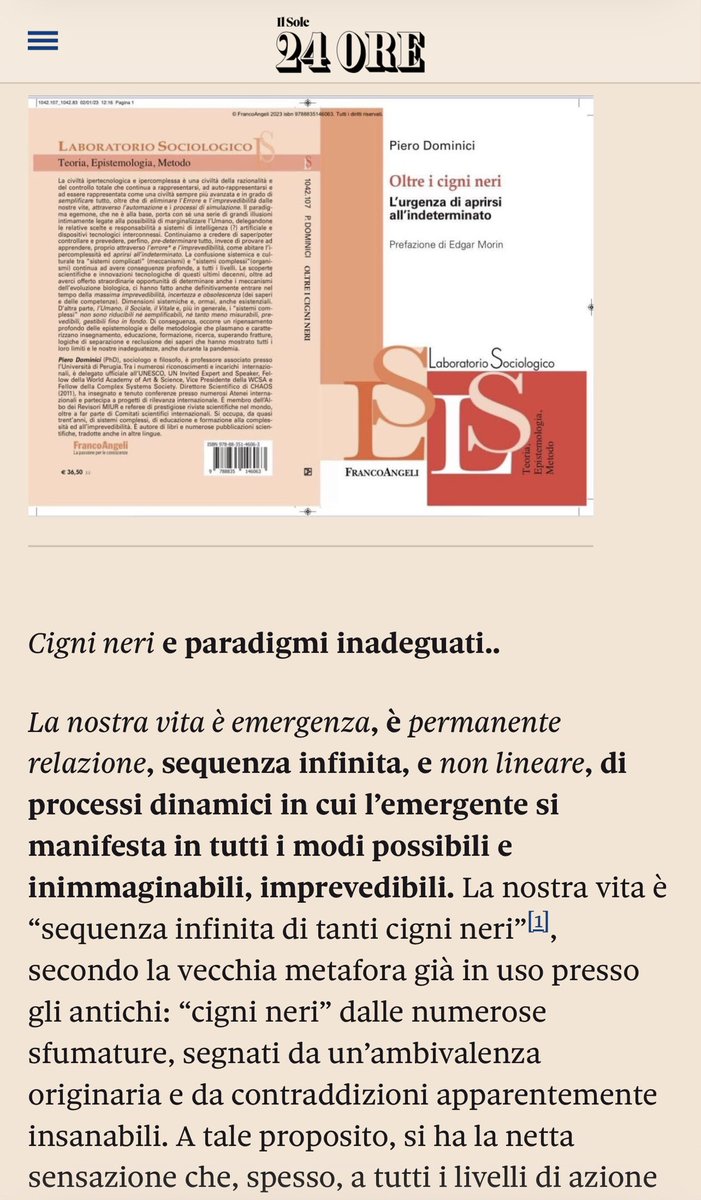
Piero Dominici e l’urgenza di educare alla complessità: abitare l’errore** per umanizzare la #conoscenza - Orizzonte #Scuola Notizie @orizzontescuola
Cher @edgarmorinparis … https://t.co/JgAVf9Owok
Debatiendo la democracia en América Latina
Estos son algunos de los aportes (hay muchísimo más que es valioso) que nos ayudan a entender qué esta pasando con la democracia en América Latina.
The day has finally arrived! So much effort, so much work, so many sacrifices... in the midst of so many other tasks and deadlines.
🌱🔬📚🏛️🎓
Beyond Black Swans:
Inhabiting Indeterminacy, @SpringerNature, 2026
Foreword by @edgarmorinparis (see screenshots)
I would like to thank Springer Nature for proposing to publish the scientific monograph and for believing in this project, the result of many years of study and research, meetings and experiences.
Without a hint of rhetoric).
🌐🇺🇳🏛️🎓
This year, I will have the honour and pleasure, as well as the responsibility, of opening the prestigious APHELEIA UNESCO International Conference, where my publication, the result of many years of study and research, will be presented and discussed in the opening session on the first day of the conference.
🌐🇺🇳🏛️🎓I would like to thank #APHELEIA UNESCO @UNESCO colleagues, Prof. Luiz Oosterbeek and all the organisers for the invitation, which is always welcome, and for the honour bestowed upon me.
📌📚
About this book
This book describes the urgent need of modern humanity to renew and reinforce an open attitude to the complexity of life, above all by embracing its intrinsic indeterminacy, rather than attempting futilely to control its evolution. Oblivious to this ever-more urgent necessity, seduced by the speed and virality of digital pattern recognition, computing, and artificial simulation of human thought, society has reverted to a linear, deterministic concept of reality, under the belief that everything can be measured and managed, and that error and unpredictability will soon be eliminated from our lives and organizations.
Consequently, choices and responsibilities have been delegated to technology, artificial intelligence and algorithms, even in educational institutions, which are now preoccupied with teaching mere skills and know-how, thus committing the fatal error of confusing artificial, mechanical, complicated systems with living, complex, adaptive systems.
This volume is intended not only for complexity/social scientists, philosophers and students, but to the curious from all walks of life. It calls for learning to inhabit complexity, while recognizing and participating in its interdependent, interconnected, interactive systems of relationships. Dominici reveals the futility of endeavoring to control the uncontrollable or observe the unobservable, showing how self-organization and emergence, triggered from the smallest and most modest elements, impact the entire system.
🌐▶️ https://t.co/22e3MB931B
An approach, an epistemology and research since 1995
Cigni neri e paradigmi inadeguati..
“La nostra vita è emergenza, è permanente relazione, sequenza infinita, e non lineare, di processi dinamici in cui l’emergente si manifesta in tutti i modi possibili e inimmaginabili, imprevedibili.
La nostra vita è “sequenza infinita di tanti cigni neri”[1], secondo la vecchia metafora già in uso presso gli antichi: “cigni neri” dalle numerose sfumature, segnati da un’ambivalenza originaria e da contraddizioni apparentemente insanabili. A tale proposito, si ha la netta sensazione che, spesso, a tutti i livelli di azione della prassi organizzativa e sociale, coloro i quali, in presenza di situazioni/dinamiche sfuggite al loro controllo, insistono sulla questione/metafora del “cigno nero”[2], dell’evento unico e imprevedibile o, comunque, altamente improbabile, non cerchino/non facciano altro che operare/costruire delle (“classiche”) razionalizzazioni a posteriori in grado di rassicurare gli altri e sé stessi rispetto al fatto che, nonostante qualche episodio, tutto rimane sotto controllo, gestibile e prevedibile.
E così, la vecchia “illusione del controllo” – di impadronirsi del caso e del proprio destino – continua ad occupare una posizione di assoluta egemonia, non soltanto in termini di immaginari organizzativi e sociali, nonostante le evidenze ne abbiano mostrato la profonda inconsistenza e inadeguatezza.
Al contrario, la vita sociale e umana è caratterizzata da infinite sequenze, non lineari, di cigni neri.
Errore, imprevedibilità, complessità e dinamismo sistemico ne sono gli elementi costitutivi” (cit.).
🔥🌐🏛️🎓A breve sarà pubblicata l’edizione in lingua inglese per @SpringerNature #research #PeerReviewed #ComplexSystems #NewEpistemology #ParadigmShifts #Democracy #AI
@edgarmorinparis@LuizOosterbeek@bridges_science@UNESCO@mauromagatti@DeBortoliF@lucadebiase@micheket@La_Lettura@sole24ore@RaiCultura@necsi@ipsa_aisp@repubblica@PierPaterlini@jesusflores@demartin@CorrPetrocelli@MichelWieviorka@daniInnerarity
CONTINUA
⬇️⬇️⬇️⬇️⬇️
https://t.co/bUYITDOrgD
Un approccio, un’epistemologia e percorsi di ricerca dal 1995
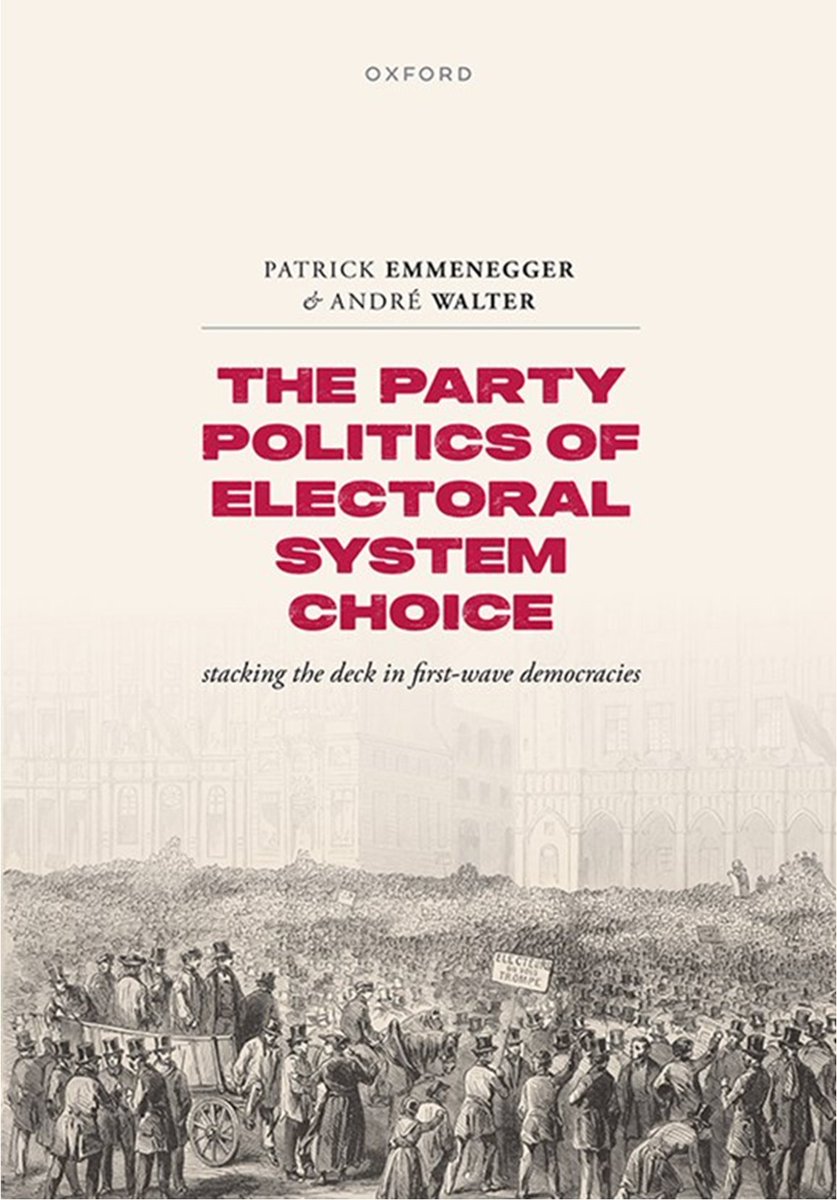
Sistemas electorales en las primeras democracias
Este libro de Emmenegger y Walter elabora una teoría neo-rokkaniana sobre la elección del sistema electoral. Explica cómo los partidos manipulan los mercados electorales para sacar ventajas
Acceso abierto: https://t.co/kOQ6Nu2Akj
La @UNESCO_es ha publicado el informe AI and the Future of Education. Disruptions, dilemmas and directions (2025).
No es un texto para leer en diagonal ni una lista de recomendaciones rápidas. Es más bien una advertencia tranquila. La IA no entra en educación solo como un conjunto de nuevas herramientas, sino como un amplificador de tensiones que ya estaban ahí y que ahora se vuelven imposibles de seguir ignorando.
El informe insiste en algo que llevo tiempo observando en centros y universidades. El problema no es tanto la velocidad tecnológica como la asimetría entre innovación técnica y capacidad pedagógica para absorberla.
La IA avanza más rápido que nuestra manera de pensar el aprendizaje, la evaluación y la responsabilidad educativa.
Hay varias ideas que merece la pena subrayar.
- La primera es que no basta con formar en el uso de la IA. Si no se rediseñan tareas, criterios y evidencias de aprendizaje, la formación se queda en la superficie y acaba siendo cosmética.
- La segunda es que la equidad no se resuelve simplemente dando acceso a herramientas. Se juega en las condiciones reales de aprendizaje y, sobre todo, en que el criterio pedagógico no se delegue, aunque técnicamente sea posible hacerlo.
- La tercera es quizá la más incómoda. Si no repensamos qué evaluamos y por qué, la IA no va a “romper” la educación, pero sí puede vaciar de sentido muchas prácticas que ya estaban agotadas antes de su llegada.
La UNESCO no propone prohibiciones ni soluciones mágicas. Plantea dilemas. Gobernanza, ética, agencia humana, rol del profesorado, sentido del aprendizaje en contextos cada vez más automatizados. Y ahí está, para mí, el verdadero valor del informe. Obliga a parar y a pensar antes de reaccionar.
Leyéndolo, es difícil no ver la necesidad de marcos que ayuden a tomar decisiones con calma y criterio en los centros. No para decidir por nosotros, sino para ordenar el análisis antes de actuar. En ese plano encaja el SEIA, como una forma de trasladar a contextos reales muchas de las preguntas que el informe plantea a escala global: qué diseñamos, qué evaluamos, qué responsabilidad asumimos y qué decidimos no delegar.
El futuro de la educación con IA no se juega en la herramienta, sino en el diseño. En cómo distribuimos la responsabilidad. En qué seguimos exigiendo al estudiante. Y en qué decidimos no delegar, aunque sea técnicamente posible.
Si quieres acceder al informe completo, escríbeme “UNESCO” en los comentarios y te paso el enlace de acceso.
Leerlo no resuelve el problema. Pero ayuda a formular mejor las preguntas. Y ahora mismo, en educación, eso ya es mucho.
#edtech #UNESCO #IA #AI
📢 Registration is open for the 2026 OECD Global Anti-Corruption & Integrity Forum.
🗓️23–27 March📍OECD, Paris
Join us as we discuss "The Integrity Advantage: Powering Competitiveness & Prosperity"
Register now ➡️ https://t.co/6FrrefIgh7 #OECDintegrity
Do increasing participation rates in early childhood education narrow the reading achievement gap between high- and low-SES primary school students?
https://t.co/UR3PxFnTSD
Looking to explore heritage in a new way this year?
Discover the @UNESCO Sites Navigator, a dynamic platform offering verified geospatial data for #WorldHeritage, #BiosphereReserves & #GlobalGeoparks.
Measure, access alerts & support sustainable site management.
@Flanders_DFA
🌐🌻🌐 “Education is Citizenship, Education is Inclusione, Education is Democracy (Education and not Indoctrination)” #quote 📌 @edgarmorinparis@LuizOosterbeek@SteGiannini@micheket@lucadebiase@demartin@_WAAS_@yaneerbaryam@research_chaos@necsi@HumanandComplex@PikettyWIL
Starting with my definition ‘Democracy is complexity’ (quote) which I proposed back in the mid-1990s.
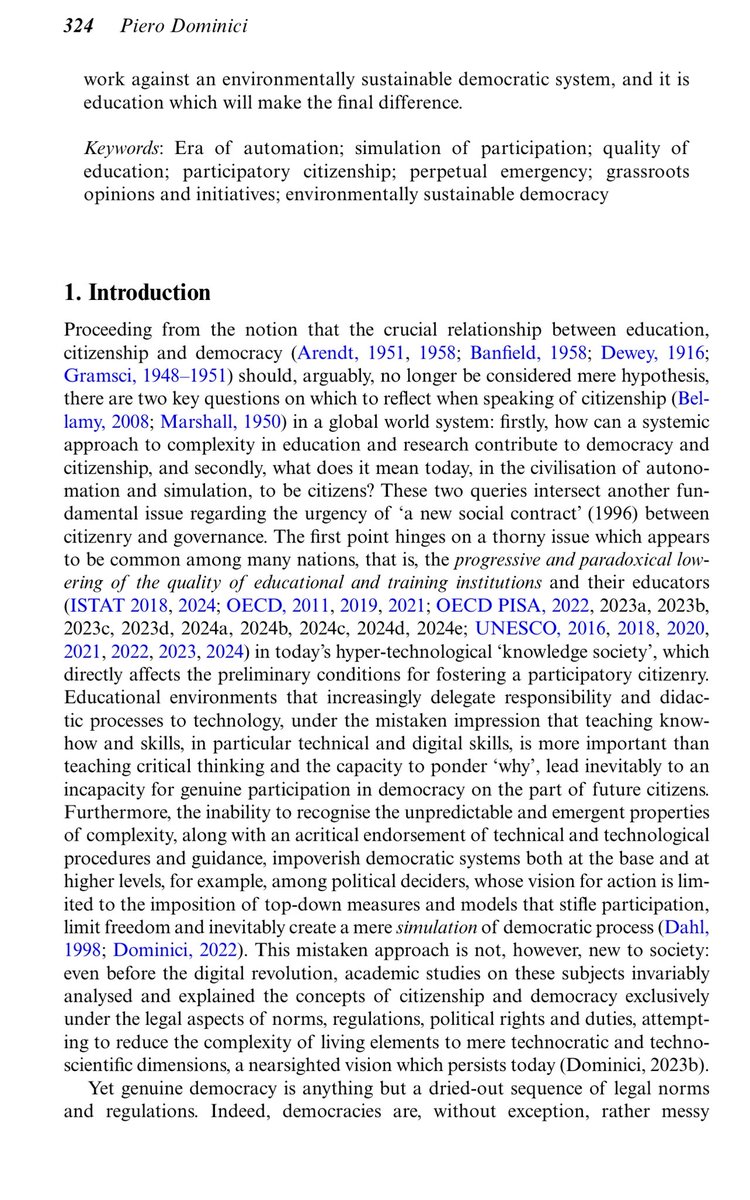
🌎 “The weak link of democracy and the challenges of educating toward global citizenship. #Prospects (2022). #UNESCO
➡️ Here’s the link: https://t.co/WBrVzNZoXU
🌍🤝🌎 Education is a #HumanRight not a privilege!
🟥 “📌 Education is not a privilege but - I would add - until now it has been. (Always taking care not to confuse ‘education’ and ‘indoctrination’) (quote)
Springer Nature #PeerReviewed
👉 https://t.co/H0LJDctoQh
🌐Abstract🌐
📌 Before discussing the prospects for educating young people toward becoming global citizens, we must ask ourselves: is global citizenship reality or illusion? What can be stated is that plain citizenship itself can no longer be considered merely a legal or judicial question.
📌 Today, citizenship is only partially linked to rights and duties deriving from the recognition of an individual as belonging to a community (local, national or international). Future citizens of the digitally hyper-connected global village face two dangers: simulation of participation and the illusion of having a less asymmetrical relationship to power.
📌 The rules of engagement are not being written by legislators but by agencies producing and sharing knowledge; citizenship (global or otherwise) is intimately correlated with access to quality education.
👉Three concepts form the basis for educating toward global citizenship:
- 1️⃣ awareness that citizenship and education are inseparable,
- 2️⃣ awareness that democracy and education are inseparable, and
- 3️⃣ awareness that democracy is complexity** (quote).
🌎 Global citizenship: Reality or illusion?
👉DOI: 10.1007/s11125-022-09607-8 (to be continued)
Políticas científicas y tecnológicas en América Latina
La @RMS_UNAM acaba de publicar un número especial sobre políticas científicas y tecnológicas en América Latina. Tiene artículos sobre Argentina, Brasil, Chile, Ecuador y México.
Acceso abierto: https://t.co/5n8h71n49j
🌐🌎♾️🌍🌱🔬📚🖋️🏛️🎓
Exciting previews! Years of study and research...
We’re almost there, not long to go now until publication!
Beyond Black Swans: Inhabiting Indeterminacy
🏛️📚🎓▶️ https://t.co/aVQe8qBXCW
🌐🎓 The book has a foreword by the great @edgarmorinparis.
About this book
This book describes the urgent need of modern humanity to renew and reinforce an open attitude to the complexity of life, above all by embracing its intrinsic indeterminacy, rather than attempting futilely to control its evolution. Oblivious to this ever-more urgent necessity, seduced by the speed and virality of digital pattern recognition, computing, and artificial simulation of human thought, society has reverted to a linear, deterministic concept of reality, under the belief that everything can be measured and managed, and that error and predictability will soon be eliminated from our lives and organizations. Consequently, choices and responsibilities have been delegated to technology, artificial intelligence and algorithms, even in educational institutions, which are now preoccupied with teaching mere skills and know-how, thus committing the fatal error of confusing artificial, mechanical, complicated systems with living, complex, adaptive systems.
This volume is intended not only for complexity/social scientists, philosophers and students, but to the curious from all wakes of life. It calls for learning to inhabit complexity, while recognizing and participating in its interdependent, interconnected, interactive systems of relationships. Dominici reveals the futility of endeavoring to control the uncontrollable or observe the unobservable, showing how self-organization and emergence, triggered from the smallest and most modest elements, impacts the entire system.
#research #transdisciplinarity #ComplexSystems #Epistemology #Philosophy #SocialSciences #PeerReviewed - an approach and research since 1995
#BeyondBlackSwans #InhabitingIndeterminacy #EpistemologyOfError ** (1995)