🇺🇸 INSIGHT: Senator Cynthia Lummis says JPMorgan CEO Jamie Dimon either “hasn’t read the bill or wants to mislead people” with his criticism of the CLARITY Act.
DOCUMENT FOUND 🇯🇵 Here's what the suits are building behind closed doors:
Vaccination DLT subsidies. Crypto powered electric grids. Every industry, every business, every citizen. All onchain.
• Japan's 74 biggest banks building the digital yen. @SBIRippleAsia involved $XRP $RLUSD
• 74 Japan banks. 74 networks connected by $QNT yesterday. I'm just saying
• Found 2022 emails: Gilbert Verdian discussing with Ripple researcher on secure asset transfer protocol
• ECB Appia June 2026: Eurosystem building a tokenized financial ecosystem
• Bank of France: #Ripple & $XRP as the Digital Euro platform for Europe
• @MasterCard: 3.7B cards. 210+ countries. Now settling onchain
• Supported: $XRP $SOL $CC $ETH $POL $USDC $RLUSD $PYUSD
• Citigroup 2030: $8.2T bull case. $LINK $CC $XRP throughout the document
• Becoming a master of liquidity via @MeteoraAG@Heavymetalcook6@met_lparmy
• Hashgraph + @iobuilders: Asseto live. Tokenized securities on hedera-hashgraph:native
Don't let them shake you out before they turn it on.
DO NOT LOSE HOPE
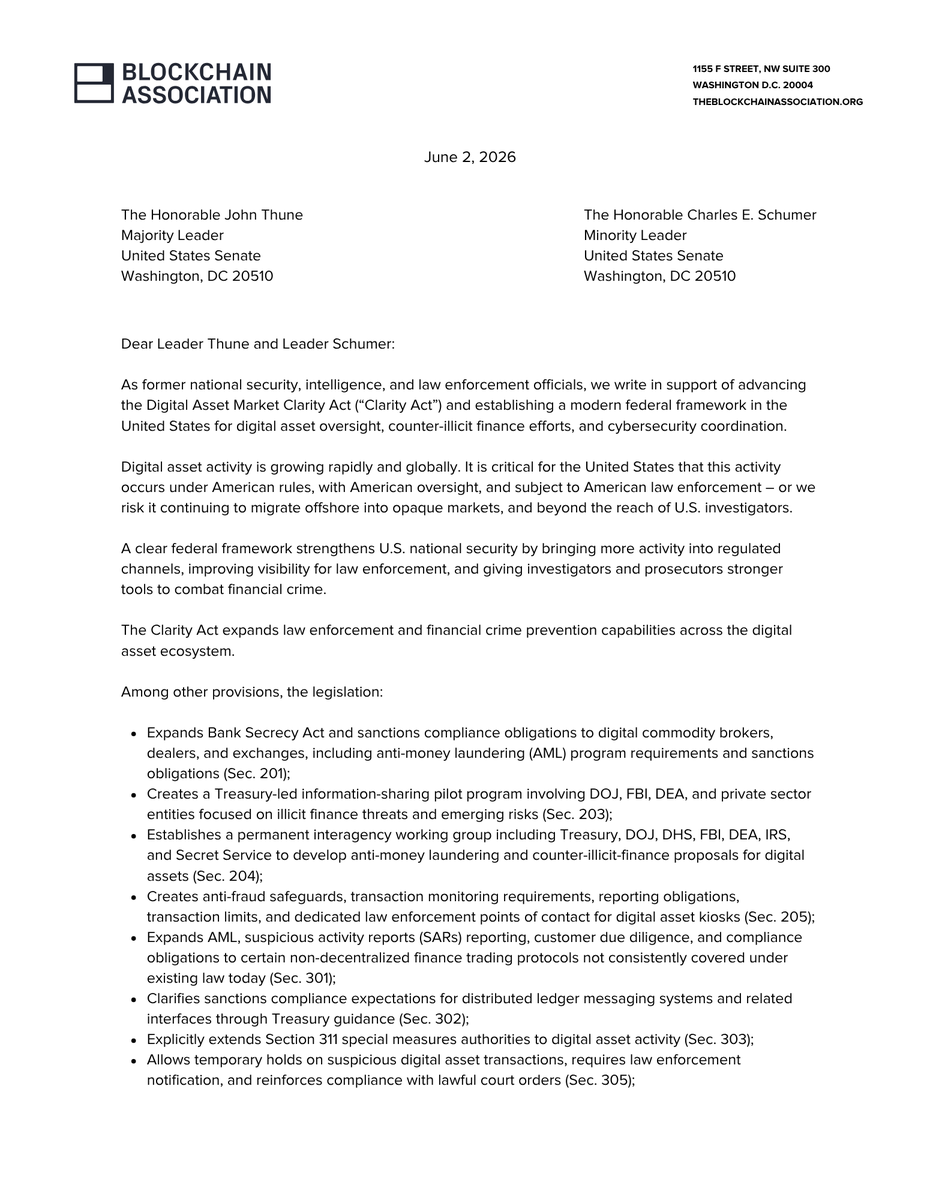
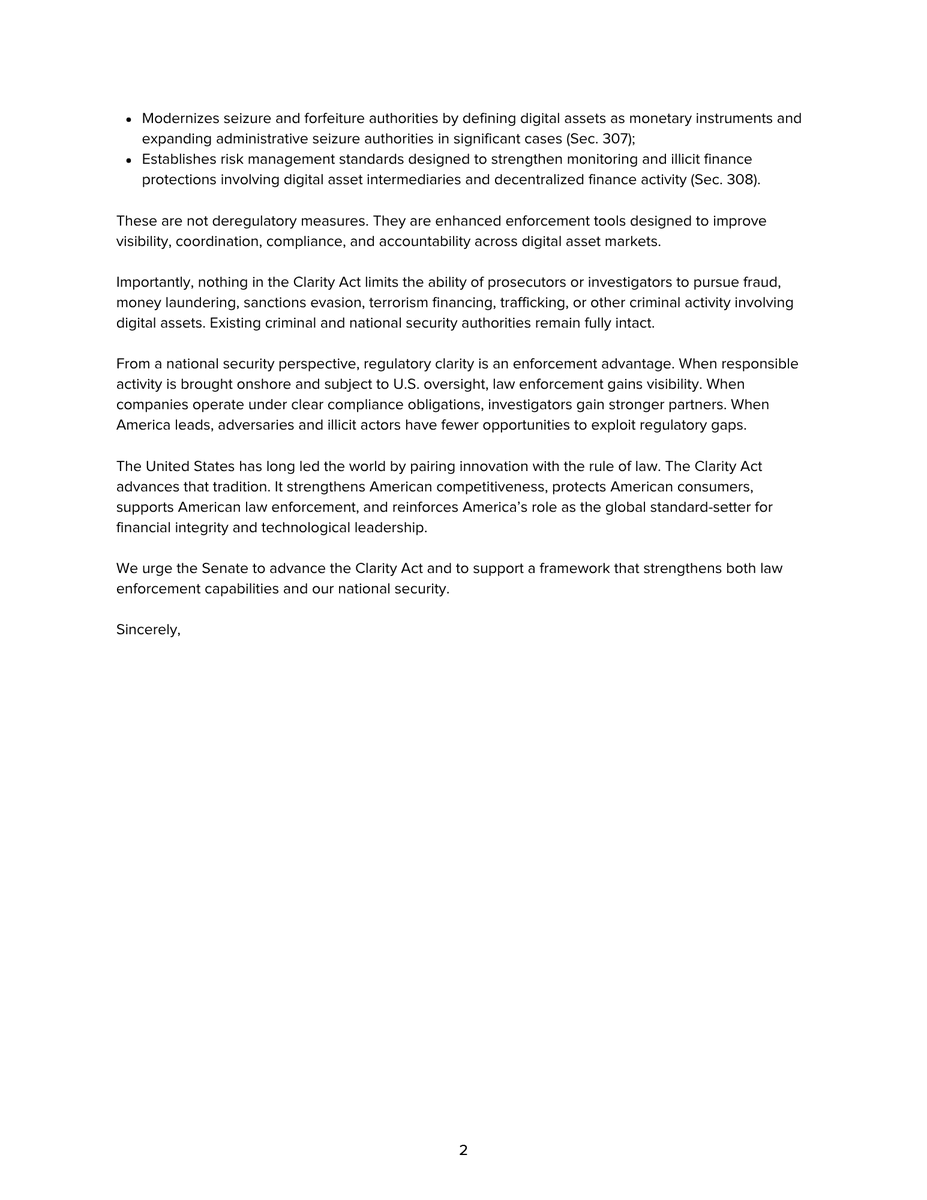
1/ Today, we’re sending a letter to Senate Majority Leader Thune and Senate Democratic Leader Schumer signed by 160 former national security, intelligence, and law enforcement professionals in support of the Clarity Act.
https://t.co/1lSQkoaaXI
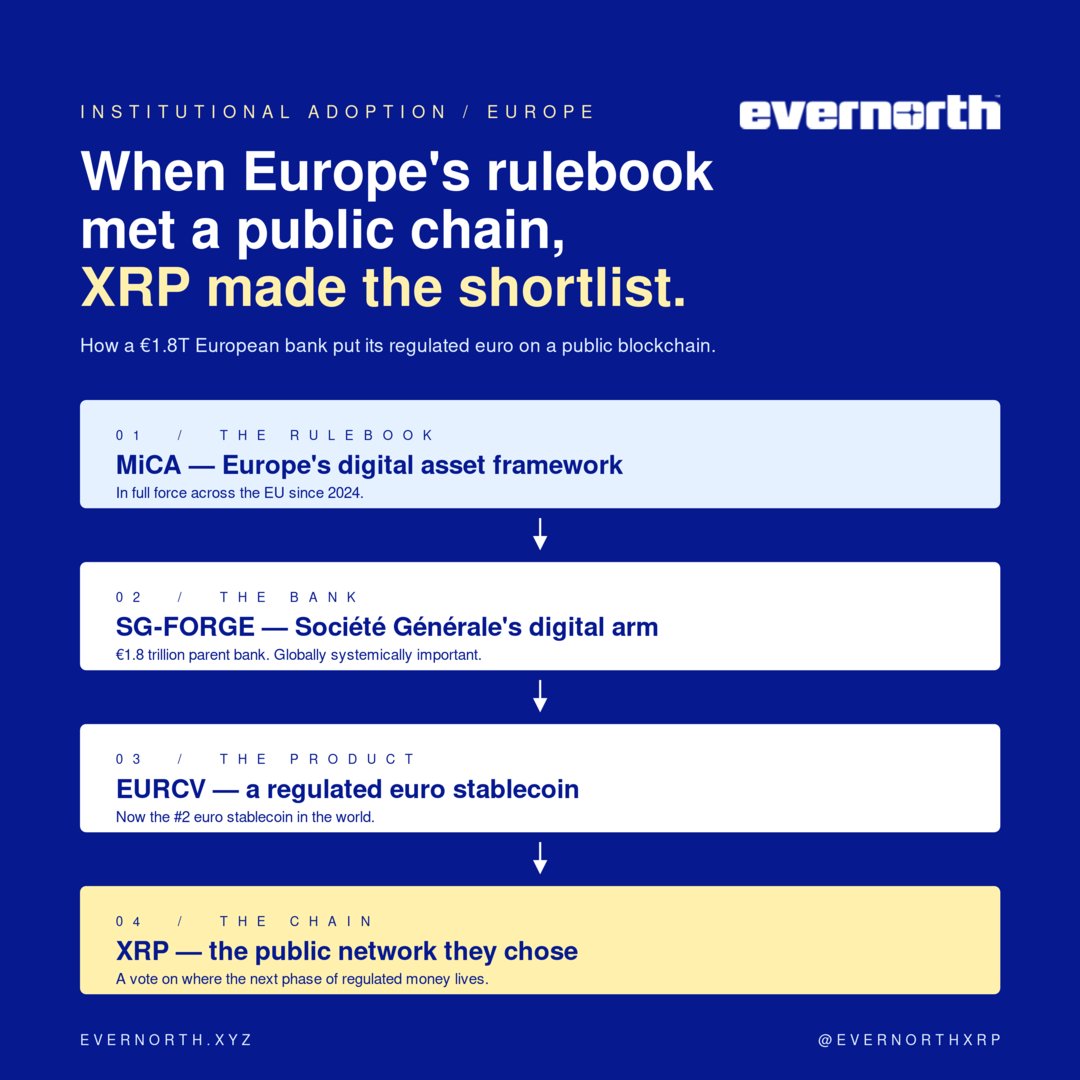
1/6 For everyone who's wondered when "real banks" will use blockchain: they already are. The next 18 months will be about how much, on which chains, and under which set of rules.
One of Europe's biggest banks has put its euro stablecoin on XRP. Here's why that matters. 🧵👇
This content is for informational purposes only and does not constitute investment advice. Digital assets involve risk, including potential loss of principal. Learn more about Evernorth: https://t.co/f1nPiu69OG
24/7 regulated crypto futures and options trading are here through @CMEGroup, and Ripple Prime is a day-one clearing partner.
Institutional demand meets institutional infrastructure.
Built for always-on markets.
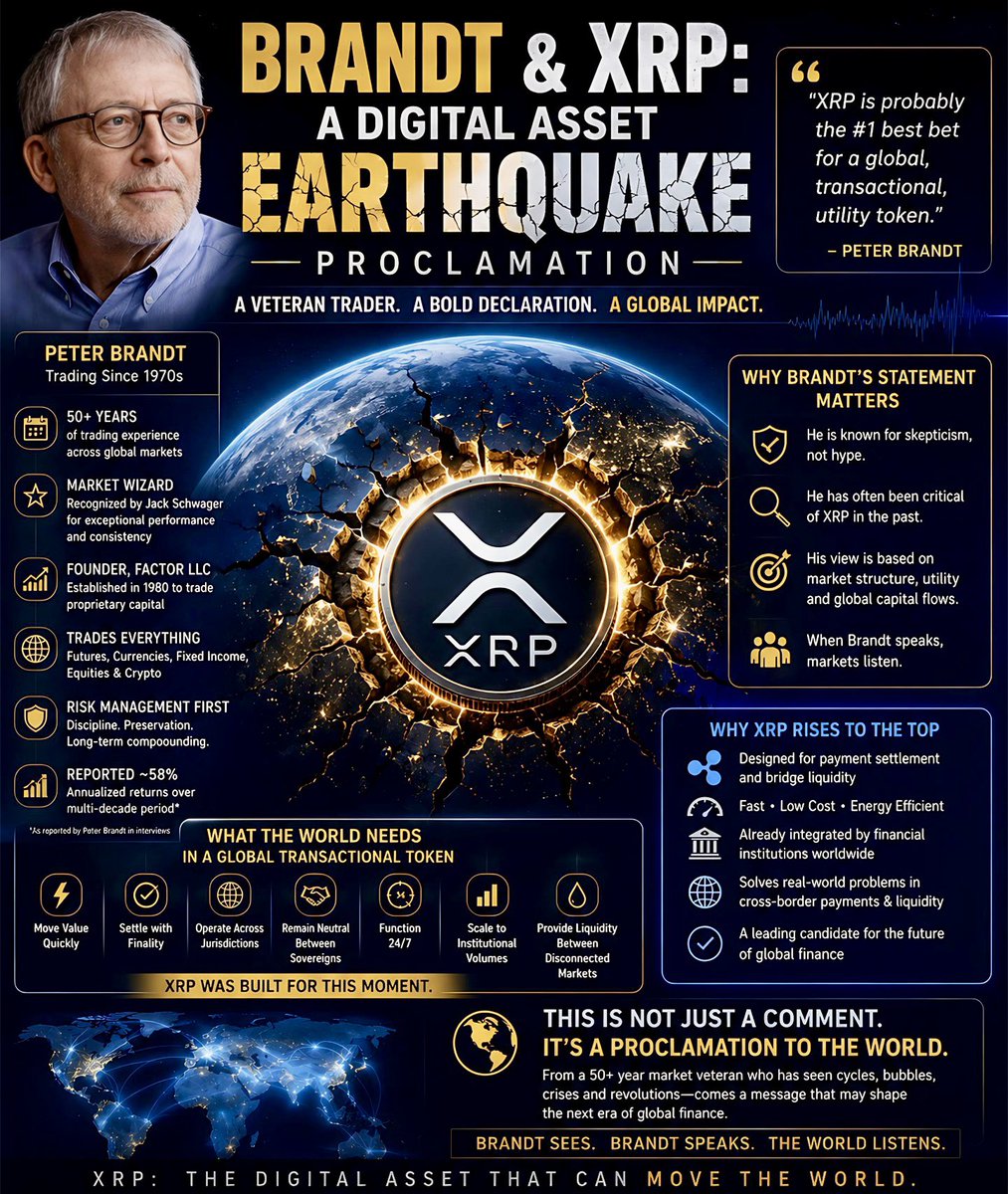
• Peter Brandt is not a crypto influencer. He is one of the most respected market speculators of the modern era. For more than fifty years, Brandt has traded commodities, currencies, bonds, equities, and digital assets through bull markets, crashes, recessions, bubbles, and financial crises. He founded his own trading firm in 1980, earned recognition as a legendary "Market Wizard" by renowned author Jack Schwager, and built a reputation on disciplined risk management rather than hype or prediction. In a world filled with loud opinions and short track records, Brandt's credibility was forged through decades of surviving—and thriving—in the most competitive financial markets on earth.
• What makes his XRP comments extraordinary is that he has historically been one of XRP's most visible skeptics. For years, Brandt frequently published bearish XRP chart analyses, challenged XRP enthusiasts, and often poured cold water on exaggerated claims made by portions of the crypto community.
He was never viewed as an XRP cheerleader, promoter, or partisan. Quite the opposite. That history matters because when someone spends years criticizing an asset and then publicly acknowledges that it may be the strongest candidate for global transactional utility, it cannot reasonably be dismissed as tribal loyalty, confirmation bias, or emotional attachment.
• That is why many view his apparent change in perspective as a financial earthquake rather than a simple opinion. When a trader with more than half a century of experience studying liquidity, settlement, capital flows, market structure, and global finance concludes that XRP may be the leading contender for a worldwide transactional utility role, people pay attention. Not because Brandt is infallible, but because he is respected, independent, battle-tested, and historically difficult to impress. If one of XRP's longtime critics now sees unique value in its role as a bridge asset for moving liquidity across markets, jurisdictions, and financial systems, many investors interpret that not as noise—but as one of the strongest validations XRP has received from a veteran of the traditional financial world.
🫡🇺🇸🌎 @PeterLBrandt
#XRPFamily #Ripple @XRPLF@Interledger@The_DTCC@USTreasury@POTUS@BlackRock
Cc: @Bitcoin, @ethereum, @CNBC, @WSJ, @nytimes, @WatcherGuru@SMQKEDQG
I’m not going to announce anything ahead of time but here is a summary of the things we are focussing on:
- Sourcing more stablecoin liquidity against which XRP can be deployed.
- Deepening partnerships (extending the range of deployment options) with institutions that have already committed to using XRPFi on Flare.
- Acquiring new partners who sit on large amounts of XRP to be deployed into XRPFi on Flare.
- Working towards trials with RWAs using Flare Confidential Compute.
- Broadening the use of FDC (and hence FDC fee earning) through partnerships with entities that need that kind of data.
🚨XRP ETF DEMAND BEATS BTC AND ETH ETFs
$XRP ETF outperformed Bitcoin and Ethereum in weekly ETF flows for the third straight week.
Despite broader crypto weakness, XRP recorded $15.2 MILLION in new inflows, extending its streak of investor demand.
📣 BIG! @Ripple just released another "XRP in one minute" clip: @HugoPhilion says @FlareNetworks is turning $XRP from a passive payment asset into productive collateral: unlocking lending, stablecoin borrowing, and DeFi yield, with vault-based routes set to expand horizons: $FLR
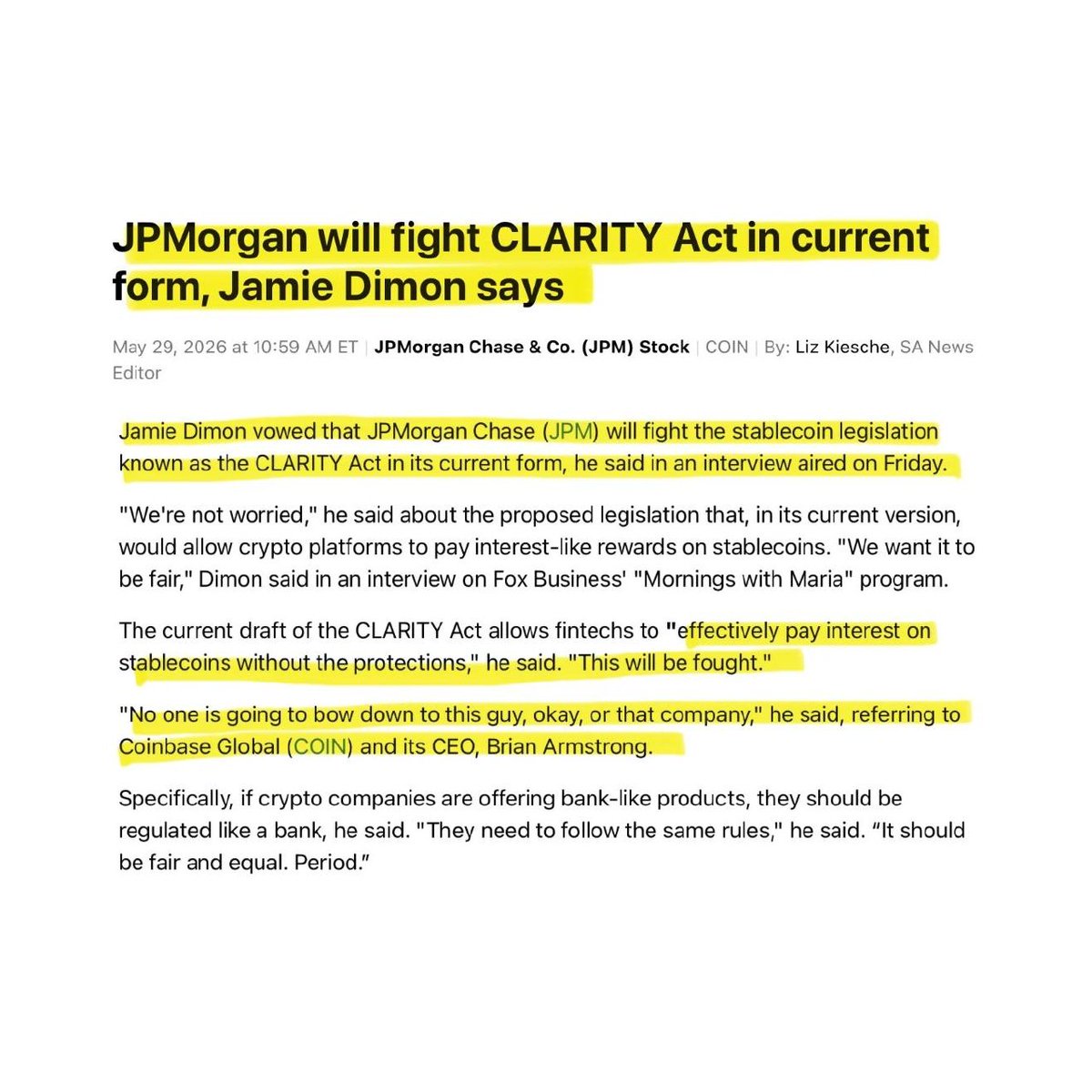
BREAKING: America's largest bank JPMorgan is trying to kill the most important crypto bill in US history.
The CLARITY Act is the first comprehensive legal framework for digital assets ever written in the United States. It would end regulation by enforcement, define which crypto assets are securities and which are commodities, split oversight between the SEC and CFTC, and create the legal framework for stablecoins and institutional participation at scale.
The bill passed the House in July 2025 with massive bipartisan support: 294 to 134. It then moved to the Senate where it got stuck for months over one specific fight, whether crypto platforms should be allowed to pay rewards on stablecoins.
Banks fought this aggressively because if users can earn rewards on stablecoins sitting on Coinbase, they have less reason to keep money in a bank. Banks claimed this would reduce deposits available for consumer loans by as much as 20%.
Senators Tillis and Alsobrooks published a compromise. Crypto platforms cannot offer passive yield but can offer rewards tied to real activity: transactions, network participation, actual usage. Banks still rejected it and promised to increase their opposition.
JPMorgan then went public. Dimon called out Coinbase CEO Brian Armstrong directly by name. "No one is going to bow down to this guy or that company. They need to follow the same rules. It should be fair and equal. Period."
On May 14, the Senate Banking Committee advanced the CLARITY Act 15-9 with all 13 Republicans joined by two Democrats. It now moves to the full Senate floor where it needs 60 votes.
JPMorgan lost the first battle. They are still fighting to kill it before it reaches the Senate floor.
🚨NEW: JPMorgan CEO Jamie Dimon took aim at the Senate's crypto market structure bill today, arguing it "doesn't do anything for AML/BSA" and provides "almost no legal protections."
When asked for comment, a spokesperson for @SenLummis told me:
"The banks can’t deal with a bipartisan compromise on stablecoin yield and are making completely false claims about BSA/AML as a last ditch attempt to poke holes in a solid piece of legislation that protects consumers. Fear of competition always brings out an interesting side of people and that’s all this is.”
Since when do banks get to decide on legislation? The way I understand basic government from the 10th grade is that our elected representatives write and pass laws.
It’s time for Washington to do the right thing. They have heard all sides for 18 months.
Pass a bill that is good for our country! Period.