Click anywhere on the brain and see that region's projections.
Fibers are diffusion tractography (dMRI) from Human Connectome Project
https://t.co/Fl4O6YnbiB
After 25 years of brave & brilliant work by hundreds of scientists in my lab to understand then safely reverse aging for the first time, it was moving to witness the first human dose being delivered 🥹 https://t.co/veQsyUEORz
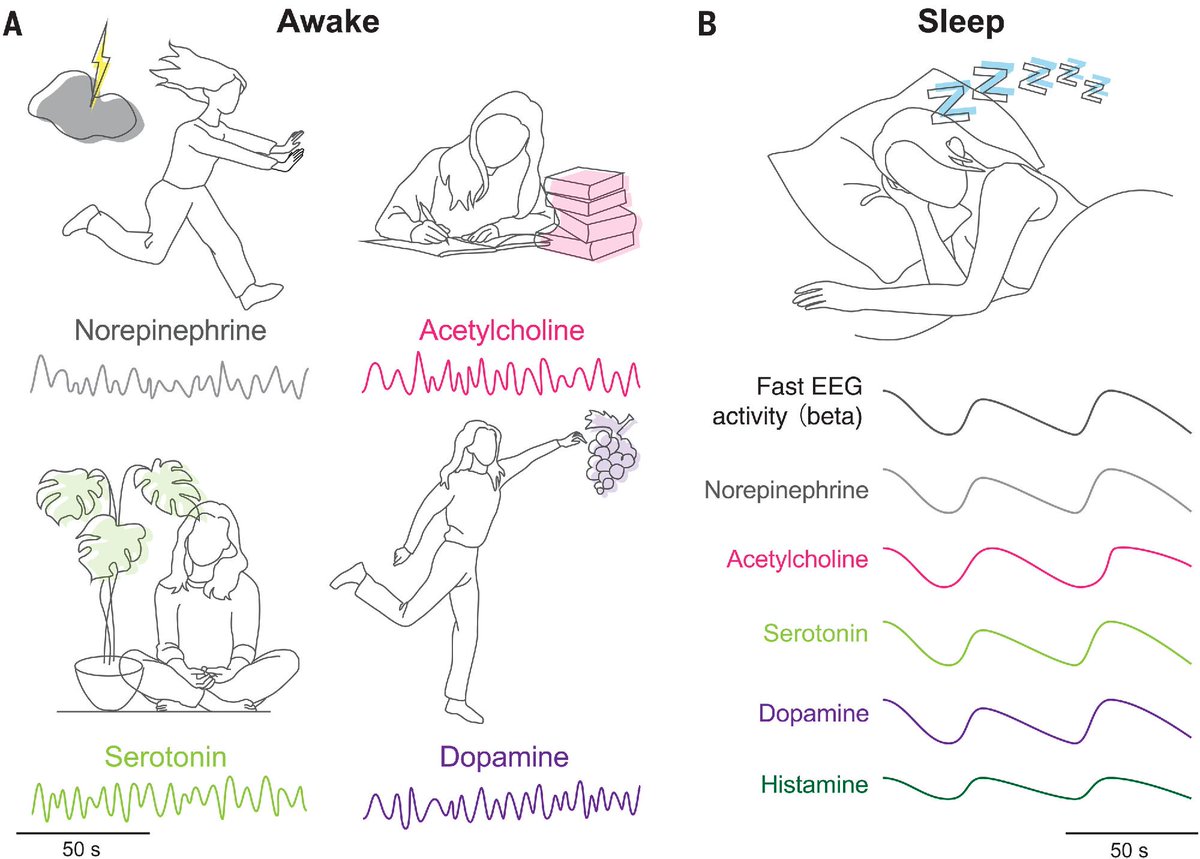
Recent studies have revealed the synchronization of neuromodulators including norepinephrine, serotonin, acetylcholine, dopamine, and histamine during sleep.
A new #ScienceReview explores what potential role the synchronization of these oscillations may play in health. https://t.co/fcDdHm1SDP
Today in @Nature, we report MouseMapper: foundation-model AI to map disease perturbations across the entire mouse body cell-by-cell.
In obesity, it revealed body-wide inflammation & unexpected facial nerve damage. 🧵👇🔉
https://t.co/BERf5GQ10Z led by @Dorie00 & @yingchen733
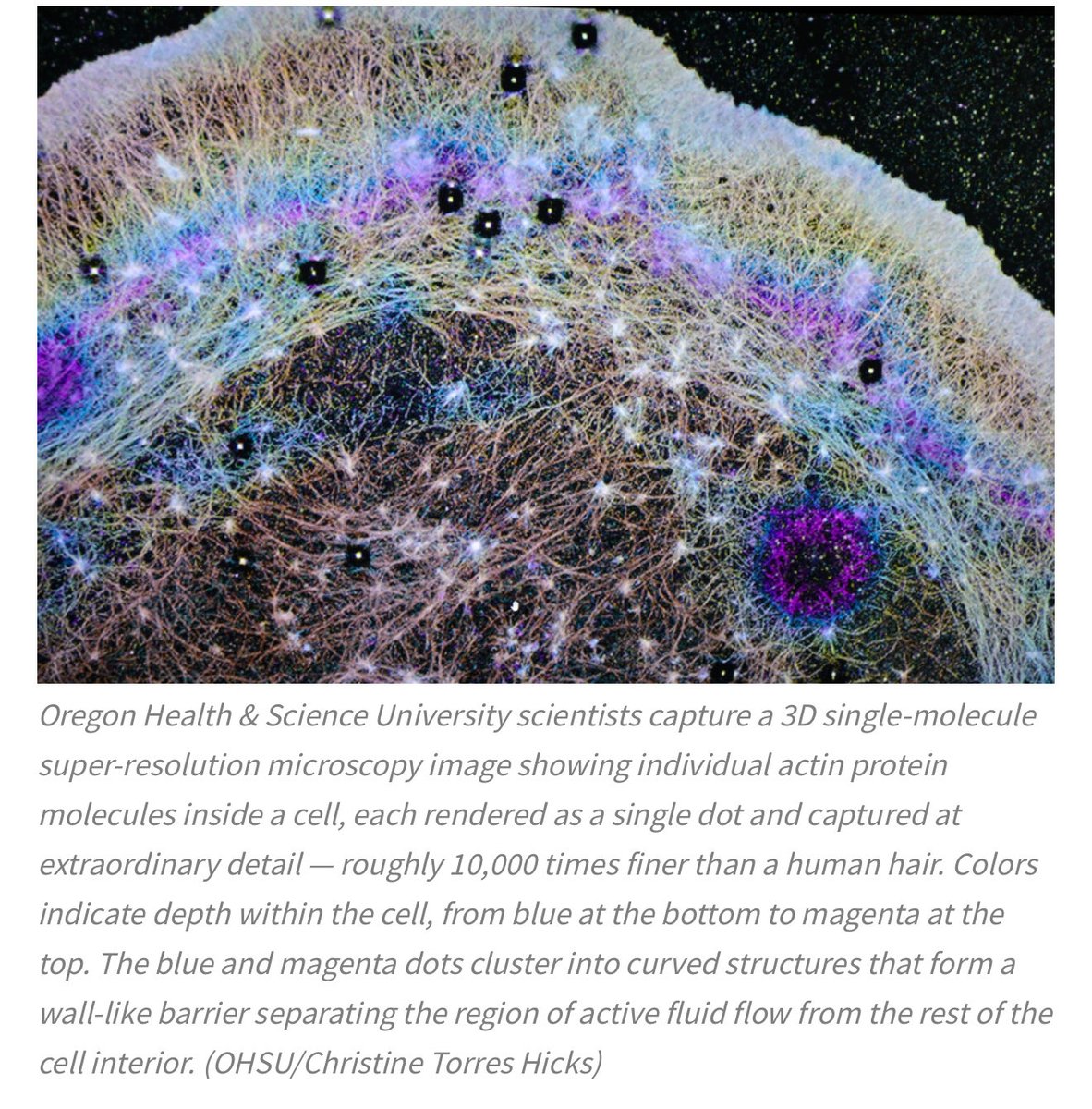
scientists just discovered that cells create their own internal wind currents to move proteins around. not diffusion. WIND. your cells have weather. we’ve been modeling intracellular transport like it’s random and it turns out cells invented logistics before we invented the wheel
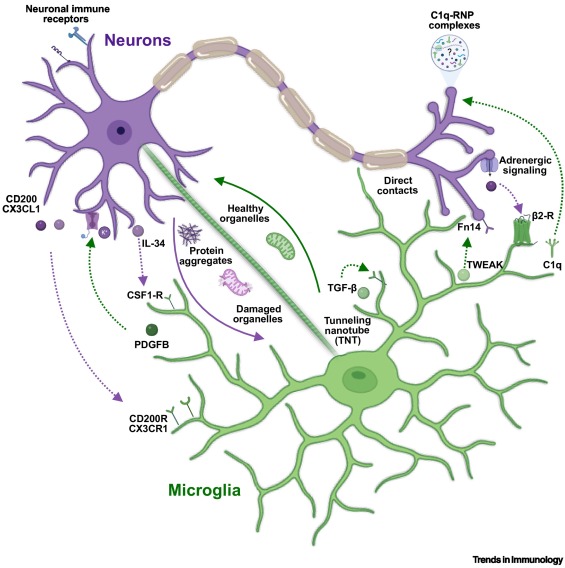
It is my utmost pleasure to share my lastesr work with the research community. In this study, we uncover how dysregulation of microglial checkpoints can selectively render vulnerable white-matter regions susceptible to age-related damage.
How the brain talks to the immune system
This diagram shows the inflammatory reflex - a neural circuit where the brain regulates inflammation through the vagus nerve. It’s how psychological stress, inflammation, and immune activity stay linked.
1️⃣ The signal starts in the brain
The vagus nerve carries electrical impulses from the brainstem to the spleen, the body’s blood-filtering and immune-coordinating organ.
🟢 Example: Deep breathing and meditation can activate the vagus nerve, lowering heart rate and reducing circulating inflammatory markers like CRP and IL-6.
2️⃣ The spleen acts as a relay
When the vagus nerve is stimulated, it triggers the splenic nerve to release noradrenaline, which activates immune T cells to release acetylcholine.
🟢 Example: In animal models, vagus nerve stimulation increased noradrenaline in the spleen within minutes, showing how fast the nervous system can modulate immunity.
3️⃣ Acetylcholine calms inflammation
This neurotransmitter binds to receptors on macrophages, reducing the release of tumor necrosis factor-α (TNF-α), an inflammatory cytokine involved in chronic disease.
🟢 Example: Clinical studies using implanted vagus nerve stimulators in rheumatoid arthritis patients lowered TNF-α levels and improved joint pain without immunosuppressive drugs.
The inflammatory reflex shows that inflammation isn’t just chemical, it’s electrical. The brain can literally tell the immune system when to stand down.
10.1038/nrendo.2012.189
A cubic millimeter of mouse brain with 75,000 neurons, vizualized by @quorumetrix :
https://t.co/2UvxxneSw2
Watching the way the signals propagate through the layers, with pyramidal cells integrating and processing 11,061 inputs at a time is mindbending.
Long-range axon branching: contributions to brain network plasticity and repair — a Review by Linda J. Richards, Cheng Huang, Adam Q. Bauer & Jin-Moo Lee
https://t.co/uRDrN7Mvtt
Your brain can fire up your immune system just by seeing someone who looks sick.
In VR, avatars with coughs + rashes triggered immune defenses.
Your mind prepares your body before germs even arrive.
Excited to share our collaborators' @JClinicalInvest paper: "MPO-anchored ENO1 mediates NET DNA to boost Treg differentiation via IFITM2 in sepsis." Congrats to Prof. Wankun Chen! https://t.co/wsbtUicZHs #Immunology
🎉 Thrilled to share our latest paper in Nature Methods on GeneAgent, a next‑generation AI agent designed for gene‑set analysis with built‑in self‑verification against biological databases to minimize LLM hallucinations.
🔬 Key Highlights
📍 Gene‑set analysis helps researchers interpret large-scale omics data but traditional methods struggle to predict novel functions or provide explanatory insights.
📍 Standard LLMs like GPT‑4 show promise in annotating gene sets but can generate plausible yet incorrect results (“hallucinations”).
📍 GeneAgent addresses this by autonomously querying expert-curated biological databases to verify its results, entering a four‑stage pipeline: generation → self‑verification → modification → summarization.
📍 In a benchmark study of 1,106 gene sets, GeneAgent significantly outperformed GPT‑4 in accuracy. When applied to seven new mouse melanoma gene sets, our human expert panels confirmed that GeneAgent provided more relevant, comprehensive, and trustworthy functional annotations than GPT‑4.
In summary, by verifying output against domain‑specific data, GeneAgent reduces factual errors in LLM‑generated interpretations.
🔗 Read the full paper: https://t.co/EXe1TZCVv6
🚀 Run your analysis at our GeneAgent website: https://t.co/60dbxYgbiZ
Many thanks to all co-authors at National Library of Medicine (NLM): Drs. Zhizheng Wang, Chih-Hsuan Wei, Shubo Tian, Po-Ting Lai, Qingqing Zhu, Robert Leaman, Zhiyong Lu, and our collaborators at National Cancer Institute (NCI): Chi-Ping Day & Christina Ross, Ph.D.
We're also deeply grateful to the scientists and developers behind the various biological databases used in this study: Gene Ontology (GO), KEGG, Reactome, WikiPathways, Transfer, MiRTarBase, CORUM, Human Phenotype Ontology (HPO), MSigDB, etc.
We have developed MouseMapper AI, a deep learning ensemble for the analysis of whole-body systems, including the nervous and immune systems, to map disease/drug perturbations tissue by tissue, organ by organ, at the cellular level in 3D.
MouseMapper uncovered obesity-induced whole-neuronal changes, most notably, a loss of trigeminal nerve endings linked to impaired whisker sensitivity, as well as tissue-specific macrophage clustering across the body.
Kaltenecker, Horvath, Al-Maskari, Kolabas, Chen… Ertürk, bioRxiv (2024)
https://t.co/ks0zBmntcn
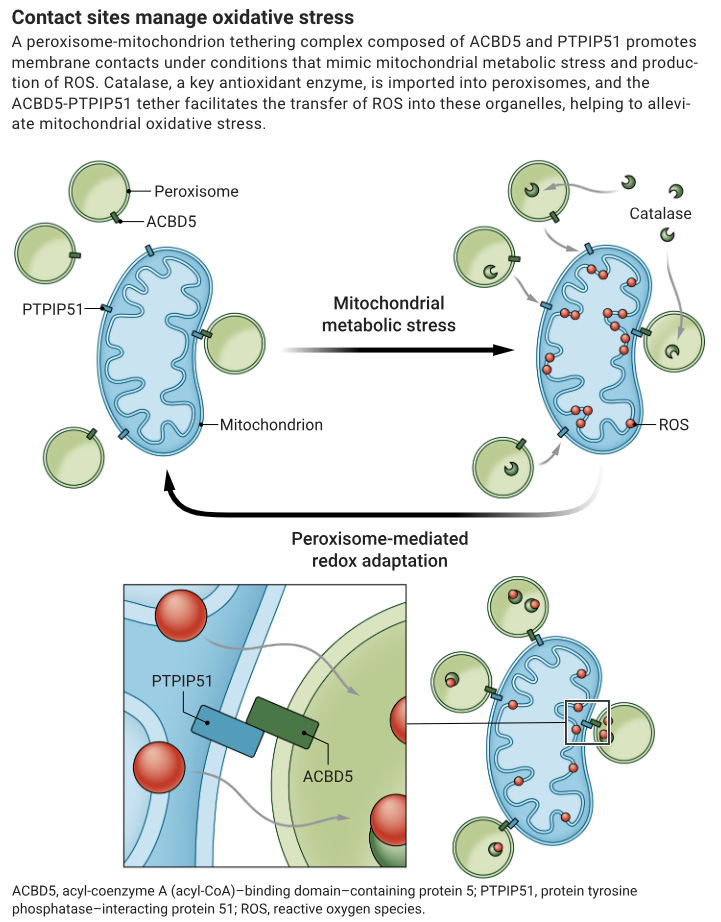
New findings in Science deepen our understanding of the role of membrane contact sites in cell biology and reactive oxygen species regulation.
📄: https://t.co/D45bHcCmeV
#SciencePerspective: https://t.co/E6t6wfw9dM