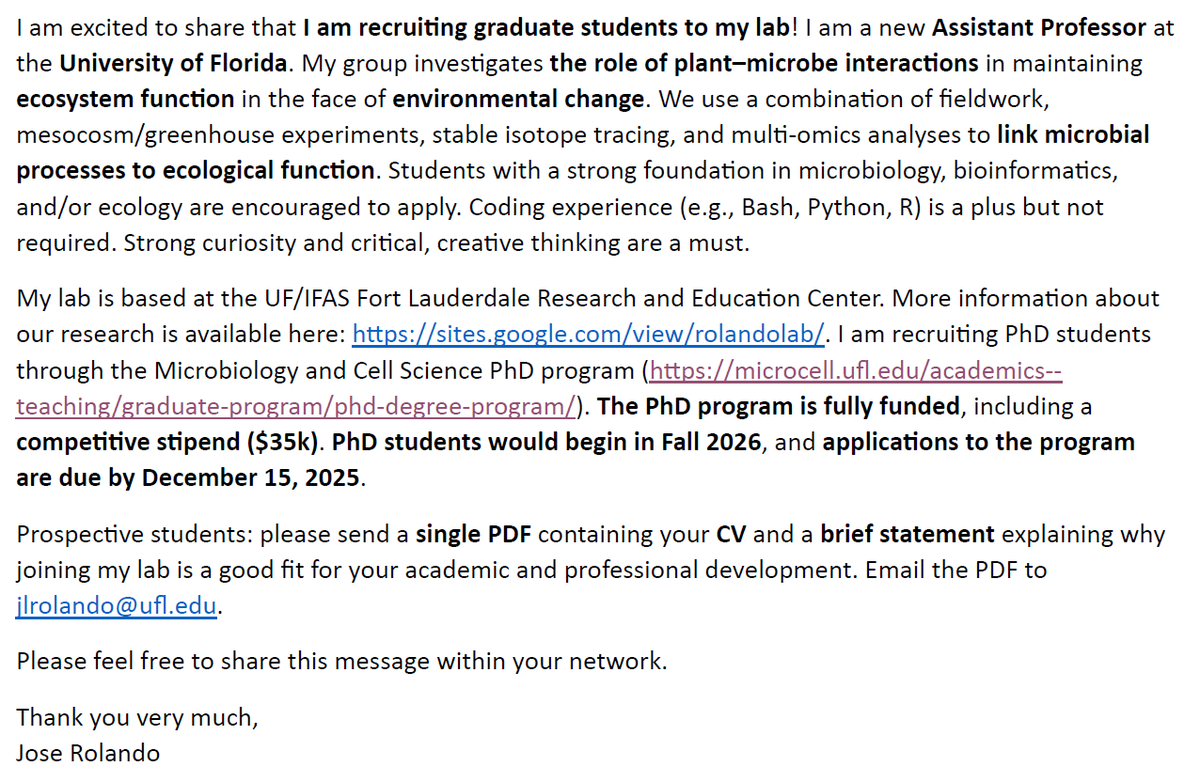
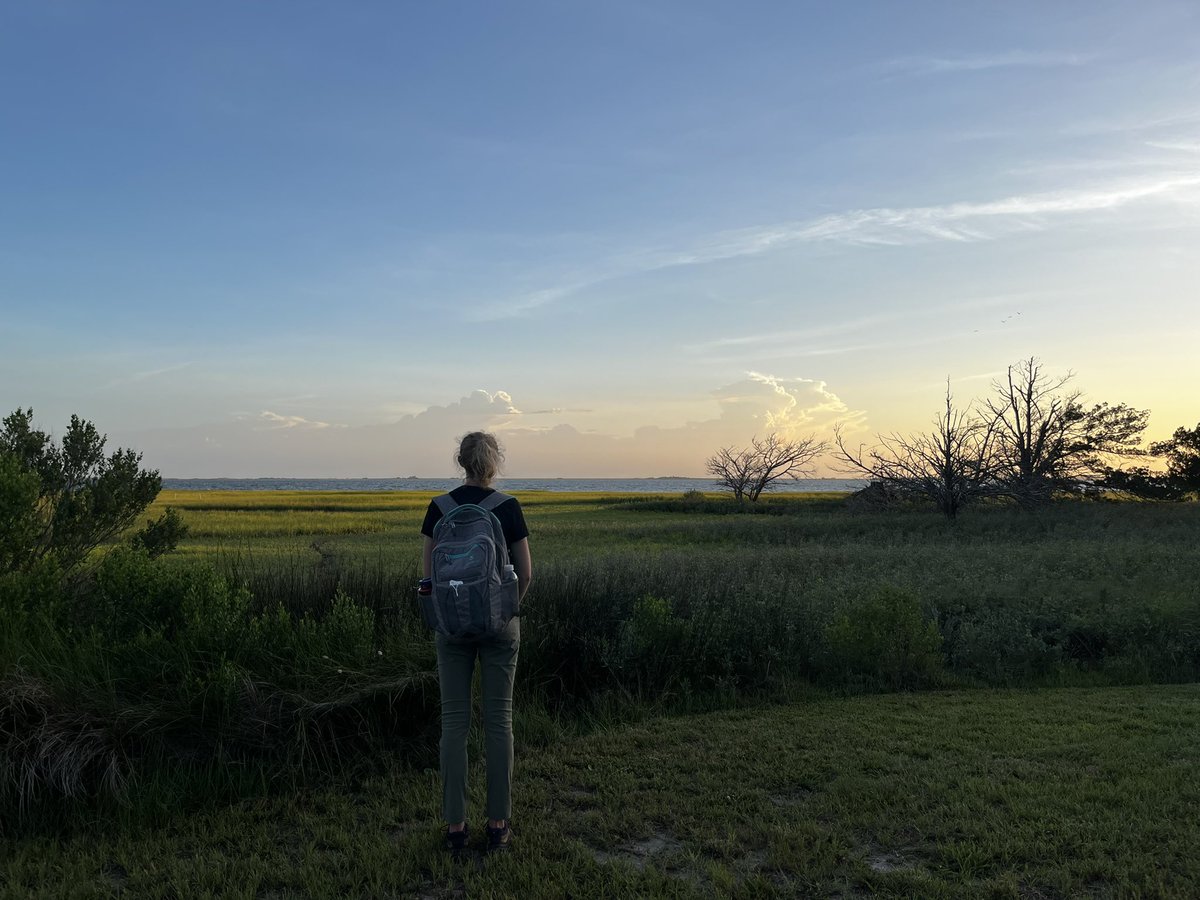
Join our new lab @UF_IFAS as a grad student!
We study how plant–microbe interactions drive ecosystem function.
Now recruiting PhD students (Fall 2026) via the Microbiology & Cell Science program.
💰 Fully funded (~$35k) | 🗓 Deadline: Dec 15, 2025
🔗 https://t.co/CtokkL5jzR
Cordgrass keeps Georgia's marshes healthy, but how does it stay healthy? @KostkaLab used advanced genomic methods to discover bacteria detoxify sulfide and fix nitrogen, enhancing plant health and resilience. 🌾https://t.co/OdGXtyeRfA
Our latest research in @NatureComms discovered that sulfur-eating bacteria play a key role in fixing nitrogen in the roots of salt marsh plant Spartina alterniflora.
More details in the press release below:
https://t.co/m4QBKLqhug
The mechanisms underlying plant-microbe interactions in coastal ecosystems are little explored. Rolando et al. use multi-omics & biogeochemical measurements to investigate saltmarsh cordgrass root microbiome.
@joseluisrolando@KostkaLab
https://t.co/BrXwXEyEqs
Excited to finally see this online! Here, we link N fixation to sulfur oxidation in Spartina alterniflora roots -the dominant marsh plant in the US. Interestingly, our discovered symbionts are closely related to those living in the gills of marine clams!
https://t.co/a8aaWf5US2
Sulfur oxidation and reduction are coupled to nitrogen fixation in the roots of a salt marsh foundation plant species https://t.co/dV3gU1LQJ1 #biorxiv_micrbio
More on some ongoing salt marsh restoration efforts here in CHS. Looking forward to more collaboration with the fine folks @KostkaLab / @GTSciences, @SCDNR, @SCaquarium, and @Robinson_Eng !
https://t.co/sDTo61dp7K
So proud of @autpeterson for representing @GTSciences and @GaTechMicrobes at the ABRCMS conference!
To any prospective grad students reading this, I’m happy to tell you more about opportunities at both @QBioS_GT and in Biology. Just ping me here or via email.
From northern Minnesota to coastal Georgia, wetlands are essential. Building on work w/@ORNL, Joel Kostka's team @GeorgiaTech is studying microbes' roles in salt marshes to understand how climate change will affect soils & plants that store carbon: https://t.co/MvLtQStJEf
We are so excited to start work on this cool new project in collaboration with @ORNL@Tfaily_Lab@ChrisInKnox, Caitlin Petro, Rachel Wilson, Kostas Konstantinidis, and Jeff Chanton!
Joel Kostka Awarded $3.2 Million to Keep Digging into How Soils and Plants Capture Carbon — And Keep It Out of Earth’s Atmosphere | College of Sciences | Georgia Institute of Technology | Atlanta, GA https://t.co/NmtwewGkfQ
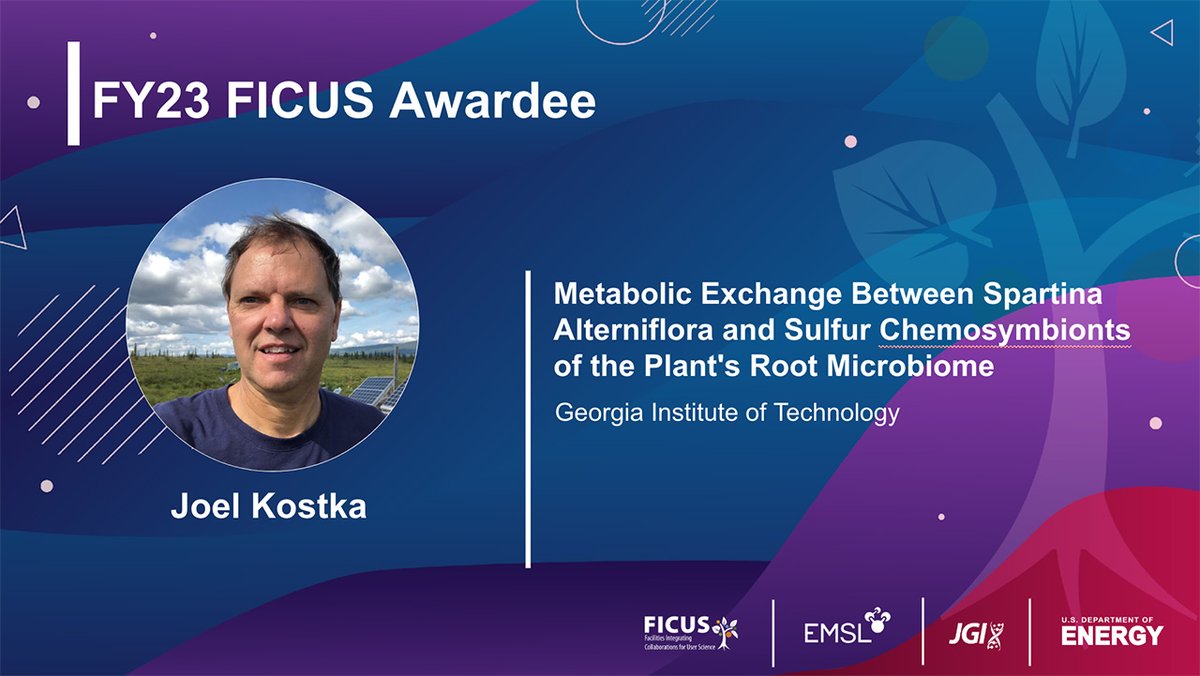
Little is known of how plant/microbe interactions regulate coastal ecosystems. @KostkaLab of @GeorgiaTech looks at the carbon/nitrogen exchange that govern interactions in Spartina alterniflora — a dominant plant along the Gulf of Mexico and Atlantic Coast. #2023FICUS (7/13)
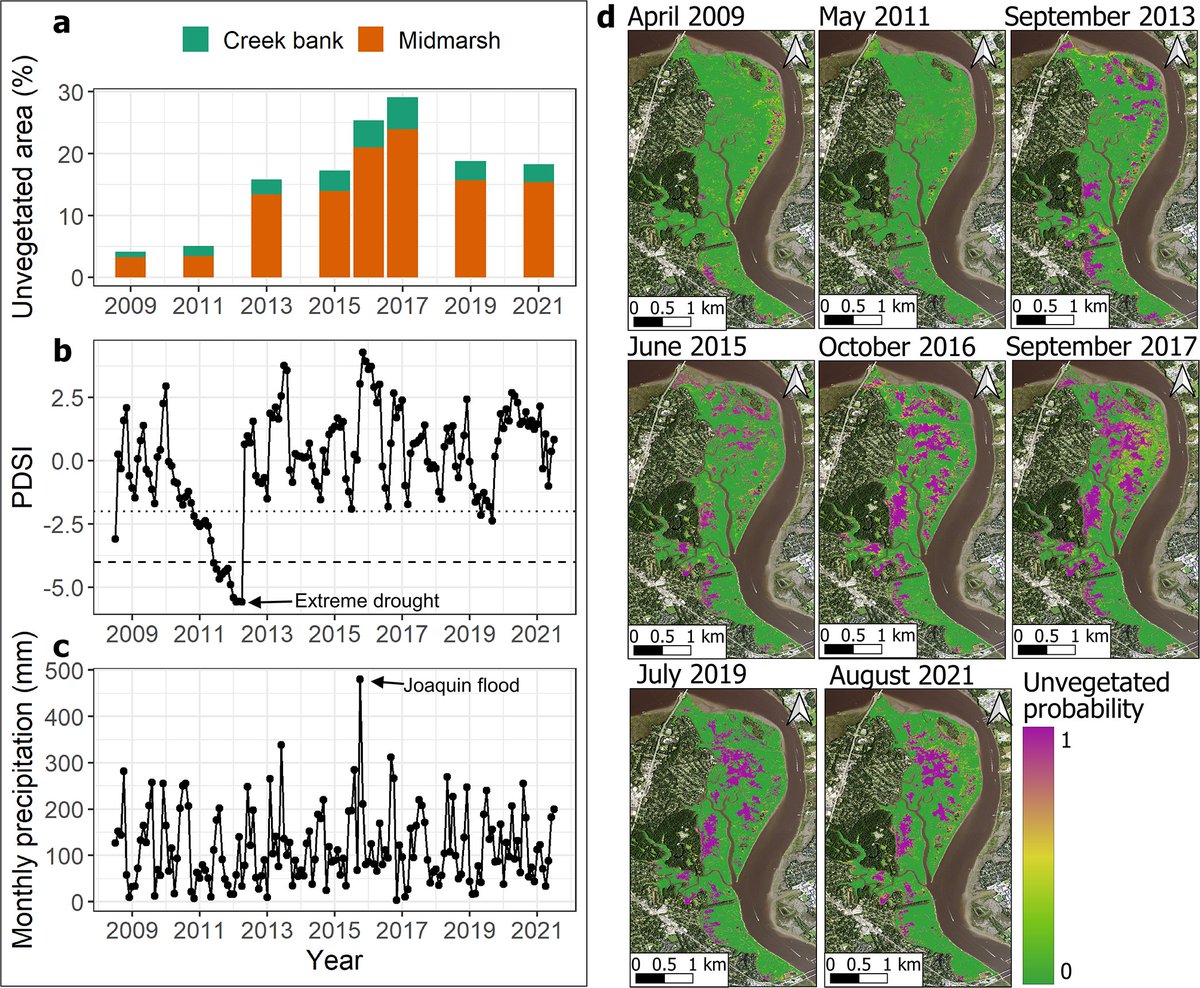
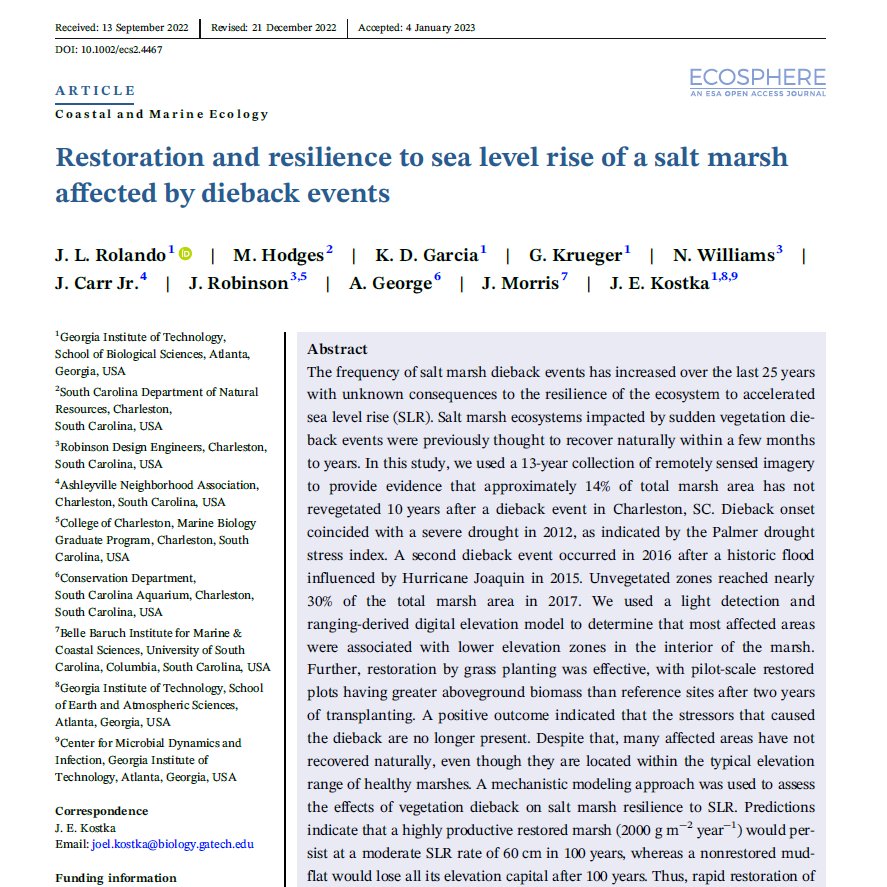
Thread on our recent study assessing the trajectory of salt marsh long term dieback events. A collaboration with the South Carolina DNR, South Carolina Aquarium, Robinson Design Engineers, the Ashleyville Neighborhood Association, and Jim Morris at @UofSC
We just released this preprint exploring the trajectory of salt marsh dieback events in South Carolina and Louisiana, USA. We found that extreme climatic events, which are increasing in frequency and intensity due to climate change, triggered dieback events
We just released this preprint exploring the trajectory of salt marsh dieback events in South Carolina and Louisiana, USA. We found that extreme climatic events, which are increasing in frequency and intensity due to climate change, triggered dieback events