🎙️ New from Uromigos
How long should patients stay on enfortumab vedotin plus pembrolizumab? And what’s next for targeted therapy in bladder cancer?
In this episode, returning guest Matt Galsky, MD, joins the Uromigos to tackle one of the most debated questions in urothelial cancer care: treatment duration in both metastatic and perioperative settings. The conversation also explores promising new research targeting PPARγ signaling in advanced bladder cancer.
🎧 Listen Here:
Apple Podcasts: https://t.co/1k5yKh2HEz
Spotify: https://t.co/HHqmwc35kI
GU Oncology Now: https://t.co/rW6dmDU6vm
An essential topic addressing Cardio-Oncology in prostate cancer. Cancer and CVD remain the two major threats to PCa patients. Congratulations to the outstanding team led by @neerajaiims !
Thrilled to share #PRIMARY2 Trial Results. This is the first randomised trial to show that adding [⁶⁸Ga]Ga-PSMA-11 PET-CT to MRI can safely halve the number of men needing a prostate biopsy.
Hot off the press in @TheLancetOncol 🎉
In 660 men across Australian sites with PI-RADS 2-3 but high clinical risk, PSMA-PET:
- Avoided biopsy in nearly half (49%)
- Was non-inferior for detecting clinically significant cancer (12% vs 16%)
- Halved the overdiagnosis of insignificant cancer (32% to 14%)
Fewer biopsies, less overdiagnosis, whilst not missing clinically significant prostate cancer: a real step forward for the diagnostic pathway.
Enormous congratulations to @ButeauJames@PeterMacCC , who led this as the centrepiece of his PhD and presented it as a plenary at #EAU26 in London. And to my brilliant co-lead @drlouiseemmett - this was a true partnership across our two centres.
Thank you to the UROLOGISTS @DrDanielMoon@declangmurphy (& many others), nuclear medicine physicians, technologists, radiopharmaceutical scientists across every site, and to @AnnetteVDHeyden and the @pros_tic who held it all together.
We are grateful to our funders: @PCF_Science, @nhmrc, St Vincent's Curran Foundation, Peter MacCallum Cancer Foundation, and @ANZUPtrials
Most of all, thank you to the 660 men who took part.
Open Access article: https://t.co/S0c60VLPBM
Glad to share our paper "Consolidative therapy for PSMA-avid lesions after 3 cycles of apalutamide plus androgen deprivation in metastatic hormone-sensitive prostate cancer: A prospective phase 2 single-arm trial"
https://t.co/H4K9aQRfsn
AcTION: first prospective Phase 1 of ²²⁵Ac-PSMA-617 in mCRPC, n=101. RP2D 10 MBq Q8W x6 cycles.
🎯 Chemo/ARPI-naive: PSA50 85.2%
🎯 Post chemo + ARPI, no prior Lu-PSMA: PSA50 58.8%
🎯 Post ¹⁷⁷Lu-PSMA: PSA50 52.5%
🔍 No DLTs, MTD not reached up to 10 MBq
🔍 No G4/5 TRAEs. Dry mouth G1/2 in >90%, mostly unresolved at data cut.
AcTFirst and PSMAcTION are now recruiting
#ProstateCancer #mCRPC #GUOnc #ASCO26
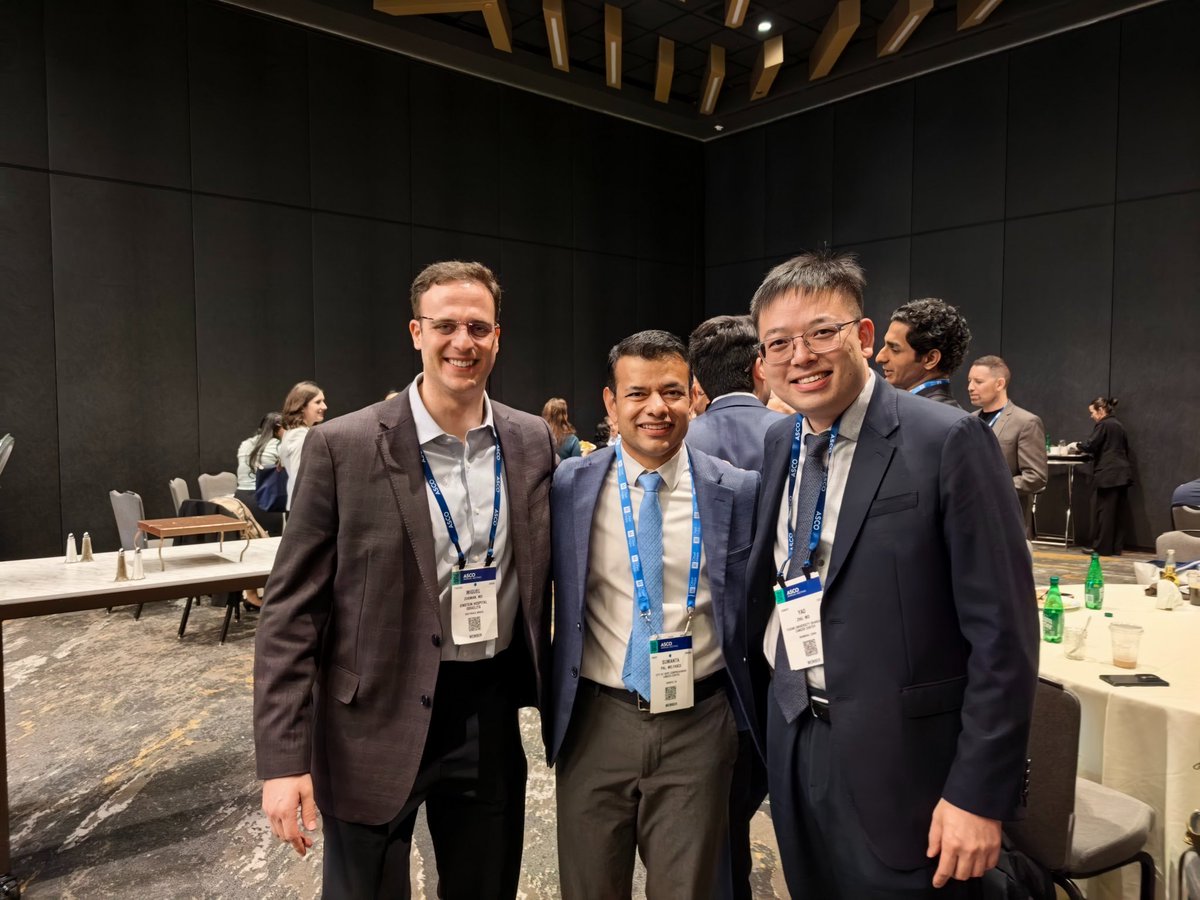
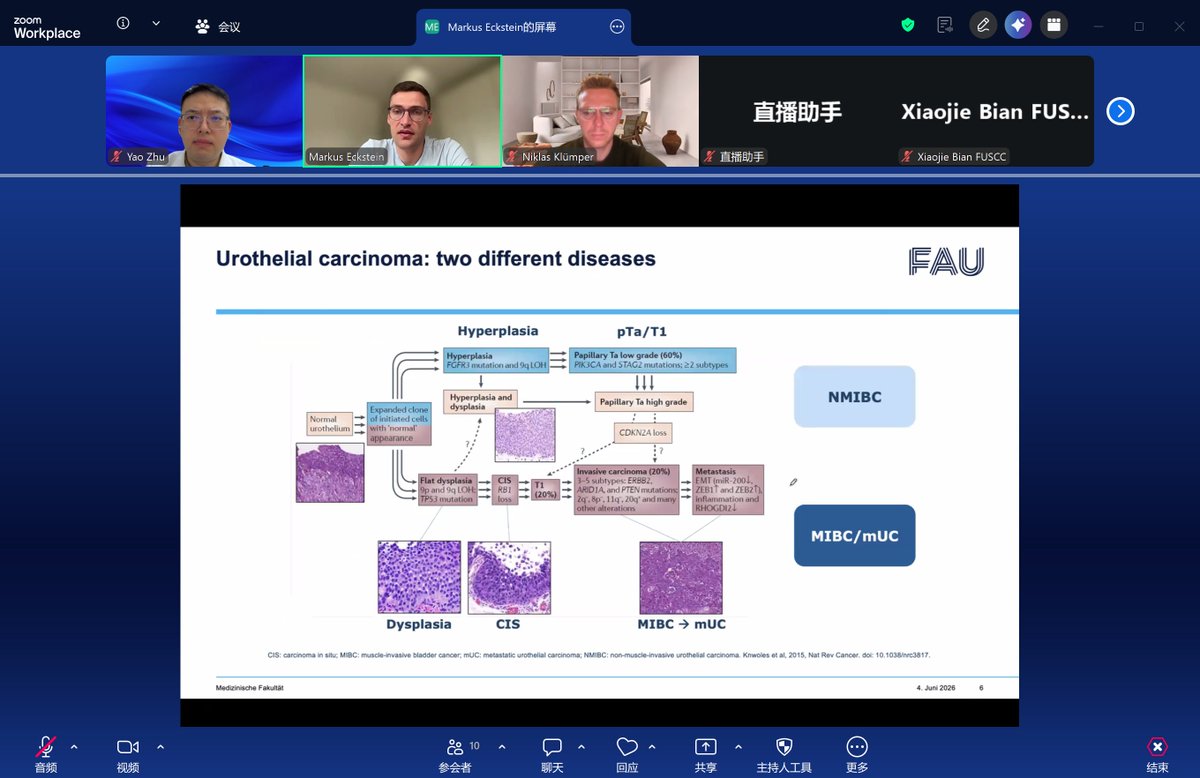
Excited to share that right after #ASCO26, @niklas_kluemper & @Markuseckstein3 gave talks at the FUGO seminar on biomarkers in UC for ADC response. Great insights—we just discussed nectin4-top1i, DV, Iza-bren. With a surge of ADC options, selection is set to become a hot area.
EXCEED #ASCO26: LY4101174 = More data on Nectin4/Topo1 ADCs in 86 patients with pretreated advanced UC
. RRs 20% is lower than expected while haem tox was high. Efficacy and toxicity balance doesn’t support further development. Yesterdays data (LY405 same payload/target) has ⬆️ efficacy and is a preferential agent for R3 development IMO. Not all ADCs with matching target and payload are the same.@OncoAlert
Truly humbled and delighted to join European Urology as a Consulting Editor. It is a privilege to contribute to a journal that stands at the forefront of urological science and clinical practice.
MFS by conventional imaging identical between ENZARAD and PROTEUS at 5 y and both trials negative for addition of ARPI. This was the initial primary in PROTEUS and hard to see why should be viewed as positive. PET imaging triggered by PSA >0.2 hence PROTEUS MFS = PSA PFS
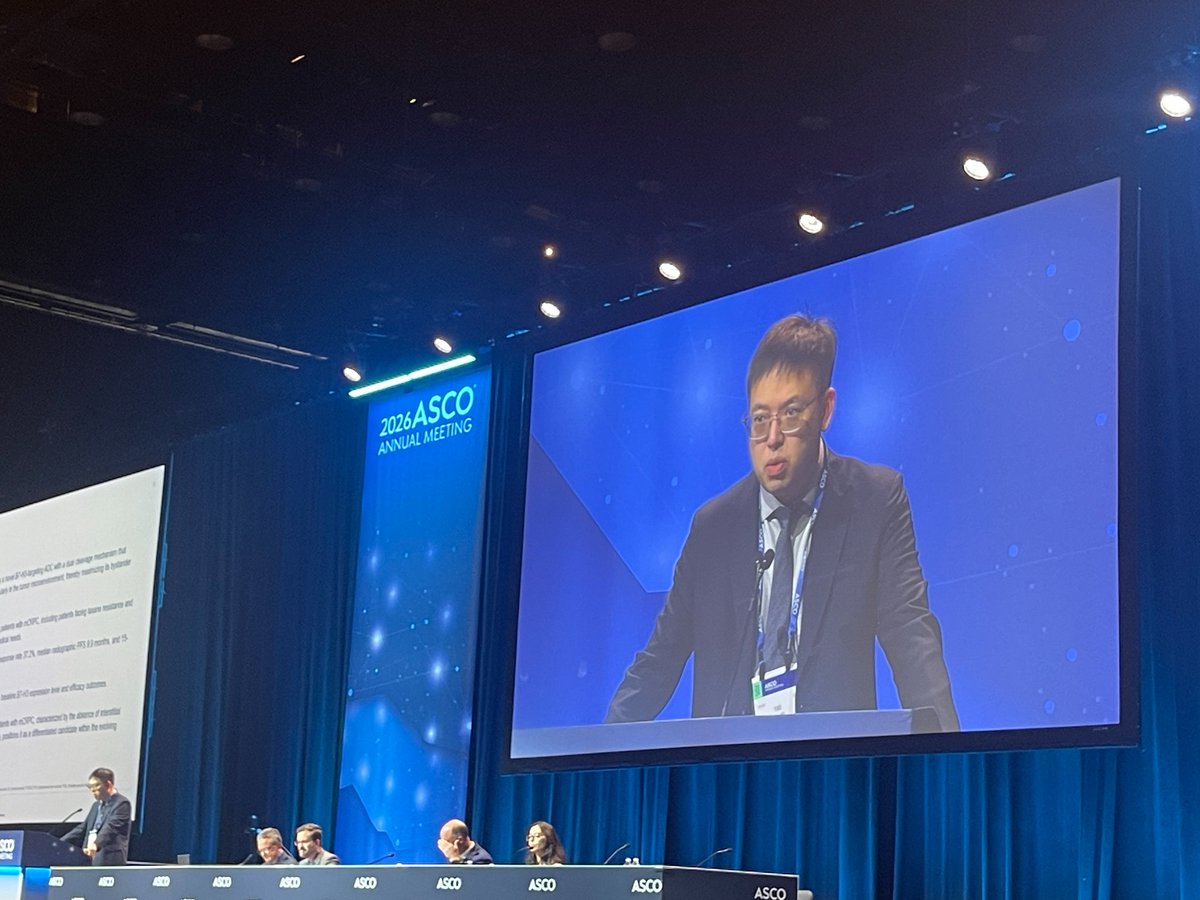
#ASCO26 GU Oncology Spotlight 🚨
🔬 Abstract 5015 | YL201 / tam-peli
Phase 2 study of a B7-H3–targeting antibody–drug conjugate in heavily pretreated mCRPC
Presented by Dingwei Ye, MD / Yao Zhu, MD
@ASCO@OncoAlert
Another important ADC signal in prostate cancer.
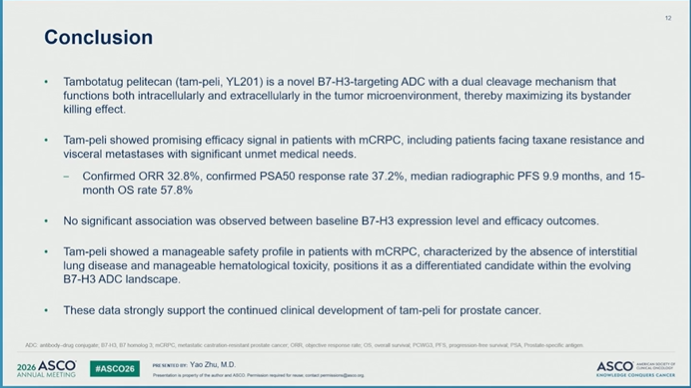
YL201, also known as tambotaug pelitecan / tam-peli, is a novel B7-H3–targeting ADC designed with a dual-cleavage mechanism that may function both intracellularly and extracellularly in the tumor microenvironment.
Why this matters:
➡️ mCRPC remains highly heterogeneous
➡️ many patients progress after ARPI + chemotherapy
➡️ ADCs may offer a new way to exploit tumor-associated targets and bystander killing
🔵 Study population
This was a heavily pretreated mCRPC cohort:
• N = 82
• median prior lines: 4
• ARPI: 100%
• taxane-based chemotherapy: ~71%
• visceral metastases: ~44%
• liver metastases: ~22%
• lung metastases: ~23%
So this was not an easy-to-treat population.
🔵 Efficacy signal
YL201 showed promising activity:
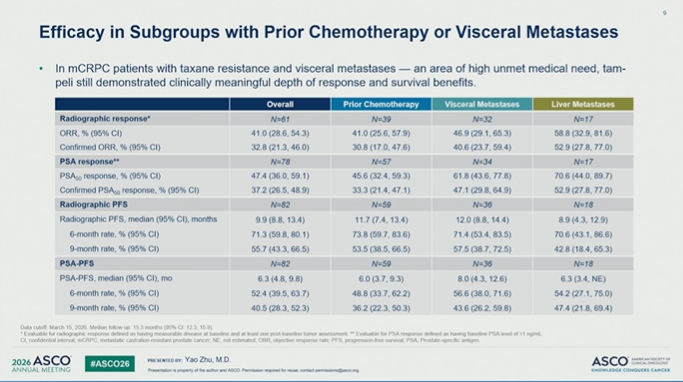
➡️ confirmed ORR: 32.8%
➡️ confirmed PSA50 response: 37.2%
➡️ median rPFS: 9.9 months
➡️ median OS: 18.5 months
➡️ 15-month OS rate: 57.8%
Notably, activity was observed in patients with taxane resistance and visceral metastases — a clinically important unmet-need group.
🧬 Biology signal
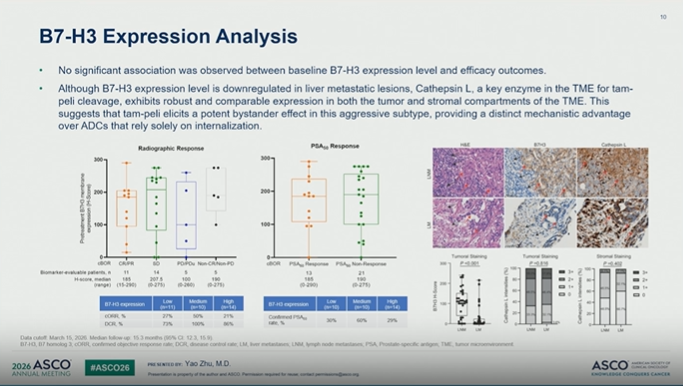
No significant association was observed between baseline B7-H3 expression level and efficacy outcomes.
That is interesting.
The presentation suggested that B7-H3 expression may be lower in liver metastases, while cathepsin L expression in the tumor microenvironment may support the dual-cleavage / bystander mechanism.
This raises a key ADC question:
Is target expression alone enough to predict benefit?
Probably not.
🔵 Safety
Tam-peli had a manageable safety profile in this phase 2 dataset.
Important differentiating point:
➡️ no interstitial lung disease signal reported
➡️ hematologic toxicity was described as manageable
That matters in an evolving ADC landscape where payload, linker, target, tissue distribution, and toxicity profile all shape clinical utility.
🔵 My take
YL201 / tam-peli is an important early ADC signal in mCRPC.
The key message is not just “another target.”
It is a broader shift:
Prostate cancer treatment is moving from ARPI/taxane/radioligand sequencing toward targeted payload delivery strategies.
But major questions remain:
➡️ Where does B7-H3 ADC fit after ARPI, taxanes, PARPi, and Lu-PSMA?
➡️ Can we identify who benefits most?
➡️ Is B7-H3 expression sufficient, or do we need better ADC biomarkers?
➡️ How durable are responses?
➡️ What is the optimal dose and toxicity-management strategy?
Promising signal.
Important biology.
Clinical role still being defined.
#ASCO26 #GUOnc #ProstateCancer #mCRPC #ADC #B7H3 #PrecisionOncology #ClinicalTrials #AntibodyDrugConjugates #Oncology
@OncLive@TargetedOnc@CancerNetwork@ASCOPost@ecancer@VJOncology@curetoday
Presented at #ASCO26:
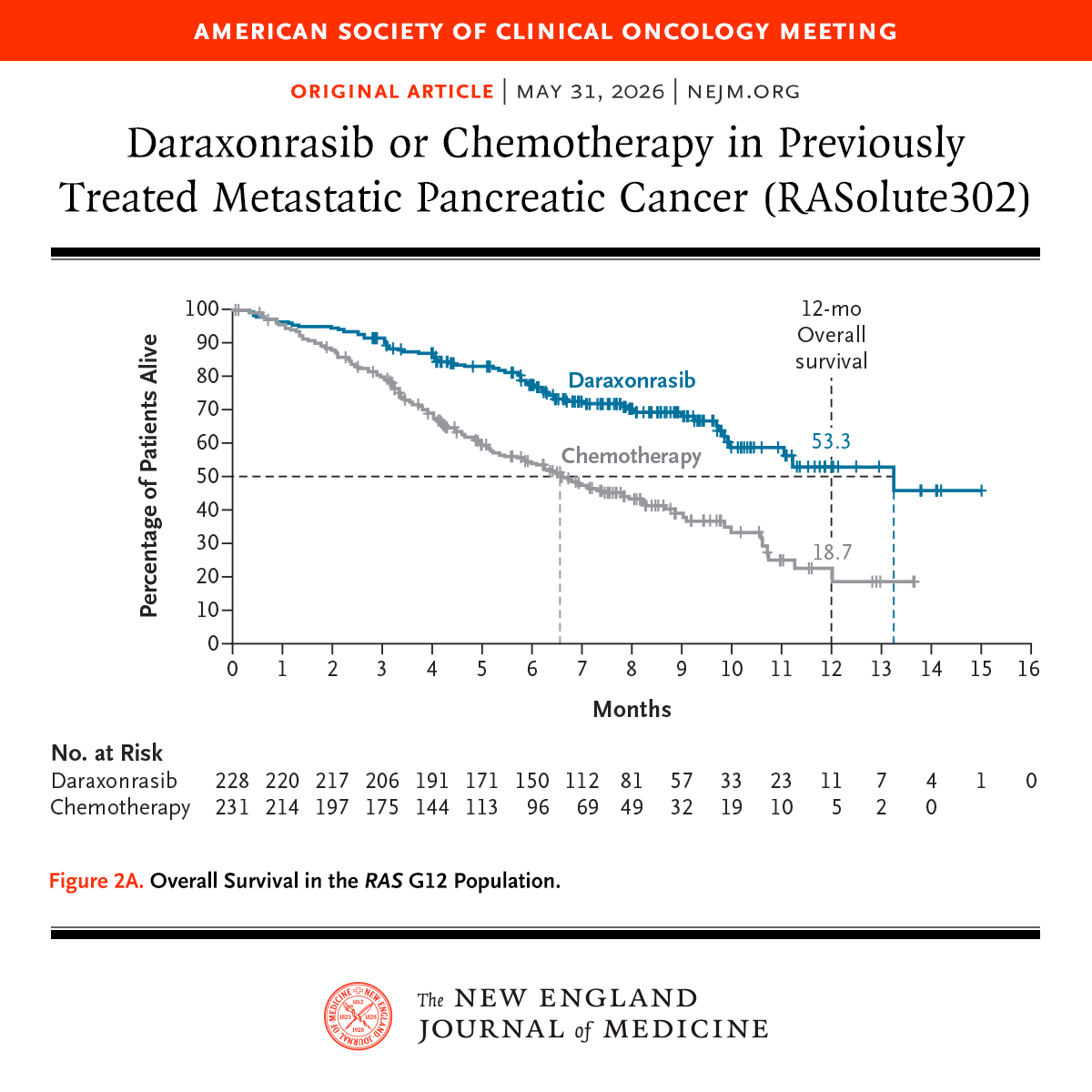
Among patients with previously treated metastatic pancreatic ductal adenocarcinoma, the RAS(ON) inhibitor daraxonrasib led to significantly longer overall survival and progression-free survival than chemotherapy. Full phase 3 RASolute 302 trial results: https://t.co/xwLWBZYRzq
@ASCO
Ivonescimab + chemo beats PD1 + chemo in advanced sq NSCLC in HARMONI6 (⬆️ OS HR 0.66, 10% ⬆️ TRAE) #ASCO26. This is relevant for bladder cancer. Ramucizumab also activity in bladder cancer while becacizumab did not, but the mechanism VEG/PD1 maybe more immunogenic. Could we see benefit for 1st line EV + VEFG/PD1 vs EVP? I think it’s worth testing in large randomized trials. @OncoAlert
3/n #ASCO26
The larger controversy. The change of the primary endpoint.
The original primary endpoint was a co-primary endpoint of pCR/minimal residual disease and MFS by conventional imaging. This was chosen based on ICECaP today demonstrated MFS by conventional imaging is a surrogate of OS.
You can see from the discussion in @urotoday from GU ASCO 2022. PET-based MFS was a secondary endpoint.
@ChrisSweens1@jamesbyu@NicholasZaorsky@PCaParker@Prof_Nick_James
Pleased to share our next #ASCO26@JCO_ASCO Simultaneous Publication
Neoadjuvant Sacituzumab Govitecan in Patients With Muscle-Invasive Bladder Cancer #SURE-01 Trial following our previous #SURE02
29% pCR rate with monotherapy supports TROP2 as a reliable target in MIBC
Biomarkers point to the Payload TOP1 effect rather than the Ab target @SanRaffaeleMI@MyUniSR@BrigidaMaiorano@vale_tateo@Anto_cigliola@CMercinelli@GiorgioBre et al.
https://t.co/598YYHHrPY
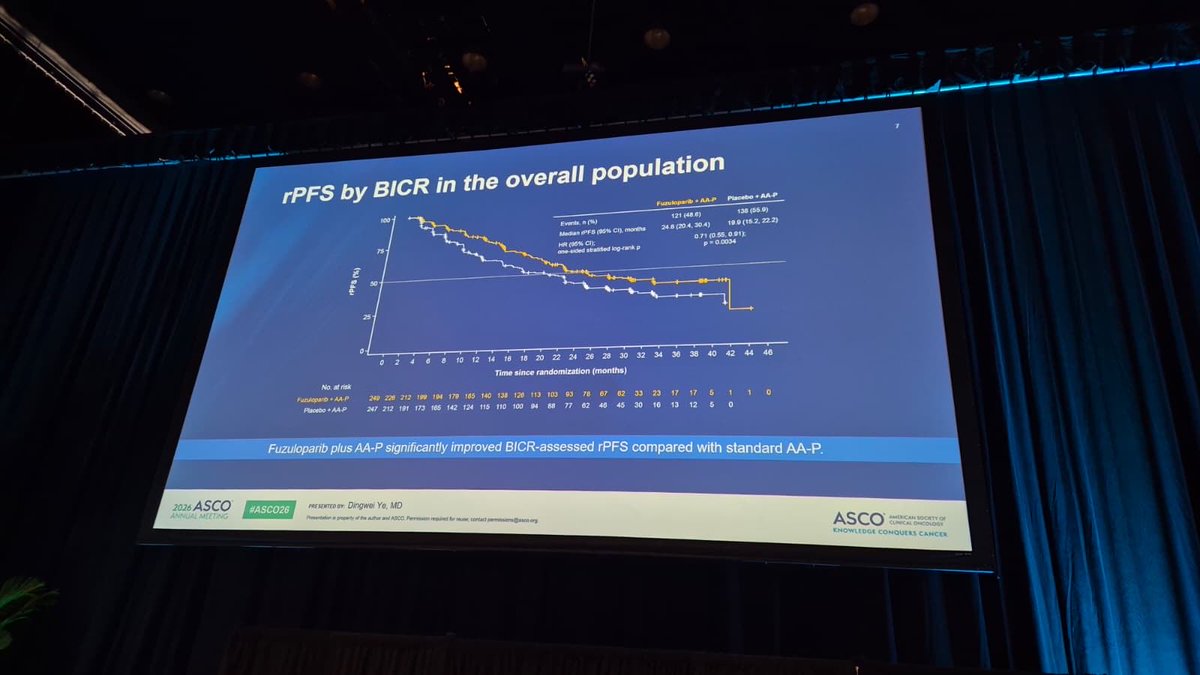
Interesting phase III data from FUZUPRO in 1L mCRPC: fuzuloparib + AA-P prolonged rPFS over AA-P alone, with notable activity in DRD-positive pts (27.7 vs 13.9 mo; HR 0.51). Safety profile remained manageable without new signals.
#ASCO26#ProstateCancer@OncoAlert@ASCO@OncBrothers















![DrMHofman's tweet photo. Thrilled to share #PRIMARY2 Trial Results. This is the first randomised trial to show that adding [⁶⁸Ga]Ga-PSMA-11 PET-CT to MRI can safely halve the number of men needing a prostate biopsy.
Hot off the press in @TheLancetOncol 🎉
In 660 men across Australian sites with PI-RADS 2-3 but high clinical risk, PSMA-PET:
- Avoided biopsy in nearly half (49%)
- Was non-inferior for detecting clinically significant cancer (12% vs 16%)
- Halved the overdiagnosis of insignificant cancer (32% to 14%)
Fewer biopsies, less overdiagnosis, whilst not missing clinically significant prostate cancer: a real step forward for the diagnostic pathway.
Enormous congratulations to @ButeauJames @PeterMacCC , who led this as the centrepiece of his PhD and presented it as a plenary at #EAU26 in London. And to my brilliant co-lead @drlouiseemmett - this was a true partnership across our two centres.
Thank you to the UROLOGISTS @DrDanielMoon @declangmurphy (& many others), nuclear medicine physicians, technologists, radiopharmaceutical scientists across every site, and to @AnnetteVDHeyden and the @pros_tic who held it all together.
We are grateful to our funders: @PCF_Science, @nhmrc, St Vincent's Curran Foundation, Peter MacCallum Cancer Foundation, and @ANZUPtrials
Most of all, thank you to the 660 men who took part.
Open Access article: https://t.co/S0c60VLPBM](https://pbs.twimg.com/media/HKfTz0oWkAAqe31.jpg)