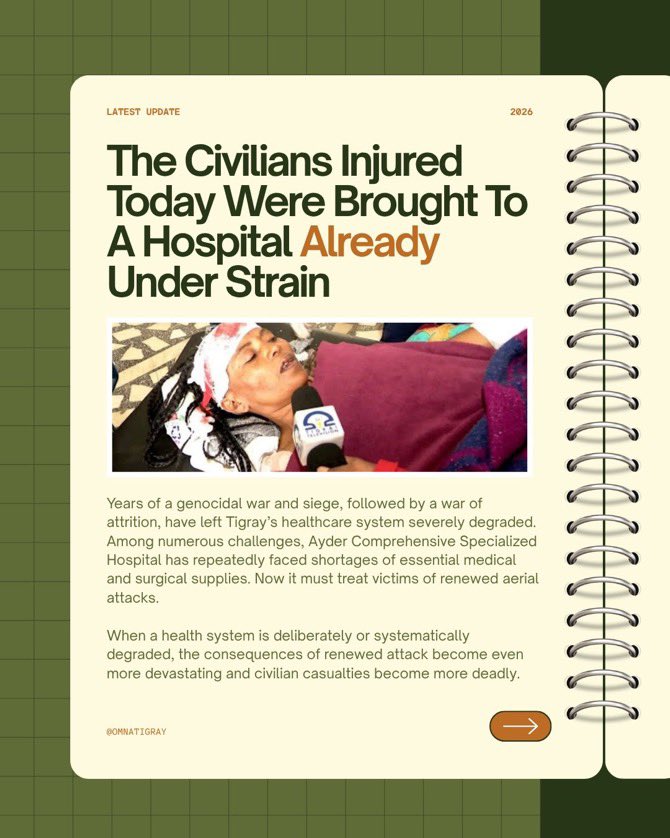
"Among them is a mother with her two children, all seriously injured. Another patient died from his injuries after arriving here. Those from Maichew, we received them on the night of September 28."
Enough is enough!
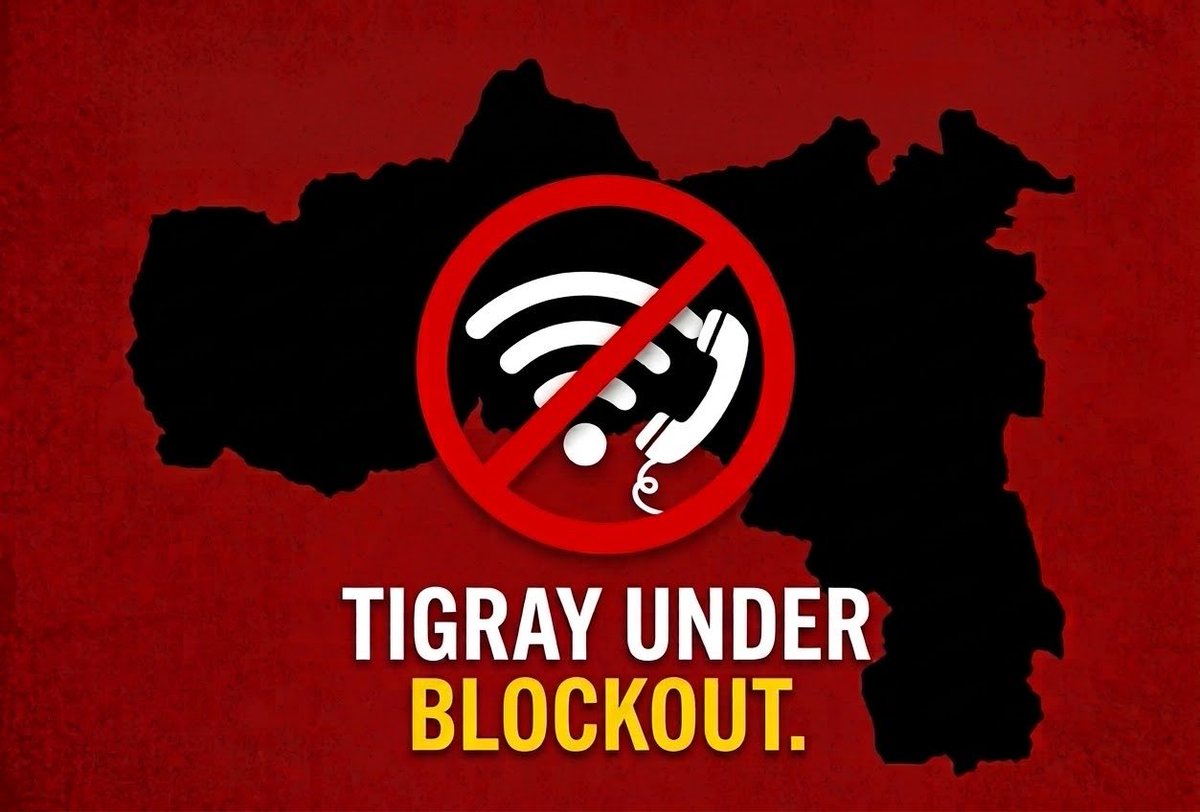
People in Ethiopia’s Tigray region are once again cut off from the internet + the world, with services disrupted since September 25.
The region has already endured a blackout lasting over two years in 2020. It must NOT happen again.
https://t.co/PdXtm8ePy8
Context behind the headlines: The war in #Tigray isn’t “restarting.” The genocidal war in Tigray started in 2020 and has yet to end.
Sign this petition to protect civilians: https://t.co/M7ibfYccE2
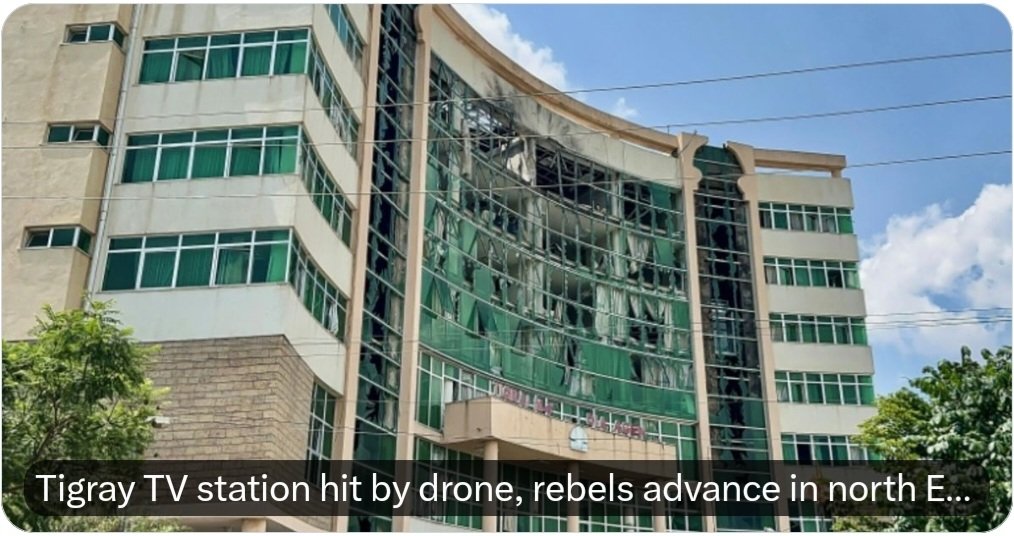
📢 Ethiopia Bombed Broadcaster to Silence Tigray’
Head of @TigraiTV described
🇪🇹Ethiopia’s drone strike as an attempt to commit ‘genocide in the dark’by silencing #Tigray.He added that after 24hours of disruption,the channel has resumed broadcasting from an undisclosed location.
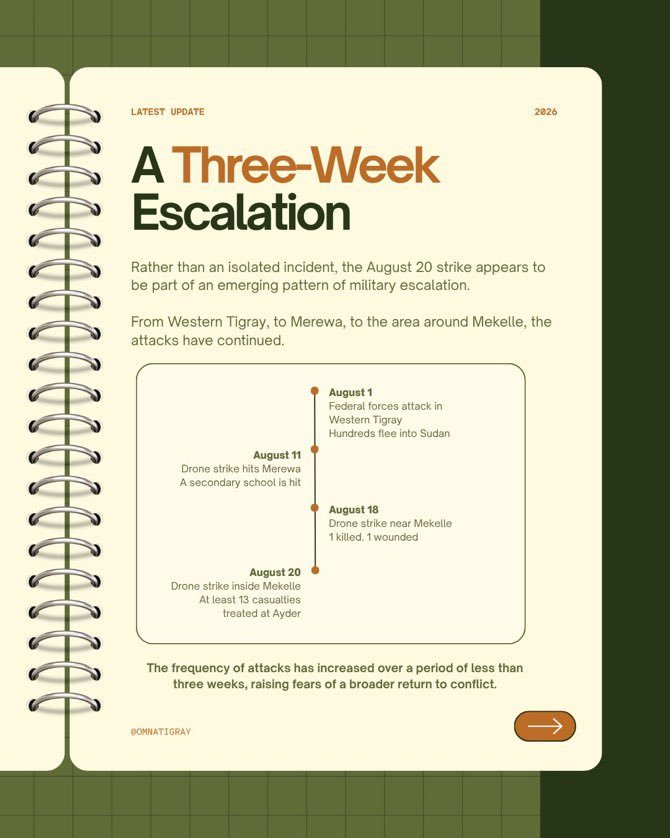
Since August, there's been an escalation in airstrikes in Tigray.
The resumption of hostilities in northern Ethiopia heightens concerns about unlawful attacks and the grave threat posed to civilians.
HRW's @LaetitiaBader spoke to @BBCNews' Focus on Africa:
Systemic looting across in Mekelle
Tigray people are being looted in a daylight!
In the footage: ENDF soldiers started already loading the Mekelle residents
"Five thousand birr. That was all my nephew asked for—to hide, to escape forced conscription, and to remain free. Hours later, telecommunications services in Tigray were shut down, and I could no longer reach him."
As active war once again takes hold in #Tigray, a Tigrayan who survived the #TigrayGenocide shares what this has meant for him and his family. Read more👇🏽
https://t.co/UE7bOxEewS
Thread 🧵
War is not experienced only through bullets and drones. It is also experienced through the disappearance of cash, medicine, communication, electricity and the ability to reach one’s family.
#Tigray#EndImpunity@UN@WHO@ICRC@UNHumanRights
https://t.co/5O0TKxDJtg
Call for big demonstration against the UAE involvement of destabilizing #Africa, #EastAfrica#Ethiopia#Tigray for Oct. 7, 2026 from 10am-1pm EST, staging at Connecticut Ave NW & Van Ness St NW Washington DC.
🚨 Tigray Stands on the Brink Again: The World Must Act Before Another Humanitarian Catastrophe Unfolds:
The renewed fighting in Tigray must be treated as an urgent international warning, not simply another Ethiopian political or military dispute. The region is again facing armed confrontation between federal and Tigrayan forces, while tensions between Ethiopia and Eritrea have sharply deteriorated.
Eritrea has announced that it is severing diplomatic relations with Ethiopia after Addis Ababa expelled Eritrean diplomats, while both sides have exchanged serious accusations. The African Union has urged restraint and peaceful dialogue.
The international community must act now because Tigrayans have already endured one of the most devastating conflicts of the 21st century. From November 2020 to November 2022, estimates of deaths associated with the war range from approximately 300,000 to more than 800,000, with some estimates placing the toll at around 500,000 or more. The deaths resulted not only from direct fighting and massacres but also from famine, disease and the collapse of healthcare.
The suffering was not limited to battlefield deaths. @UN investigators and international human-rights organizations documented serious violations of international humanitarian and human-rights law by multiple parties to the conflict, including extrajudicial killings, torture, rape and other forms of sexual violence, arbitrary detention, forced displacement, looting and attacks against civilians.
Investigators found reasonable grounds to believe that Ethiopian federal forces and allied forces committed crimes against humanity in Tigray and documented the deprivation of necessities essential for civilian survival. Eritrean forces were also accused of grave abuses, including mass killings of civilians and widespread sexual violence.
Tigrayan forces likewise committed serious violations in areas they controlled, including killings and sexual violence against civilians. The evidence demonstrates that civilians paid an extraordinary price regardless of which armed force controlled their communities. For survivors, the consequences continue through physical injuries, psychological trauma, displacement, destroyed homes and livelihoods, and the loss of family members.
Hunger became another devastating feature of the conflict. Humanitarian organizations and UN officials repeatedly warned that millions of people in Tigray required emergency food assistance, while hundreds of thousands faced famine-like conditions. Restrictions on humanitarian access, the destruction of agricultural livelihoods, disruption of markets and transportation, and the collapse of health services compounded the crisis.
UN investigators reported that starvation and the denial of essential services contributed to large numbers of deaths. Hospitals and health facilities were damaged, looted or deprived of medicines and equipment, leaving patients without lifesaving treatment. Children were particularly vulnerable, facing malnutrition, displacement, interruption of education and separation from their families. The scale of the humanitarian disaster makes clear that the consequences of war extended far beyond the battlefield.
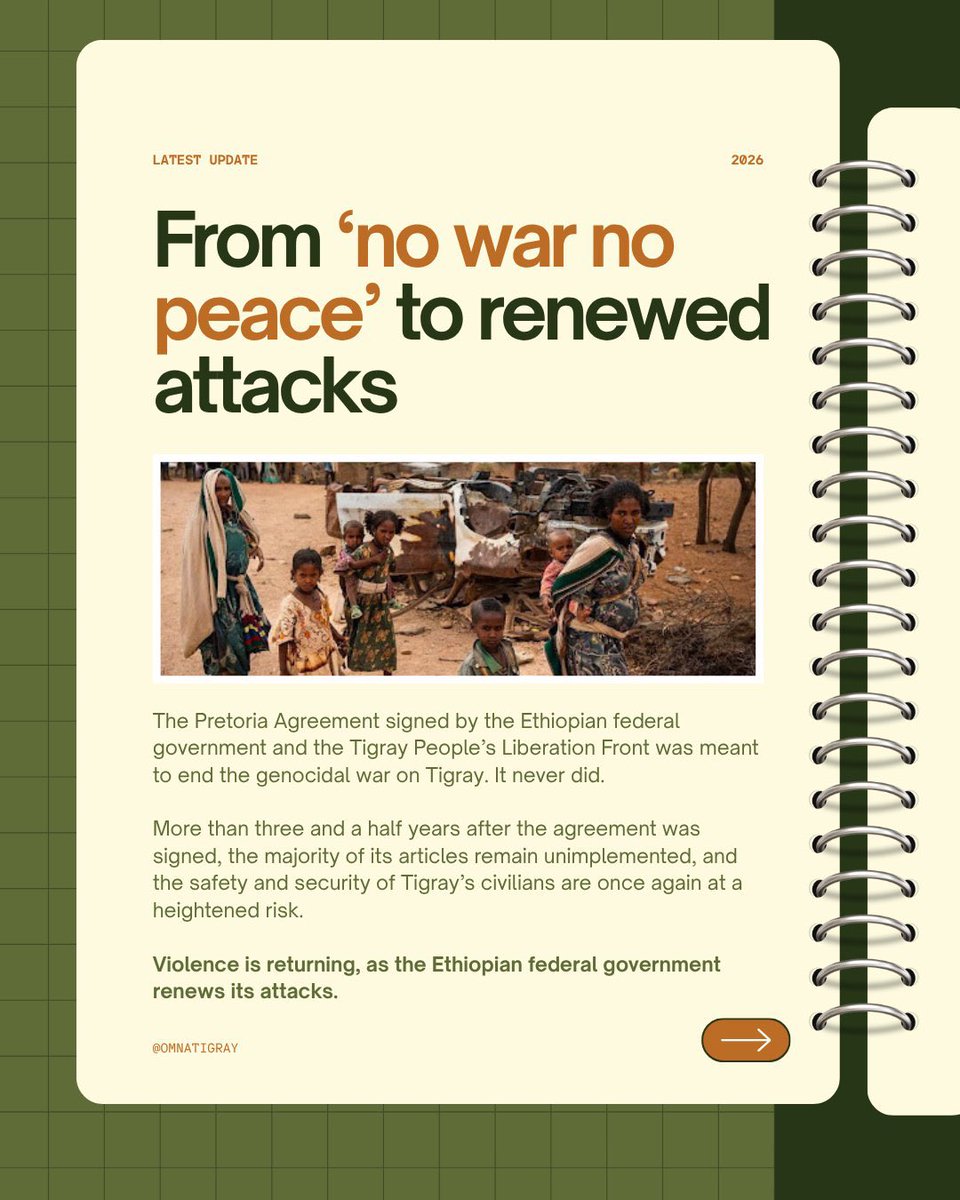
The Pretoria Agreement of November 2022 ended the large-scale fighting, but it did not erase the consequences of the war or resolve every underlying dispute. Large numbers of people remained displaced, particularly from contested areas of Western Tigray, while questions surrounding accountability for alleged war crimes and crimes against humanity remained unresolved.
Survivors of sexual violence and other atrocities continue to seek justice, recognition and support. The absence of comprehensive accountability has also left communities vulnerable to renewed fear and insecurity.
Continued below:
⬇️
Ethiopian Drones Bomb Adigrat In Eastern Tigray
The Ethiopian regime has carried out airstrikes on Adigrat in Eastern #Tigray, following recent attacks on Axum’s airport and a local school. It’s worth mentioning that thousands of IDPs in Axum are currently sheltering in schools.
A medical professional at Ayder, on the Maichew victims:
"Those who are brought here are only the critically injured. We have received 16 people from Maichew and 8 of them are children. Some have lost their eyes, some have lost their limbs. Some are injured on their spines badly."
Interview with @LaetitiaBader of @hrw about possible war crimes in Tigray following indiscriminate airstrikes in Mekelle, and the lack of accountability enabling the Abiy regime to perpetrate crimes against Tigrayans and Ethiopians in general.
https://t.co/LJPK6LkvYf
Tigray capital “Mekelle” 'out of cash' as fighting escalates, resident tells @BBC
A resident of Mekelle, the capital of Ethiopia's Tigray region, says that the atmosphere is calm but people are very stressed after fighting broke out between government troops and the party that controls the region on, raising fears of a return to full-scale civil war.
He says that many banks have been running low on cash for months, leaving people to rely on mobile banking, with fears that could now be blocked.
An adviser to Ethiopia's prime minister accused the Tigray People's Liberation Front of launching an all-out offensive, including in the two neighbouring regions of Afar and Amhara.
The Tigrayans say they are engaged in defensive combat.
⬇️ https://t.co/tOkc7KEazn