Artificial intelligence (AI) personas and virtual humans have emerging applications in obesity research, education, and healthcare practice.
The @EASOobesityECN eLearning Hub webinar examined the potential of AI-supported technologies.
Watch here: https://t.co/vU8z1HUIOX
Couldn’t make it to #iwAL26? No problem! 🙌
Presentations from the 8th International Workshop on Acute Leukemias are now available on VJHemOnc. Hear the latest in acute leukemia from the experts who presented them.🩸
👉 https://t.co/VllNUhaVAc
Naval Daver (@Daver_Leukemia / @MDAndersonnews, Charles Craddock (@charliecraddock / @unibirmingham), Andrew Wei (@PeterMacCC), Gail Roboz (@WeillCornell)
#AMLsm #Leusm #HemOnc
Can genetic 🧬risk make PSA screening smarter? New data from 59,000+ men suggest that PSA alone may not tell the whole story.
https://t.co/fwcf9n4P1r
Polygenic Risk Scores and PSA Levels for Risk of Prostate Cancer and Related Mortality
A prospective cohort study of 59,067 men found that genetic risk meaningfully refined #ProstateCancer risk beyond baseline PSA.
➡️Ten-year risk of clinically significant disease was 0.5% with PSA <1 ng/mL, 6% with PSA 1–<3 ng/mL, and 21% with PSA ≥3 ng/mL.
➡️Higher polygenic risk scores or family history increased risk 2- to more than 3-fold across PSA categories and were also associated with prostate cancer-specific mortality.
@HVigneswaran, @adamkibel_uro, @TobiasNordstrom, @annalantzKS@OncoAlert 🚨 #LPCCC27
@Silke_Gillessen@AOmlin@ProfKHerrmann@weoncologists
📣This is an exciting day for the #GIST community! Patients have more options to live longer and better lives. #CTOS2026@ctosociety remember when we fought for this drugs years ago? It has now become a reality that the drug works and we look forward to seeing how pts do on it.
Accelerating CARs for #lymphoma. Join Drs. Sairah Ahmed, Sunita Nasta, and Nirav Shah (@niravshahmd) with @HealthTree at the Hilton New Orleans Riverside, Fri 12/11, 7 PM CST: https://t.co/yvpOhvwNZB #ASH26#MedEd
Well we were all wondering when this approval would happen. Today was the day. Now the question is when will it be distributed and available from cancer pharmacies for the innumerable patients asking for it. #giredestrant#Lidera#bcsm#breastcancer#SERD
$SNY x $INSM
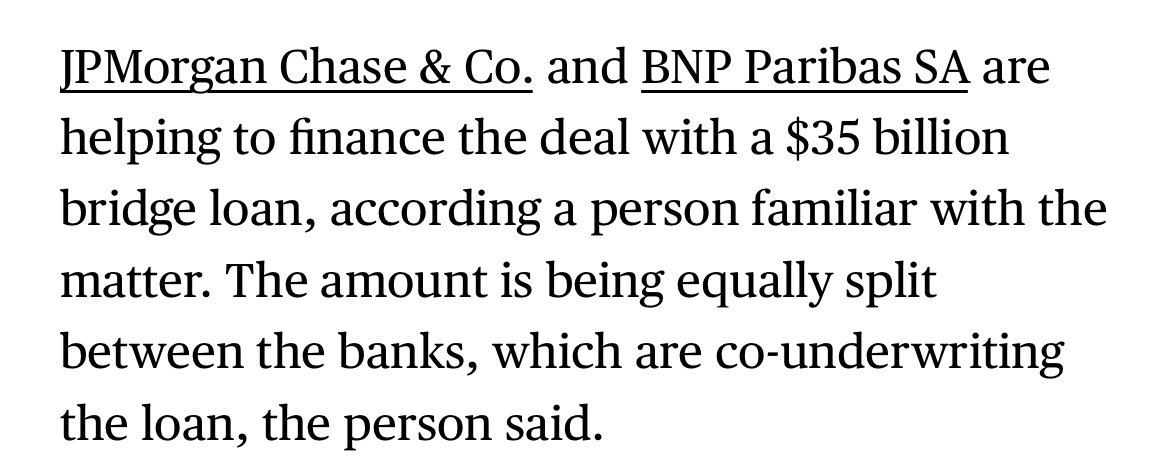
Additional details about the transaction, from @Bloomberg, which is the largest tie-up since $PFE x $SGEN:
A whopping $35 billion of the acquisition price is being underwritten by a $35 billion bridge loan from JPM and BNP…
Talk about pharma firepower — no sweat for $SNY with banking buddies such as these…
And bodes well for future deals for $xbi & pharma:
Join #IHPAC2027 in 🇮🇪 Aug 19-21, 2027, to explore innovative approaches bridging science & practice, strengthening connections between prevention & intervention & promoting equitable health outcomes across diverse populations.
https://t.co/xU5G2pbp0v
By employing silencing RNAs directed to the liver, researchers show that they can silence the pathogenic activity of AASS and rescue brain damage caused by toxic metabolites in a mouse model of glutaric aciduria type I. @Duke_Childrens https://t.co/in8J7h8gnp
Leanne Li, @TuomasTammela, and Humam Kadara will discuss "New Frontiers in Lung Cancer Biology and Therapeutics" in a plenary session at the AACR Conference on Redefining Lung Cancer (January 14-17; San Diego).
https://t.co/FogMoBmx9b
#AACRlung27@LiGroup_Crick@humam_kadara
Can immunotherapy’s side effects be reduced without losing its effectiveness? This and more in the November Editors’ Picks from AACR journals. Also, this month: two trials testing immunotherapy before surgery. Read them all free on the #AACRBlog: https://t.co/CBMWr1SZHx
🧬 Nature Communications: AlphaFold2 kept predicting adenylate kinase’s closed state. AF-ClaSeq recovered both open and closed states using purified alignments containing just 7–10 sequences each—showing that which evolutionary signals survive can matter more than simply adding sequences.
Developed by Ohio State University researchers, AF-ClaSeq is an MSA-selection framework, not a new foundation model. An MSA aligns related protein sequences to provide evolutionary information for structure prediction.
🔬 Rather than merely shrinking or clustering an alignment, it repeatedly samples sequence subsets, predicts their structures, and tracks which sequences consistently accompany each conformation. A voting procedure then assembles separate, state-enriched alignments.
For adenylate kinase, the highest-confidence predictions matched experimental open and closed structures at Cα RMSDs of 1.7 Å and 1.9 Å. Random alignments of the same size produced substantially more variable, less accurate results. https://t.co/7GJwH6bzeT (https://t.co/tIT2qgjNDm)
🧩 The study evaluated 14 protein systems, covering domain movements, local loop rearrangements and fold switching. State-associated sequences were dispersed across evolutionary branches, helping explain why sequence-similarity clustering alone can miss them.
The practical contribution is more controlled access to alternative conformations by changing AF2’s input, rather than retraining its weights.
⚠️ Small final alignments do not mean cheap discovery: purification requires extensive AF2 sampling. State definition and validation still depend on structural descriptors and, in some analyses, known reference structures. This is computational recovery against existing experiments—not new wet-lab validation or a complete dynamical ensemble.
📄 Paper:
https://t.co/eyP33Q1mSe (https://t.co/nohnrYvLUm)
💻 Code listed in the paper:
https://t.co/Sza7D5p4LI
#AlphaFold #ProteinDynamics #StructuralBiology #AIforScience
Alex Potter (@alexandra_p_24) led a new study in JAMA Oncology (@JAMAOnc), providing the first national-level evidence of the association between LDCT screening and improved outcomes in small cell lung cancer (SCLC). Among more than 17,000 Medicare beneficiaries, we found that patients with SCLC who underwent LDCT screening were less likely to present with late-stage disease (44% vs. 70%) and had more than 2.5 times higher 3-year survival (28% vs. 11%).
These findings challenge the longstanding assumption that SCLC is too aggressive for screening to make a difference and highlight the tremendous potential for early detection to improve outcomes in SCLC.
Read it here: https://t.co/J1YWdPGzeE
Phase I study of clesitamig (DLL3 x CD3 × 4-1BB trispecific T-cell engager) @jitcancer. CRS in 46.3% but with step-updosing, all grade ≤ 2. In SCLC, RR 20.8%, DOR 4.4m - but immunogenicity an issue with all pts developing ADAs, which reduced exposure.
https://t.co/hiwFdiWpr3
This global panel to discuss availability and impact of #kidneycancer care is truly impactful. Understanding the barriers of reimbursement, opportunities for trials & novel therapies across borders from @montypal@AlbigesL#KanGong et al. From 4 continents
#IKCSNA26@OncoAlert