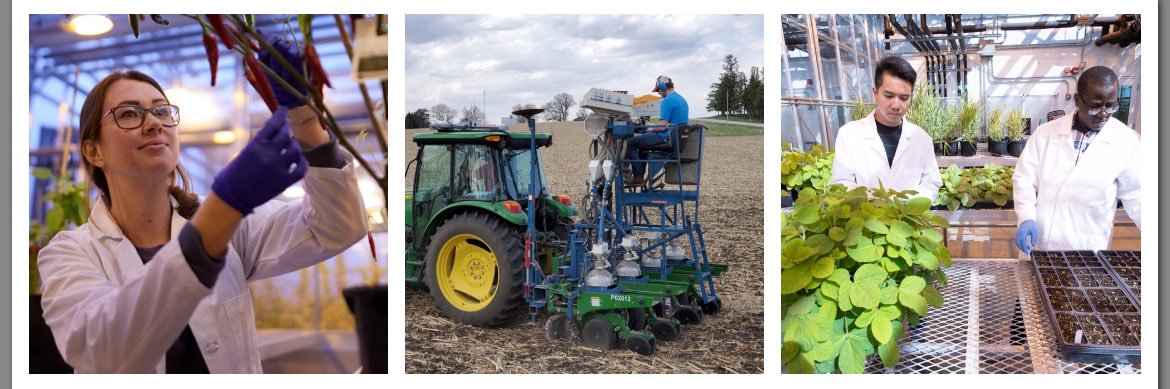
Future agriculture teachers at Iowa State are gaining a unique advantage through CASE AgXplore certification training: https://t.co/vpzs7Bec4y
#AgEducation#IowaState#CASE#FutureTeachers
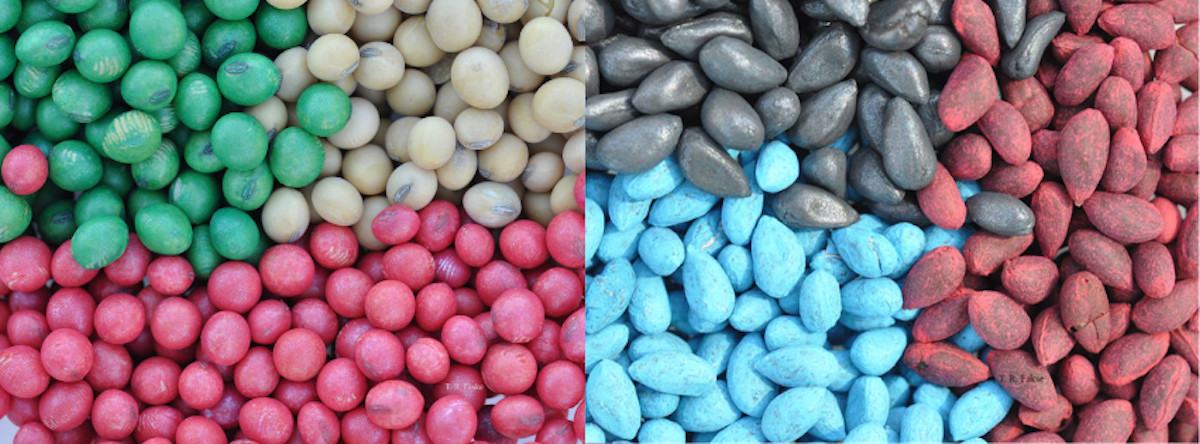
Seeds are the foundation of food security. Iowa State University has partnered with the Ukrainian Agri Council to support the recovery and modernization of Ukraine’s seed sector through research, training, and international collaboration. Read more here: https://t.co/g4sGSmFE1a
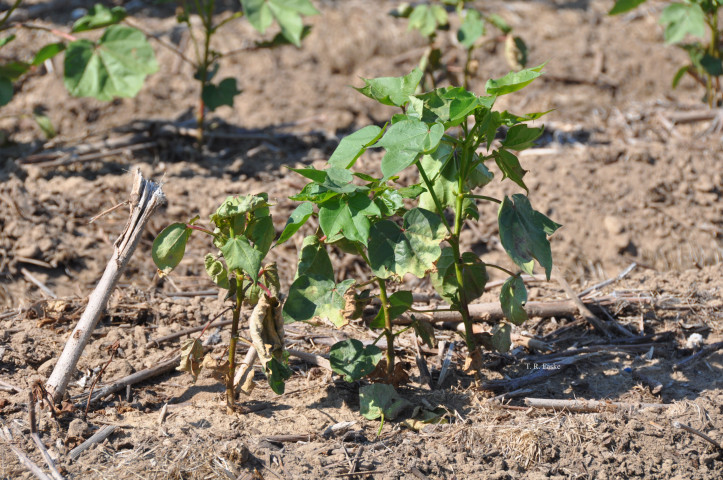
In general, chemical nematicides move more readily in coarse-textured soils than fine-textured soils, assuming adequate water infiltration.
As a result, chemical nematicides often have a larger zone of root protection in coarse-textured soils than in fine-textured soils such as silts and clays.
Moreover, the zone of protection is more vertical like a “chimney” to protect the developing taproot rather than horizontal to protect lateral roots.
Therefore, seed-applied nematicides typically work better in strongly tap-rooted crops such as cotton and soybean compared to fibrous root systems like corn.
Read more in "How Seed-Applied Nematicides Work" at https://t.co/Wix4v46A5E.
From @travisfaske@MartinChilvers1@badgercropdoc@CFAES_OSU & @CUESNews. Funded by @CottonInc.
@UFcropnematodes@UFEntNem@UCDavisEntomolo@NematodeGuy #cotton #soybean #nematodes
Alfalfa weevil larva and adults defoliate alfalfa by consuming leaf tissue. In general, larvae cause the most plant injury and risk is most severe prior to the first cutting.
Use a sweep net to determine the presence of alfalfa weevil. Accurate sampling of alfalfa weevil larvae can be made by hand collecting alfalfa stems, dislodging them into a bucket, and then determining the number of alfalfa weevils per stem.
Insecticides can be used to manage alfalfa weevils; check with local extension resources for the most up-to-date economic thresholds. Sample larva using stem counts, paying special attention to very small larvae at terminals. Consider time until harvest and stem size when making treatment decisions, as well as risk to natural enemies that reduce alfalfa weevil populations. Early harvest and hay removal, winter grazing, and planting more tolerant alfalfa cultivars are additional management strategies.
Ask local Extension for more information.
#alfalfa #forage @bick_emily@justinmcmechan@ErinHodgson_ISU@ashleyn_dean@nick_seiter
We have a shared responsibility in keeping plants healthy for a zero-hunger world. Here is why we need to keep our plants healthy .
Via Food and Agriculture Organization of the United Nations (FAO)
The PPEM Spring Seminar Series is right around the corner! May 5th, 2026 join Sharon Badilla Arias as she discusses biocontrol of cucurbit bacterial wilt. To learn more visit https://t.co/JN4fWEnVhc
Big congratulations to 4 Iowa State University alumni: Morgan Smith, Nolan Monaghan, Olivia Marti & Evelyn Heidt. Named inaugural World Food Prize Foundation Alumni Ambassadors! 🌍🌱 Their leadership is helping drive the future of global food security. #IowaState#WorldFoodPrize
We are excited to promote the 2026 Walter E. & Helen Parke Loomis Lecture and Plant Biology Mini-Symposium. This year’s theme is “Engineering Plants for the Future”.
The event is Monday, May 18, 8:00 am - 4:00 pm
Register here before May 11: https://t.co/McrflqF939
With mesh bags in hand, their heads mostly looking down, and a keen desire to find the motherload of morels, a secretive band of hunters is about to hit the woods in central Iowa. Learn more: https://t.co/hxNmO8iQPr
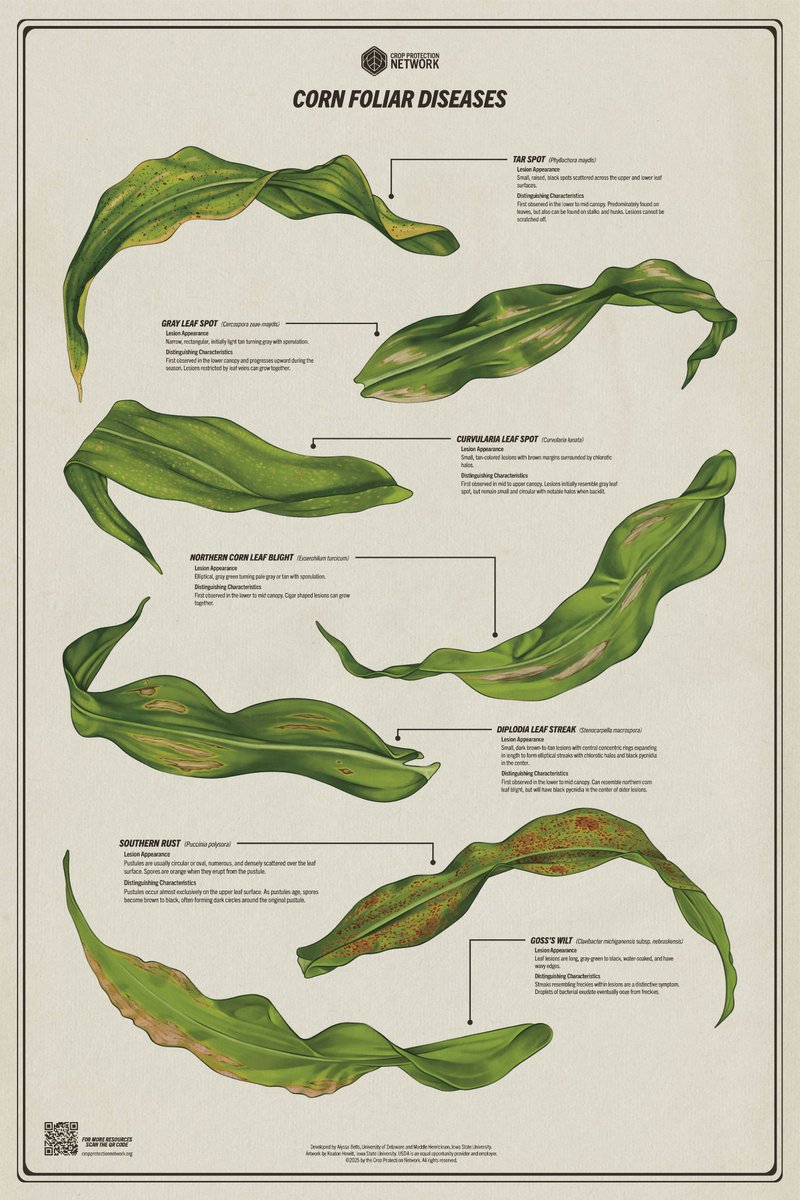
Seven new soybean insect articles are now in the Crop Protection Network encyclopedia!
Explore updates on whitefly, twospotted spider mite, corn earworm, green cloverworm, woollybear complex, tarnished plant bug, and yellowstriped armyworm.
Stay informed this season with CPN!
Does pollinator habitat embedded within conventional farming systems provide overall benefits if pesticides remain in the surrounding landscape? https://t.co/V8300hVjyp
Need to identify pests? There's an app for that!
The technology will be like having an "expert crop advisor or extension agent in your pocket," say researchers working together to build an app and chatbot to help farmers. https://t.co/x3yIMdGUcI