“When nature has a problem to solve, it makes a protein. And we should be inspired by this.”
@ScienceCorp_ co-founder @maxhodak_ explains how amino acid language models help his team engineer opsins, the light-sensitive proteins used in optogenetics.
Every society depends on systems to make decisions, allocate capital, establish trust, and coordinate people.
The Programmable Economies & Governance Focus Area at @protocollabs_rd aims to advance the infrastructure that makes these systems work. 👇
https://t.co/gFwKDjwUXW
The Transcriptions series returns, revisiting talks by experts across science and technology from the Protocol Labs Library.
Co-inventor of optogenetics @eboyden3 discusses approaches to stimulating, mapping, and simulating the brain. 👇
https://t.co/TSQ9kv8iKZ
Onchain operations security goes far beyond smart contract audits. Even audited protocols can remain vulnerable through compromised signers, malicious front ends, custody or cloud infrastructure exploits.
As institutional adoption grows, we need to rethink how we approach security across onchain finance.
🎙️ Our cofounder @hbbiok joined Mike and Skyler on @AltFundsNetwork podcast to discuss these challenges, lessons from past security incidents, and how blockchain technology itself can become part of the solution.
At @XRPSEOUL and @token2049 this month, PLC Rails GP @laceywisdom challenged several common assumptions about where stablecoins will create value.
In the U.S., undue risk without asymmetric rewards does not make much sense for consumers. Stablecoin yield accounts are a difficult proposition when people can get similar return profiles from insured products. The case is much stronger in emerging markets, where stablecoins can offer FX volatility hedging and USD exposure.
Lacey also argued that Visa and Mastercard are the payment networks of tomorrow. That does not mean stablecoins can’t play an important role. It means companies need to focus on hard problems existing payment networks do not (or cannot) solve today — or on upgrading what is still broken. They win by building the things Visa was never designed to do.
Even if stablecoins live up to their potential, consumers may never know what a stablecoin is. Most people don’t know what XMTP or RSS are, despite using the stack built on top of these protocols daily. Stablecoin infrastructure will have won when it works the same way: useful, embedded, and largely invisible.
“When nature has a problem to solve, it makes a protein. And we should be inspired by this.”
@ScienceCorp_ co-founder @maxhodak_ explains how amino acid language models help his team engineer opsins, the light-sensitive proteins used in optogenetics.
3/ Oct 29 | Sovereignty-Aligned AI for Environmental Diplomacy Dinner
Join researchers, developers, and policymakers to discuss AI's role in environmental decision-making.
📍 Yerevan, Armenia
🕒 18:30–21:30
🔗 https://t.co/bzak1nsqsl
If you're in Armenia for #COP17, join the PL Network for two AI4COP events co-hosted with @Hti_Armenia, exploring sovereignty-aligned AI and its role in environmental diplomacy.
🔗 https://t.co/M3IxB45EKn
🧵
2/ Oct 27 | AI4COP: Sovereignty-Aligned AI for Biodiversity Diplomacy
A discussion on AI governance in environmental negotiations.
📍 Armenian Pavilion, Blue Zone
🕒 15:00–16:00
“More than 5 million people around the world have an advanced form of age-related macular degeneration (AMD) called geographic atrophy, in which cells in the retinas die off." https://t.co/k8wDrm0Ci2
#Neurotech & #Robotics: Smart Grip, Human Touch🦾🧠
I just published about the convergence of smart hands, neural interfaces, training decoders, licensing data, and even biocompute.
Who are the top experts, founders, investors to connect with here?
https://t.co/xVCZ7A59dH
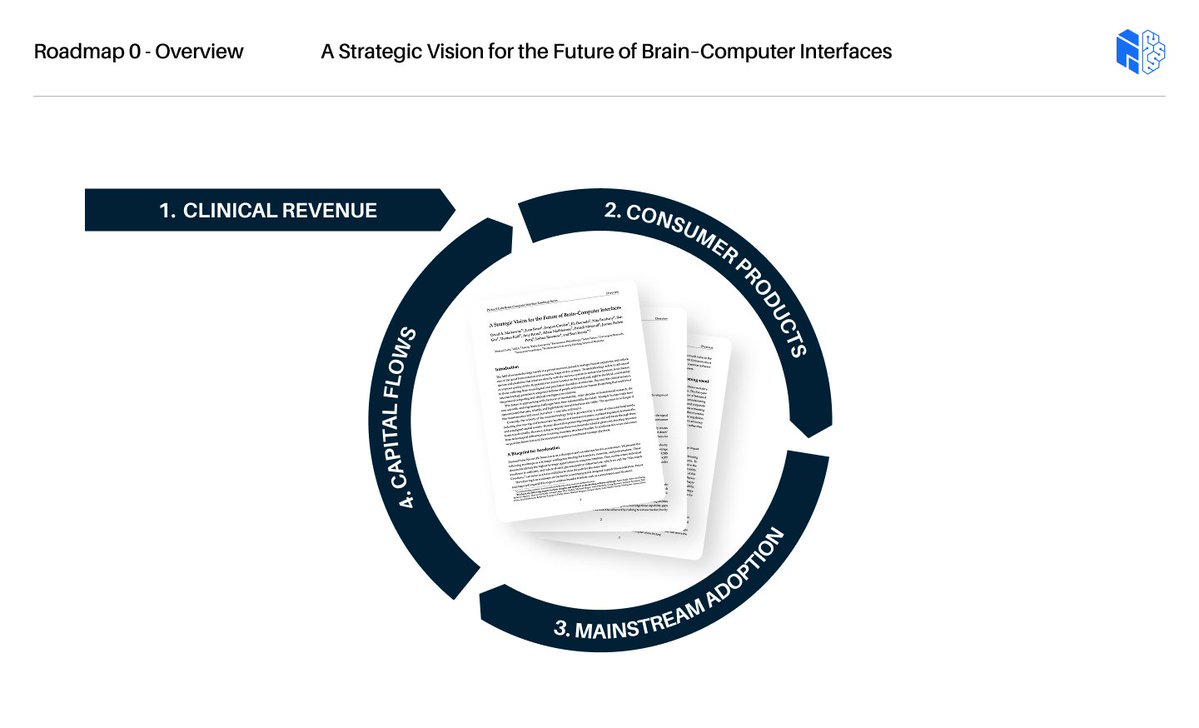
The PL BCI Roadmap Series explores the future of brain-computer interfaces and the technical, clinical, and commercial bottlenecks ahead.
👉 https://t.co/MY3GnXV14O
Important research needs the right support.
@protocollabs_rd coordinates funding, infrastructure, and talent to accelerate computing breakthroughs.
@momack28 and Lukas Bresser outline the operating model behind this work. 👇
https://t.co/QailtkCzp4
Today is probably a good time to check in on things with @privy_io, which became part of @stripe just over a year ago.
Our acquisition was predicated on three factors: stablecoin growth, self-custody as a key enabler of broader global coverage, and rapidly increasing demand for programmable financial infrastructure. As we said at the time, "money has to reside somewhere, and Privy builds the world's best programmable vaults."
Since then, the Privy team has executed exceptionally well: assets in Privy wallets have grown ~25x, monthly active developers are up ~3x, revenue is up ~9x, and Privy now facilitates nearly $25B of monthly transaction volume. @tryramp, @Deel, @Klarna, @felixpago, @HyperliquidX, and thousands of other businesses are building embedded banking functionality on Privy.
At Stripe, we're deeply integrating Privy into Treasury, @Link, and Connect. In each case, it's accelerating our global expansion, and enabling us to build better functionality faster. (Coming soon: @Link balances.)
We're also seeing that Privy's wallet infrastructure is the ideal substrate for agents to transact and earn -- live today with @merit_systems, @orthogonal_sh, @Nevermined_ai, @prlnet, and more. Developers prefer programmable financial infrastructure, but agents need it. We expect that the agentic economy will continue to grow extremely quickly.
The Privy team has maintained remarkable product velocity, with major launches this year including deposit addresses, earning on Privy balances, digital asset accounts, custodial wallets, and Stripe's own stablecoin cards.
It's also been neat to see how Privy has been accelerated by Stripe, with better onramps, @stablecoin payment rails and licenses, Stripe's fiat capabilities and issuing stack, and integration with @Tempo.
Together, we're building one API for holding stablecoin balances and earning yield, moving money in and out of fiat, and orchestrating spend with cards. We still have a lot of work to do, not least in integrating everything across Privy, Bridge, and the rest of Stripe -- there's been so much feature and functionality expansion that we haven't yet had much time to reconcile everything. Overall, though, I'm very happy with how things are going, and excited by where these capabilities are headed.
If you're interested in working on the future of stablecoins, agentic payments, and crypto's deployment in the real world, you should get in touch with @sternhenri (now leading all of @StripeCrypto) or others on the team.
A significant milestone for @ScienceCorp_. PRIMA's recognition by @TIME marks a turning point for BCIs restoring central vision.
Geographic atrophy affects millions, and commercial approval in Europe opens the door for broader deployment.
PRIMA is one of @TIME's Best Inventions of 2026.
As the first brain-computer interface approved for commercial use in Europe for the restoration of central vision, PRIMA has given clinical trial patients with geographic atrophy the ability to read letters, numbers, and words again.
Zama has officially passed more than $100M shielded on @Morpho with their confidential vaults
@plcapital has supported @zama since we led their Series A & we know there is so much more to come 📈