Sam is an epigeneticist dedicated to understanding health and disease. Clinical importance over statistical significance. Baker Heart and Diabetes Institute.
Grateful for all the recent interest by clinicians and scientists in our Diabetes (ADA) paper:
DNA methylation biomarkers in cord blood predict future metabolic risk with 79% greater accuracy than traditional factors.
A window into lifelong health.
Read: https://t.co/hbeYCgPAwM
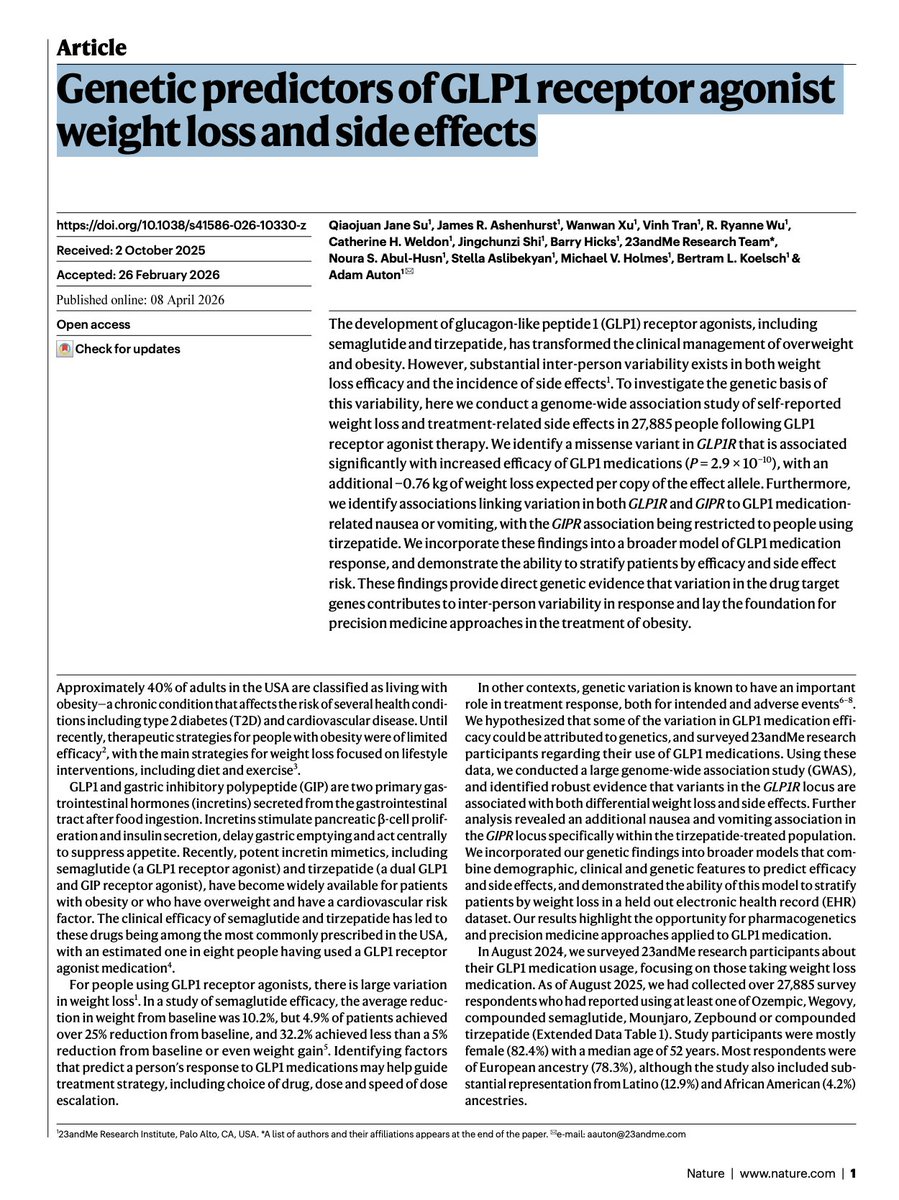
This is an example of the rot inside Nature.
This will be hyped and canonized as truth. Influencers will take over, and critical scientists will stay quiet or be left out of the conversation.
The topic is trendy, so it gets published, and the tacit conclusions are far more grand than what the data support. They are essentially claiming to have found a genetic basis of GLP-1 response.
In reality, this is a GWAS study. These studies rarely identify genes of real interest and have largely proven ineffectual in complex diseases, in part because these traits are multigenic and heavily influenced by environment. GWAS looks at single associations and says nothing about causality.
At first glance, the effect size is not even reported in the abstract. And the p-value of the lead hit—near the GLP-1 locus—given a cohort of nearly 30,000, strongly suggests the effect is very small and not much overall came from this study just like most of the GWAS studies conducted over the past 15-20 years.
A recent review proposes integrating POTS, ME/CFS, and Long COVID into the subspecialty of neuroimmunology.
This could mean better care, better research, and finally ditching the harmful myth that these are "psychological" conditions.
Here is why...🧵
TrialNet looks for up to five autoantibodies that signal an increased risk for T1D.
If you have a family member with T1D, register for free screening at https://t.co/TxC7UN5XDu or with the link in our bio!
A woman with an ultra-rare combination of three autoimmune diseases has had no symptoms since receiving a single dose of engineered immune cells
https://t.co/myiqnZwMVn
Our Human Multiomic Development Atlas paper is out in Nature today! A heart-felt "thank you" to all co-authors for their tireless work on this complex yet exciting project! Congrats all! https://t.co/iUiZz00KOt
A massive Nature study of 27,885 GLP-1 users just dropped some major news about Ozempic and tirzepatide.
Your DNA determines how much weight you lose and how bad the side effects hit.
1 in 3 people see minimal results, and now we know why: (1/9)
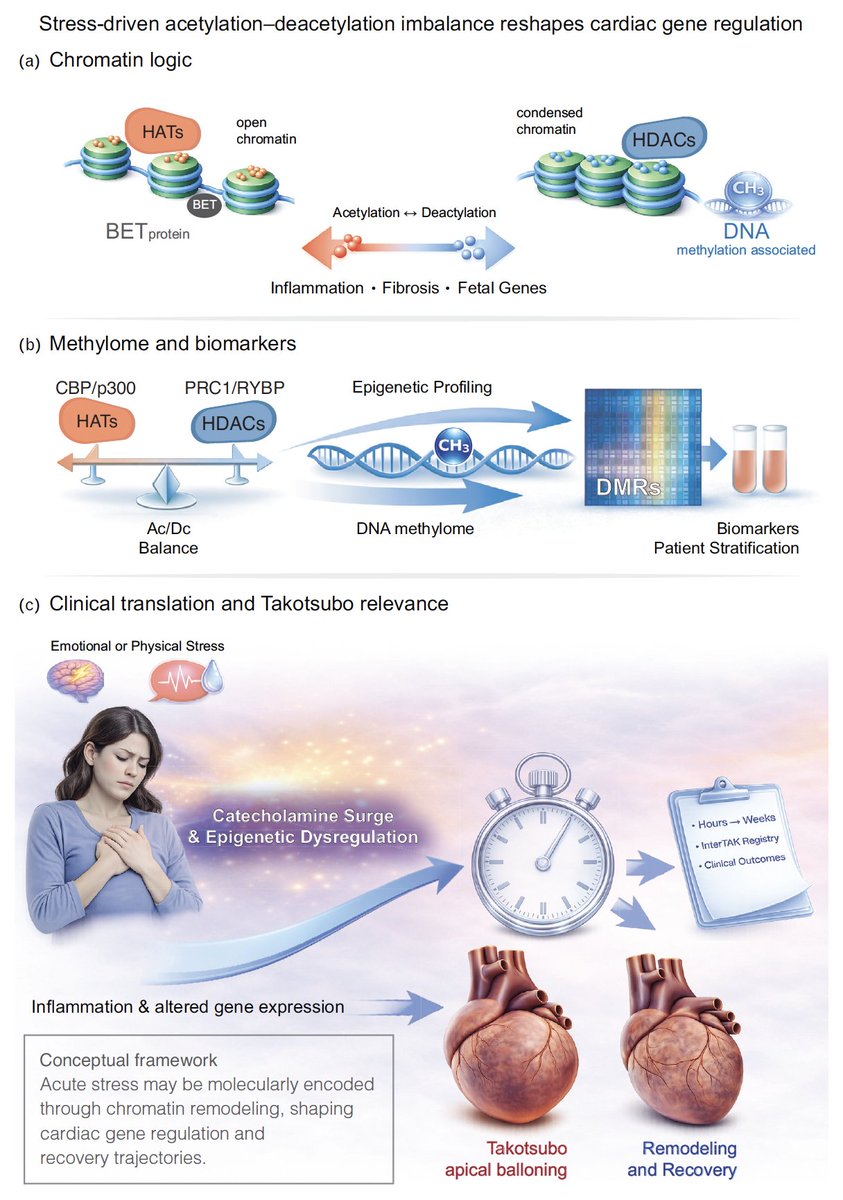
Ahead of release in Current Opinion in Cardiology explores how epigenetic regulation gives heart failure a lasting memory.
Grateful to Dr. Ali J. Marian for editing the Molecular Genetics section for the May 2026 issue.
https://t.co/wAl5wXNvaP
How do noncoding variants drive disease?
This research highlight explores how nuclear context and 3D genome architecture connect genetic variation to regulatory rewiring, altered transcriptional programs, and clinical interpretation.
Read the paper https://t.co/Mx5TzcjDHh
I am very pleased with our latest paper, spearheaded by 3 incredibly talented first authors @chris_cowley14,@LFSoto12 and @SairajSajjath with @ElaineFuchsLab. Here we show that cells can remember past injury for a long time! https://t.co/lL0VYIyNan
🆕 @ScienceMagazine
How do our cells have long term memory of inflammation that can later lead to persistent, chronic inflammation and disease?
Through specific epigenetic chromatin changes, aka "memory domains" @ScienceVisuals
https://t.co/mt70OwH144
https://t.co/DMk7SaIuBc
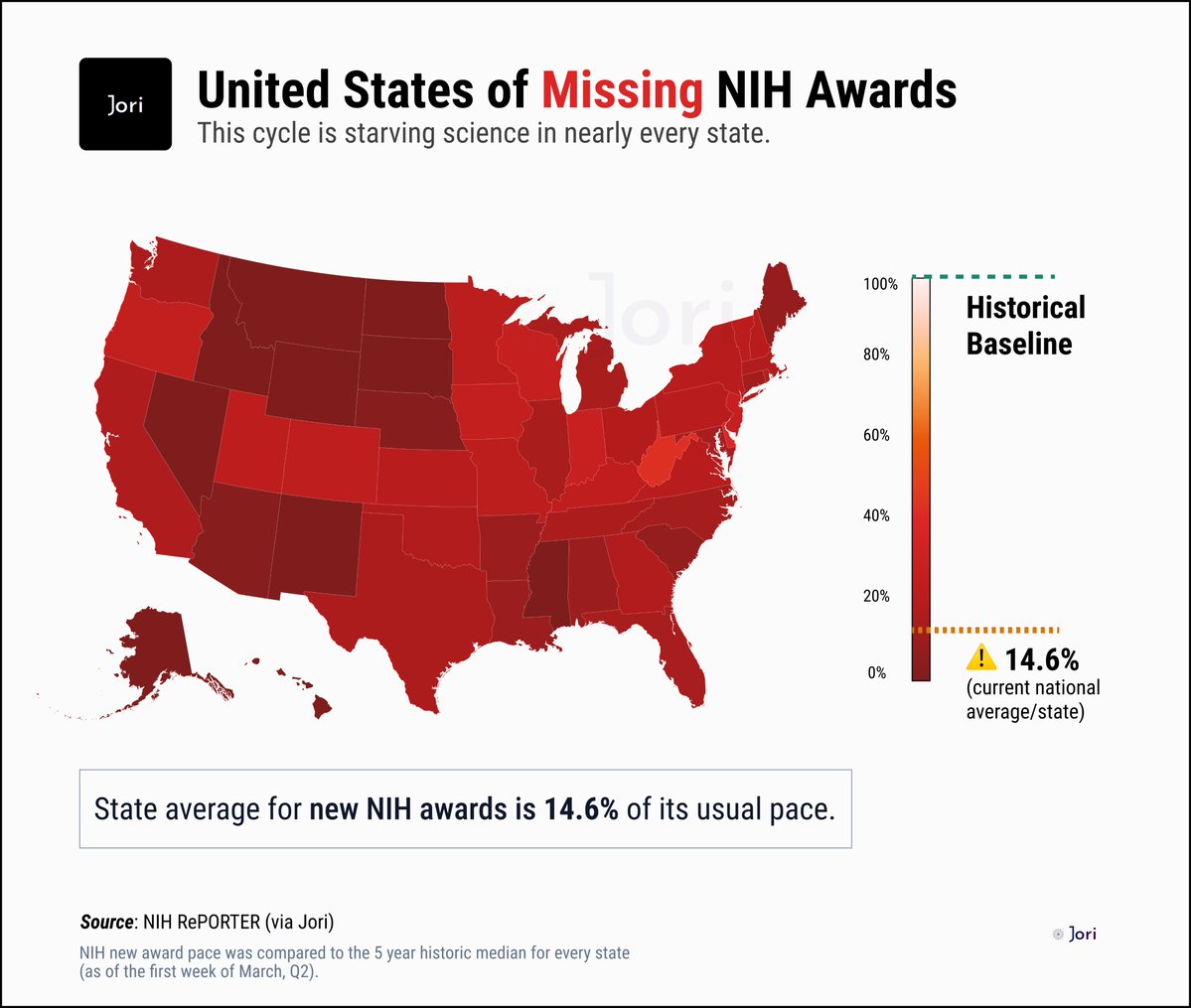
U.S. bioscience research is collapsing.
This is the map of a systemic rot.
NIH new award pace this year: 14.6% of normal.
If you wanted to stall science, you don't pick & choose states.
You just freeze the entire map.
In case you missed it:
▫️ ~95,000 scientists gone (@nytimes)
▪️ ~$2.4B in NIH research wiped out
▫️ ~$6B in economic loss (@DrCatharineY / PNAS)
This is what (predictably) follows next:
⇣ early-career scientists exit for good
⇣ breakthrough discoveries never made
⇣ trials that never open
⇣ labs that quietly shut down
⇣ global talent choosing other countries
⇣ the next decade of innovation erased before it starts
Sadly, you don’t "bounce back" from 14%
you just hollow out the system.
For a country that leads in science, this is the mo(u)rning after “National Science Appreciation Day”
==========
Source: NIH RePORTER via @Jori_health
Plot note: NIH new-award counts were compared to the 5-year historic median for every state (as of the first week of March, Q2).
==========
This is a molecular dynamics visualization of SETD7 and histone H1 complex, created in
@Blender using my favorite #MolecularNodes add-on by @bradyajohnston.
First time I tried to create a custom atom-cluttering sound effects as well as my own speech recording (sorry, English is not my first language).
Background music is generated by @suno
#sciart #b3d #md #blender3d
We are excited to announce the release of the Human Methylation Atlas Summary and Signals tracks for hg38 and hg19. The tracks display genome-wide DNA methylation profiles across 39 primary human cell types from 205 healthy tissue samples.
Learn more at https://t.co/GB3hxaYo1H
Genome architecture provides an essential framework for understanding how noncoding variants influence transcriptional programs. This invited Research Highlight discusses how nuclear context links regulatory variation to gene control and disease biology. https://t.co/HjhM7Ja1z9
New: The UK population-based study (ELSA) is the first to explore the feasibility of implementation and psychosocial effect of general population screening for paediatric type 1 diabetes in the UK.
https://t.co/H4ghWkRhXs
#diabetes
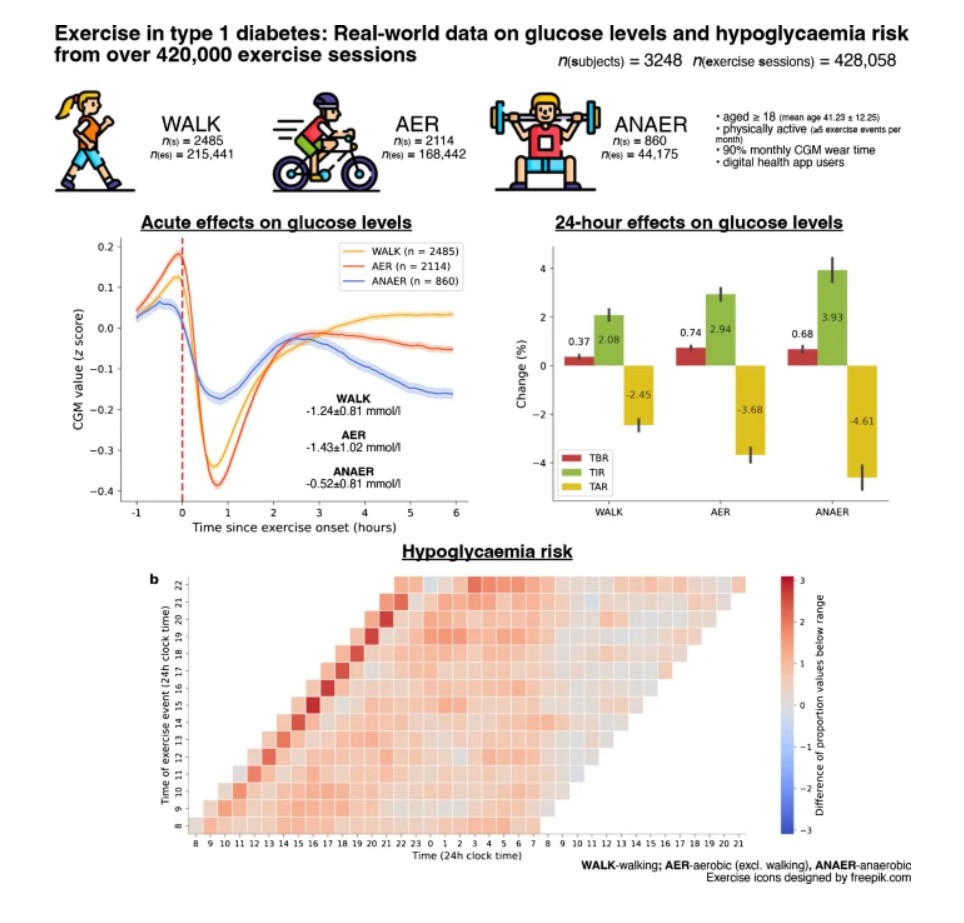
How does exercise impact glucose levels in T1D? Analysis of 428,058 exercise sessions shows aerobic exercise lowers glucose more than anaerobic, with greater 24 h glycaemic benefits but higher acute hypoglycaemia risk. #T1D#Diabetes#Exercise https://t.co/thioji4iVf 🔓
#Type1Diabetes affects approximately 2 million people in the US and 8.4 million people worldwide.
🔗 Learn more about the diagnosis and treatment of type 1 diabetes in this JAMA Review:
https://t.co/B4KWgoP38w