🧵 Tweetorial:
1/
MRI is now central to prostate cancer workup — but does what we see on MRI predict outcomes?
In a national cohort of 2,275 veterans, we found that MRI-detected EPE is common & highly prognostic.
MRI-detected extraprostatic extension, including major capsule abutment, is common in localized #ProstateCancer (PC) and independently prognostic. MRI findings should be considered in the next iteration of PC staging.
https://t.co/LDJLzR9sok
@OncoAlert#RadOnc#PCSM
🫁 I made a video to clarify #CURB2 (CCTG BR.38)
Why enroll?
✅ SBRT remains an option post progression
❓ Benefit unproven ➡️ Ph3 data needed
🛡️ No harm: syst therapy per physician choice
🇺🇸 Enroll via @NRGonc, @SWOG, @eaonc, @ALLIANCE_org
🇨🇦 via @CDNCancerTrials
Telling patients that SBRT is inferior—when randomized trials have not demonstrated that—is not only misleading, but may also leave them feeling that the treatment they received was inadequate. This can harm patient's feeling of hope.
Let's be humble & tell patients the truth - we do not know if surgery or SBRT is better at this time. We do not have randomized evidence yet. VALOR will help us better understand the truth.
Telling patients that SBRT is inferior—when randomized trials have not demonstrated that—is not only misleading, but may also leave them feeling that the treatment they received was inadequate. This can harm patient's feeling of hope.
Let's be humble & tell patients the truth - we do not know if surgery or SBRT is better at this time. We do not have randomized evidence yet. VALOR will help us better understand the truth.
🧵 How well does retrospective comparative effectiveness research reproduce randomized clinical trials (RCTs) in oncology?
Not very well.
Two studies highlight the limitations of using observational data to compare cancer treatments.
Why the discordance?
Confounding by indication, selection bias, and unmeasured differences in patient characteristics.
Propensity score matching and multivariable adjustment help, but cannot account for variables that were never measured.
Instrumental variables are interesting, but have major assumptions/flaws. Not a substitute for a RCT.
Research from Duke #RadOnc Drs. Sperduto, Vaios, Kirkpatrick, Sulman in @TheLancetOncol: patients with #RCC & brain mets are living longer; findings support expanding clinical trial access. Proud of our @DukeCancer contributions to this int'l effort! 🔗 https://t.co/FT8JVUKuCl
Will do a deeper dive but at first glance, some concerns: where are smoking pack-years, actionable mutation status, central vs peripheral location, and EBUS staging rates in the SABR cohort. The use of 60 Gy/8 fx suggests some central lesions, and many SABR patients may never have been surgical candidates. Despite these potential major imbalances, the absolute difference in 3-year lung cancer–specific mortality was only 6.1% (14.5% vs 20.6%; P=.07). Confounding by indication remains a major concern. Let’s wait for the randomized trial VALOR
Can SABR replace surgery for operable stage I NSCLC?
New @JCO_ASCO study by Kagenaar et al. uses England's national cancer data (2015–2020) to compare outcomes in 12,546 patients:
🔹 Surgery: 10,247
🔹 SABR: 2,299
Study: https://t.co/fv55nQlwqI
🧵
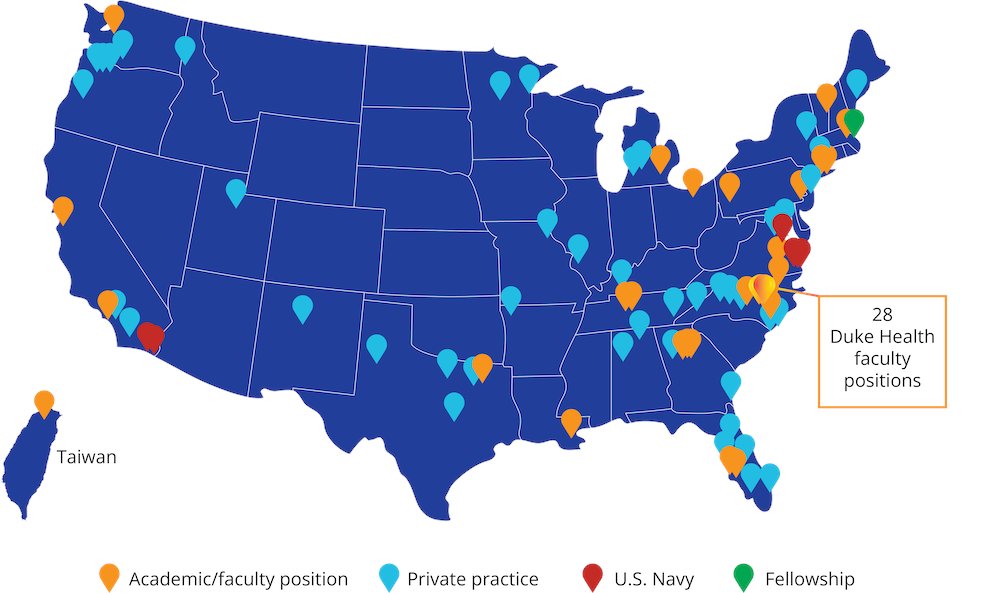
We're looking forward to upcoming residency interviews! We have #RadOnc alumni all over the country, in both academics and private practice – check out our alum page for a listing of first jobs taken by program grads: https://t.co/cQQemYqgNd #Match2027#MedTwitter@ARRO_org
🧵 Excited to share our multicenter, prospective phase 2 trial of proton re-irradiation for people with recurrent head & neck cancer, now in @JournalCancer
Grateful to Dr @IMRTLee@xrtGenomics@DrPaulRomesser and team for the opportunity to write 🙏
🔗 https://t.co/UNSRCe132P
PE-PE is a fantastic study, giving us randomized data on adding pembrolizumab to MDT in oligometastatic RCC!
Phase II, open-label, multicenter trial: 85 pts with prior nephrectomy and ≤3 mets within 5y of nephrectomy or previous metastasectomy, all amenable to surgery or SABR. Randomized 2:1 favoring pembro: MDT alone (n=29) vs pembro + MDT (n=56).
Pembro 400 mg q6w x9c (1y). First dose BEFORE MDT; registry specifies MDT on C1d21-42.
At MFU 17.5 mo, median RFS was 11→ 25.4 mo (HR 0.47, 95CI 0.24-0.92, p=0.024), MDT alone→ pembro + MDT. 35 RFS events, 16→ 19.
SABR 72→ 73%; surgery 28→ 23%. SABR dose/fx and per-site data weren't reported. I'd like to see those details along with local vs distant relapse.
Any AE 21→ 80%; G3 AEs 3→ 7%. The 21% control rate is with no study systemic therapy. Pembro-related AEs occurred in 59%, including G3 in 2 pts; no G4/5 pembro-related events were reported. Four pts stopped pembro for AEs.
Both groups received MDT, so the randomized question is what pembro adds. This doesn't establish the benefit of MDT itself or RT-ICI synergy. With 1 death/arm and no QoL results reported, an OS/QoL benefit remains unestablished.
I'd also like the prior systemic therapy history and the timing/burden at first metastatic presentation. The eligibility window alone doesn't tell us whether these pts were oligometastatic from the outset.
Congratulations to the investigators on this important work!
https://t.co/i8P1uvW9y4
#radonc #ESMO26 #RCC
📢 Our practical guide to EBRT for HCC is out in PRO
Less of a lit review, more of a how-to for #radonc: pt selection, techniques, treatment delivery, special scenarios
Many thanks to all coauthors!
@ldawsonmd@AndrewMMoon@hmaxi_MD@MichaelYanMD
🔗 https://t.co/NIVDmjyOok
Hear the latest on MDT for oligomets from the first author himself, @AlexSherryMD!
Check out the paper📜 AND the podcast🎙️ for some main highlights! ☢️
📜https://t.co/uLn5ab8FwN
🎙️https://t.co/FeC9zipV11
@ChadTangMD@ebludmir
🚨#ESMO26 Localised stage II-IIIB gastroesophageal cancer; n=1024 patient trial from 🇨🇳 indicates de-escalated 4 months of adjuvant XELOX is non-inferior to 6 months XELOX . V important as tolerance of these regimens is a big issue! #gcsm@marklewismd