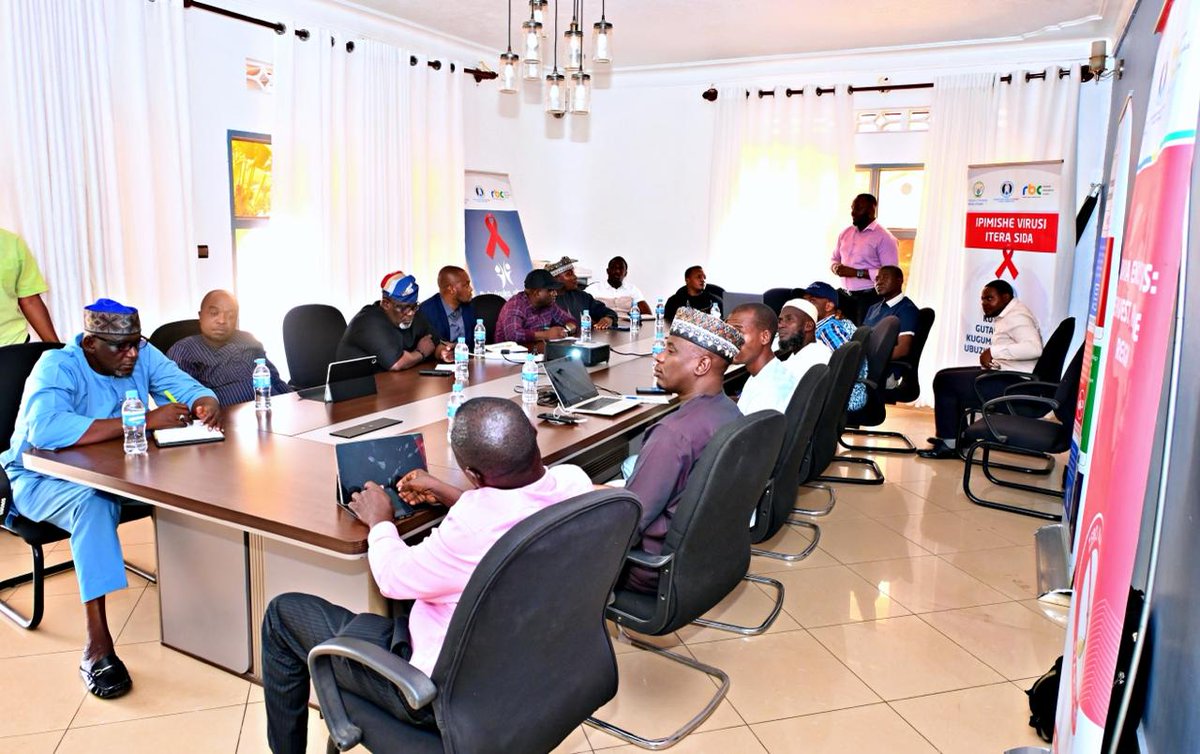
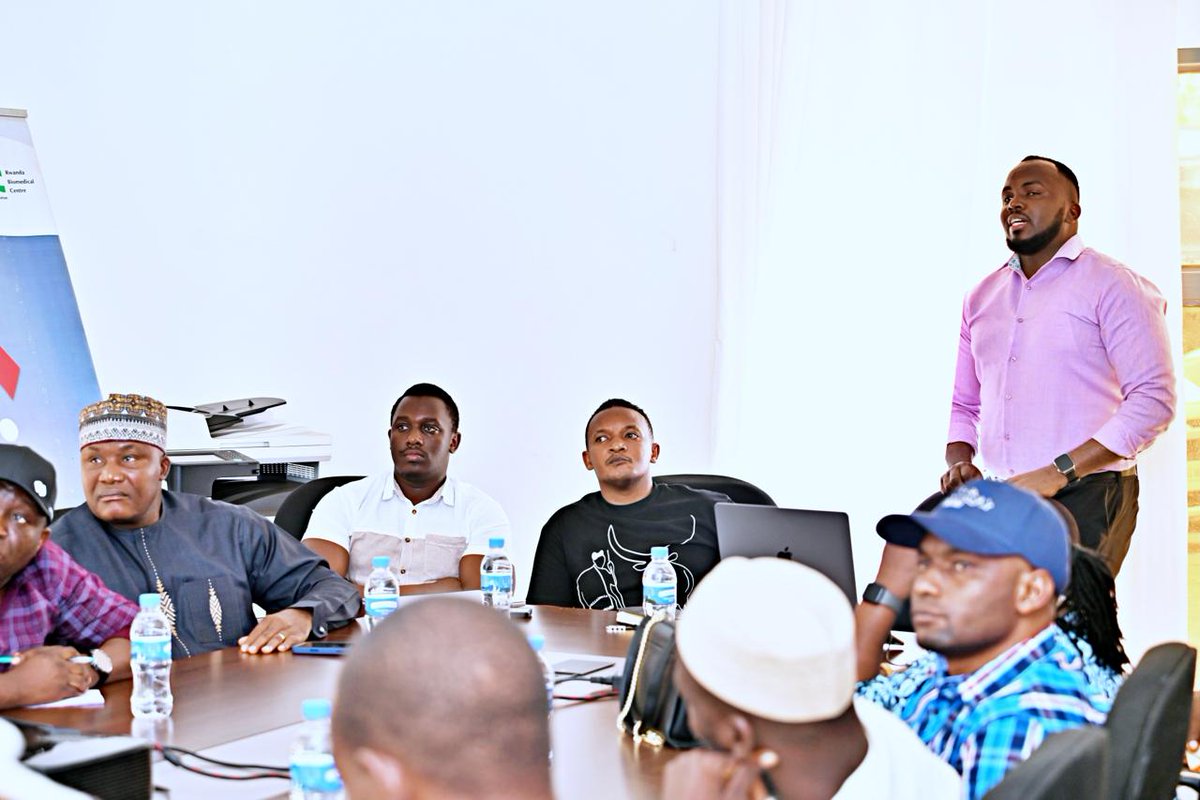
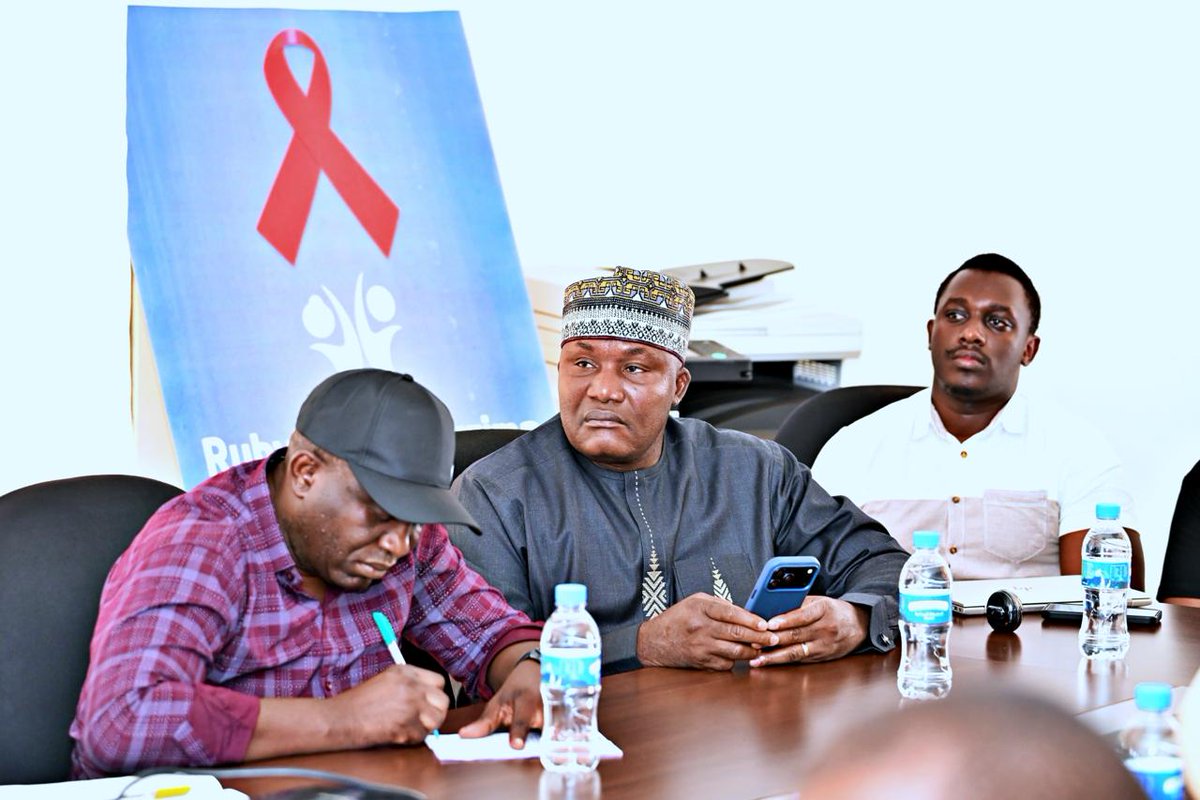
Community engagement is not an add-on; it is the backbone of Rwanda's HIV response.
Grateful to @RwandaNGOForum members and community networks who make services accessible and dignified.
#CommunitiesLead#KeyPopulations
Putting Communities First: Transforming HIV and SRHR Through Partnership in Rwanda
Rwanda’s HIV response is a global reference point, having reached remarkable milestones with adult targets now standing at 96-98-98. However, national averages can sometimes hide the people the system still misses.
In this compelling article, we highlight the impactful power of collaboration and partnership between the @RwandaNGOForum and @UNAIDSRwanda in putting key and priority populations, including FSW, MSM, transgender people, PWID/PWUD, people with disabilities, and AGYW, at the center of the HIV and SRHR response through Community-Led Monitoring (CLM), data-driven advocacy, and policy transformation.
Read the full article here: https://t.co/Lx4IsHu3ot
How can we better leverage community-led monitoring (CLM) and SRHR initiatives to reach the last mile and ensure no one is left behind in our health responses? Share your thoughts in the comments below and keep the conversation going.
#LetCommunityLead #EndAIDS2030 #KeyPopulations #HealthyAdolescentRw #HealthEquity
@RwandaHealth@RBCRwanda@nsanzimanasabin@JNdayizigiye@UNAIDS@WHORwanda@BrianChirombo@CMuvunyi@UNAIDS_ESA@RichardAmenyah@AndrewGasoziNtw@Knooliet@J_Umuhire@HDIRwanda@ImroRwanda@Sfrwanda1@FXBRwanda@TuyishimeAlbert@Rwanda_CCM@mwanaimable@DMbituyumuremyi@aflodiskagaba
Putting Communities First: Transforming HIV and SRHR Through Partnership in Rwanda
Rwanda’s HIV response is a global reference point, having reached remarkable milestones with adult targets now standing at 96-98-98. However, national averages can sometimes hide the people the system still misses.
In this compelling article, we highlight the impactful power of collaboration and partnership between the @RwandaNGOForum and @UNAIDSRwanda in putting key and priority populations, including FSW, MSM, transgender people, PWID/PWUD, people with disabilities, and AGYW, at the center of the HIV and SRHR response through Community-Led Monitoring (CLM), data-driven advocacy, and policy transformation.
Read the full article here: https://t.co/Lx4IsHu3ot
How can we better leverage community-led monitoring (CLM) and SRHR initiatives to reach the last mile and ensure no one is left behind in our health responses? Share your thoughts in the comments below and keep the conversation going.
#LetCommunityLead #EndAIDS2030 #KeyPopulations #HealthyAdolescentRw #HealthEquity
@RwandaHealth@RBCRwanda@nsanzimanasabin@JNdayizigiye@UNAIDS@WHORwanda@BrianChirombo@CMuvunyi@UNAIDS_ESA@RichardAmenyah@AndrewGasoziNtw@Knooliet@J_Umuhire@HDIRwanda@ImroRwanda@Sfrwanda1@FXBRwanda@TuyishimeAlbert@Rwanda_CCM@mwanaimable@DMbituyumuremyi@aflodiskagaba
📌 WORLD SEXUAL HEALTH DAY 2026
Rwanda has made important progress in advancing sexual and reproductive health, from expanding family-planning services, lowering adolescent age of consent and youth-friendly care to strengthening sexuality education, improving maternal health outcomes and placing SRHR higher on the national agenda. Our policies and strategies demonstrate a clear commitment to improving access to quality SRHR services.
But progress must not become complacency.
Too many adolescents and young people still face stigma, misinformation, judgment and financial or geographic barriers when seeking SRHR information and services. Teenage pregnancy remains a concern, while gaps in access to family planning and other essential SRHR services continue to affect those who are most underserved.
This #WorldSexualHealthDay , we recognize how far Rwanda has come, but we also call for the work that remains.
We call on health institutions, policymakers and development partners to move beyond policies and programmes on paper and ensure that services are accessible, affordable, confidential, inclusive, youth-friendly and responsive to people’s real needs. We need comprehensive sexuality education, reliable SRHR commodities, stronger protection from sexual violence and coercion, as well as services that uphold bodily autonomy, informed choice and dignity.
Every body deserves sexual health. Every body deserves dignity. Every body deserves rights.
#WorldSexualHealthDayRw #SRHR4EveryBodyRw
A Proud Day of Cross-Border Learning at Rwanda NGOs Forum
Yesterday, @RwandaNGOForum, through its member organization @dreamvillage6, had the great honor of hosting a 16-member delegation from Adamawa State, Nigeria, the State Coordination Office for World Bank & Development Partners’ Projects (SCO-WBDPP), as part of their study tour in Rwanda.
The delegation came, in their own words, “not simply to observe, but to understand the systems, structures, institutional arrangements and practices in the health sector” that have driven Rwanda’s development progress and to consider which lessons can be meaningfully adapted to their own context back home.
Our engagement centered on the pillars that make development work truly deliver for people:
1⃣Government–NGO–Private partnership: how the State, civil society, and private sector collaborate effectively.
2⃣Citizen participation and social accountability: putting communities at the center of response.
3⃣Monitoring, evaluation, and community feedback: results-based systems that measure real impact.
4⃣Community ownership and sustainability: development that lasts beyond any single project.
5⃣Coordination with development partners: aligning efforts for shared, measurable outcomes.
#KnowledgeExchange #SustainableDevelopment #CommunityDevelopment #HealthSystemsStrengthening #PartnershipsInDevelopment
📢 DID YOU KNOW?
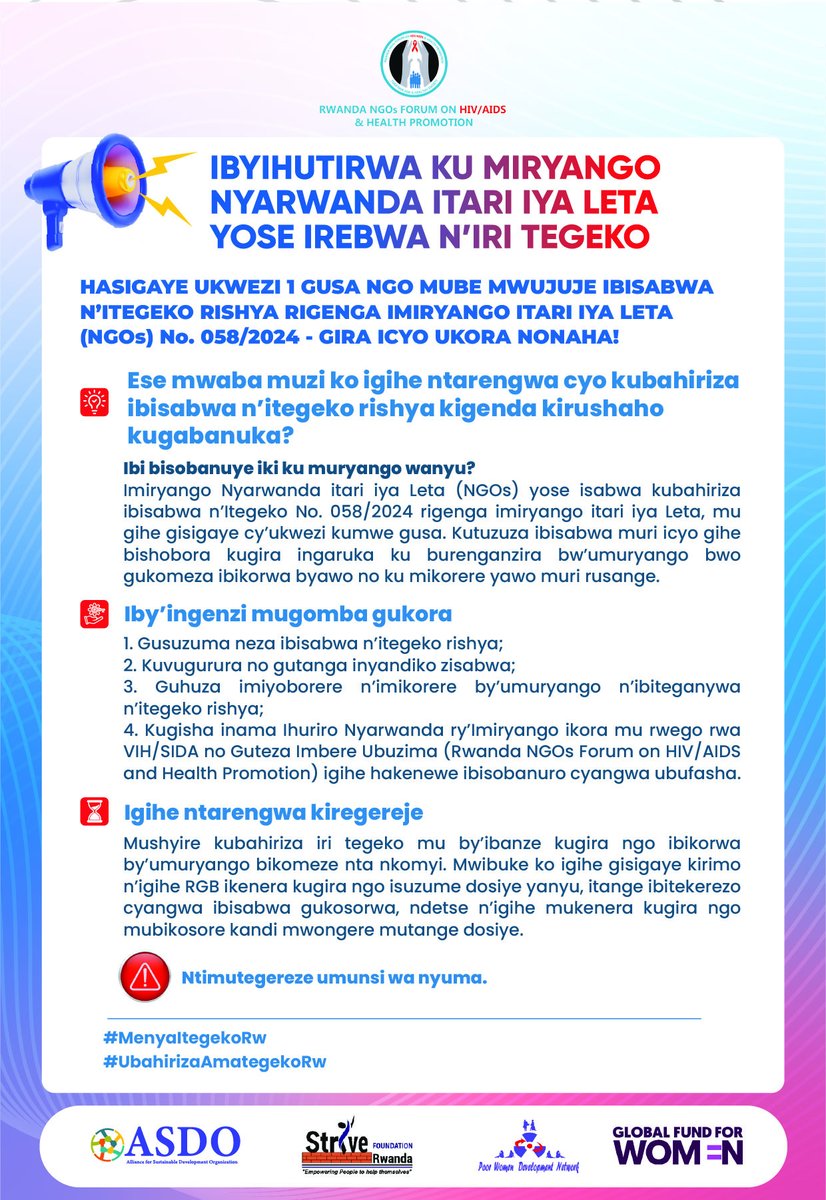
The new NGO Law recognizes the importance of collaboration and collective action among civil society organizations. Article 22 of Law No. 058/2024 provides a legal framework for the establishment of Umbrella Organizations and Forums of Umbrellas, creating stronger platforms for coordination, advocacy, representation, and partnership within the NGO sector.
Under the law, NGOs carrying out related activities may come together to establish an umbrella organization, while umbrella organizations themselves may establish forums of umbrellas to further strengthen cooperation and collective engagement. To obtain legal personality, an umbrella organization must be composed of at least ten organizations and, like any other legal entity, must obtain its own Certificate of Legal Personality.
The law also promotes effective representation while ensuring balanced participation by providing that a National NGO may belong to a maximum of three umbrella organizations. These provisions are intended to strengthen coordination, reduce fragmentation, amplify the collective voice of civil society, and enhance the contribution of NGOs to Rwanda’s development.
📚 Collaboration is not just a strategy, it is recognized and supported by law.
#KnowYourLawRw
#RwandaNGOsLaw2024
#ComplianceMattersRw
@RwandaLocalGov@GovernanceRw@RwandaParliamnt@Rwanda_Justice@RwandaOmbudsman@CivilSocietyRW@NINGORwanda@Imbuto@SCIRwanda@asdo_rwanda@Sfrwanda1@NARwanda@RWN_WomenNet@soscvrwanda@actionaidrwanda@NUDOR_Rw@uphls@ReseauP29968@ReseauFemmesRw@GlobalFundWomen
📢 DID YOU KNOW?
The new NGO Law does not only establish the requirements for obtaining a Certificate of Legal Personality or a Certificate of Registration, it also guarantees clear administrative procedures and timelines that protect applicants throughout the registration process.
Under Article 6 of Law No. 058/2024 Governing Non-Governmental Organisations, the @GovernanceRw (RGB) is required to issue a Certificate of Legal Personality or a Certificate of Registration within sixty (60) days from the date an organization fulfills all legal requirements. This provision promotes efficiency, predictability, and accountability in the processing of applications submitted by NGOs.
🔔Importantly, the law also safeguards the rights of applicants. Where RGB decides not to grant a certificate, it must communicate its decision in writing and clearly state the reasons for refusal within the same sixty-day period. This ensures transparency and enables organizations to understand any gaps that may need to be addressed.
The law further provides a mechanism for administrative review. An organization whose application has been refused may request RGB to reconsider its application. Upon receiving such a request, RGB is required to review the matter and communicate its decision within thirty (30) days.
📚 Understanding these legal timelines is essential for NGOs seeking legal recognition, as it enables organizations to effectively follow up on their applications, exercise their rights under the law, and navigate the registration process with confidence.
A strong civil society is built not only on compliance, but also on awareness of the rights and protections provided by the law.
#KnowYourLawRw
#RwandaNGOsLaw2024
#ComplianceMattersRw
@RwandaLocalGov@GovernanceRw@RwandaParliamnt@Rwanda_Justice@RwandaOmbudsman@CivilSocietyRW@NINGORwanda@Imbuto@SCIRwanda@asdo_rwanda@Sfrwanda1@NARwanda@RWN_WomenNet@soscvrwanda@actionaidrwanda@NUDOR_Rw@uphls@rrpplus@ReseauP29968@ReseauFemmesRw@GlobalFundWomen
Good morning world😍
Exciting news!
Africa Health Awards & Summit 2026 is just a corner away🎉
A big shout out to our official Sponsors & Partners 👇 for @healthiconaward .
📅 7-8 May 2026
📌 Kigali,Rwanda
🎟️ Get your tickets NOW :https://t.co/cZkwWd52dO…
#AHAS2026
@RwandaNGOForum yifatanyije n’Abanyarwanda bose kwibuka ku nshuro ya 32 Jenoside yakorewe Abatutsi mu 1994.
Twibuke Twiyubaka
_____________________
@RwandaNGOForum stands in solidarity with #Rwandans during the 32nd commemoration of the 1994 Genocide against the Tutsi.
Remember - Unite - Renew
#Kwibuka32