Welcome home!
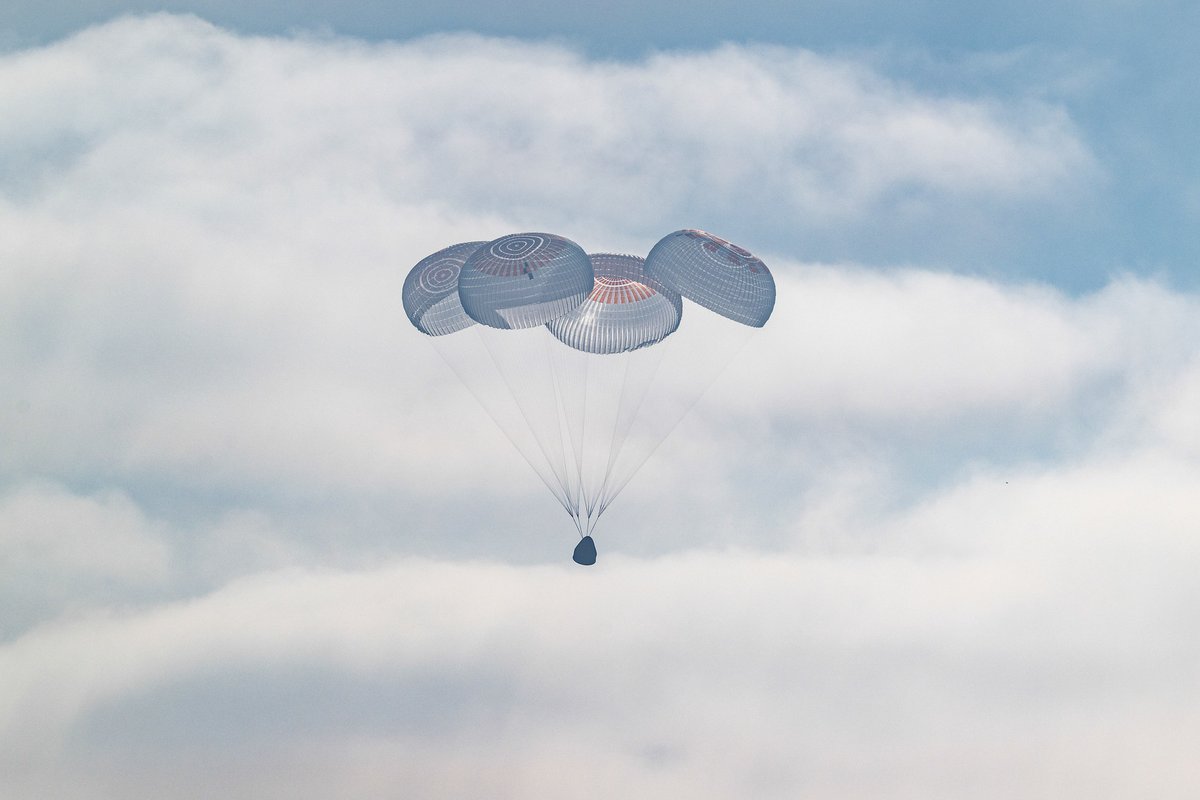
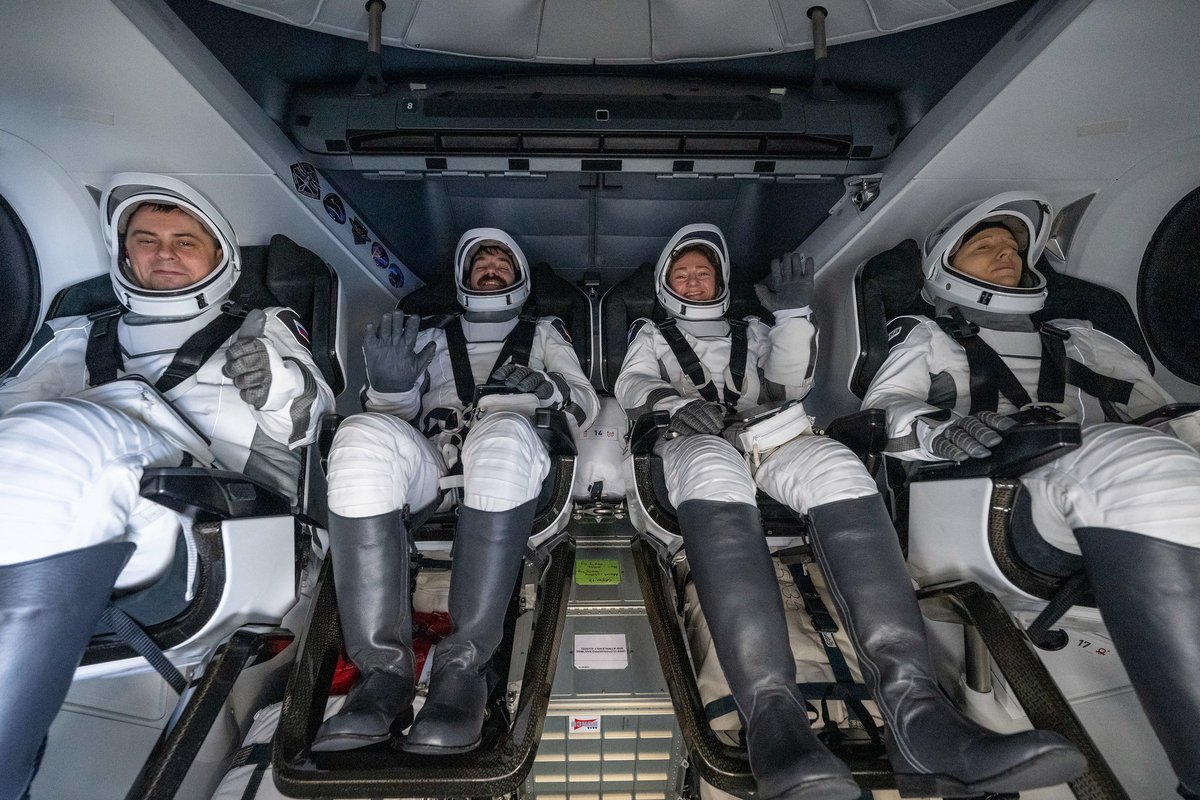
Crew-12 splashed down in the Pacific on Thursday, Oct. 8. Their 237-day mission aboard the @Space_Station included research into medicine, quantum science, and 3D-printing with metal in low Earth orbit. https://t.co/bHE4QrN1r5
It's World Space Week!
This year's theme is "Rocket Revolution" — celebrate with us by looking back to the launch of Artemis II, powered by our Space Launch System rocket and its 8.8 million pounds of thrust. Learn more about SLS: https://t.co/1w344Bl1zF
The month of September brings a new season and skywatching opportunities. You can look forward to:
- The Moon pointing out stellar sights
- Venus hitting peak brilliance
- Seasons shifting on Sept. 22
- The Harvest Moon
Happy skywatching! https://t.co/F65OTMYYxj
For a couple of minutes on Aug. 12, the Sun all but disappears in the middle of the day.
NASA-funded student teams will launch research balloons from Iceland and Spain to track how the lowest layer of the atmosphere responds.🎈
More: https://t.co/zPn8UavJ3m
🚀 GJ 581 c: A World Beyond Our Solar System!
Discovered in 2007, GJ 581 c became one of the most famous exoplanets ever found — a planet orbiting a red dwarf star just ~20 light-years away in the constellation Libra.
#education#science#technology#engineering#mathematics
🚨: Message sent from Earth to alien planet Gliese 581c in 2008 will arrive in 2029, if it's received, the earliest possible reply could reach us by 2050
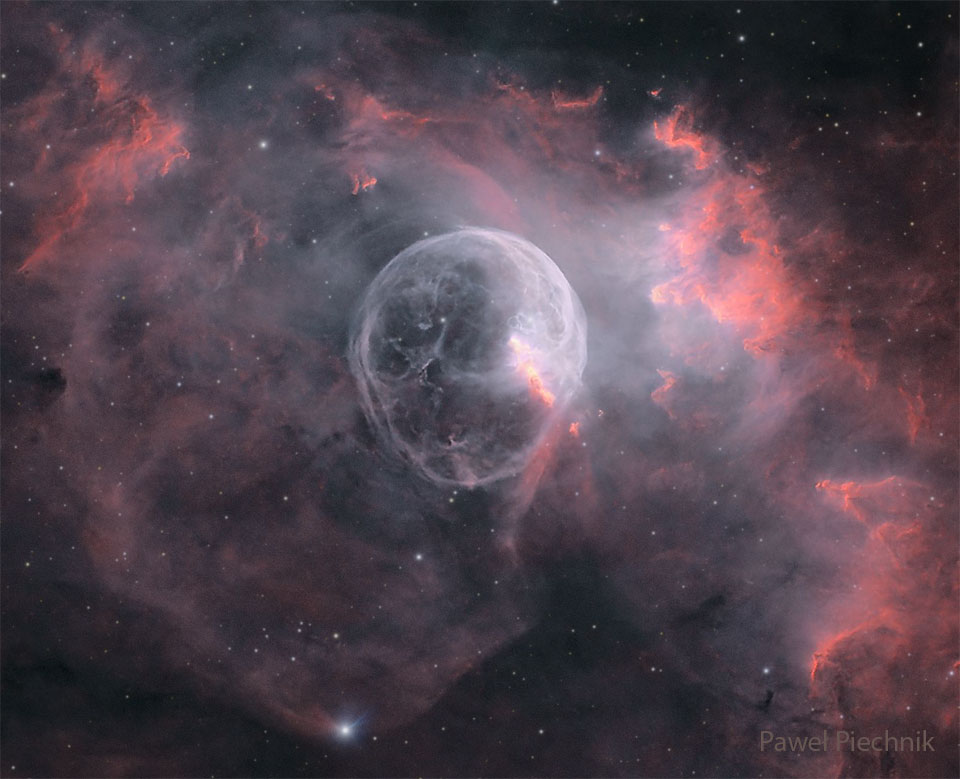
🚀 Bubble Nebula (NGC 7635): A Cosmic Masterpiece!
Located about 7,100 light-years away in the constellation Cassiopeia, the Bubble Nebula (NGC 7635) is a spectacular example of stellar feedback in action.
#education#science#technology#engineering#mathematics
What created this huge space bubble? Blown by the wind from a star, this tantalizing, head-like apparition is cataloged as NGC 7635, but known simply as the Bubble Nebula. Taken from Krakow, Poland, the featured view utilizes a long exposure to reveal the intricate details of this cosmic bubble and its environment. Although it looks delicate, the 10 light-year diameter bubble offers evidence of violent processes at work. Seen here right of the Bubble's center, a bright hot star is embedded in the nebula's reflecting dust. A fierce stellar wind and intense radiation from the star, which likely has a mass 10 to 20 times that of the Sun, has blasted out the structure of glowing gas against denser material in a surrounding molecular cloud. The intriguing Bubble Nebula lies a mere 11,000 light-years away toward the boastful constellation Cassiopeia.
Image Credit & Copyright: Paweł Piechnik
What's connecting these two volcanoes? In ancient folklore, the two volcanoes, Parinacota (left) and Pomerape (right), are connected by representing a mythical prince and princess who engaged in a forbidden romance. Beneath the ground, the two peaks are not known to be connected by a common pool of hot magma, and neither volcano has erupted in the past 1000 years. Above the ground, there is usually nothing in the sky that connects them -- except if you use careful timing and look from a specific location. The featured well-planned image was captured from Bolivia in mid-April with a series of camera exposures taken on the same day and from the same location. Then, Barnard's Loop appeared to connect the volcanic peaks. Also visible in the image is the Orion Nebula in the center, the star Betelgeuse on the right, and the Rosette Nebula on the upper right.
Image Credit & Copyright: Gonzalo Laserna Vargas
The Space Shuttle!
From the first launch on April 12, 1981, to the final landing on July 21, 2011, NASA's space shuttle fleet flew 135 missions, helped construct the International Space Station, and inspired generations.
#education#science#technology#engineering#mathematics
The final space shuttle mission touched down 15 years ago today, marking the end of NASA's 30-year Space Shuttle program.
As the world's first reusable spacecraft, the shuttles accomplished so much over 135 missions. From building and supporting the @Space_Station, to launching and servicing missions a variety of commercial and scientific satellites such as @NASAHubble, to conducting groundbreaking research, it left an enduring legacy as a platform for exploration, science, and international cooperation.
Hot inside and out! 🌋
NASA’s Juno mission has provided the first measurements of the temperature below the surface of Jupiter’s moon Io, revealing significant heating within the subsurface of the solar system's most volcanically active world. 1/2
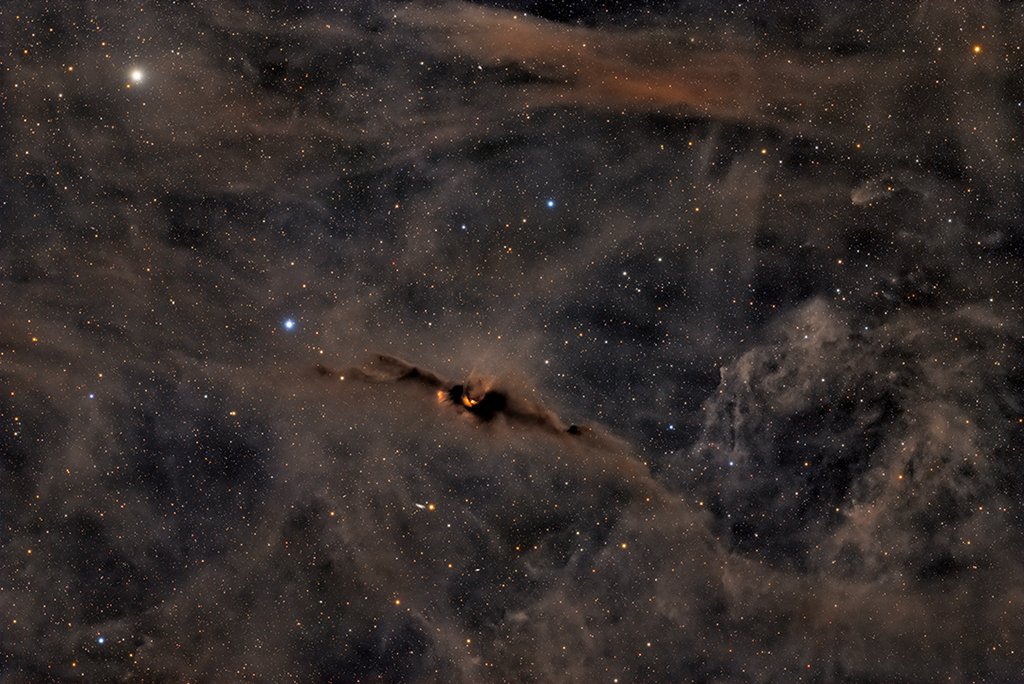
This Cosmic Bat wishes you a happy Summerween! This mid-year celebration of Halloween transcends hemispheres, even though summer in the Northern hemisphere is winter in the South. Contrary to its eery aura, the Cosmic Bat Nebula (LDN 43), not to be confused with the Bat Nebula (NGC 6995), is a vibrant birthplace for stars. A bit of young starlight peeks through the dense clouds of gas and dust that make up the Cosmic Bat’s 12 lightyear wingspan. The ultraviolet light from the young stars energizes the nebula’s hydrogen gas, causing it to glow an ominous red. The jet of glowing hydrogen gas emerging from the bat’s head hints at the star formation hidden within.
Image Credit & Copyright: Humbert Cédric
Text: Keighley Rockcliffe (NASA GSFC, UMBC CSST, CRESST II)
Sometimes we can all use a little help from a friend.
NASA's Neil Gehrels Swift Observatory needs a boost to stay in orbit after almost 22 years of service.
This video shows an artist's visualization of the Swift Boost Mission: The Katalyst's LINK spacecraft was launched aboard a Northrop Grumman Pegasus XL rocket on July 3 and it is now en route to rendezvous with Swift and boost it to a higher orbit over the course of the next several months.
This type of maneuver has never been attempted before. If successful, it will be the technology demonstration of a new key capability to extended the lifetime of spacecraft in low Earth orbit, whose orbits decay over time.
Swift has an array of instruments that observe the most energetic explosions in the Universe in gamma-rays, X-rays and ultraviolet, and the unique ability to repoint in their direction within tens of seconds. Astronomers around the world, and indeed all fans of cosmic explosions, are anxiously hoping for a successful mission!
Image Credit: Katalyst Space
Text: Cecilia Chirenti (NASA GSFC, UMCP, CRESST II)
What has happened to Saturn's moon Iapetus?
Vast sections of this strange world are dark as coal, while others are as bright as snow.
To help better understand this unusually tinted moon, in 2007 NASA directed the robotic Cassini spacecraft then orbiting Saturn to swoop within 2,000 kilometers.
Pictured here, from about 75,000 kilometers out, is the hemisphere of Iapetus that is always trailing.
A large impact crater seen in the south spans 500 kilometers and appears superposed on an older crater of similar size.
The dark material is seen increasingly coating the easternmost part of Iapetus, darkening craters and highlands alike.
A leading hypothesis is that the dark material is mostly a form of carbon-rich soil leftover from when relatively warm but dirty ice sublimates.
An initial coating of this dark material may have been effectively painted on by the accretion of meteor-liberated debris from other moons.
Image Credit: NASA, ESA, JPL, SSI, Cassini Imaging Team
Our space telescope Euclid has discovered 31 ancient quasars in the early Universe, including the two oldest ever observed.
Their light has travelled for more than 13 billion years, taking us back to when the cosmos was just 5% of its current age. 🌌
Read more 👉 https://t.co/qNfbebKeHd
It's been another busy week across the agency. Here's what's new!
⚽ @FIFAcom World Cup match ball
🔭 Roman at @NASAKennedy
🤖 ERNEST rover testing
🏛️ @Freedom250 Great American State Fair
🌕 @NASAMoonBase update next week
Follow along for more!
It's been another busy week across the agency. Here's what's new!
⚽ @FIFAcom World Cup match ball
🔭 Roman at @NASAKennedy
🤖 ERNEST rover testing
🏛️ @Freedom250 Great American State Fair
🌕 @NASAMoonBase update next week
Follow along for more!
Coming soon: one of history’s most complex missions
Tune in on Tuesday, June 9, at 11am ET, to meet the astronauts flying aboard Artemis III, the mission that will test docking capabilities with commercial landers in low Earth orbit — an important step to crewed lunar landings.