Postdoc at University de Montreal working on merging neuroscience research with AI techniques, especially interested in graph representation learning and GCN
Come today to check out our poster #1112 on cortical lamination patterns in V1, V2, V3, hMT+, S1 and M1.
Thanks to the AHEAD project for collecting this beautiful and inspiring post-mortem dataset. @piloubazin
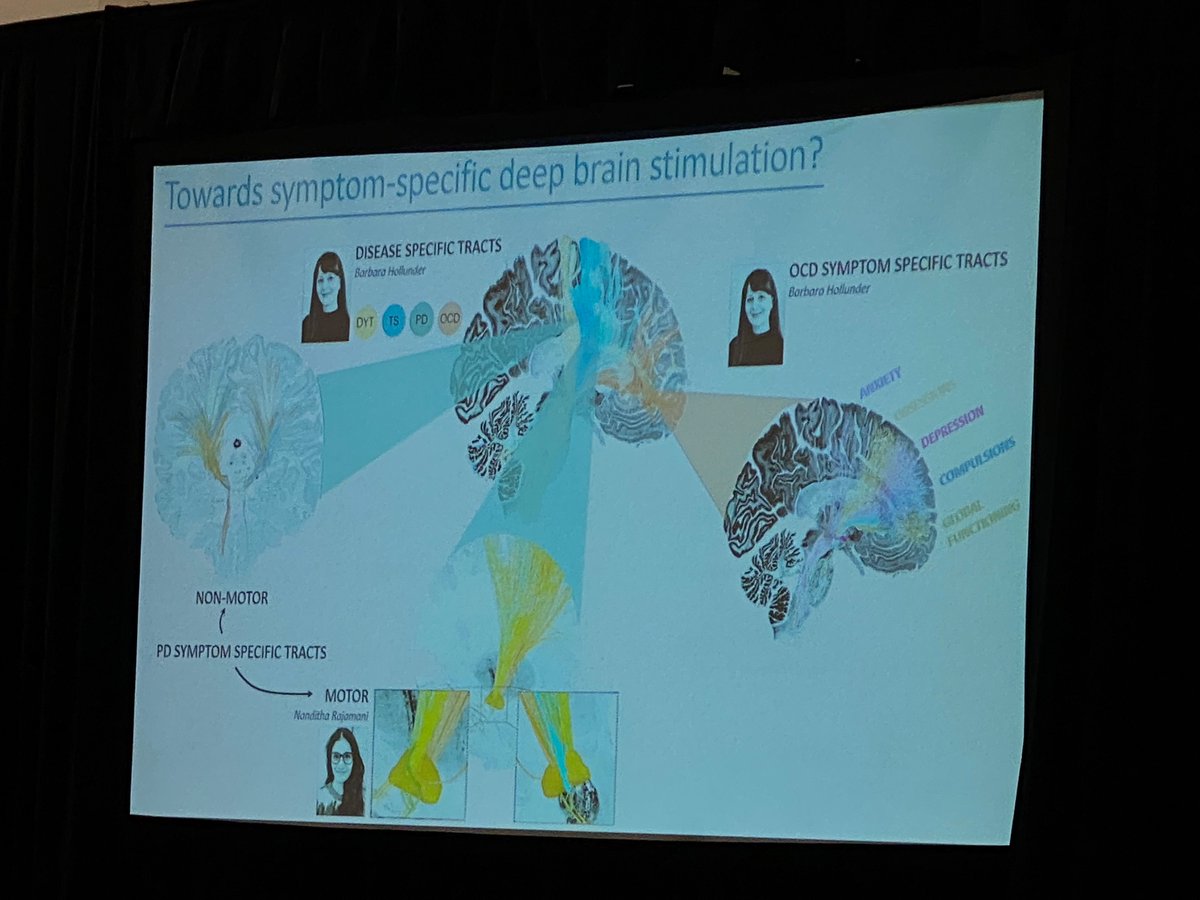
Great summary slide bringing all three talks together - segregating the frontal cortex into dysfunctional circuits on a disorder- and symptom-level across PD, OCD, Dystonia and Tourette’s! 👏
Aperture Neuro is a new #openaccess publishing platform. Designed to be high quality, peer-reviewed, and low cost. Affiliated with @OHBM, it aims to increase the impact of brain imaging and assessment on society. https://t.co/gW0f37QXl7 #OHBM2023
Alan Evans reviews present and future prospects of IT infrastructures, including LORIS and CBRAIN, that support global neuroscience initiatives like Global Brain Consortium, @NeuroLibre , The Neuro's Open Biobank and HIBALL Consortium @BigBrainProject. #OHBM2023#globalhealth
Can't wait! Come see us at #OHBM2023 at booth 204. We’ll have beautiful books by @perryzurn & @DaniSBassett, @fMRI_today, @PessoaBrain, & others.
And please join us in the poster hall on Mon. at 5:15 for a cocktail reception welcoming @ImagingNeurosci to the Press! 🍸
Joining #ohbm2023? Then don't miss our
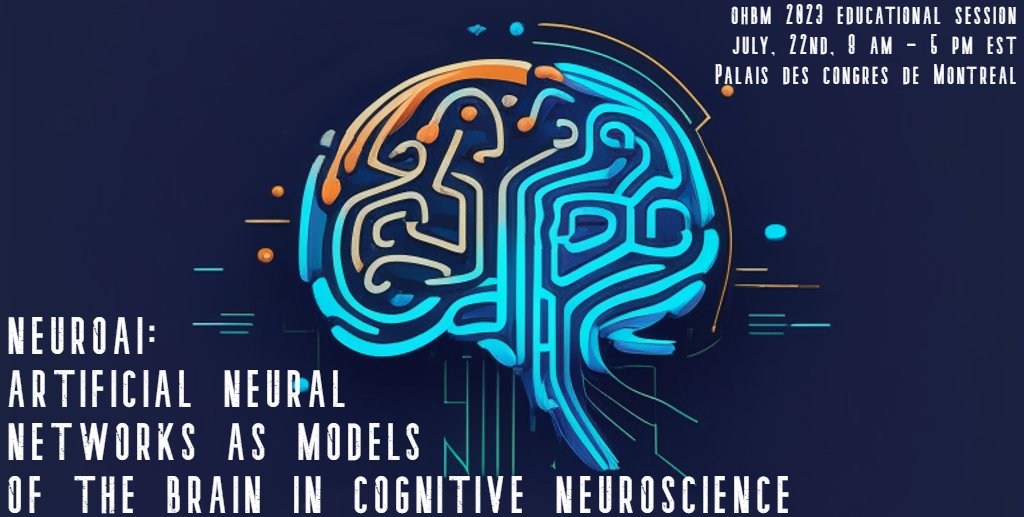
“NeuroAI: artificial neural networks as models of the brain in cognitive neuroscience” workshop as part of
@OHBM educationals🤖 🧠
We host the leading researchers to give talks & tutorials to discuss the recent advancements in the field 🧵
Brain2Music: Reconstructing Music from Human Brain Activity
paper page: https://t.co/4UOCG2AYhg
The process of reconstructing experiences from human brain activity offers a unique lens into how the brain interprets and represents the world. In this paper, we introduce a method for reconstructing music from brain activity, captured using functional magnetic resonance imaging (fMRI). Our approach uses either music retrieval or the MusicLM music generation model conditioned on embeddings derived from fMRI data. The generated music resembles the musical stimuli that human subjects experienced, with respect to semantic properties like genre, instrumentation, and mood. We investigate the relationship between different components of MusicLM and brain activity through a voxel-wise encoding modeling analysis. Furthermore, we discuss which brain regions represent information derived from purely textual descriptions of music stimuli.
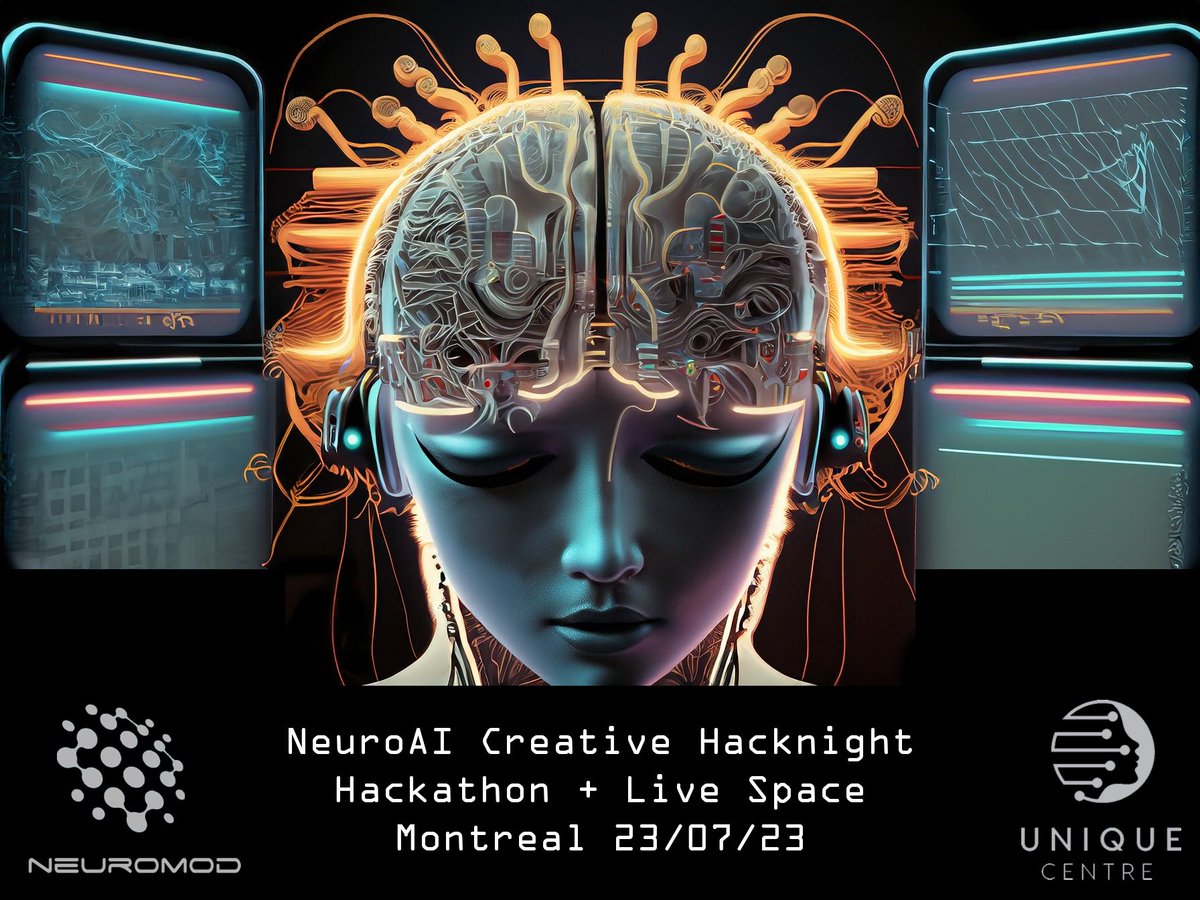
This SUNDAY in Montreal
🧠 🤖 🎶 👁️
👉 Neuro-AI Creative hacknight !
a fun hack+party event, where u can join hacking real-time brain-art projects, or simply enjoy the installations & live DJ & VJ sets! / 4pm-2am
by @ai_unique + @CNeuromod
More 👉 https://t.co/FQ2bOs2Dri
Grateful for new @NIH funding received to support novel @brainstorm2day extensions for AD neuroimaging research.
We're opening 2 post-doc positions available immediately: 1 @USC + 1 @mcgillu@TheNeuro_MNI.
Reach out now for more info+see u @OHBM#OHBM2023
https://t.co/tRMqZSDuqa
Congratulations @YuZhang2bic, Loïc Tetrel, @BertrandThirion & @pierre_bellec 👏
And for those that would like to know more, check out Yu's latest talk: https://t.co/ayoKsA0jhE
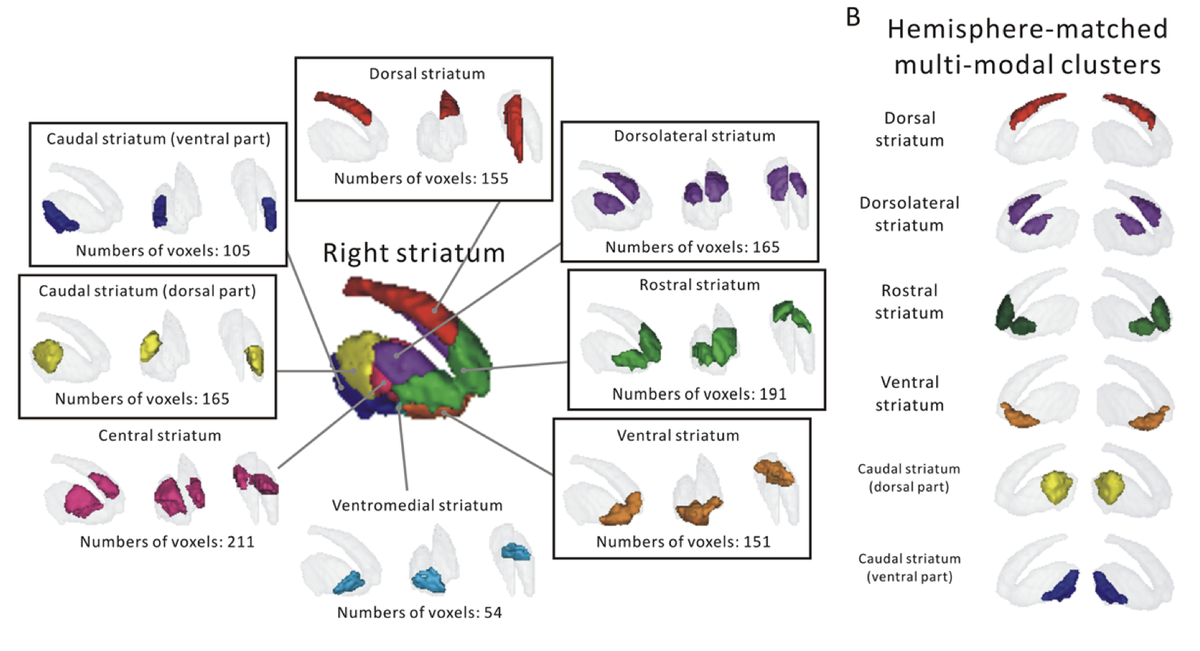
Congratulations to Xiaojin Liu & Kaustubh Patil to this massive work on the human striatum
- Joint multimodal in-vivo parcellation
- Characterization of function and connectivity
- Clinical relevance in SCZ & PD
Paper & Maps available freely on ANIMA:
https://t.co/GLZ4ADGd3E
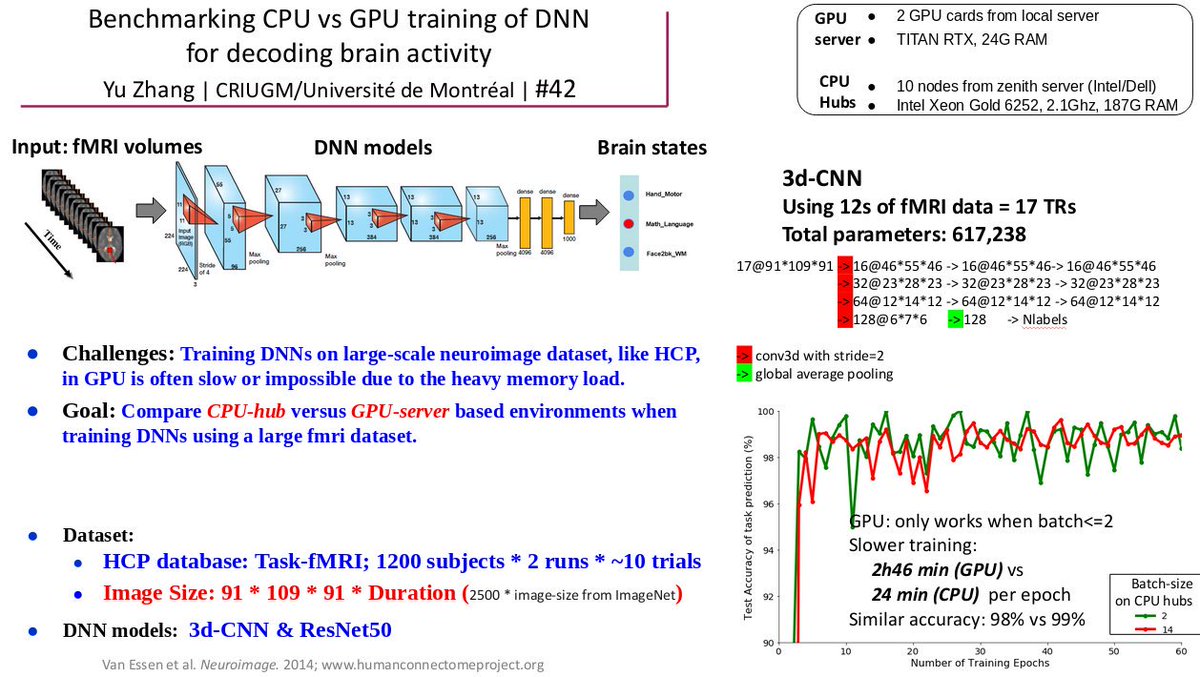
And, rounding out this theme is @YuZhang2bic from @UMontreal ! Presenting work that's part of @CNeuromod with Benchmarking CPU vs GPU training of deep artificial neural networks for decoding brain activity
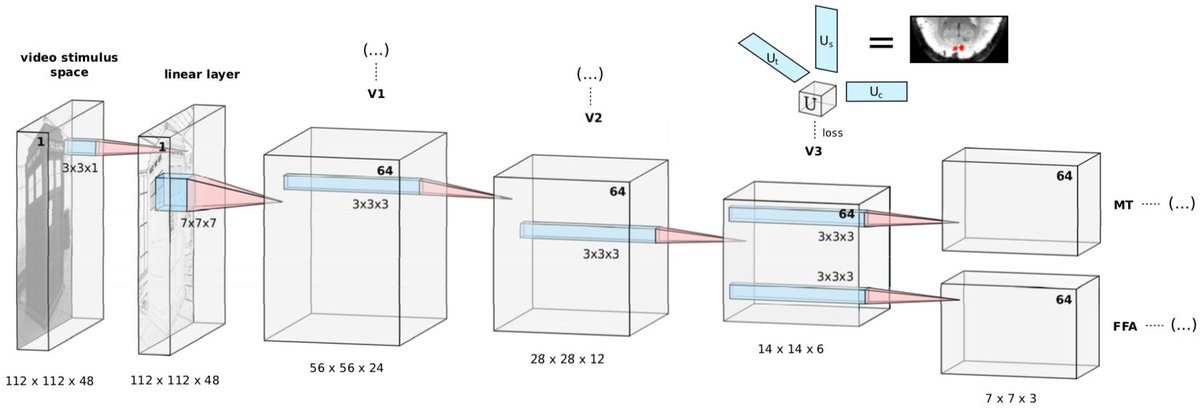
We ( @artcogsys ) have a new preprint: https://t.co/RMVbIRqX5W
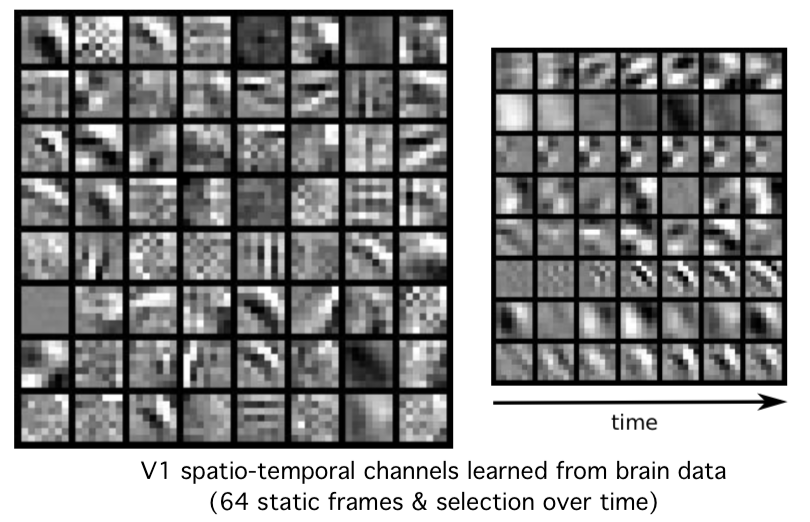
We propose a modeling framework that learns population receptive fields, layer-wise representations and the flow of neural information in a single end-to-end convolutional neural network model trained on brain data.