Glad to see the DeSci ecosystem continuing to grow globally ⚡️
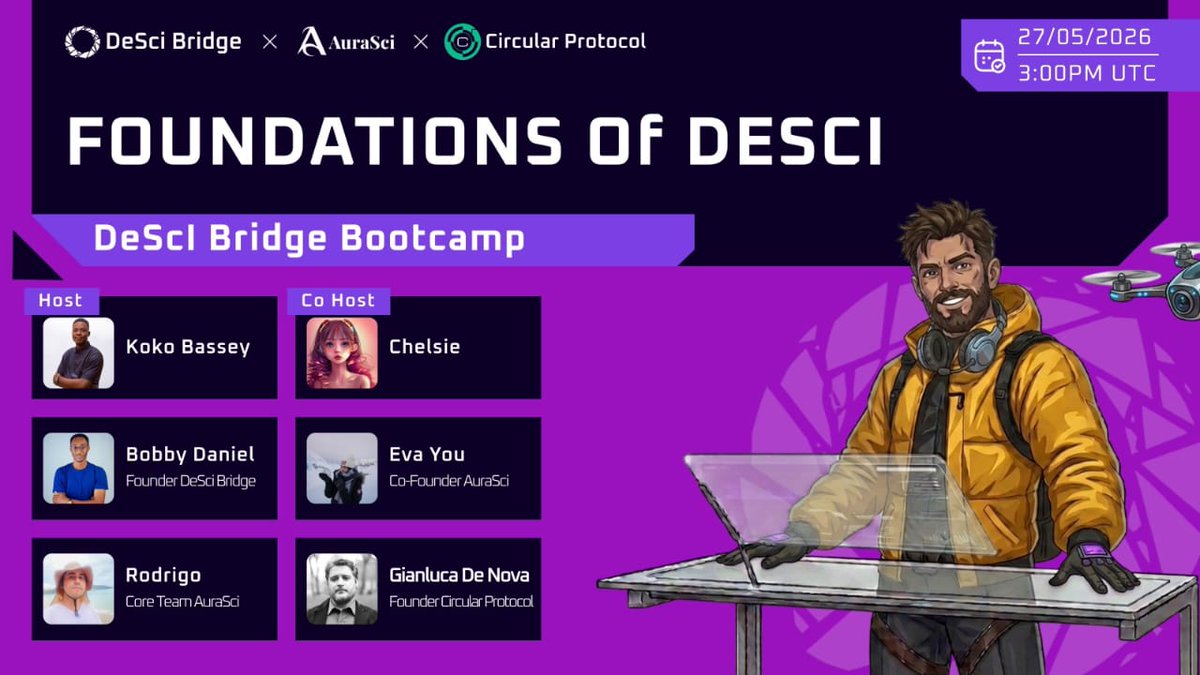
AuraSci will be joining today’s DeSci Bridge Bootcamp session on the Foundations of DeSci, with two of our core contributors sharing perspectives from building in the space.
Looking forward to the conversations around scientific coordination, funding infrastructure, and the future of open research.
Nice article in @nytimes by @SmithDanaG on the recent findings that circulating NAD levels do not decline with age in humans.
https://t.co/VForvv3j4l
These new data are important because the original model was always supported more by marketing narratives and extrapolation than by strong human evidence. For years, the claim that “NAD declines with age” has often been presented as established fact when, in reality, the data were limited and inconsistent.
To be clear, NAD biology absolutely matters. Understanding how NAD metabolism changes across specific tissues, disease states, and metabolic conditions remains an important scientific question. But absent convincing evidence that NAD broadly declines across tissues and organs during normal human aging, we should be willing to conclude that the broader hypothesis has failed. That’s how science is supposed to work. The burden of proof rests on those making the claims.
The case for widespread NAD precursor supplementation as a gerotherapeutic is further weakened by the fact that preclinical studies reporting benefits for lifespan and healthspan have often lacked robust reproducibility across laboratories and model systems. And in humans, there is still remarkably little evidence supporting broad NAD precursor supplementation for otherwise healthy people.
At the same time, I do think there are likely subsets of individuals with significant mitochondrial or metabolic dysfunction where NAD dyshomeostasis is real and therapeutically relevant. Those individuals may ultimately benefit from targeted interventions aimed at NAD metabolism. But the evidence increasingly suggests this is probably a small subset of people — not the average healthy aging adult.
Science advances by testing hypotheses against data, not by repeating narratives until they become accepted dogma.
Introducing Gemini for Science — a collection of AI tools to help accelerate the scientific process. Gemini can already assist in solving complex problems, but our new @GoogleLabs prototypes can help streamline more daily scientific tasks, including:
📃 Staying on top of new papers
🧑💻 Transforming research goals into usable code
💡Generating new hypotheses
#GoogleIO
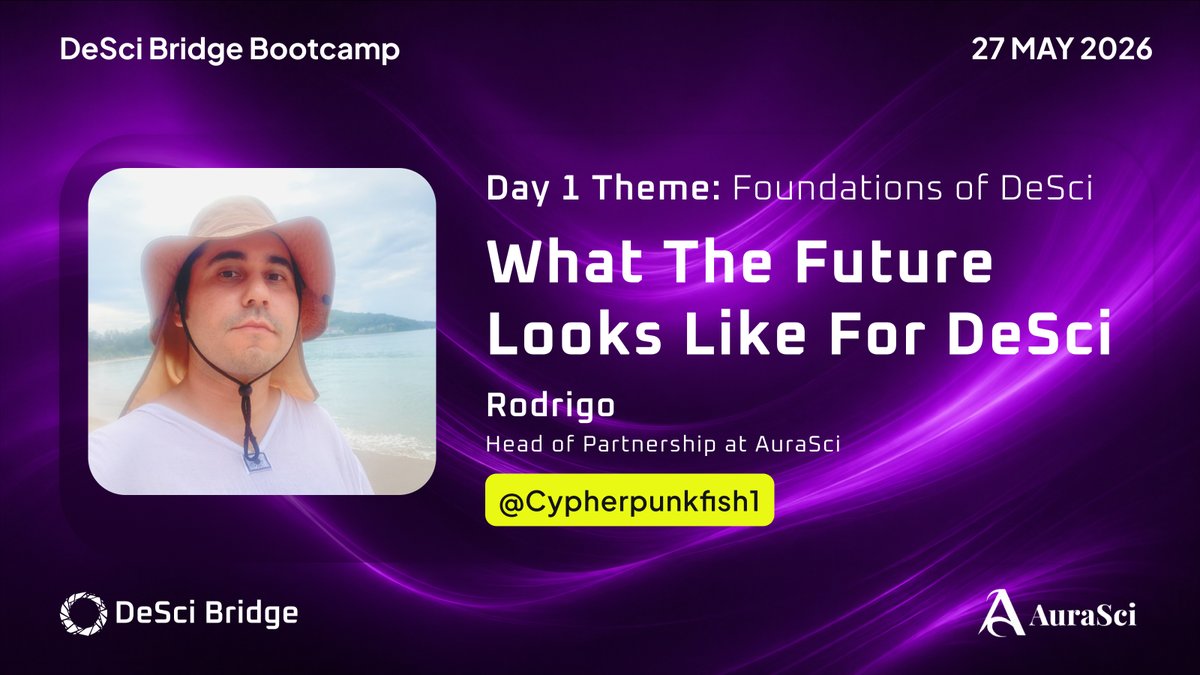
Proud to see @Cypherpunkfish1 bringing the AuraSci perspective to the @DeSciBridge Bootcamp. 🧬 If you want a real read on where decentralized science is heading—not the hype—this is the session. May 27 👇
What does the future of DeSci actually look like?
Excited to have Rodrigo @Cypherpunkfish1 from @Aura_Sci joining the DeSci Bridge Bootcamp for a session on:
“What the Future Looks Like for DeSci”
From emerging trends to the long-term vision of decentralized science, this session will explore where the ecosystem is heading and why now is the time to pay attention.
Don’t miss it.
Register 👇
https://t.co/qH3zgwxPCT
Scientists are raising funds on @ResearchHub to test whether the Wim Hof Method is safe and potentially beneficial for cancer patients.
So, we went and interviewed @Iceman_Hof himself. We asked him about breathwork, cold exposure, and what science still hasn't explained about his method.
Support the proposal here: https://t.co/kXNo8y6i0H
If Hantavirus mutated into a global threat, it would unleash AI + biotech unlike anything we've ever seen.
> genome sequenced and public in 4 hours
> AlphaFold maps every protein target
> AI screens 10,000 drugs in 24 hrs
> 50 vaccine candidates designed simultaneously
> AI designed antibodies in days
> risk of death computed instantly
> decentralized trials launch globally
> enroll from home
> 20 countries manufacturing at once
> first doses in three weeks
> real-time dose characterization
> your genome + biomarkers determine your protocol
> variant map updates every hour
No one would wait for governments.
Proteo-R1 (ICML 2026), the first reasoning protein foundation model for protein design, is out! 🚀🧬
Most protein design models generate structures without ever *reasoning* about which residues matter. We think that's backwards.
Human protein engineers👩🔧 don't work this way. They identify critical interaction residues first — charged anchors, hydrophobic hotspots, specificity-determining motifs — and only then optimize geometry around those decisions.
━━━━━━━━━━━━━━━━
🔬 THE CORE IDEA
━━━━━━━━━━━━━━━━
A dual-expert architecture that explicitly decouples molecular understanding from geometric generation:
→ ⚡A multimodal LLM (understanding expert) analyzes protein sequences, structures, and text to identify key functional residues governing binding and specificity
→ ⚡A diffusion model (generation expert) then co-designs sequence + structure — but with those residues locked in as hard constraints
━━━━━━━━━━━━━━━━
📐 HOW IT'S TRAINED
━━━━━━━━━━━━━━━━
Three-stage curriculum:
① Multimodal Alignment — freeze the LLM, train projections to bridge ESM-2 + AF3-style structural features into language space
② Structural Reasoning Mid-Training — unfreeze the LLM, teach it residue grounding → pairwise geometry → interface localization → hotspot prediction
③ Joint Reasoning-Guided Design — end-to-end on antibody-antigen complexes. Gradients from the diffusion objective flow back through the reasoning expert.
━━━━━━━━━━━━━━━━
📊 RESULTS
━━━━━━━━━━━━━━━━
Evaluated on simultaneous multi-CDR redesign and the RAbD CDR-H3 benchmark:
✅ Best RMSD & DockQ on RAbD — redesigned H3 loops are geometrically accurate *and* docked well
✅ Lowest backbone dihedral divergence (JSDbb) among all baselines
✅ Reduced intra- and inter-chain steric clashes
✅ Generated sequences score lower perplexity than native antibodies under IgLM & AbLang
✅ Plug-and-play: swapping the diffusion backend to UniMoMo still improves RMSD and IMP
━━━━━━━━━━━━━━━━
💡 WHY IT MATTERS
━━━━━━━━━━━━━━━━
Proteo-R1 isn't just a better antibody design model. It's a blueprint for coupling deliberative LLM reasoning with any physical generative process — interpretable, modular, and backend-agnostic.
📄 Paper: https://t.co/efquYg3O76
💻 Code: https://t.co/Qxm06IZ4xy
🌐 Demo: https://t.co/nkfEWY32OA
Great thanks to my wonderful collaborators Weihao Xuan, Heli Qi, @Hanqun_CAO, Heng-Jui Chang, @KKuanPang@XiangruTang Zehong Wang, @hcwww_ , @KejunYing@lupantech Chiho Im, Seungju Han, @richardxp888@tikgiau. Also appreciate the guidance from advisors @YejinChoinka@jure@erranlli Naoto Yokoya, Masashi Sugiyama.
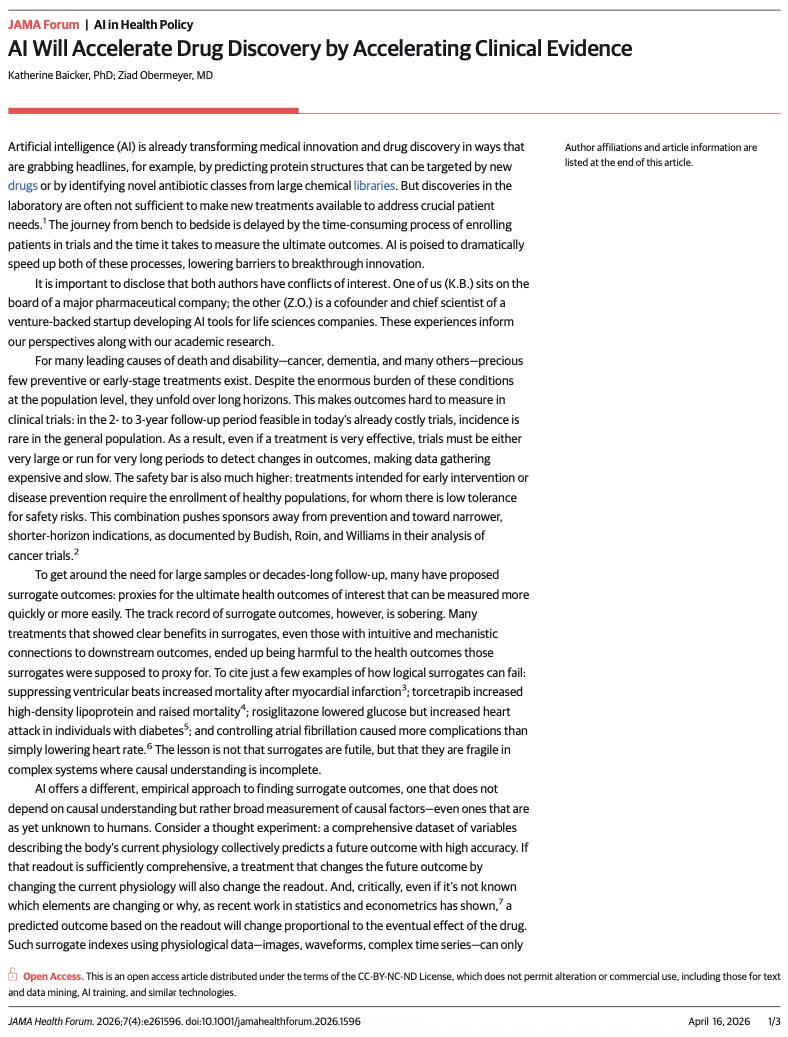
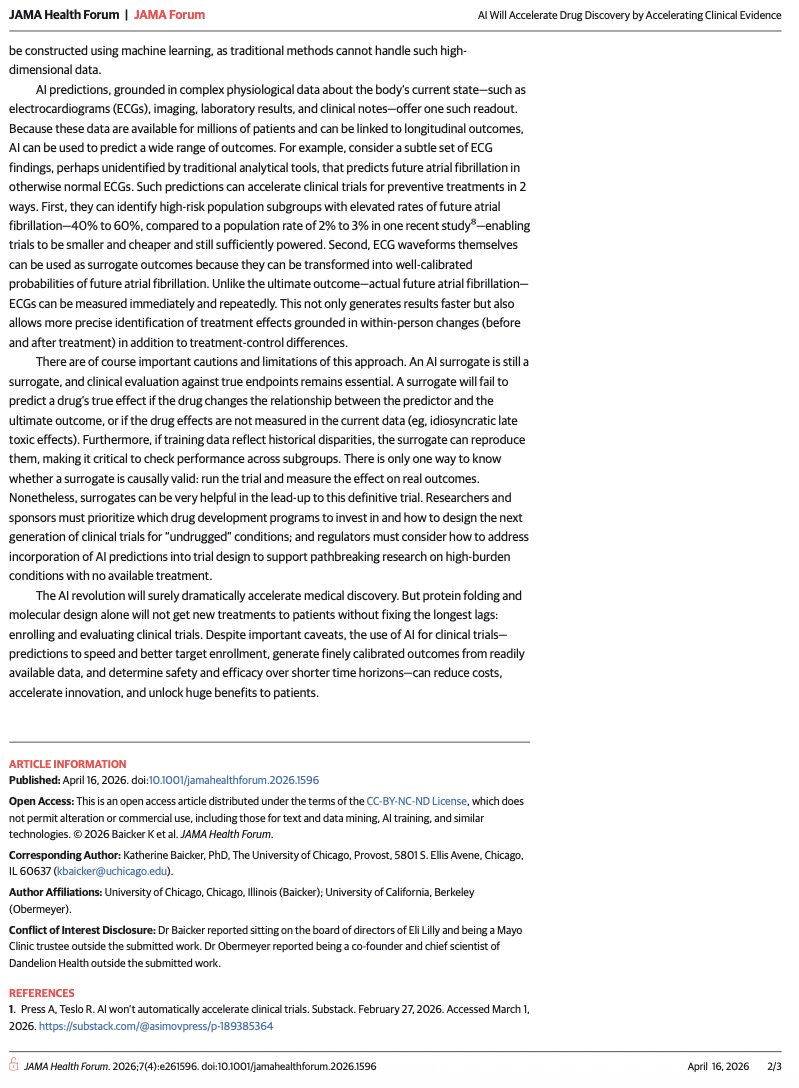
Common thought: AI for drug discovery = AlphaFold, drug design, etc.
But the bottleneck isn't design - it's clinical trials, as @RuxandraTeslo eloquently notes
Many well-designed drugs fail
Good news: AI can help there too
Our @JAMAHealthForum piece: https://t.co/EvRB5S7Fts
most people have no idea what is coming
- genome sequencing just crossed $100, down from $100M in 25 years
- peptides just went from felony to federal policy
- psychedelics just got a presidential executive order
- epigenetic reprogramming just entered human trials for the first time in history
- embryo editing is no longer a thought experiment: it is a clinical conversation
every single thing bio/acc has been bullish about for 2 years is breaking out simultaneously
honestly not a trend anymore
this is an inflection point
the next 6-12 months will be the most important period in the history of human biology
bio/acc
What is the most established intervention linked to lower biological (epigenetic) age?
Exercise
A new systematic review @LancetLongevity of 44 studies, >145,000 participants
https://t.co/agmAazwDxs
Something new is cooking on Prakasha.
We're building an AI agent that trades prediction markets autonomously — powered by decentralized compute from our own GPU network.
First target: @Polymarket.
Compute → Inference → Execution. One stack. No middlemen.
🔗 https://t.co/VbdgQuETt8
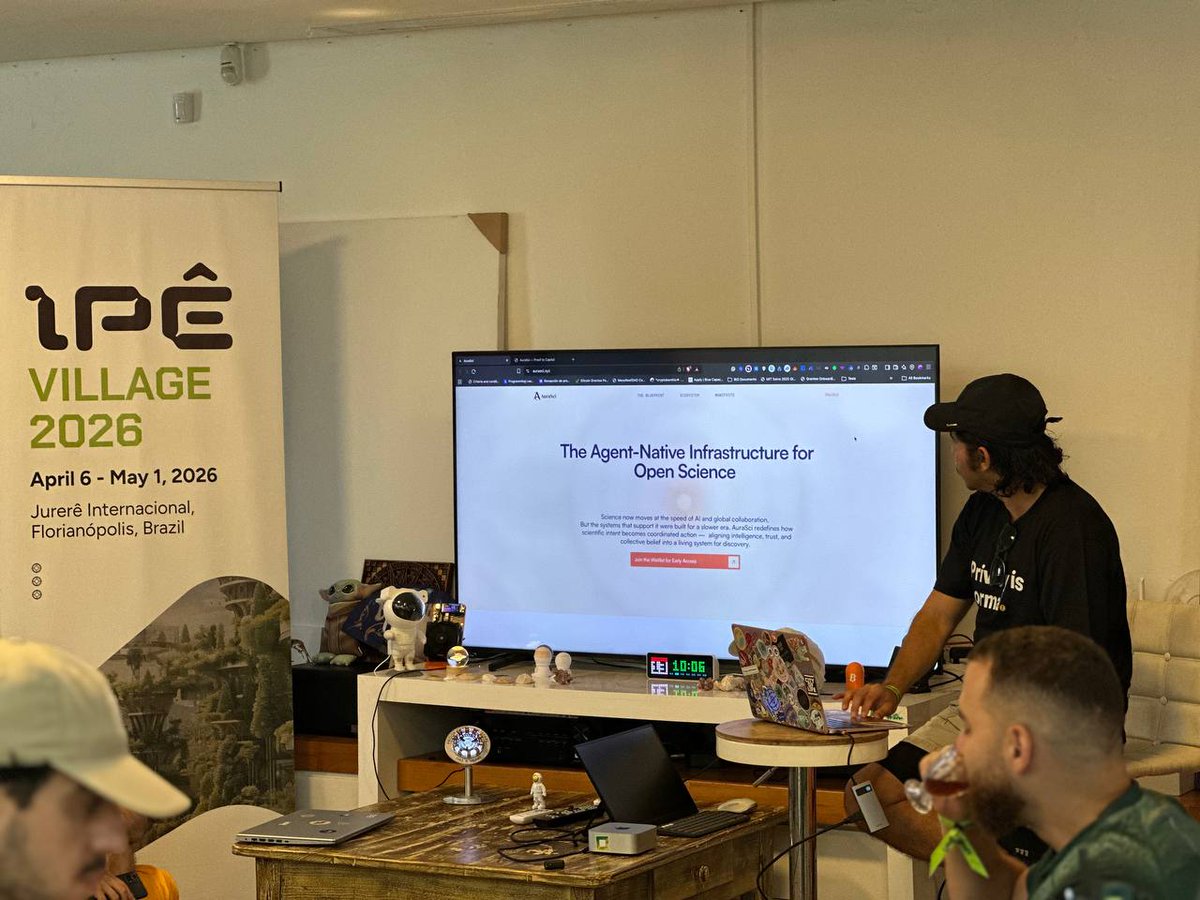
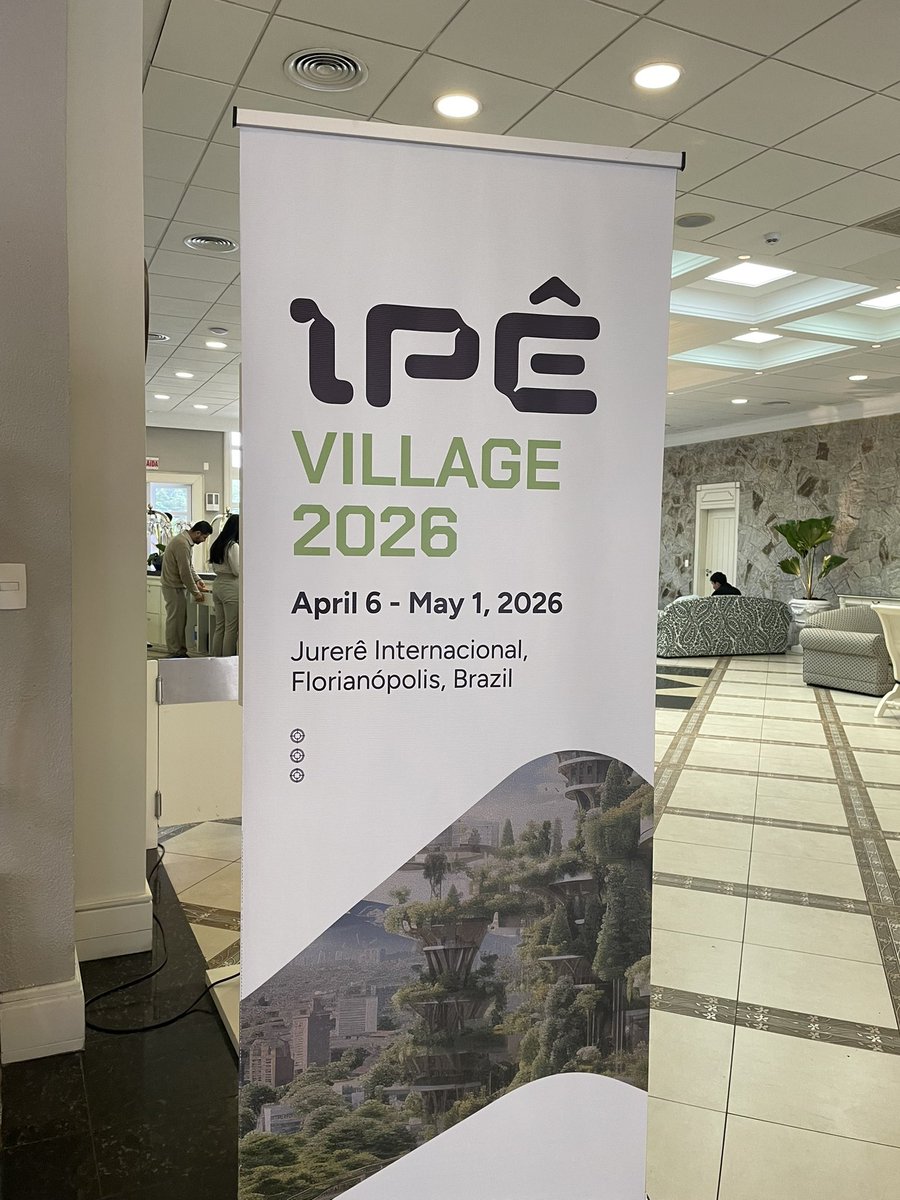
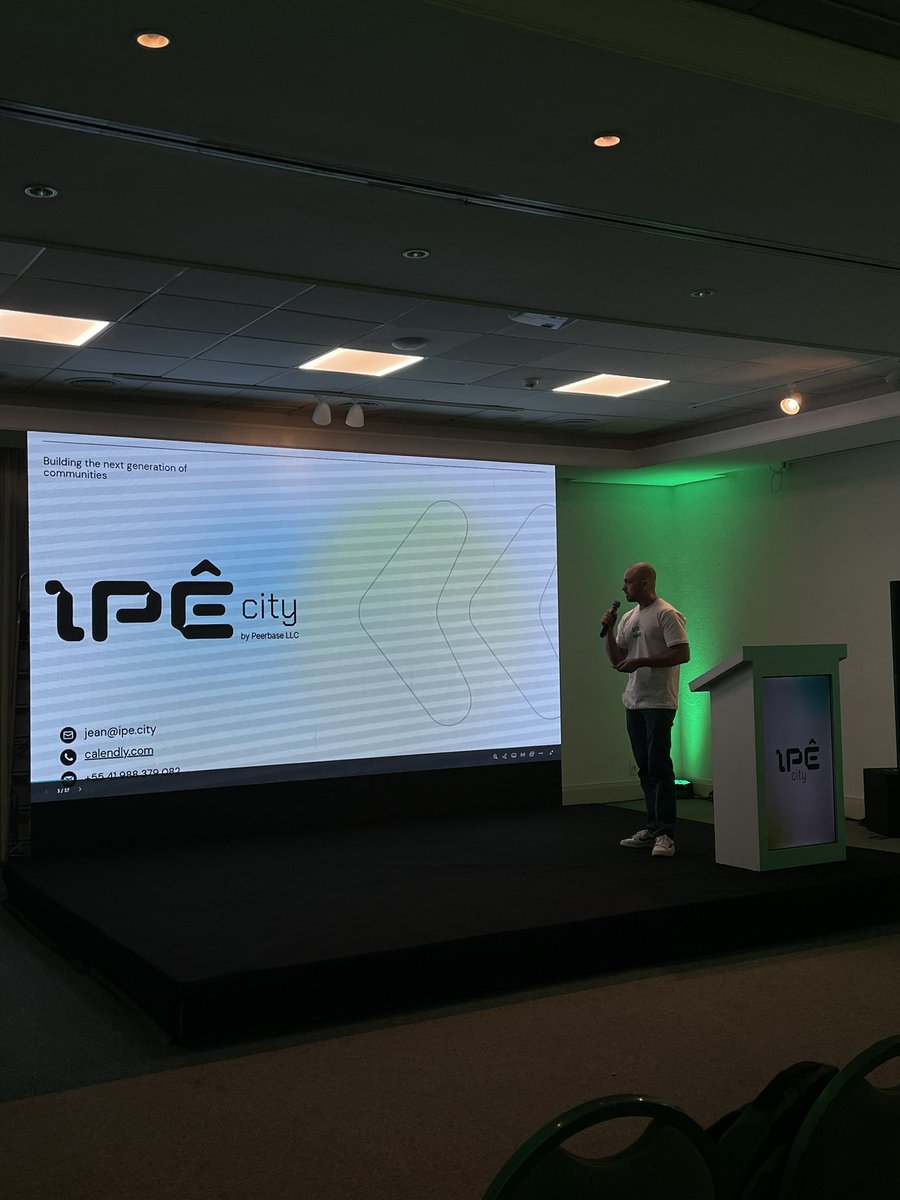
AuraSci at IPE Village 🌿
@Cypherpunkfish1 shared a live demo of AuraSci and introduced our vision for agent-native infrastructure for open science.
Great conversations around DeSci, AI for Science, and how new coordination systems can help scientific ideas move from intent to real execution.
More to come from AuraSci. ✨
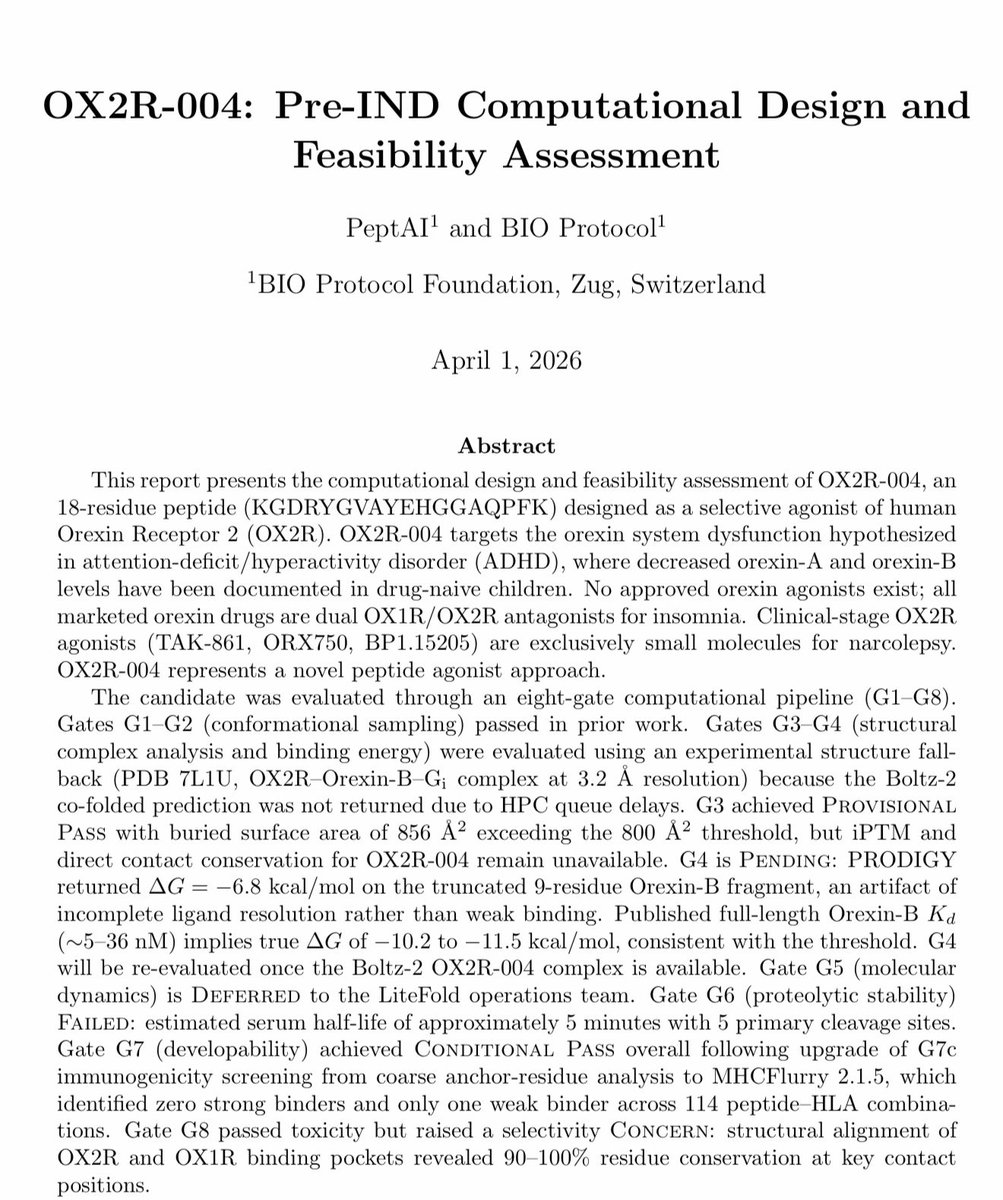
🧵 Over 24 hours, our scientific team and AI scientist infrastructure developed a novel peptide agonist to potentially treat ADHD.
Below is our paper for a pre-IND computational feasibility assessment for OX2R-004: an 18-residue peptide agonist designed as a selective OX2R agonist for ADHD.
Why this matters? No approved orexin agonists exist anywhere. All marketed orexin drugs are dual OX1R/OX2R antagonists for insomnia. Clinical-stage ones are small molecules for narcolepsy only.
We did this with @peptai_ a novel full 8-gate computational pipeline in one shot developed by @BioProtocol community 👇
Most of the self-professed longevity experts predicting we will soon live much longer (or live forever!) haven’t done a single day of aging research or published a peer-reviewed paper on the subject
Like @elonmusk, I’m proud of our hardworking teams 👏
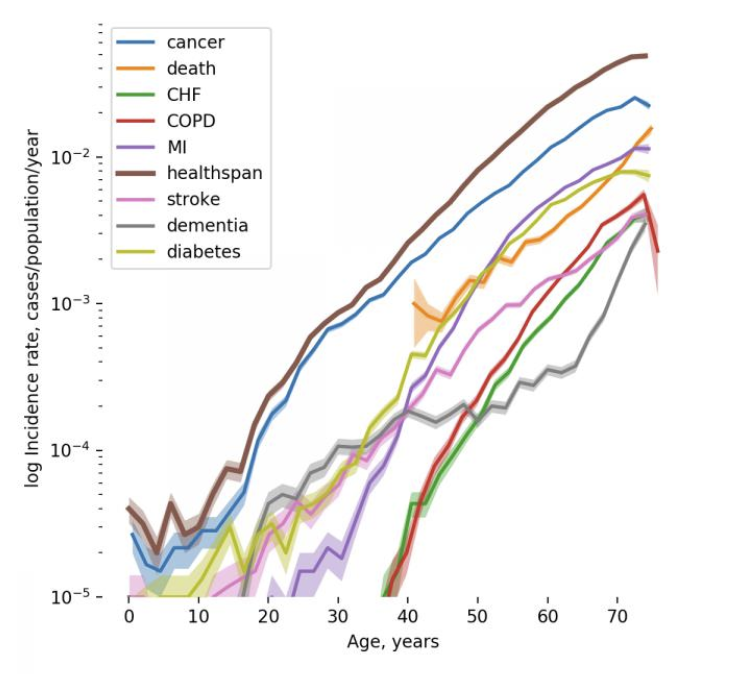
Aging is arguably the root cause of most major diseases. Our cells lose function as we age, allowing various conditions to manifest, which is why most major diseases correlate with age.
Yes, it is more complex than this, but this is a major component. @newlimit is working on treating a root cause of disease (aging) using epigenetic reprogramming.
The Startup Society Conference just started. I’m currently volunteering, building, and connecting dots in @ipecity!
A call to all DeSci builders, exploring and eager to create synergies in villages. Science needs to be a public good in Brasil! 🌊🏝️🇧🇷⛓️🧬🪸🐠🧜♂️
A lot of important work in biotech doesn’t get lost at the idea stage.
It gets lost in everything that comes after — validation, translation, deployment, and the long path of making something real.