Review “#CRISPR in clinical oncology: translational advances from molecular diagnostics to therapeutics"
Grigg S, Shembrey C, Fareh M, Blombery P, Corn JE, Seymour JF, Casan JML.
Nat Rev Clin Oncol 2026-07-09.
https://t.co/vq0AtWHM5b
… CRISPR-enabled functional genomics, diagnostics, therapeutic strategies (from ex vivo immune cell engineering to nascent in vivo interventions), and technological and regulatory challenges in oncology.
Saying it because @kenjmloi didn't:
This is really close to a RNA system that targets protein sequences because of wobble bases in codons.
Truly amazing discovery!
🚨NEW FDA Draft Guidance Safety Assessment of Genome Editing in Human Gene Therapy Products Using Next-Generation Sequencing #FDA#Regulatory#geneediting#genetherapy
Top 5 Takeaways -
1) NGS becomes the regulatory backbone for genome editing safety
2) FDA expects a layered, redundant approach to off-target assessment
3) Low-frequency events matter and must be detectable
4) Patient genetics is now explicitly part of risk assessment
5) Genome integrity (translocations) is no longer optional for DSB-based gene editing systems
https://t.co/28QKQPFtLb
Champions ⭐️⭐️⭐️ Phenomenal win for Team India in Ahmedabad. Absolutely no match for the explosive cricket played by us throughout the tournament. Brilliant character shown by the boys to keep fighting in tough situations and become world champions once again. Congratulations to all the players and all the members of the management for achieving this feat. Jai Hind 🇮🇳❤️
AlphaGenome: Decoding the dark matter of the genome with a unified deep learning model
More than 98% of human genetic variation lies outside protein-coding regions. These "non-coding" variants can disrupt gene regulation in remarkably diverse ways: altering chromatin accessibility, shifting 3D genome architecture, modifying splicing, or changing expression levels—often in tissue-specific patterns. Yet existing computational models face a fundamental trade-off: either they capture long-range regulatory interactions (like distant enhancers) but blur fine-scale features, or they achieve nucleotide resolution but miss distal context. And most specialize in a single modality, leaving users to stitch together predictions from many separate tools.
Žiga Avsec and coauthors at Google DeepMind present AlphaGenome, a model that sidesteps these trade-offs. It takes 1 megabase of DNA as input and predicts ~6,000 genome tracks—spanning gene expression, splicing (sites, usage, and junctions), chromatin accessibility, histone modifications, transcription factor binding, and 3D contact maps—at up to single-base-pair resolution.
The architecture combines a U-Net backbone with transformer blocks: convolutions capture local motifs essential for splice sites and TF footprints, while transformers model long-range dependencies like enhancer–promoter interactions. Training uses a two-stage approach—pretraining on experimental data followed by distillation from an ensemble of teachers using mutationally perturbed sequences—yielding a single model that scores variants across all modalities in one pass.
The results are striking: AlphaGenome achieves state-of-the-art performance on 25 of 26 variant effect prediction benchmarks, including a 25% improvement in predicting eQTL direction over the previous best model. It outperforms specialized models on their own tasks—beating SpliceAI-class methods on 6 of 7 splicing benchmarks and ChromBPNet on accessibility QTLs. Critically, the multimodal outputs enable mechanistic interpretation: for oncogenic mutations near the TAL1 gene in T-cell leukemia, AlphaGenome simultaneously predicts neo-enhancer formation (increased H3K27ac), chromatin opening, and elevated gene expression—recapitulating experimentally validated mechanisms.
This points toward a future where interpreting non-coding variation no longer requires assembling a patchwork of specialized models. A unified framework that jointly predicts molecular consequences across modalities could accelerate rare disease diagnostics, guide therapeutic oligonucleotide design, and help prioritize variants in GWAS loci—moving us closer to truly reading the regulatory code written in DNA.
Paper: https://t.co/3WzrnGNUSw
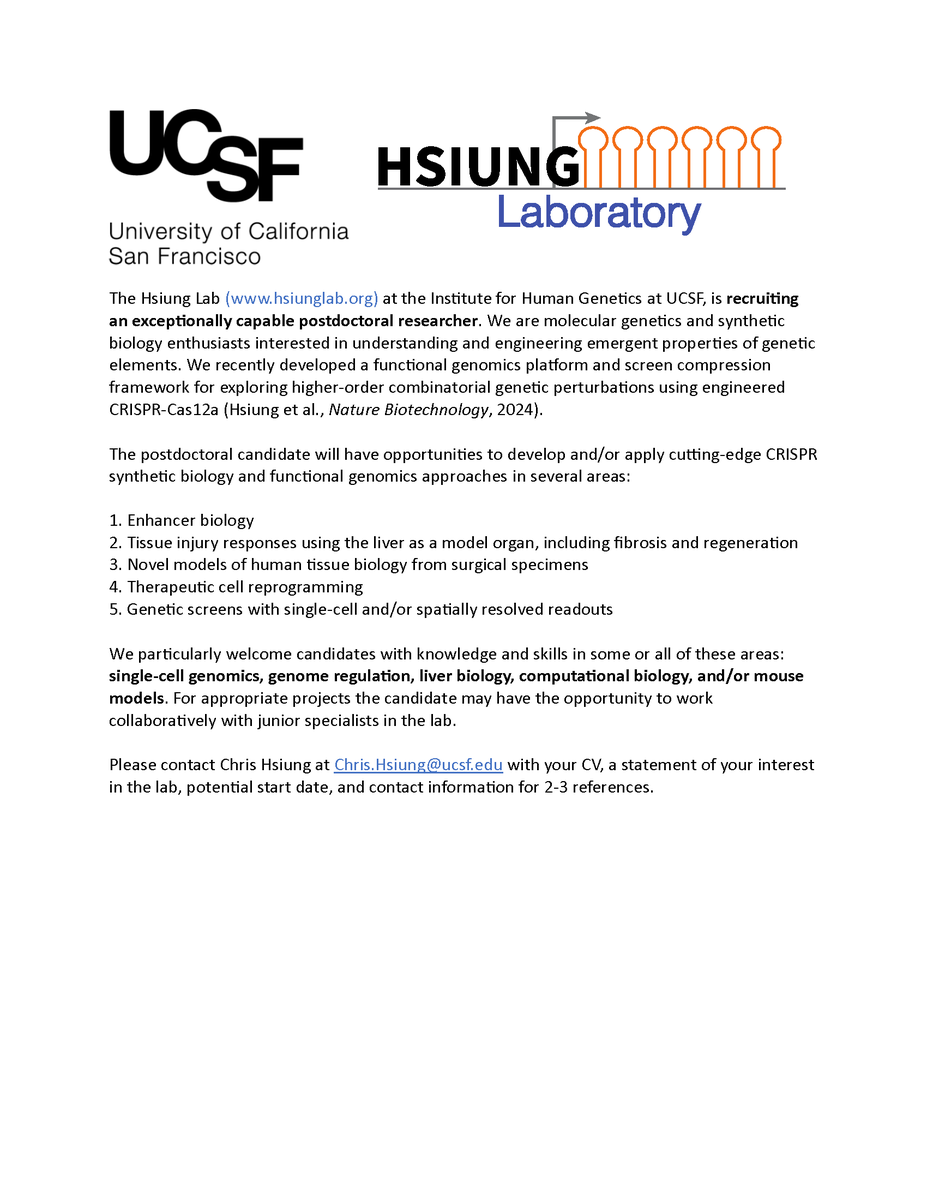
My lab is recruiting postdoc candidates interested in CRISPR synthetic biology and functional genomics approaches to study and engineer tissue injury responses! https://t.co/5ESgJ1FxFV
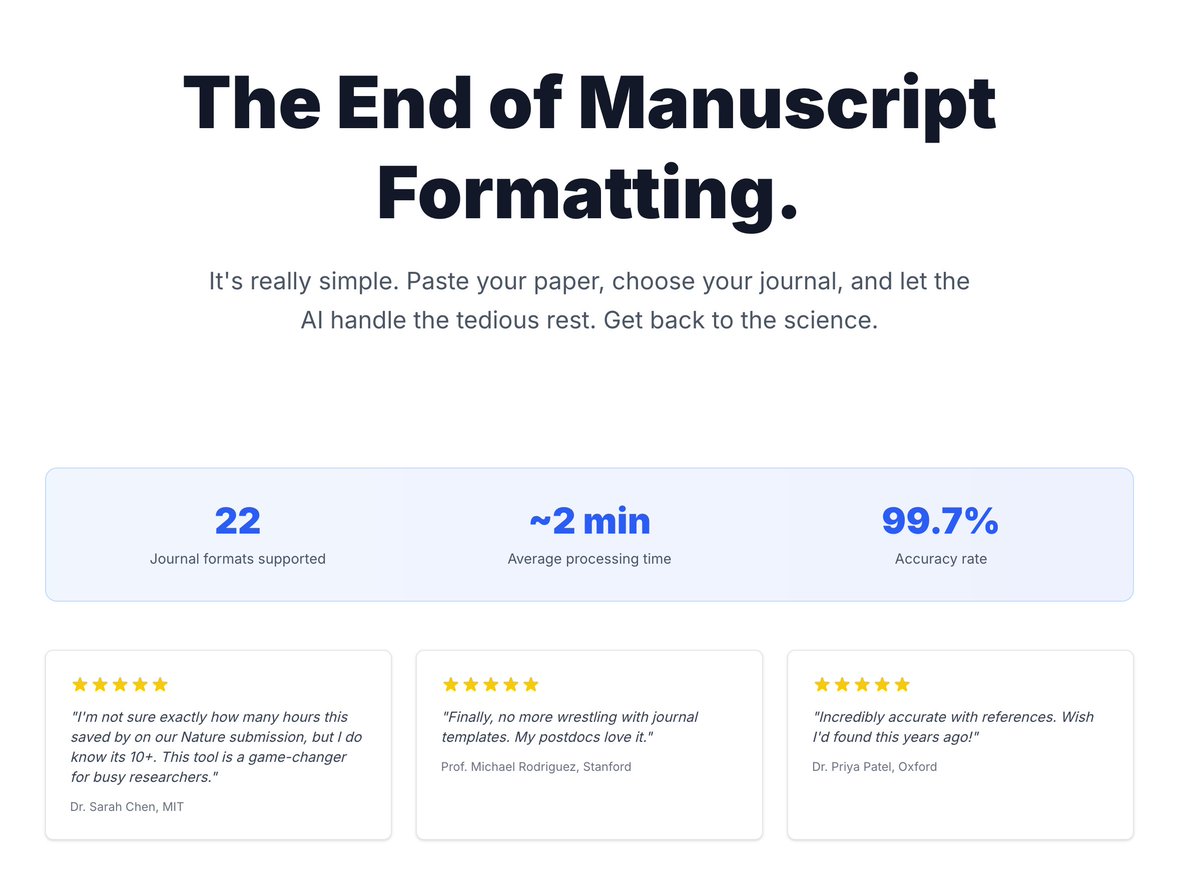
Finally, someone has solved a real problem with AI! No more having to take a paper in the format for a journal that rejected you, and reformat it for a new journal. Well done!!
https://t.co/J5HekY1Pc0
Say good morning to our new medicine laureate Mary Brunkow! 🎉
This photo was taken by Brunkow's husband Ross Colquhoun at 4:30 in the morning, just after she had received the news.
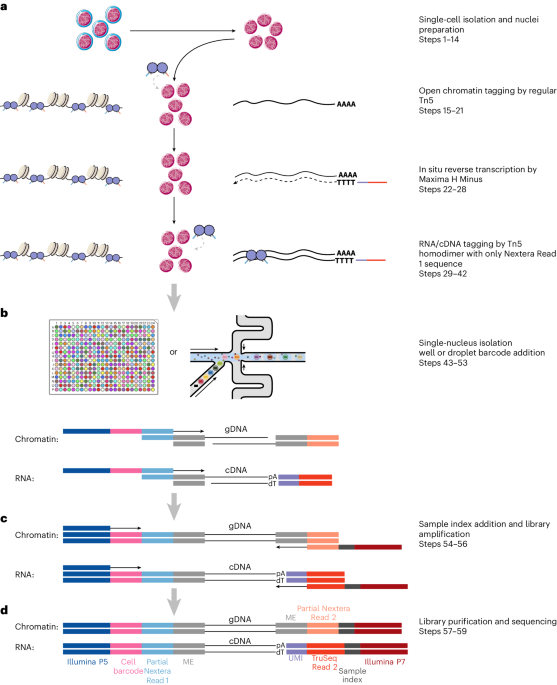
We published a detailed protocol for our Plate-CUT&Tag method on @protocolsIO to accompany our recent preprint (https://t.co/yKSUM3NchS)--give it a try! Feedback welcome! https://t.co/al5GBKXQBV
MIT Course announcement: Machine Learning for Computational Biology #MLCB25
Fall'24 Lecture Videos: https://t.co/tA3zeuIF7g
Fall'24 Lecture Notes: https://t.co/C3WmXZuQur
(a) Genomes: Statistical genomics, gene regulation, genome language models, chromatin structure, 3D genome topology, epigenomics, regulatory networks.
(b) Proteins: Protein language models, structure and folding, protein design, cryo-EM, AlphaFold2, transformers, multimodal joint representation learning.
(c) Therapeutics: Chemical landscapes, small-molecule representation, docking, structure-function embeddings, agentic drug discovery, disease circuitry, and target identification.
(d) Patients: Electronic health records, medical genomics, genetic variation, comparative genomics, evolutionary evidence, patient latent representation, AI-driven systems biology.
Foundations and frontiers of computational biology, combining theory with practice. Generative AI, foundation models, machine learning, algorithm design, influential problems and techniques, analysis of large-scale biological datasets, applications to human disease and drug discovery.
First Lecture: Thu Sept 4 at 1pm in 32-144
With: Prof. Manolis Kellis @manoliskellis, Prof. Eric Alm @ejalm, TAs: Ananth Shyamal, Shitong Luo @luost26
Course website: https://t.co/ateGr6xKLM
@MIT@MITEECS@MITdeptofBE@MITCSBPhD@MIT_CSAIL@Harvard@HarvardMed@BroadInstitute
🚨 We're hiring a postdoc!
Join the Galloway & Voigt Labs @Geneticdesigner to engineer human cells & push the boundaries of genome engineering.
👉 PhD required, mammalian cell expertise a must
📍 Must be US-based, start Sept 2025 in Boston
📧 Apply: [email protected]
🔬 Details ⬇️ in link below
#SynBio #PostdocJobs #MIT