Everyone knows the mitochondria is the "powerhouse of the cell." But have you seen how beautifully its movement was captured by Dr. Patrick C. Hickey in this 5th place #SmallWorldInMotion winning video? 🏆 Now you have!
https://t.co/tqx7CPhYT6
Claude has discovered a previously unknown enzyme system hidden in the DNA of bacteriophages. Beside the enzyme’s gene sits a long array of repeating DNA—a structure that looks somewhat similar to CRISPR.
We don’t yet understand what this system does, but only a handful of known systems share its features, and all of them are able to cut, copy, and paste DNA. Historically, the discovery of such programmable systems has helped revolutionize medicine. CRISPR, for instance, is now the foundation of genetic medicines. But it will take much more work to learn what this system does, and whether it can be put to similar use.
Read more: https://t.co/RuEosScSMb
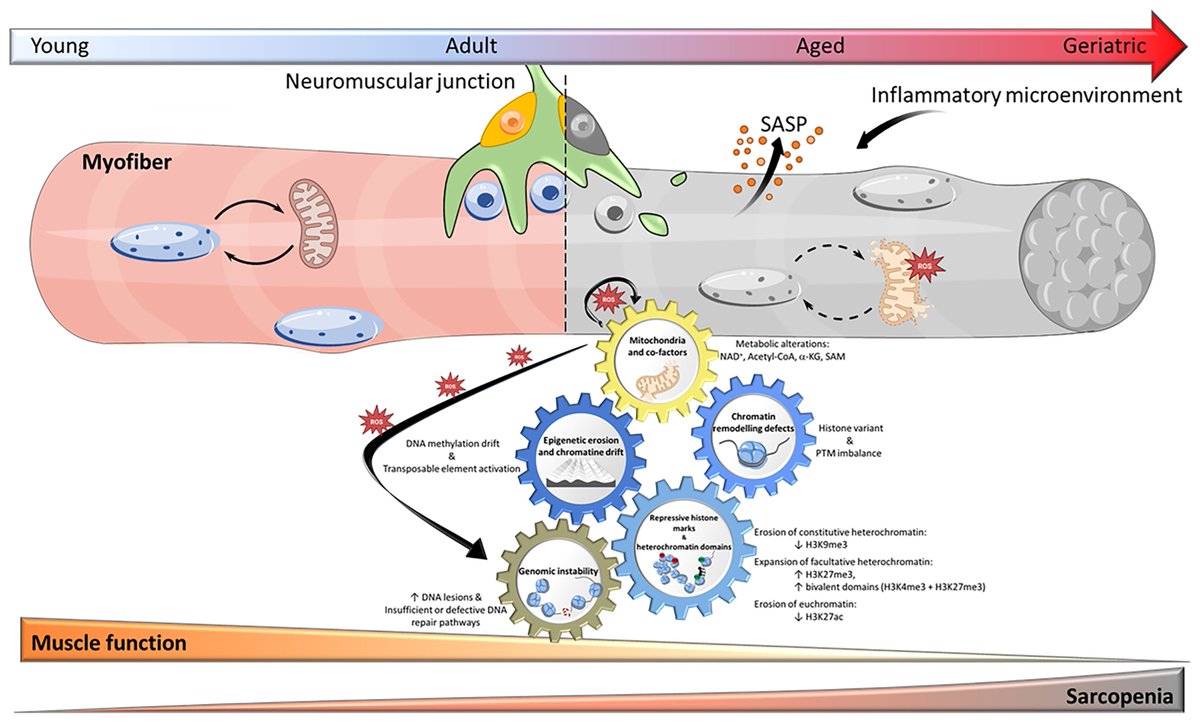
Arterial calcification is not just the accumulation of cholesterol. It is an active biological program in which vascular cells begin behaving like bone-forming cells and they start building bone. Could loss of epigenetic information be pushing them to forget what they are?
Just out @CellCellPress. The Future of Genomic Medicine - Imagine a new standard of care involving the analysis of complete genomes with the assistance of AI models...
OpenAntigens: A structure-aware database for antigen construct design across the human cell-surface and secreted proteome
1. OpenAntigens is a free, no-login, static web database that turns the messy “what region should we express?” decision into reproducible construct-design reports for 5,328 human extracellularly accessible proteins (secreted, GPI-anchored, single-pass, multipass).
2. The key innovation is structure-aware construct boundary logic at proteome scale: it uses AlphaFold pLDDT and PAE not just for visualization, but to algorithmically propose constructable regions and domain splits (with both lenient and strict settings), alongside PDB precedent and annotated domains.
3. The 2026-07-23 release provides 55,305 construct suggestions plus 148,722 precomputed sequence-similarity hits to support cross-reactivity and specificity decisions before ordering DNA.
4. Each target report integrates evidence that is usually scattered across many sites: UniProt topology/features (signal peptides, disulfides, PTMs), AlphaFold models (pLDDT/PAE), PDB coverage and expressed boundaries, InterPro/Pfam domains, HGNC/Ensembl family context, Open Targets disease associations, Complex Portal/UniProt partner context, and local BLAST results.
5. Construct suggestions are intentionally presented as multiple “classes” rather than a single answer: full inferred design-region constructs, PDB-backed boundaries, domain-annotated constructs, AlphaFold-derived calculated regions (lenient/strict), and membrane-expression options for compact multipass targets.
6. The strict AlphaFold-derived workflow is notable: it seeds from high-confidence residues (pLDDT > 70) and recursively splits multi-domain regions at boundaries where between-block PAE is high (≥12) and exceeds within-block PAE by ≥4, aiming to separate internally cohesive domains when their relative placement is uncertain.
7. The database treats cross-species and paralog context as first-class construct-design constraints: it maps human design regions to mouse and cynomolgus ortholog-equivalent sequences (when references exist) and provides family membership plus directional identity/coverage matrices to reflect asymmetric embedding of domains/ectodomains across paralogs.
8. Cross-reactivity assessment goes beyond “any similarity” by highlighting residues predicted to be extracellular and solvent-accessible (SASA-based), helping users focus on conserved accessible surfaces that are more likely to drive antibody/binder cross-binding and counter-screen needs.
9. OpenAntigens includes practical “liability” and feasibility cues during construct selection: construct-specific cysteine/disulfide warnings, PTM and processing annotations (including furin-like motifs), and partner/assembly alerts when annotations suggest obligate complexes or stabilizing co-expression context.
10. A browser-based interactive construct designer links sequence selection, 3D structure, pLDDT trace, and PAE matrix; users can adjust boundaries and export human/mouse/cyno sequences in FASTA/TSV with real-time warnings—bridging computational evidence to bench-ready construct ordering.
💻Code: https://t.co/6OSIgw9C0R
📜Paper: https://t.co/A0r3F4HZVq
#computationalbiology #bioinformatics #structuralbiology #proteindesign #antibodies #alphafold #database #proteomics #drugdiscovery #recombinantprotein
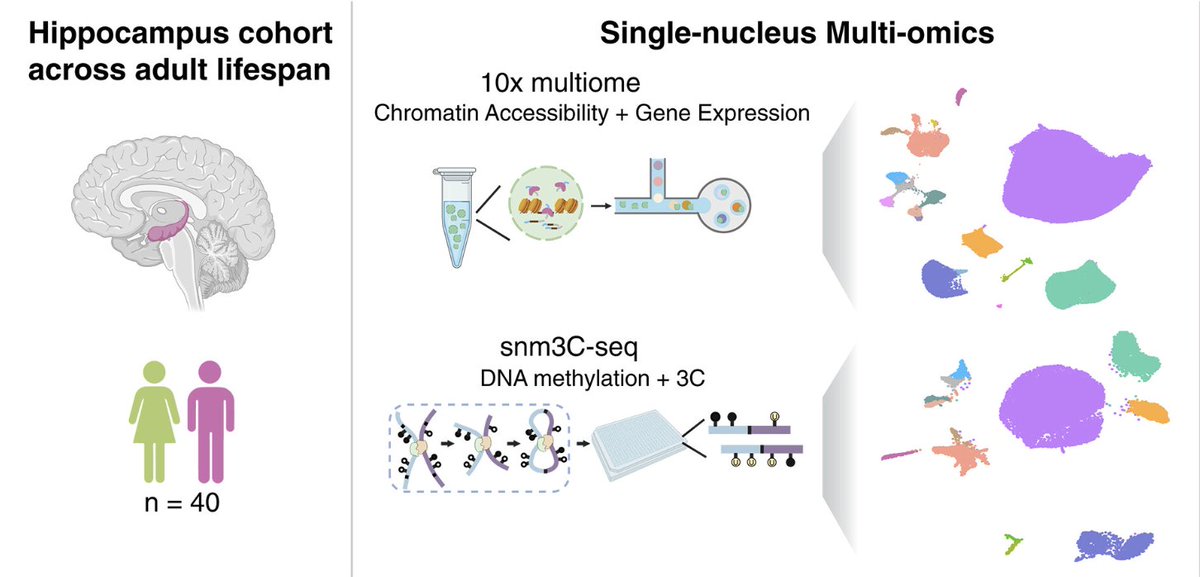
Aging doesn't just change what brain cells do, it changes what they are! New study shows microglia cells replaced over time by monocyte-like inflammatory cells due to DNA methylation changes, consistent with brain aging and dementia resulting from epigenetic information loss👏🧵