Insurance gives someone a reason to figure out how a technology actually works. If you’re paying when a boiler explodes, it helps to know why boilers explode. And if you can prevent it, profits go up.
In 1866, Hartford Steam Boiler Inspection and Insurance Company built a company on this idea: inspect boilers and insure them. Their inspections prevented accidents; the insurance gave the inspectors a reason to be rigorous. Their standards became specifications for boiler design and maintenance.
Property insurers had a similar need to know which electrical products might burn down houses. Property insurers funded Underwriters Laboratories (UL) in 1894 to investigate that question. UL first had to find the tests that mattered before certifying products against them.
In the case of cars, insurers funded crash testing, found protective measures that mattered and incentivized adoption of them. When the government didn’t require airbags in cars, insurers offered auto insurance discounts for cars that carried them. The Insurance Institute for Highway Safety (IIHS) has been conducting crash test ratings since 1995 — and as car manufacturers hill-climbed on those ratings, the IIHS made their tests harder.
Nuclear insurance connects the assessment directly to the price. Nuclear Electric Insurance Limited uses independent plant evaluations to set premiums: better evaluations earn discounts. Operators have a financial reason to respond before an accident happens; and have minimum standards for how to investigate near-misses and incidents.
AI is higher stakes than any of these examples, with a murkier liability regime. But I believe the same mechanism has a role to play in the ecosystem: insurers fund audits to price risk; their pricing quantifies risk; they enforce incident investigation.
The Artificial Intelligence Underwriting Company has raised $55M to audit and insure frontier AI models.
Insurance produces audits the public can trust and understand. The mechanism is simple: insurers need audits to price the risk. They pick auditors they believe will help them price the risk most accurately. Insurers then turn the audits into a price signal that cuts through political debates. Insurers are aligned with the public: if they get the audits wrong, they go out of business. That’s different from today, where labs pick their own auditors, creating public distrust.
Insurance only works if we scale up auditing, and we are building the infrastructure to do that. Millions of agents are being deployed; they leave terabytes of traces and will create thousands of incidents across dozens of risk categories. To scale auditing, we need reliable agents to surface evidence traces for human review.
History guides us. Take cars: auto insurers funded crash tests to price risks; crash tests led us to airbags, lowering the risk. Take electricity: home insurers funded lightbulb tests to price fire risks; today, every lightbulb carries a safety mark. Nuclear safety works similarly.
We’ve been learning by doing.. In the last 6 months, we’ve audited and insured frontier agent builders like Cursor, ElevenLabs, Lovable and Harvey. For ElevenLabs to get the world’s first agent insurance coverage, a Lloyd’s of London insurer required quarterly technical audits by an auditor of the insurer’s choice. We’ve built infrastructure for quarterly technical audits of any agent, working alongside firms like Gray Swan (technical evaluations) and Schellman (audit).
In the coming weeks, we’ll share our vision for how an insurance ecosystem can work for the frontier, and open source the world’s first actuarial model for frontier AI catastrophic risk.
We’re hiring across all roles in San Francisco. Come do your life’s work with us.
Rune & Rajiv
I could not be more excited to announce that @amirmova has joined the team @firstharmonic.
Amir and I have known each other for 15 years. He was one of the best hires I made in my five years at Twitter. Amir made a huge impact, including helping to lead the company’s IPO efforts in 2014. A few years later, he became the CFO at Mixpanel and then the COO, leading the GTM organization and owning the sales number. I knew Amir to be an extraordinary operating executive, but did not expect him to become a CEO as quickly as he did. But that’s exactly what happened when Mixpanel's founder stepped down in 2017 and asked Amir to take over.
Mixpanel was once the market leader in product analytics, but had lost its lead. As CEO, Amir led an amazing turnaround in the company’s performance. He remained CEO for eight years before recruiting his replacement and stepping down earlier this year, with Mixpanel growing, thriving, and profitable.
Amir is a builder. He is a winner. He cares deeply about his work and the people he works with. His breadth of experience at both private and public companies is remarkable, and I believe he will become a tremendous resource to First Harmonic’s founders through all stages of their journey.
Welcome to the team, Amir. I’m delighted to work with you again.
We drove 410% conversion lift on @Replit's enterprise funnel, 2x-ing the number of demo requests. All in a matter of months.
"Coframe makes you feel like you have a team of 100 people. There's nothing on the market like it."
⧉ x ⠕
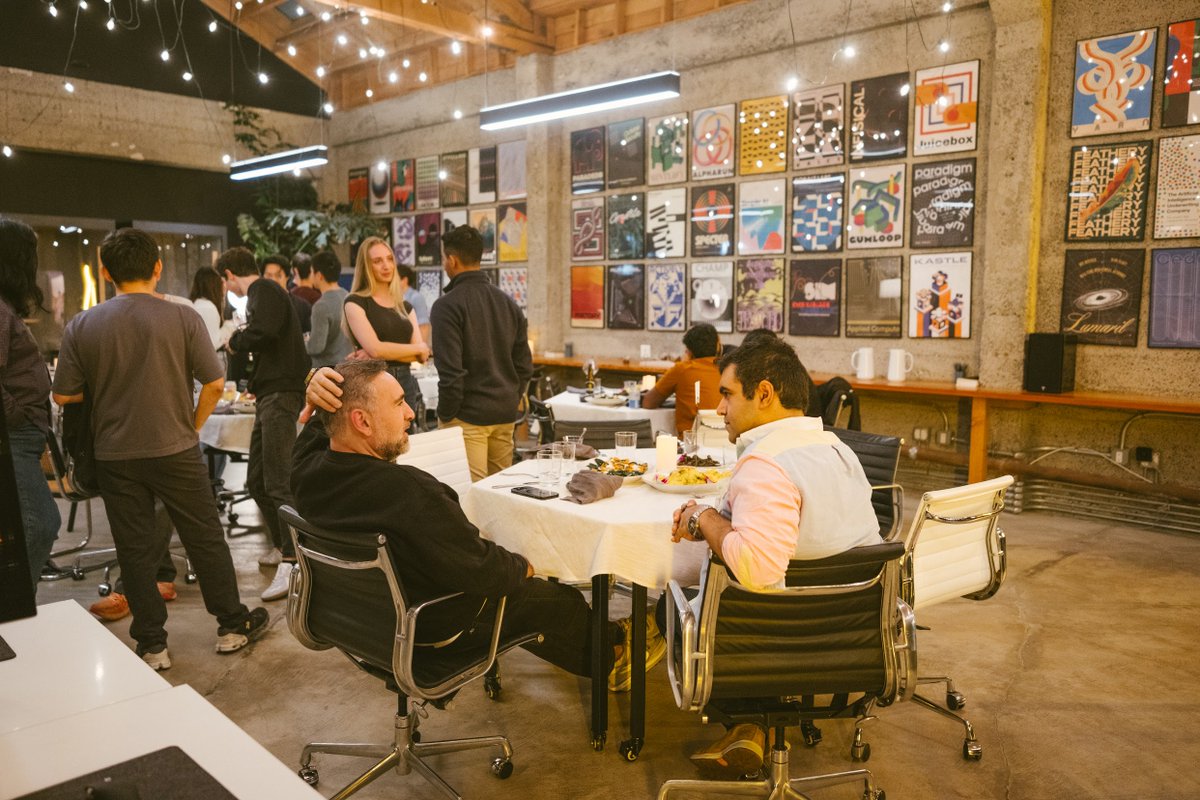
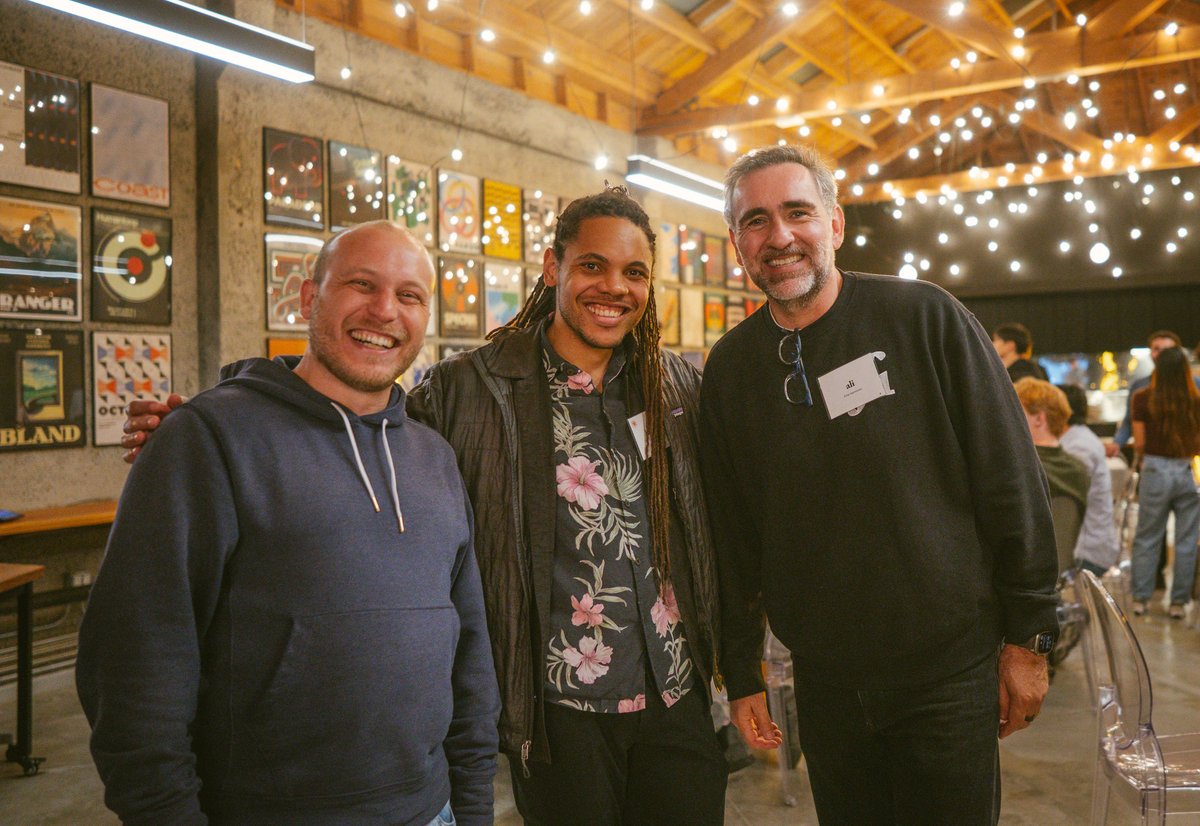
This week, @firstharmonic hosted its first sales-focused Builders Table (Sellers Table?) with top AEs from @DecagonAI, @Rippling, @fal, @getserval, @_hex_tech, @stripe, @coderabbitai, @figma, and other great companies.
Some interesting takeaways from the room:
1/ Most sellers are using AI for meeting prep and follow-up, not as much for building decks or writing emails (!).
2/ The thing sellers most WISH AI could do for them is automate CRM input (hard relate).
3/ Most sellers think that there will be fewer SDRs in five years, and that they'll have different skills than they do today.
4/ Most sellers think Salesforce will eventually get displaced, but not for 10+ years.
5/ The "AI tool" that sellers value most isn't an AI-native tool at all; it's @Gong_io.
Personally, I learned that the most cracked sellers are the ones who show up at a dinner on the last day of the quarter, the week before 4th of July!
Thanks to all who joined us. We want to do more of these dinners: for engineers, salespeople, marketers, you name it. DM or email me if you want to get on the list.
We @firstharmonic are proud to co-lead @PoeticHQ's Series A round.
Founders come in all shapes and sizes, but few come with as much light, passion, and energy as @markiewagner. She has built one of the most talent dense teams I’ve seen, and together they have built a breakthrough product that is already loved across the Fortune 500.
@PoeticHQ has built the first product that combines the intelligence of agents with the reliability of code. This architecture will revolutionize how companies run by turning process into software at every large company in the world
@firstharmonic is proud to co-lead @PoeticHQ's Series A round.
Founders come in all shapes and sizes, but few come with as much light, passion, and energy as @markiewagner. She has built one of the most talent dense teams I’ve seen, and together they have built a breakthrough product that is already loved across the Fortune 500.
@PoeticHQ has built the first product that combines the intelligence of agents with the reliability of code. This architecture will revolutionize how companies run by turning process into software at every large company in the world.
One of my favorite evenings in recent memory. We hosted 40 of SF’s best engineers at our Builders Table dinner with @bcherny, @mikeyk, and members of the Claude Code team.
We took a quick poll in the middle of dinner on some topics, and we had some interesting results:
1) It turns out that out of all the agentic coding tools out there, most folks in the room (to no surprise) trusted Claude the most 🤖
2) The next application layer unlock will come from persistent memory and better context ingestion.
3) The room was pretty split on whether there would be more or fewer software engineers in the world in 5 years.
Thanks so much to the @AnthropicAI team (@kandouss, @alistaiir, @OmidMogasemi, @jwbaskerv, and especially @RazRazcle), and to everyone who spent their evening with us.
If you're an engineer or researcher interested in a future @firstharmonic dinner, DM me.
We hosted a Builders Table event with leaders from @AnthropicAI last week. It was amazing to hear about their experiences using Mythos internally, managing the unprecedented growth they are seeing, and learning about new products they are hoping to build.
Thanks so much to the @AnthropicAI team (@bcherny, @mikeyk, @alistaiir, @OmidMogasemi, @jwbaskerv, and especially @RazRazcle), and to the great engineers who spent their evening with us.
This was maybe my favorite Builders Table yet. We hosted @bcherny, @mikeyk, and members of the Claude Code team to talk about how coding will evolve and what it means for the day-to-day experience of engineers.
40 of SF’s top engineers came. Some results from our mid-dinner poll:
1/ The biggest coding bottleneck is verification, not model capability.
2/ The next application layer unlock will come from persistent memory and better context ingestion.
3/ The jury is out on whether there will be more or fewer engineering jobs in five years, but for now the coding "tool" people trust most after Claude is... themselves. Keep thinking indeed.
Thanks so much to the @AnthropicAI team (@kandouss, @alistaiir, @OmidMogasemi, @jwbaskerv, and especially @RazRazcle), and to everyone who spent their evening with us.
We're hosting another one of these next month, on the topic of AI safety. If you're an engineer or researcher and want to come, DM me!
Actively AI (@useactively) is leading an inevitable transformation in the modern sales stack. Within five years, no one will believe that sales teams used to work without per-account agents working alongside them to guide their actions with intelligence.
I heard about Actively two years when a CRO told me it was the most transformative sales tool he’d ever seen. We then worked closely with @mgarimella and @agupta_108 in the @firstharmonic program and were blown away by their tenacity and commitment. We see enormous potential in their business.
Today, we're very excited to co-lead Actively's Series B and help realize their vision of intelligence-led revenue.
📣 We just raised our $45M Series B from @TCVTech and @firstharmonic, with participation from @BainCapVC, @firstround, and @AlkeonCapital.
Sales is the most expensive function in most companies — and one of the hardest. Hundreds of accounts, different context, different stakeholders, different dynamics, and a different path to close. No one can do that perfectly. Critical things get missed.
So we gave every account its own AI agent — working 24/7, maintaining full context, progressing it through the funnel, and guiding reps and leaders on what to do next.
The greatest privilege has been building alongside companies like @Samsara@tryramp@ironclad_inc and @attentiveHQ — enterprises with thousands of sellers who are already living in the future.
There are only two unbounded upside problems out there: building and selling. Every company sells. and @useactively is building the system they'll all run on. We’re excited to pull every revenue team into the future we know is inevitable.
The way we align and shape model behavior is evolving quickly. Last week, we had the pleasure of gathering SF's post-training experts from companies like @appliedcompute, @OpenAI, @cursor_ai, @thinkymachines, @mercor, @cognition, @xai, @flappyairplanes, and others.
Post-training is a nascent field, and I learned a ton:
1/ Reward modeling is becoming the bottleneck. The gap between what we can train models to do and what we can reliably evaluate is widening fast.
2/ The line between post-training and product is blurring. Teams that treat RLHF and fine-tuning as an afterthought are falling behind those that treat it as a core part of the product loop.
3/ Evaluation is still surprisingly artisanal. The tooling isn't where it needs to be, and there's a real opening for better infrastructure.
This event was part of @firstharmonic's Builders Table series: intimated, curated dinners where you almost certainly won't be the smartest person in the room. DM me if you're interested in coming to the next one.
We hosted 30 of SF’s best engineers at our Builders Table event with @cursor_ai last week. The way we code is changing fast, and Cursor is one of the companies at the forefront. The team shared their perspectives on questions like:
- Will engineers even look at their code in a year?
- Will the future of coding be in the IDE, the CLI, or in something else entirely?
- What will the role of an engineer look like in the future?
There are many forums for founders to learn from each other, but fewer for engineers. We loved creating one and hope to do more. If you’re an engineer and interested in attending a future @firstharmonic event, DM me!
Excited to announce that @simpleailab has raised a $14M seed round led by @firstharmonic.
For the past year, we’ve been building AI voice agents to transform direct-to-consumer sales. We fundamentally believe that voice AI is the future of all B2C calls.