@Erdayastronaut If nothing else it's going to take them awhile just to rebuild the pad. Didn't it take SpaceX a year to rebuild SLC-40 after the Amos 6 event?
⚠️ One more reason to dislike Flock:
“The Guardrail Guy” a dad who turned his daughter’s death into a national safety crusade is now documenting how many Flock cameras are installed illegally without required breakaway bases, meaning they can turn a crash into a lethal spear.
@_jaykeegan_@Alexphysics13@NASASpaceflight I have a suspicion that the RVac that later failed was underperforming in some way from the moment it lit, and that this underperformance led to the off-nominal booster flip and eventual demise. This theory is based on nothing but vibes, but I feel the need to put it out there.
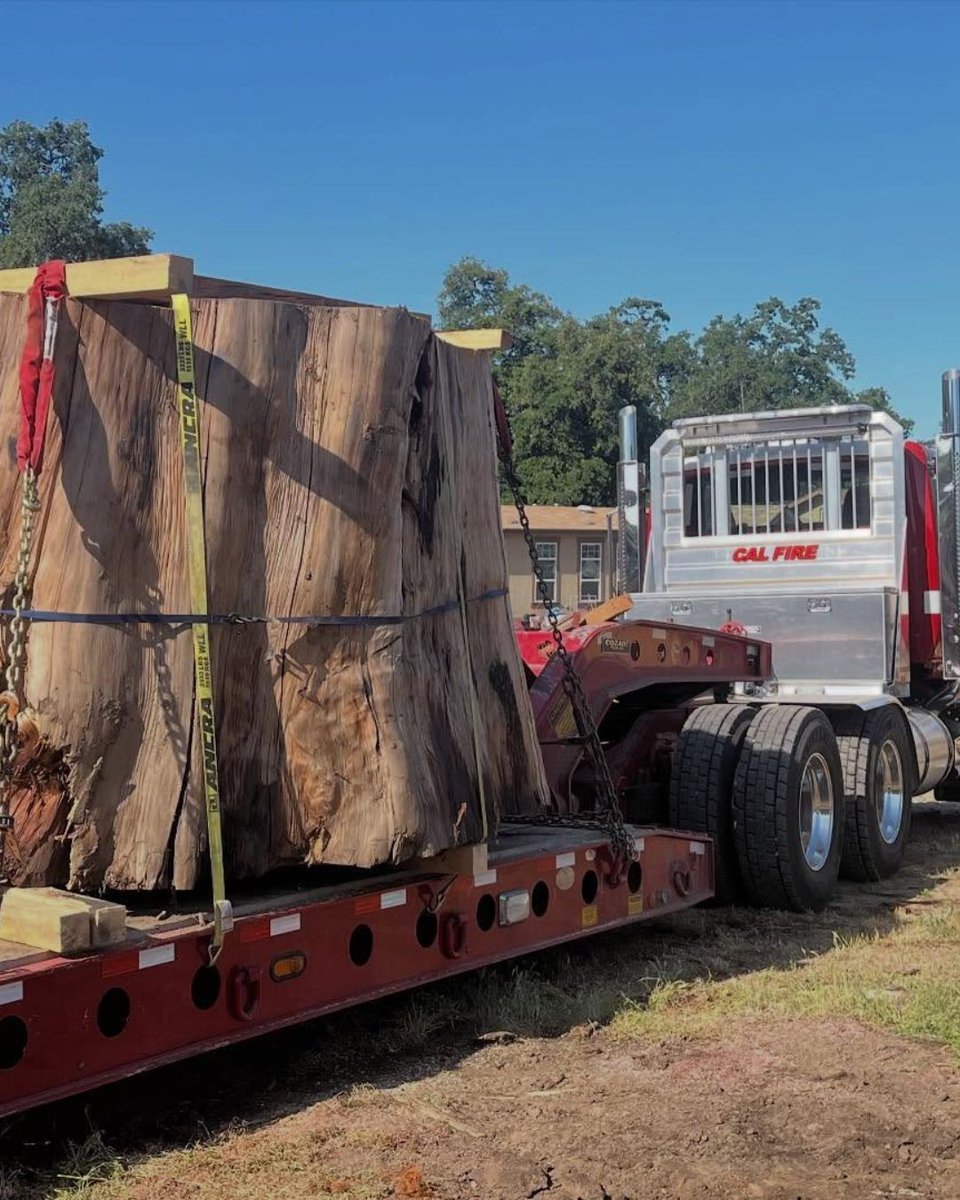
🌲 Saving a forest giant.
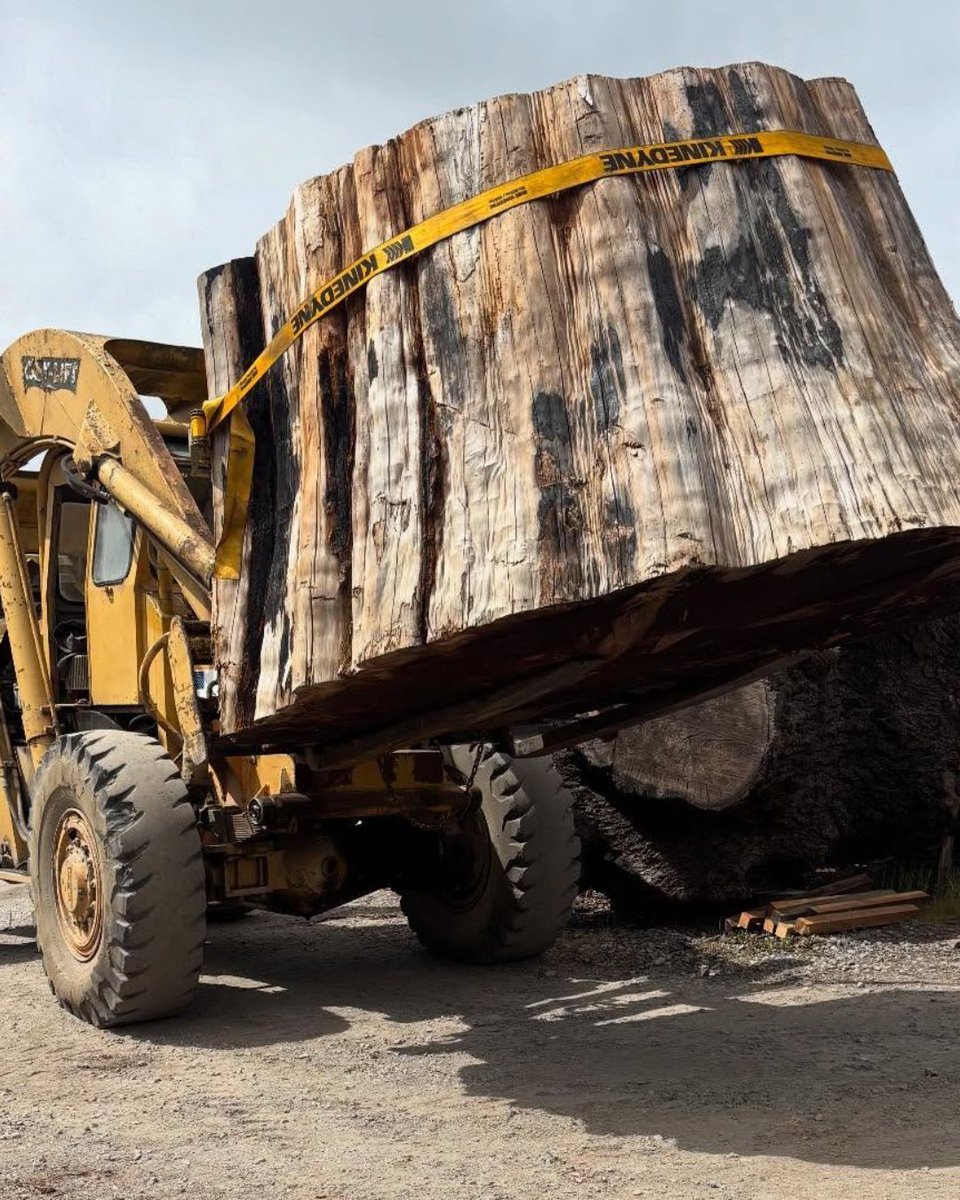
A section of a 1,500-year-old Giant Sequoia from CAL FIRE's Mountain Home Demonstration State Forest is beginning a new chapter.
The tree was lost in the 2020 SQF Complex Fire that burned through the area and was later felled for public safety. The preserved trunk section carries centuries of visible fire scars, making it a remarkable record of California fire history.
The section of the tree will be cut into two pieces — one going on display at the new California Natural Resources Agency building in Sacramento and the other at the Smithsonian Museum in Washington, D.C.
Thank you to the researchers, foresters, and crew members who worked to preserve it and see this through.
#Sequoia #Forests #Conservation #CALFIRE @MountainHomeDSF @CALFIRETUU
2034 Earth–Venus–Mars opportunity looks promising. 10–15 on-orbit refueling operations may be needed to make a crewed ship full. Most can be done at an altitude of 180–200 km, made possible by Starship’s size. The final refueling may be performed at a higher altitude of ~2000 km, just below the Van Allen belt.
Earth departure on 2034-08-21 from 2000 km orbit. A Trans-Venus Injection burn of ~3.7 km/s will place the ship on an Earth–Venus–Earth free-return trajectory. Venus flyby is expected on 2034-12-19, 120 days after departure. Two weeks before the encounter, if the mission proceeds as planned, a 25-m/s maneuver will shift the trajectory from Earth-return to Mars-bound. If not, the ship will free return to Earth in September 2035.
The Venus gravity assist will send the ship into another Earth free-return trajectory, with Mars flyby around 2035-06-02. One week before reaching Mars, a system health check will determine whether to commit to Mars Orbit Insertion. If it’s GO, a small 10-m/s manuever will put the ship to less than 100 km altitude periapsis. Otherwise, a Mars flyby will lead to an Earth return in May 2036.
The ship will enter the Martian atmosphere at about 9.4 km/s, performing an aerobrake to slow to 4.88 km/s and capture into a 100x140000 km, 7-day period high elliptical orbit. At apoapsis, a 50-m/s plane change will align the inclination with Mars’ equator, followed by additional aerobraking to remove about 650 m/s of velocity, placing the spacecraft in a 120x6128 km orbit. A 550-m/s burn at 6128 km altitude will then adjust the trajectory into Phobos orbit.
The ship will stay at Phobos for about 7 days. The Mars–Phobos L1 point is only about two miles above Phobos’ surface, and Mars would dominate nearly half the sky, appearing about 80 times larger than the Moon from Earth.
The ship will depart for Deimos afterward. Two burns totaling roughly 750 m/s will transfer the ship from Phobos to Deimos. And the ship will stay at Deimos for 7 days more.
From Deimos, the ship will raise its apoapsis to form a 20000x140000 km altitude, 7-day orbit, requiring about 420 m/s of delta-v. At apogee, a 50-m/s burn will adjust inclination and lower periapsis to ~500 km for final Trans-Earth Injection. If time and propellant allow, the orbit can be aligned to a polar inclination for Mars ice-cap observations before departure.
A Trans-Earth Injection burn at 500 km altitude, requiring 1.5–1.6 km/s of delta-v in early July 2035. If departure on the first days in July, Earth arrival is expected in December 2035. If missed that window, a March 2036 arrival may look more feasible.
Nominal mission duration: 490 days, with 30 days in Mars orbit and 14 days at Phobos and Deimos.
Two planets, two moons for 3.7+0.025+0.010+0.05+0.42+0.55+0.75+1.55=7.06 km/s Δv
@devahaz@HogheadJBone@PstafarianPrice Don't know if they still do, but they used to give their staff a number of tix every year to give out to whoever they want (I've gotten a few that way). Point is they're pretty generous with free admission - weird thing to get mad about I'd you ask me.
@devahaz@HogheadJBone@PstafarianPrice They also do a free day for locals - you present your ID proving you live in Santa Cruz or Monterey county and admission is free for the whole family including kids.
@dpoddolphinpro@julia_bergeron@NASA I always assumed this is how it would go. Using the last ICPS for A3 places too much schedule risk on A4 if (when) the Centaur V replacement development gets delayed.
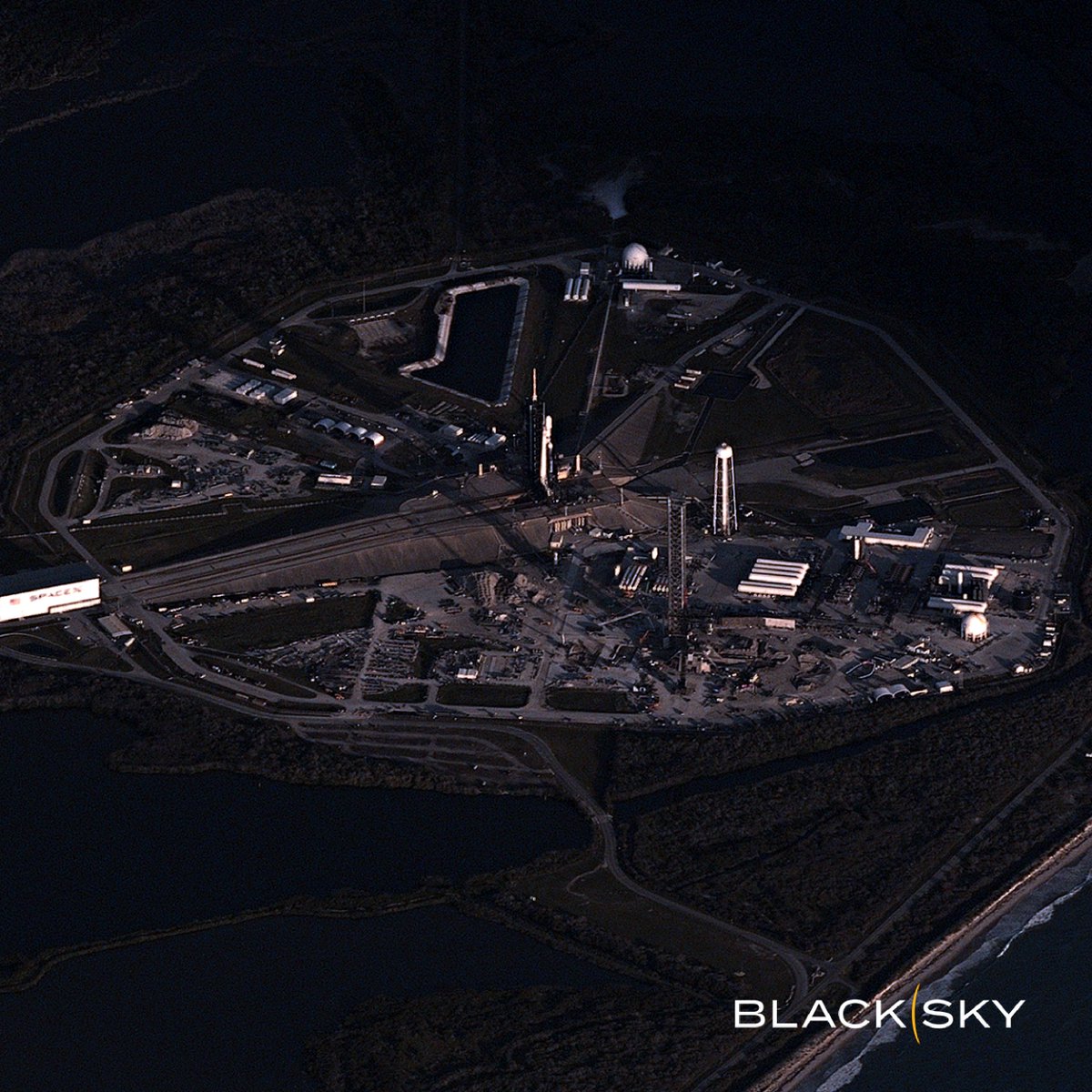
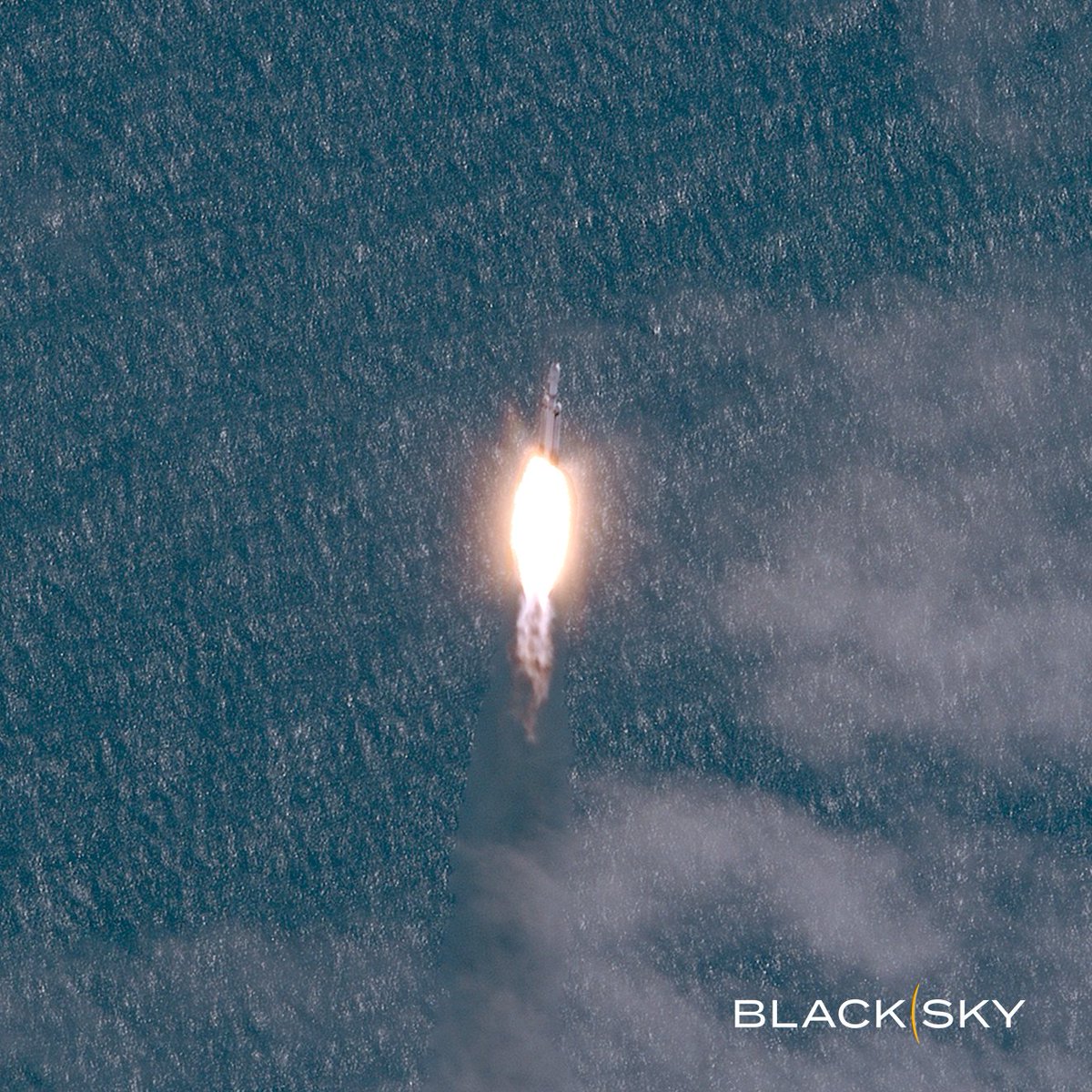
Timing is everything. Check out these images, taken today, of Launch Complex 39A at Kennedy Space Center. At 07:29 local time, Gen-3 captured an extreme off-nadir twilight shot of a SpaceX Falcon Heavy rocket on the pad before again catching the vehicle in flight at 10:13, 38 seconds after launch, as it was traveling more than 400 miles per hour.
With time-diverse imaging capabilities and flexible imaging modes, Gen-3 sees relevant activity at all hours of the day.
@StarshipGazer I never noticed that they were using what looks like speed tape to join the sections of the chines before. For all the progress they've made on V3 that still seems a bit prototypey to me.
@DJSnM Ocean-going vessels have been using this concept for awhile, haven’t they? Diesel or similar generator that drives electric propulsion like azipods or thrusters. Makes perfect sense to me.