It’s almost incomprehensible how wide the distance is between someone who’s working at the frontier with AI and basically everyone else right now.
The crazy thing is these lines are not converging, but only growing farther apart. If the curve of AI progress had leveled off, it would certainly have given most people and companies time to catch up or implement their workflows in a standardized way. The technology would have neutralized competitive advantage because everyone would be using it the same way.
But what’s happened is the opposite. The curve of AI progress is basically going vertical right now, which means if you had codified your processes 3-6 months ago you’re likely already behind again. Now imagine most companies that kicked into gear a year ago and thought that they were done. Even further behind now.
I’ve never seen a technology in my life and career that improves at this rate, which consequently means you need to upgrade your expectations at a similar rate. Our brains weren’t wired for this, and our organizational change management processes certainly weren’t either.
With any form of recursive self improvement, things just get wilder. It’s a time when you will need to be constantly reevaluating the things that didn’t work just a couple months ago to see if they now can be solved. AI native companies certainly have a strong advantage due to this right now, so now it comes down to can the bigger companies keep up. Wild times.
Maybe important to repost this now that everyone is getting hacked
If you have a VPS, I recommend you to get if off the public internet and into a Tailscale network and Cloudflare Tunnel ASAP
It doesn't matter you have SSH key login, this is about exploits and vulnerabilities AI is finding
There's 2 ways into a VPS:
- via your site/app (like the PHP exploit of this week with a file upload hack)
- via your server (like hacking into SSH or some open port)
The site/app side you put on a Cloudflare Tunnel and then with the default Free Plan it has WAF security enabled by default and they jump on new security exploits fast, it means that the only way to reach your website is via the Cloudflare Tunnel, your server does not respond to port 80 or 443 anymore
The server side you put on a Tailscale network which is like your own private network that nobody can access but your own devices (like your laptop, your phone and your VPS) kinda like a VPN
Then you switch off ANY regular access to your VPS on the firewall, in my case I use Hetzner and you create a new firewall then empty it and that blocks everything (test it)
How do Tailscale and Cloudflare Tunnel get in then? They don't. They go outbound. They make a tunnel to outside which sends and receives
Now you've reduced your attack vector to Tailscale and your Cloudflare Tunnel, much safer, not perfect btw, but nothing is
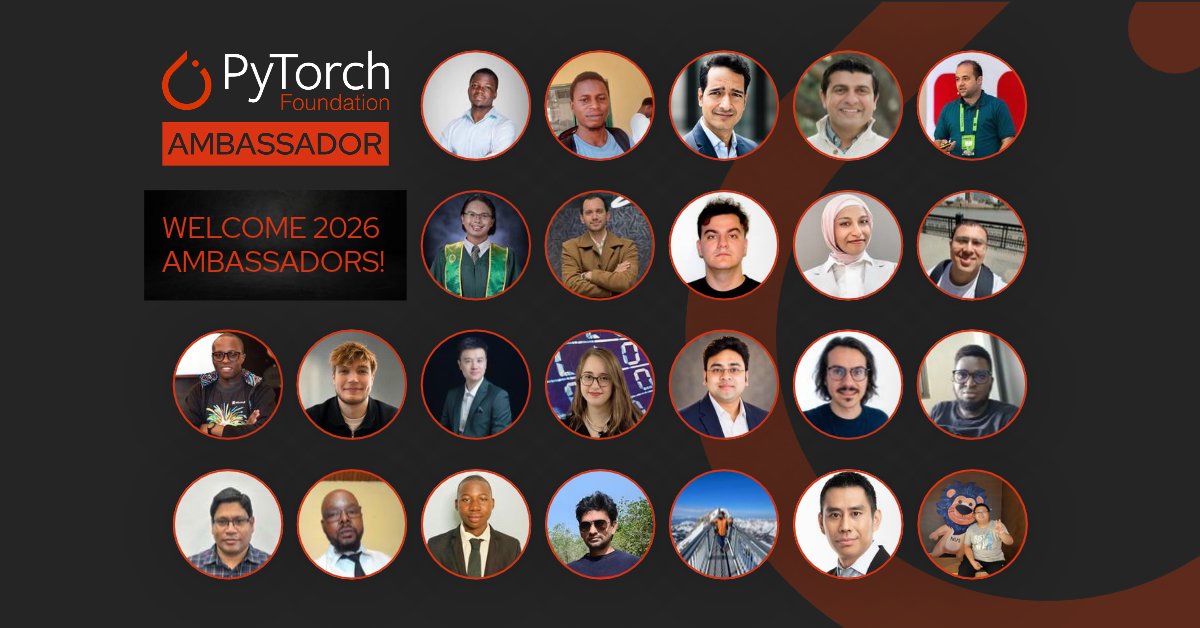
PyTorch Foundation welcomes its 2026 cohort of 24 ambassadors, representing communities from Nigeria and Burkina Faso to Singapore, India, Romania, Spain, the United Kingdom, and the United States.
Each ambassador brings a unique perspective, technical background, and connection to their local community. Together, they are creating more opportunities for people to discover open source AI, develop practical skills, and contribute to the technologies shaping its future.
Meet our 2026 ambassadors:
Adesina Lekan Samuel (@limitless__100), Soumana Dama, Ronnie Atuhaire, Farah Abdou, Abraham Imani (@imanibahati0), Simanga Comfort Mchunu, Mark Gatere (@gatere_mark), Alpha Romer Cooma, Tsai Li Ming (@tsailiming), Mu Xiaohui, Wang Zhipeng, Sumantro Mukherjee (@BytesOfBinary), Parichay Das, Sudhir Dharanendraiah, Costin-Alexandru Deonise, Ricardo Noriega (@rickynds), Matthew Cossins, Johnny Kozman, Ali Tavallaie (@AliTavallaie), Amr Osama Abdellatif, Özge Çinko, Aditya Mehra, Ali Gowani, Samaresh Kumar Singh.
We look forward to seeing what the 2026 PyTorch Foundation Ambassadors will teach, organize, create, and contribute in the year ahead.
Read the announcement: https://t.co/sAGqlfBFPc
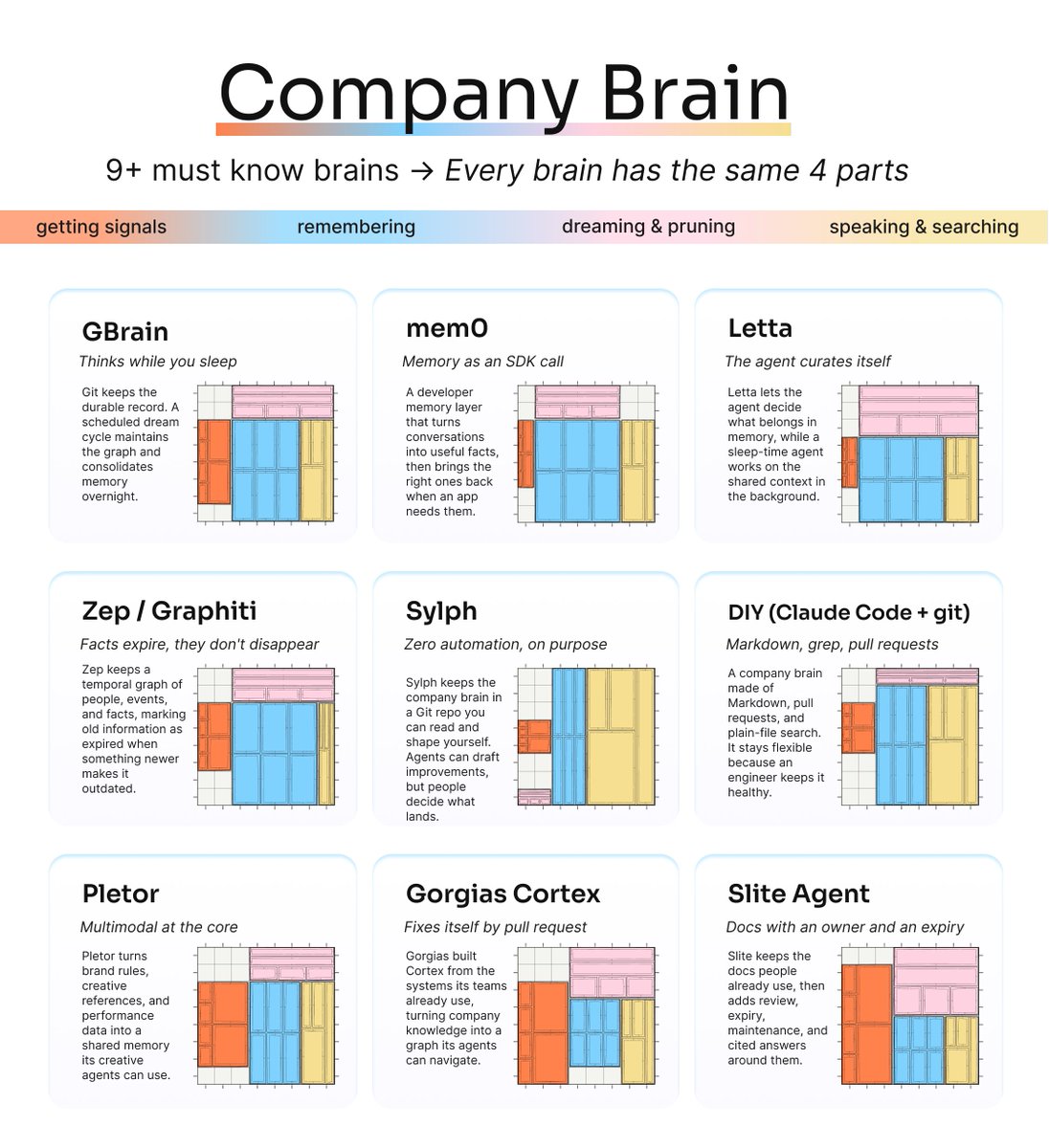
Everyone's suddenly building company brains.
Nobody agrees on what's inside one. 😵💫
So we opened up 9+ company brains to see how they're actually built.
Every single one does the same four things: getting signals, remembering, dreaming & pruning, speaking & searching.
𝟭. 𝗚𝗕𝗿𝗮𝗶𝗻
Garry Tan's open-source personal brain. Your email and calendar flow into a git repo, and a nightly job re-links everything and flags what's gone stale.
𝟮. 𝗺𝗲𝗺𝟬
A memory library you call from your own code. It only stores what you explicitly tell it to, and ranks fresh facts above idle ones at search time.
𝟯. 𝗟𝗲𝘁𝘁𝗮
For building agents that remember across sessions. The agent decides what's worth keeping, and a second agent tidies up its memory in the background.
𝟰. 𝗭𝗲𝗽 / 𝗚𝗿𝗮𝗽𝗵𝗶𝘁𝗶
A knowledge graph with a clock in it. When a fact changes, the old one gets an end date instead of being overwritten, so you can still ask what was true last March.
𝟱. 𝗦𝘆𝗹𝗽𝗵
A content brain that lives entirely in a git repo. Agents write drafts, humans publish, and afterwards the agent reads your edits to learn what it got wrong.
𝟲. 𝗗𝗜𝗬 (𝗖𝗹𝗮𝘂𝗱𝗲 𝗖𝗼𝗱𝗲 + 𝗴𝗶𝘁)
What most engineering teams actually do. Markdown in the repo, grep instead of search, and pull requests as the only thing keeping it honest.
𝟳. 𝗣𝗹𝗲𝘁𝗼𝗿
A brand brain for marketing teams. Campaigns, assets and performance data in one tree, and the brand rules only move when a human signs off.
𝟴. 𝗚𝗼𝗿𝗴𝗶𝗮𝘀 𝗖𝗼𝗿𝘁𝗲𝘅
Built in-house by an eight-person AI team. 12,000 markdown nodes in GitHub, and every night the questions it got wrong become PRs that fix it.
𝟵. 𝗦𝗹𝗶𝘁𝗲 𝗔𝗴𝗲𝗻𝘁
For teams whose knowledge lives in docs and across sources. It watches ~20 connected tools (Slack, Drive, GitHub, Jira, etc.) for what's gone stale and sends the diff to whoever owns the page. Nothing changes without human approval.
We just launched an interactive ebook with architecture notes from real 149 teams of builders and users, interview insights, and the complete research.
The ebook is free, get it here: https://t.co/B7QBztEqgI
Which brain would you pick? 🧠
Congratulations to the 2026 PyTorch Contributor Award winners, recognized today at #PyTorchCon 2026 for their innovation, collaboration, and impact across all PyTorch Foundation projects including PyTorch, vLLM, DeepSpeed, Ray, Helion, and Safetensors.
Outstanding Ambassador: Jiho Kim
Newcomer: Jiangyun Zhu (@jiangyun_zhu), Johannes Lennart Zeiser
Knowledge Enhancer: Abdulsalam Yazid Bande (@abdulsalambande), Suman Debnath (@_sumand)
Bug Buster: Guilherme Vieira Leobas, Vishal Goyal
Review Powerhouse: Wentao Ye
Catalyst: Jiahao Tan, Harry Mellor (@hmellor_)
Innovator: Masahiro Tanaka, Elfie Guo, Xinan Lin
Ecosystem Champion: Guangye Yu
Superhero: Thomas Ortner
Nominees: Chandra Mohan Singh Negi, Arun Bhandari, Masahiro Hiramori, Luka Govedič, Irakli Salia, Jiahao Chen, Kunshang Ji, Rohit Kumar Tiwari, Subin George, Xunzhuo Liu, and Aaron Gokaslan.
Thank you to Cara Delia (@RedHat) and Chris Gottbrath (Gottbrath Technologies) for presenting the awards, and to Red Hat (@RedHat) for sponsoring them.
And thank you to our 2026 Awards Committee: Chris Gottbrath (Gottbrath Technologies), Chris Hoge (@nvidia), Ashok Emani (@intel), Piotr Bialecki (@nvidia), Yashasvi Misra (@CloudNativeFdn), Sudhir Dharanendraiah (@RedHat), Zesheng Zong (@Huawei), Jiawei Li, and Kaichao You (@inferact).
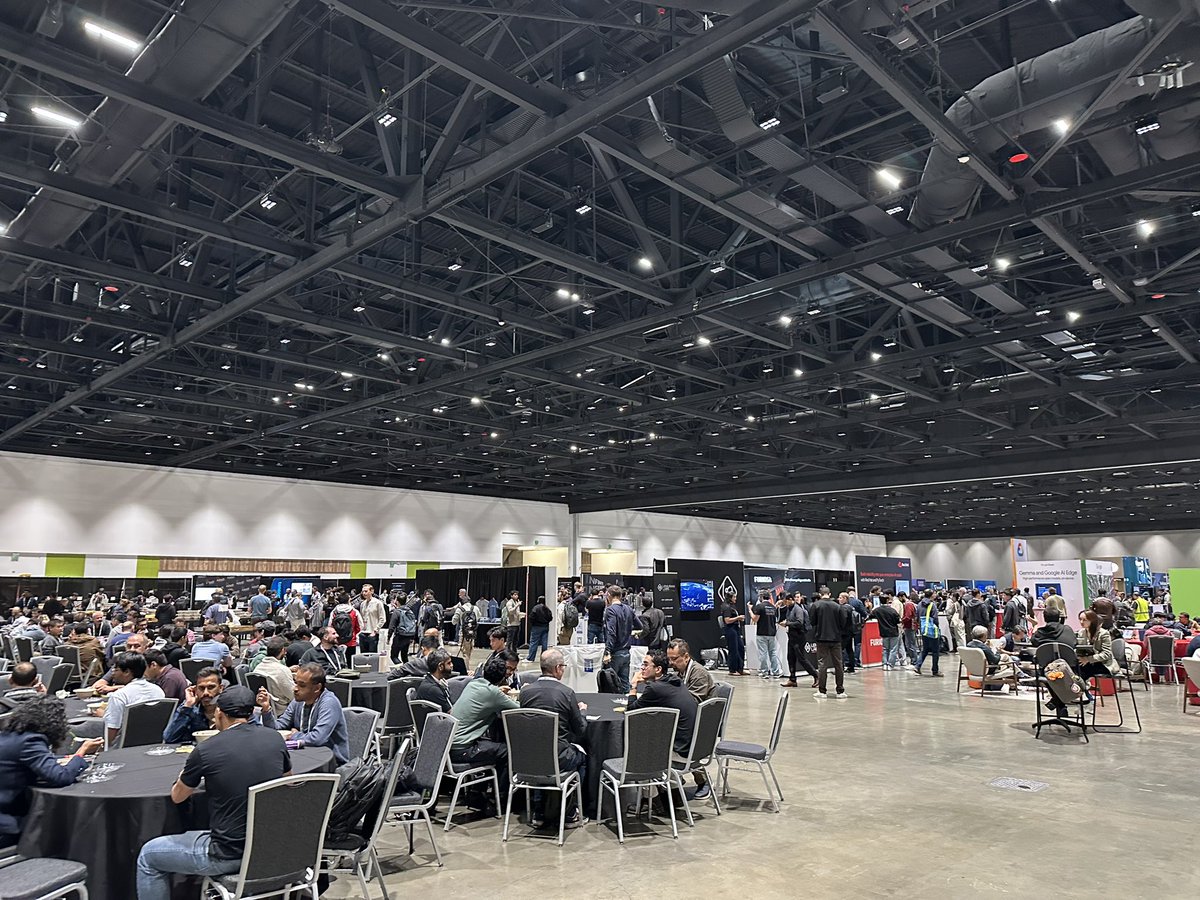
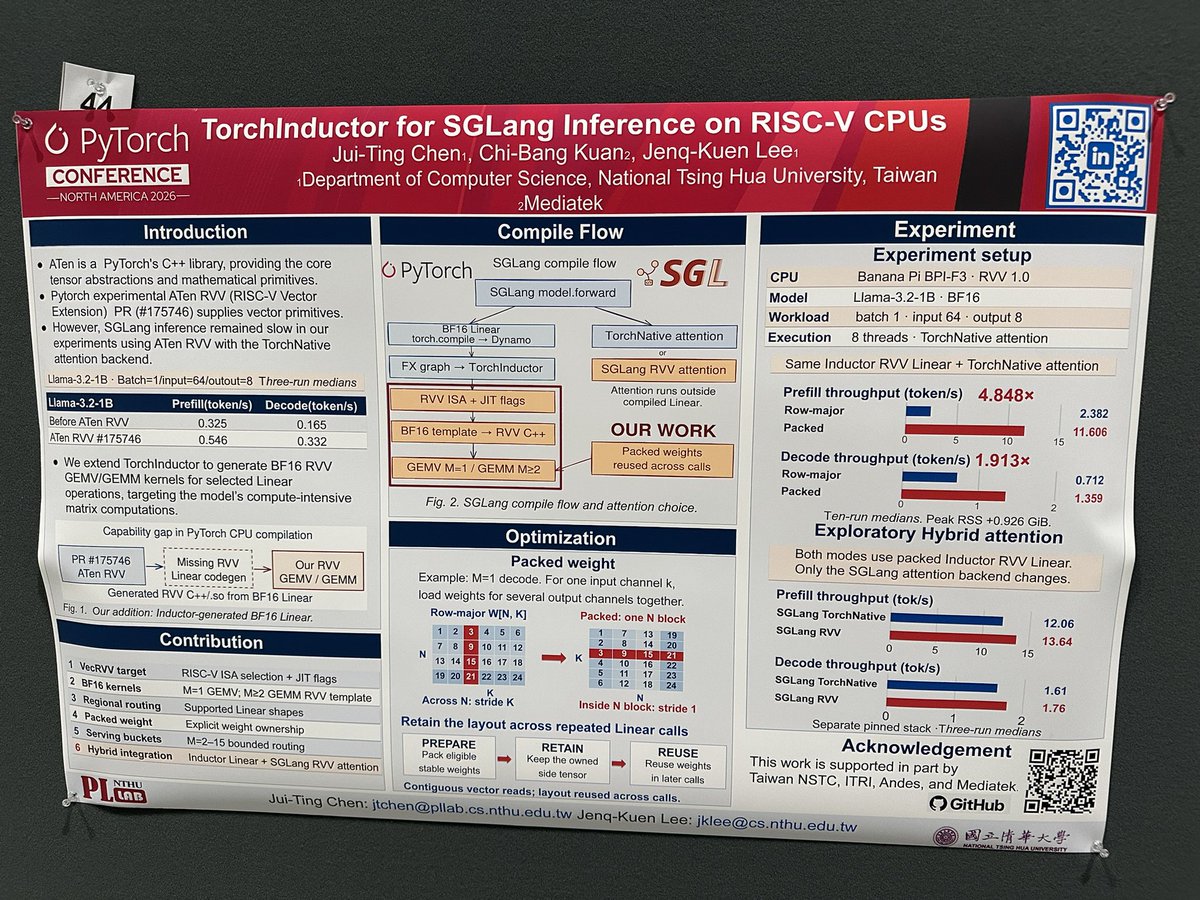
Unwind after Day 1 at the Flare Party & Poster Presentations tonight at #PyTorchCon, 6–7:30 PM in the Community Expo (Concourse Level).
Explore research, projects, and ideas from the PyTorch community on display, with presenters on hand to discuss their work and answer questions.
Good food (sliders, biryani, churros, etc.), cold drinks, even better conversations.
Then bring your squad (or join one on the spot) for Pub Trivia from 6:30–7:15 PM in the Demo Theater. No niche tech knowledge required, and the winning team takes home prizes.
View the Poster Presentation Schedule: https://t.co/sexc7vHEwB
Starship, Starlink, Grok, and Roadster. These should all have been Sputnik moments for Europe. Triggered immediate deregulation, mobilization of capital, and ambition to catch up. And that's just the work of Elon's companies alone. But what do we get? A hollowed out EU Inc 💀
Marc Andreessen on why he thinks Europe actually wants to be left behind on AI
"Europe seems, I just take them at their word, determined to be left behind. They seem enthusiastic about being left behind. They seem to really badly want that"
"25 years ago, if you did a list of the 50 biggest tech companies in the world, a pretty significant number were European, probably 15 of the top 50. Today you're basically down to Spotify. Which is great. I love Spotify"
"I think they would be very happy if AI didn't happen inside the EU. I think they'd be very happy if social media didn't exist. I think they'd be quite happy to shut up the internet"
we're so damn cooked 😭
google's gemini 4 argon just did something actually crazy for fusion energy
in 1967 a physicist named harold grad guessed that the magnetic fields inside twisty fusion reactors could never be solved exactly.
people believed him for 59 years
last month two papers finally proved him wrong. one of them used openai's GPT-6 Astra
then google deepmind gave that paper to a team of argon agents and they found a whole new family of answers nobody had.
the first answers showed up in a few hours.
the paper literally says "promising candidates appeared within hours"
NOT YEARS.
HOURS!!!!
the scientists checked every step by hand and it held up
59 years of humans vs a few hours of AI????
it's over. ai won.
GPT-6 Astra just cracked a 217-year-old Napoleon-era cipher
Carter Church used GPT-6 Astra to decipher a 217-year-old letter sent to one of Napoleon’s generals, with roughly six hours of model work.
The hardest part wasn’t the code itself. It was getting usable text from a barely legible historical scan.
Astra:
→ Transcribed 1,300 cipher units from the image
→ Found a published partial key
→ Built a solver for the remaining code
→ Cross-referenced historical letters to pin down the document’s date
Cryptiana now lists the cipher as solved. AI just helped unlock a piece of history that had been sitting unread for more than two centuries. Pretty wild use case.
Introducing Contrastive Language Model (CLM): an ultra-fast System One Model trained with a contrastive learning objective that connects states and actions.
CLM-8B is pre-trained on internet-scale data and delivers up to 9× faster inference than Jev ⚡ while achieving comparable performance across computer-use, gaming, and tool-calling tasks.
With lightweight fine-tuning, CLM-8B sets a new SOTA on challenging agentic coding benchmarks, such as DeepSWE (81.6%) and Terminal-Bench 2.1 (87.6%). In contrast, Jev fails to serve as an effective verifier for these long-horizon tasks.
We also build an efficient training and serving infra for CLMs by disaggregating states and actions, allowing their embeddings to be cached and reused independently. This substantially reduces inference latency in settings where the state evolves continuously while the action set remains fixed.
Finally, we establish scaling laws for CLMs and show that the test contrastive loss decreases predictably as a power law in training compute, model size, and dataset size.
📄 Blog: https://t.co/zwi9JOHKGx
💻 Code: https://t.co/rsHRYCGR8I
🗣️ Discord: https://t.co/Uqtdefvo3J
🤗 Data & Models: https://t.co/wdSWGGO3hu
More details on CLM’s architecture, data recipe, and scaling laws in the thread below 🧵
There's nothing kind about letting good people live in a fantasy world that no longer exists. You have to tell them, even if it hurts. Because the sooner they accept reality, the sooner they can adapt to the future.