pCR results from CompassHER2-pCR published in @JCO_ASCO. Several important results. THPx4 leads to pCR in 44% or pts with HER2+ eBC, with higher chance if ER ≤70% and HER2 3+. Weekly paclitaxel > q3w docetaxel. HER2DX associated with pCR. RFS pending. https://t.co/ABeepWdlX3
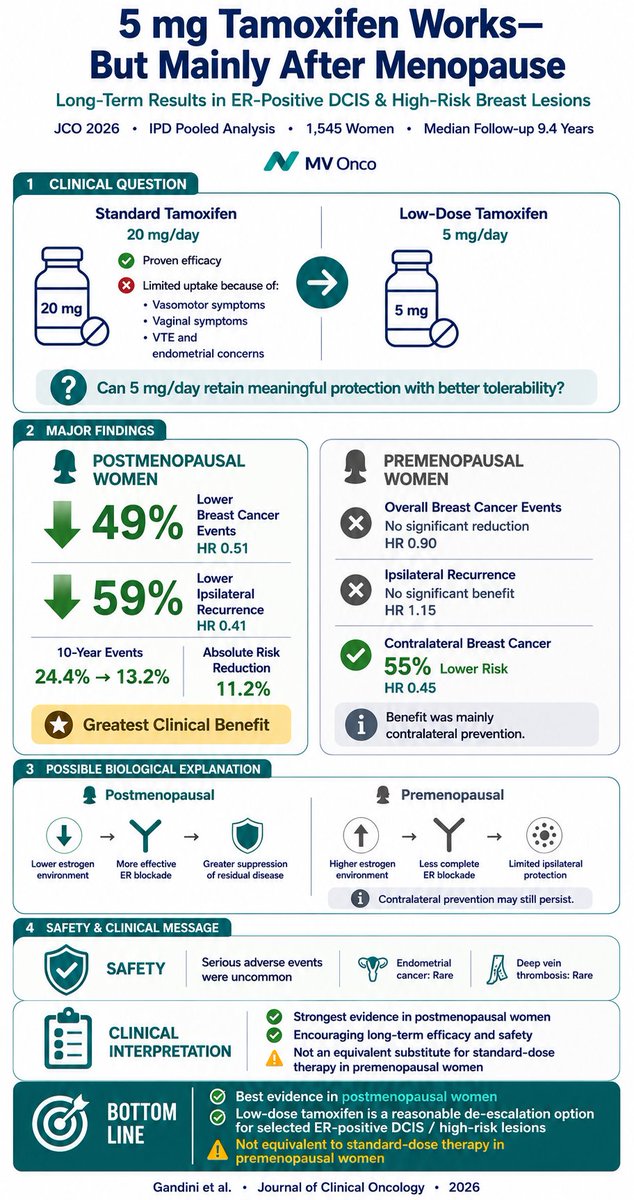
5 mg Tamoxifen: Is Less Really More?
Key Takeaways
• JCO 2026 IPD pooled analysis of 1,545 women with ER-positive DCIS and high-risk breast lesions, with a median follow-up of 9.4 years.
• In postmenopausal women, 5 mg/day significantly reduced:
49% fewer breast cancer events (HR 0.51)
59% fewer ipsilateral recurrences (HR 0.41)
• In premenopausal women, low-dose tamoxifen did not significantly reduce overall breast cancer events or ipsilateral recurrence.
• A reduction in contralateral breast cancer was still observed in premenopausal women (HR 0.45).
• Serious adverse events, including endometrial cancer and venous thromboembolism, were uncommon.
• Clinical message: The long-term benefit of 5 mg tamoxifen appears greatest in postmenopausal women, making it a promising endocrine de-escalation strategy for carefully selected patients. Evidence remains insufficient to consider it an equivalent replacement for standard-dose tamoxifen in premenopausal women.
Bottom line: The right dose depends on the right patient—not every woman benefits equally from low-dose tamoxifen.
#BreastCancer #DCIS #Tamoxifen #JCO2026 #Oncology #MVOnco
🚨New GLOBOCAN 2024 data show that the global cancer burden is not only increasing, but also widening inequalities. Incidence is higher in developed countries, whereas mortality is disproportionately greater in LMICs. By 2050, new cancer cases may reach 34.4 million!
New drugs alone will not be enough; prevention, early detection, and equitable access are essential🌍🌎🌏
https://t.co/aqbxpoQOet
FDA approves palbociclib with trastuzumab, with or without pertuzumab, and endocrine therapy for the maintenance treatment of HR-positive, HER2-positive metastatic breast cancer @FDAOncology
CARBOPLATIN MATTERS: Beyond pCR—Improving Survival in Early TNBC
Carboplatin has long been regarded as a strategy to increase pathologic complete response (pCR) in early triple-negative breast cancer. The PEARLY trial suggests its benefit extends beyond pCR, with a significant improvement in long-term event-free survival.
Key findings
• 868 patients with stage II–III TNBC
• 5-year EFS: 82.3% vs 75.1%
• Absolute EFS gain: +7.2%
• HR 0.67 (33% relative reduction in EFS events)
• Benefit observed in both neoadjuvant and primary surgery → adjuvant settings
• Higher hematologic toxicity, while quality of life and patient-reported neuropathy were preserved
These findings reinforce carboplatin as an evidence-based chemotherapy intensification strategy in early TNBC, particularly when immune checkpoint inhibitors are unavailable or unsuitable.
Reference: Kim GM, et al. PEARLY Trial. Annals of Oncology. 2026.
#BreastCancer #TNBC #MedicalOncology #Oncology #AnnalsOfOncology #MVOnco
Guidance for Canadian Breast Cancer Practice: National Consensus Recommendations for the Systemic Treatment of Patients with HER2+ Breast Cancer in Both the Early and Metastatic Settings (2025 Update).
https://t.co/Y4D4C5Yd98
🆕Now out in Annals_Oncology the @myESMO Clinical Practice Guideline for diagnosis and treatment of patients with metastatic breast cancer @E_de_Azambuja@stolaney1@Prof_Nadia_H
https://t.co/uiQUxmOZJC
Promising PFS2 and OS data from evERA presented by @jhaveri_komal, showing clear improvement in outcomes with giredestrant/everolimus vs SoC ET/everolimus in ESR1mut disease, with a promising signal in ESR1wt patients as well. #ASCO26
Can selected patients w/HR+/HER2− mBC benefit from continuing ET+CDK4/6i beyond PD?
Results from the 🇮🇹 PALMARES-2 study at #ASCO26 suggest the answer may be yes, with a median rwPFS beyond PD of 10.5 months
Kudos to #ClaudioVernieri and all investigators
More data at #ESMO26!
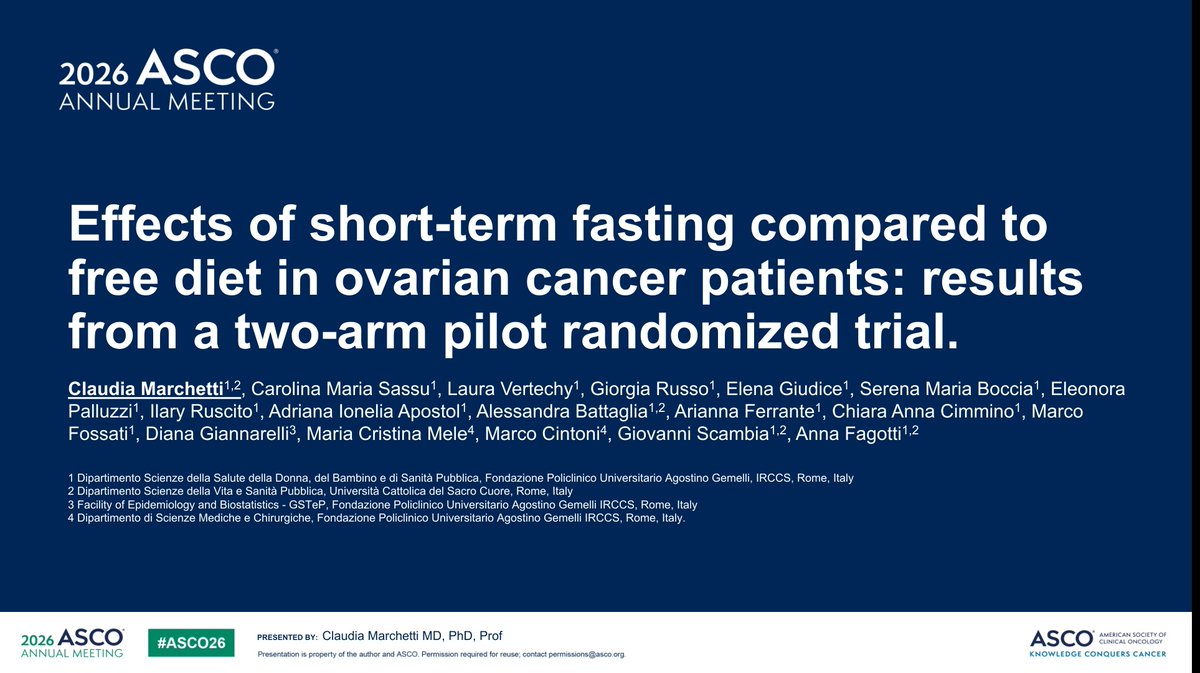
Short-term fasting during neoadjuvant chemotherapy for advanced ovarian cancer is one of the more intriguing non-drug interventions presented at #ASCO2026.
The study met its primary endpoint: fasting prevented the chemotherapy-associated rise in insulin levels and demonstrated a favorable metabolic shift.
The headline result was a PFS signal:
• mPFS 38 months with fasting vs 24 months with free diet •
HR 0.26 • Log-rank p=0.045
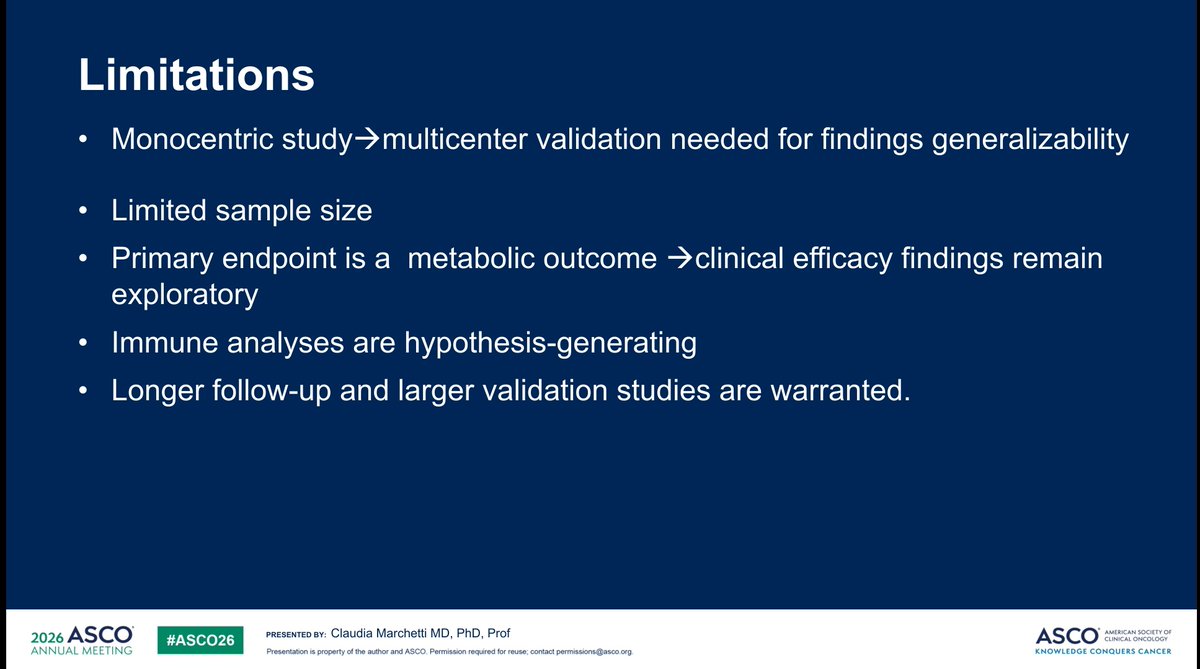
Before we get too excited, several important limitations deserve attention:
🔹 Only ~18 patients per arm after exclusions
🔹 Trial was powered for insulin changes, not PFS
🔹 Open-label design
🔹 Borderline statistics (95% CI 0.06–1.00; Cox p=0.056)
🔹 Multiple secondary and exploratory analyses increase the risk of false-positive findings
🔹 BRCA-mutated patients were more common in the fasting arm (50% vs 33%), which could influence outcomes
🔹 Median follow-up was only 16 months despite reporting a large difference in mPFS
🔹 Immune findings were hypothesis-generating with p-values around 0.06–0.07
🔹 Analysis appears vulnerable to selection bias from withdrawals and compliance-related exclusions
The most convincing finding is that short-term fasting is feasible and biologically active, affecting insulin and metabolic pathways.
The least convincing finding is a 14-month absolute PFS improvement from a dietary intervention in a 36-patient study.
Interesting study.
But extraordinary efficacy claims require validation in a larger multicenter randomized trial before fasting enters routine ovarian cancer practice.
@OncoAlert@ASCO #asco26
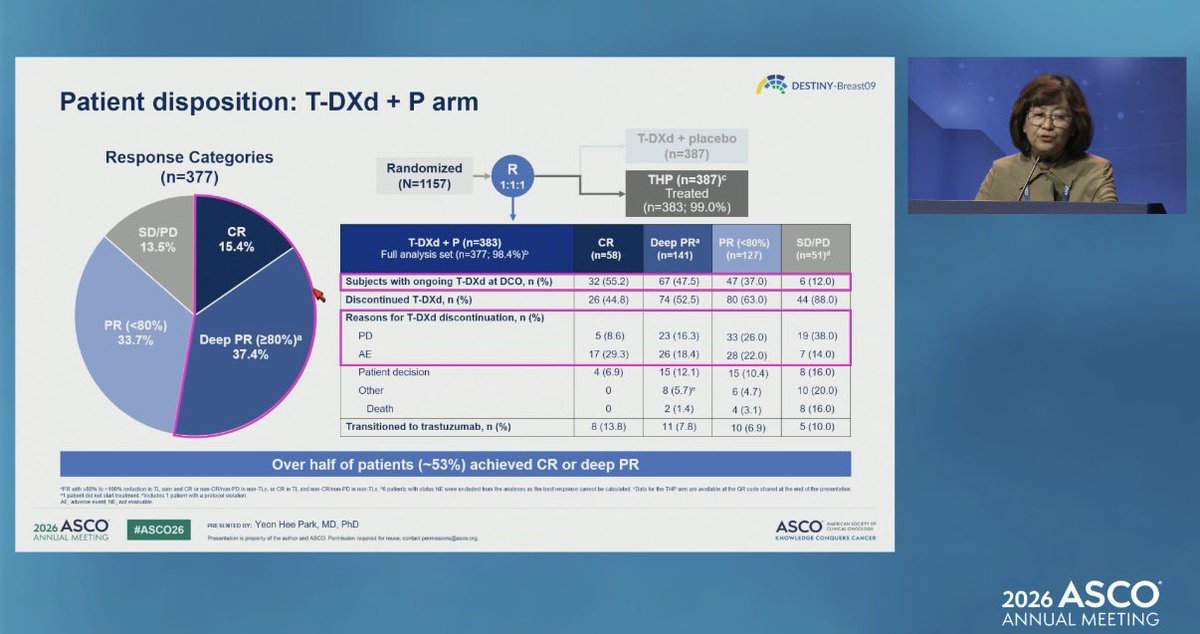
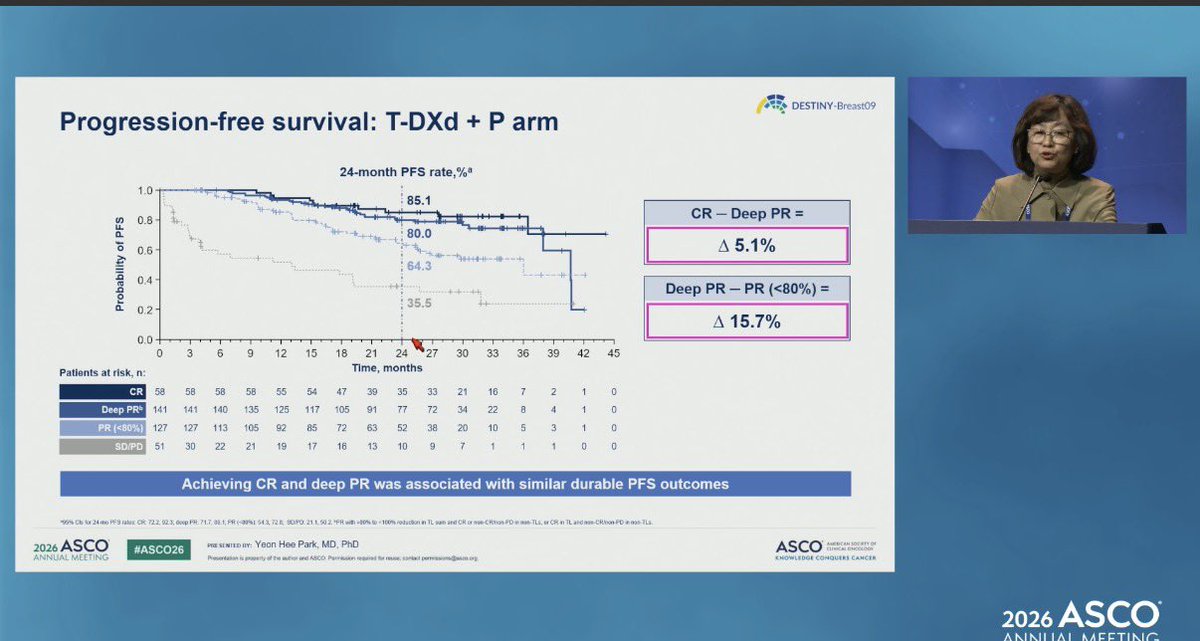
DESTINY-Breast09 exploratory analysis
#ASCO26
Deep PR (≥80% tumor reduction), a marker of long-term benefit with T-DXd + pertuzumab in first-line HER2+ metastatic breast cancer.
More than half of patients achieved CR or deep PR, with excellent 24-month PFS rates (85% and 80%, respectively). Responses continued to deepen over time, with no new safety signals observed.
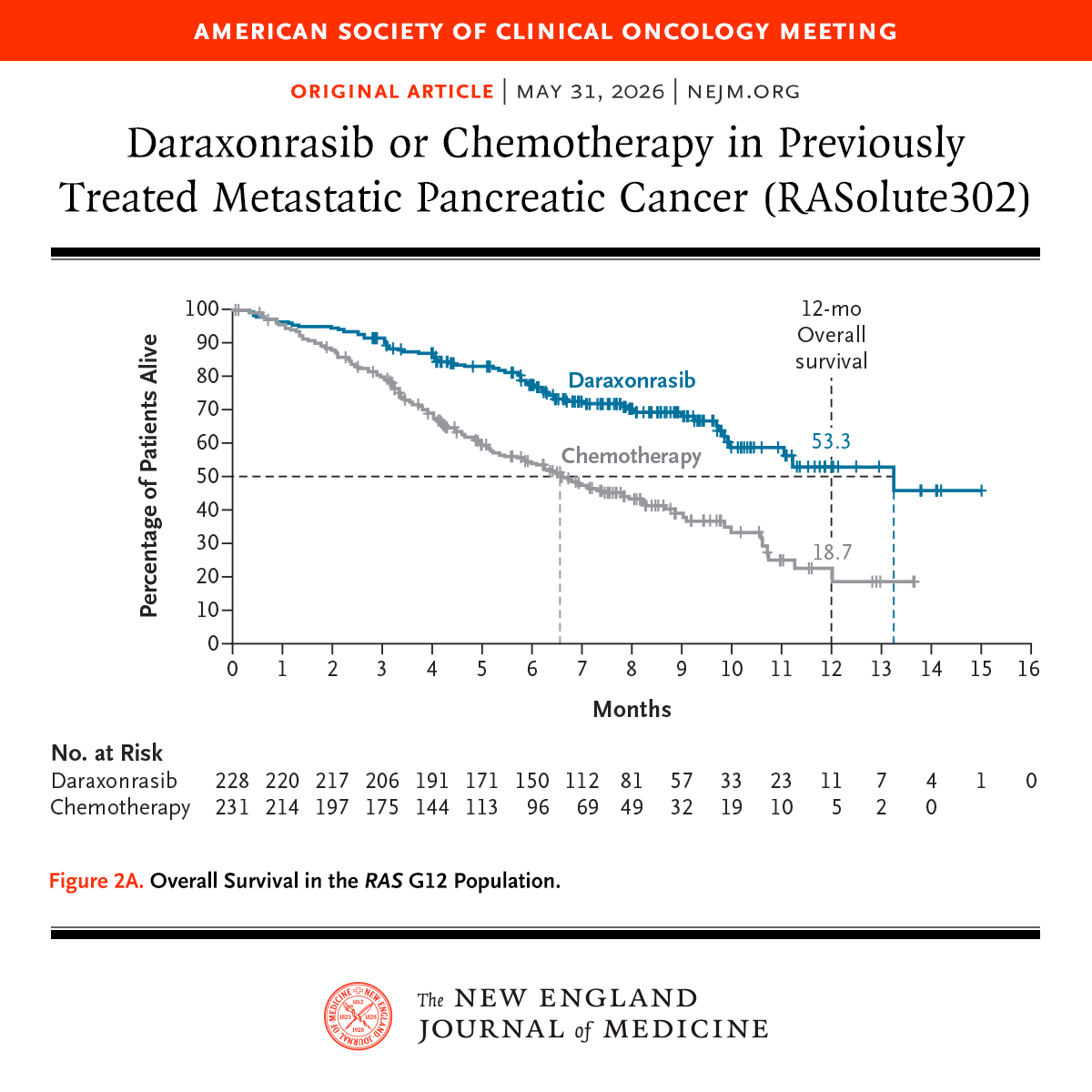
Cheers, chills, and a standing ovation when RASolute 302 showed unprecedented survival on daraxonrasib for patients with progressive pancreatic cancer
Seldom do you sense you’re witnessing a historic moment in cancer care but this feels like ras targeting has arrived
#ASCO26
Presented at #ASCO26:
Among patients with previously treated metastatic pancreatic ductal adenocarcinoma, the RAS(ON) inhibitor daraxonrasib led to significantly longer overall survival and progression-free survival than chemotherapy. Full phase 3 RASolute 302 trial results: https://t.co/xwLWBZYRzq
@ASCO