My MATS applications are open! Come do research mentored by me. Due Sept 4. All backgrounds welcome!
I've supervised 60 scholars and they get better each cohort, I'm excited to meet this round's!
The application: spend a weekend doing a safety research task
Scholar highlights:
How have software engineering fundamentals changed with agentic coding? Here is our AI Engineering Skills map for software engineering fundamentals. https://t.co/cnRLj43DLs
"Mathematics of Data Science" is a recent, freely available textbook, published in July 2026, specifically written for anyone interested in understanding the mathematics behind the fundamental concepts, methods, and applications of modern data science.
The book covers high-dimensional geometry and probability, concentration of measure, singular value decomposition, principal component analysis, linear regression and regularization, nonlinear dimensionality reduction, diffusion maps, random projections, optimization, classification, support vector machines, generalization bounds, and much more.
Chapter 5 is particularly interesting. It is entirely dedicated to graphs, networks, and clustering, including k-means and spectral clustering. It also provides an intuitive mathematical explanation of Google PageRank, showing how the structure of links between web pages can be represented and analyzed to estimate their relative importance.
The sections on classification problems are also worth reading. They cover binary and linear classifiers, logistic regression, confusion matrices, ROC analysis, support vector machines, multiclass classification, and the mathematical foundations of generalization.
https://t.co/IDIoELoIXr
The more I dig into agent memory, the more I am convinced (strong sentiment because of recent bias) that the schema is the real deal here.
Yes, retrieval is important. But to make it more efficient, we should be more prescriptive, define the right schema, and extract the right metadata for hard filtering. That improves precision.
Relying on blunt semantic lookup is a really bad idea.
If you give the model raw text and expect it to figure out the schema that you will ingest into the search engine, you will run into issues like duplications and contradictions. This is a classic data modeling problem.
So, find the verticals in your system, define typed facts for them, and make this a write-time operation instead of a read-time "guess".
The model extracts the fact. The database decides what that fact means, whether it replaces something, and what the current truth is.
The model is good at extraction and reasoning. It is not reliable at conflict resolution over its own past outputs.
"Deterministic memory" is actually a must-have for agents. The better your data model, the more predictably useful your agent will be.
Hope this helps.
I'm gradually updating and improving chapters from Understanding Deep Learning and posting them to https://t.co/8zGsFiXjXd .
The latest update concerns the backpropagation algorithm and network initialization. Critical info if you are teaching yourself ML!
Andrej Karpathy just said what nobody wants you to hear:
"Agents aren't magic. They're distillation at scale."
LLMs are wasting 99.99% of their capacity on useless data.
LLM companies will be parallelized agent swarms.
In a 15-minute speach, Karpathy reveals the exact product architecture
Worth more than any $500 AI course you've seen this year.
This might be one of the best Deep Learning playlists for serious learners.
It’s MiniTorch by Sasha Rush.
You build a small Torch-like framework yourself and learn what sits underneath the APIs we normally call without thinking much about them.
The playlist covers:
➡️ Numerical derivatives
➡️ Autodifferentiation
➡️ Computation graphs
➡️ Chain rule
➡️ Backpropagation
➡️ Neural networks
➡️ Tensors
➡️ Tensor functions
➡️ Shapes
➡️ Gradients
➡️ Tensor puzzles
➡️ GPU puzzles
The full MiniTorch course goes further into broadcasting, parallel tensor operations, matrix multiplication, CUDA, convolutions, pooling, softmax, dropout, CNNs, MNIST and sentiment classification.
You’re also writing the implementation, running tests and debugging it as you go. That is what makes this useful.
MiniTorch was developed for the Machine Learning Engineering course at Cornell Tech.
If you already know some Python and want to build stronger Deep Learning fundamentals, save this one.
[ Playlist and GitHub in comments ]
Anthropic's Andrej Karpathy just released 1-hour Stanford lecture on full AI engineering from scratch:
"You can actually delete everything… Delete everything, keep Graph"
here's his lessons:
10% → LLM: I treat GPT as a general-purpose computer that can be reprogrammed at runtime
30% → Prompt: I give that computer a program written in natural language
50% → Agent: I surround the model with a goal, context, memory, and tools that turn prediction into action
70% → Loop: I separate the inner loop, where the model learns from context, from the outer loop, where training updates its weights
100% → Graph: I organize communication as data-dependent message passing over directed graphs
This 1-hour at Stanford will teach you more about AI than 100 YouTube video guides
“Just chop up everything and throw it into the mix”
watch - bookmark, then read the article below ↓
deepseek releases a new paper along with their harness.
not sure if i have ever read someone say adaptive synthesis/formalization like this before.
it proposes a programming model where components explicitly declare both what they need and what they change.
the runtime then automatically activates/deactivates dependencies and cleanly reverses side effects as components come and go.
link - https://t.co/ZwbqscbW22
I got into @ycombinator
I'm 18, solo founder, and 3 years ago was studying 10th grade at a random city in Iran (Qazvin, love it).
In Iran, I had to build my own VPN to access UK curriculum material, then got myself into a boarding school in Oxford, paid the tuition by selling my AI thing, and then got a full-ride to study AI at Rice University.
After I got in the US I did some more things that led to Magma.
I don't have much to say for advice as I'm unlearning a lot recently. However, as an observation, the laws of physics seem to be flexible enough that you can simply do things; anything in fact. Human brain just evolutionarily underestimates that flexibility.
PS: Repost and I'll send you the full application that got me in.
🐸 We propose a super efficient approach for mechanistic interpretability: decompose weight matrices from a pretrained LLM into sparse circuit units directly, instead of training a separate sparse representation.
See more in the blog post:
https://t.co/CG1YuV2esr
Back to writing mode 📝 (YouTube on hold for now).
Polishing the opening chapter 📖, with multiple interpretations of linear transformation.
A linear mapping 🗺️ can rotate ♻️ the input into a higher ⬆️ dimension or squash it down to a lower ⬇️ one, collapsing entire subspaces.
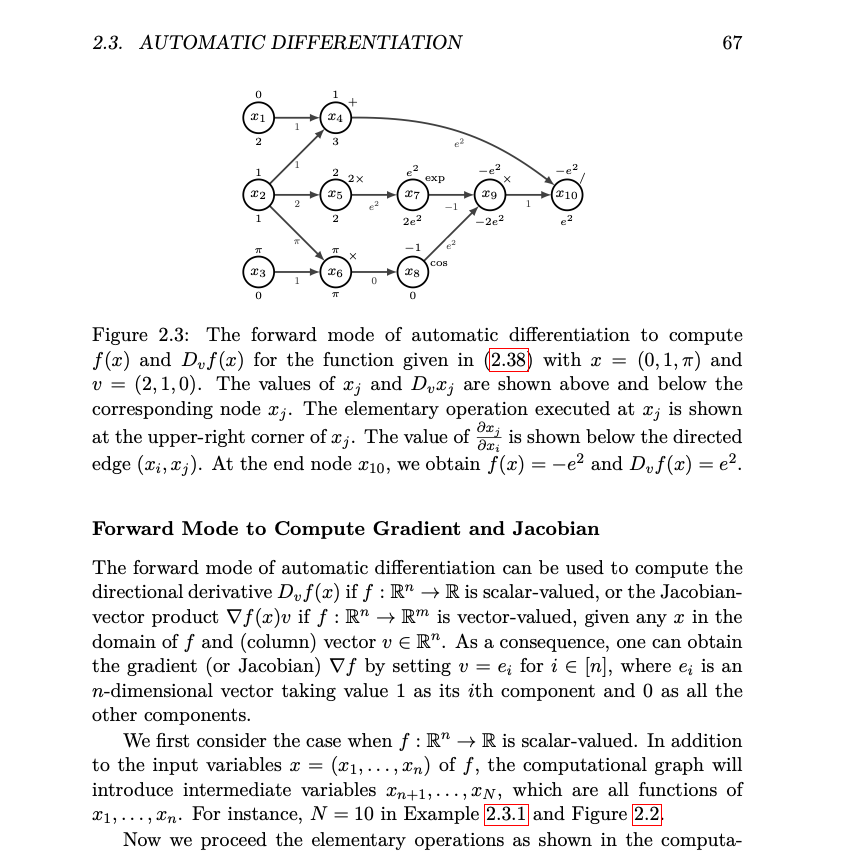
"Mathematical Foundations of Deep Learning" is an excellent free book of almost 300 pages on the mathematics behind modern deep learning. It is a good continuation of the previous resources I shared on the mathematics of modern AI and deep learning systems.
The book has chapters on deep neural networks and function approximation, the Universal Approximation Theorem, network architectures, activation functions, optimisation and optimality conditions, automatic differentiation, deterministic and stochastic optimisation, optimal control, Euler–Lagrange equations, Hamiltonian dynamics, Hamilton–Jacobi–Bellman equations, Neural ODEs, reinforcement learning, Markov decision processes, Bellman equations, model-based and model-free algorithms, generative models, and much more.
The focus throughout the book is mathematical. It is well organized and the exposition is accessible, although some basic mathematical background is naturally required. For me, it is another useful reference for anyone interested in the mathematics behind these systems. I recommend downloading it and keeping it in your personal reference library.
https://t.co/7A75Ii3jv6
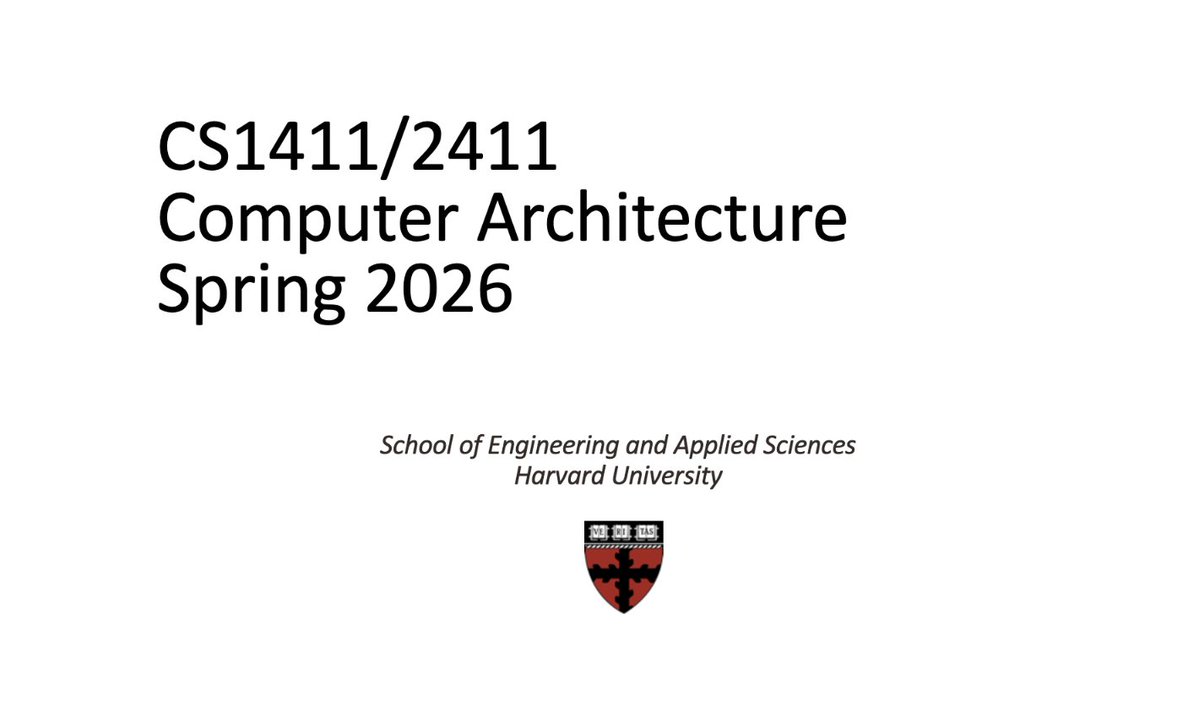
While I spend most of my time nowadays thinking about ML training and inference systems, I can trace much of the research we do today to the core CPU architecture principles I learned in my undergrad
Turns out, if you deeply understand how compute patterns run efficiently on silicon, you can generalize to any system today
I recently wrapped up as TA of Harvard’s computer architecture course (CS141), and wanted to share my distillation of the content down to a tweet thread
Disclaimer - you probably won’t learn anything about inferencing GLM5.2 at 1000 tok/s on a VR100 NVL72 from this thread, but hopefully you’ll learn a thing or two about computing from first principles!
The Networking chapter of the Machine Learning Engineering book got a massive update and cleanup.
Fixed multiple issues and extended the benchmarks.
It was long overdue!
https://t.co/xiMyotfPvj
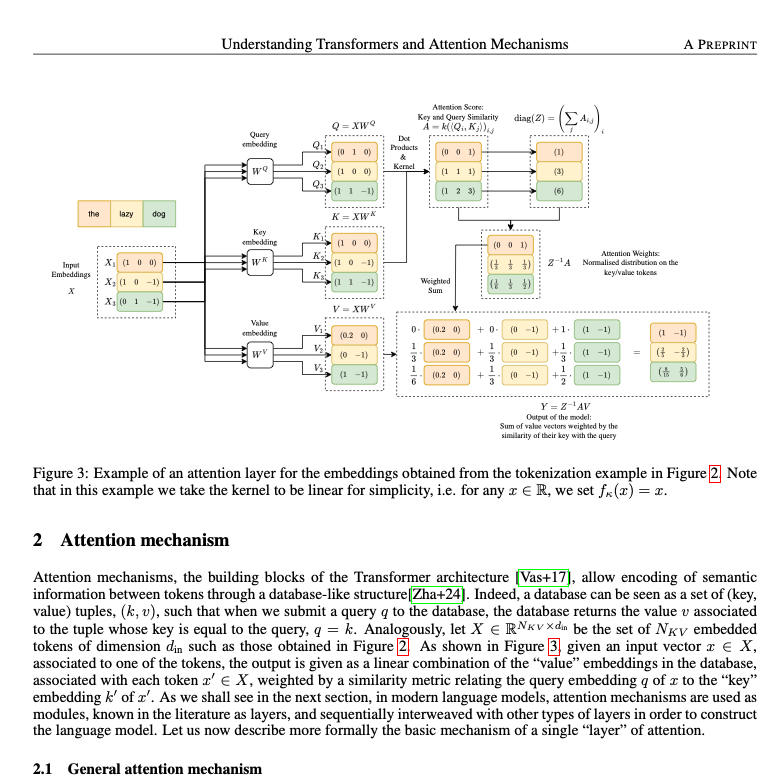
"Understanding Transformers and Attention Mechanisms" is a very interesting paper that presents the Transformer architecture from the perspective of applied mathematics.
It starts by representing text as vectors and explains mathematically how the attention mechanism processes these vectors to encode contextual information. It then develops Multi-Head Attention and shows how the main components of the Transformer architecture are constructed.
The paper also discusses more recent methods designed to reduce the computational and memory costs of attention, including KV caching, Grouped Query Attention, and Latent Attention. I think it is a useful reference for anyone interested in understanding Transformers beyond their high-level architecture and in seeing the linear algebra behind modern language models.
https://t.co/Rlun9QT7zx
Lecture 10 of my course! Nominally on regularization in RL, so I discuss the evolving role of the KL penalty in RL, but also a set of nice RL papers that explain what RL helps models generalize better than SFT -- with theory supporting it.
When going through these, it's so interesting how seasonal problems in ML are. Lots of problems from controlling reward models overopt will rhyme as we try to control rubrics for agents.
00:00 Intro & the role of regularization
02:50 The KL penalty in RL
10:53 RL as a reverse KL loss
21:09 Why RL generalizes better than SFT
25:15 Other regularization tools
Just a few videos left as I get to the end of the course. Thanks all, and keep sending questions. Spread the word if you have a second.
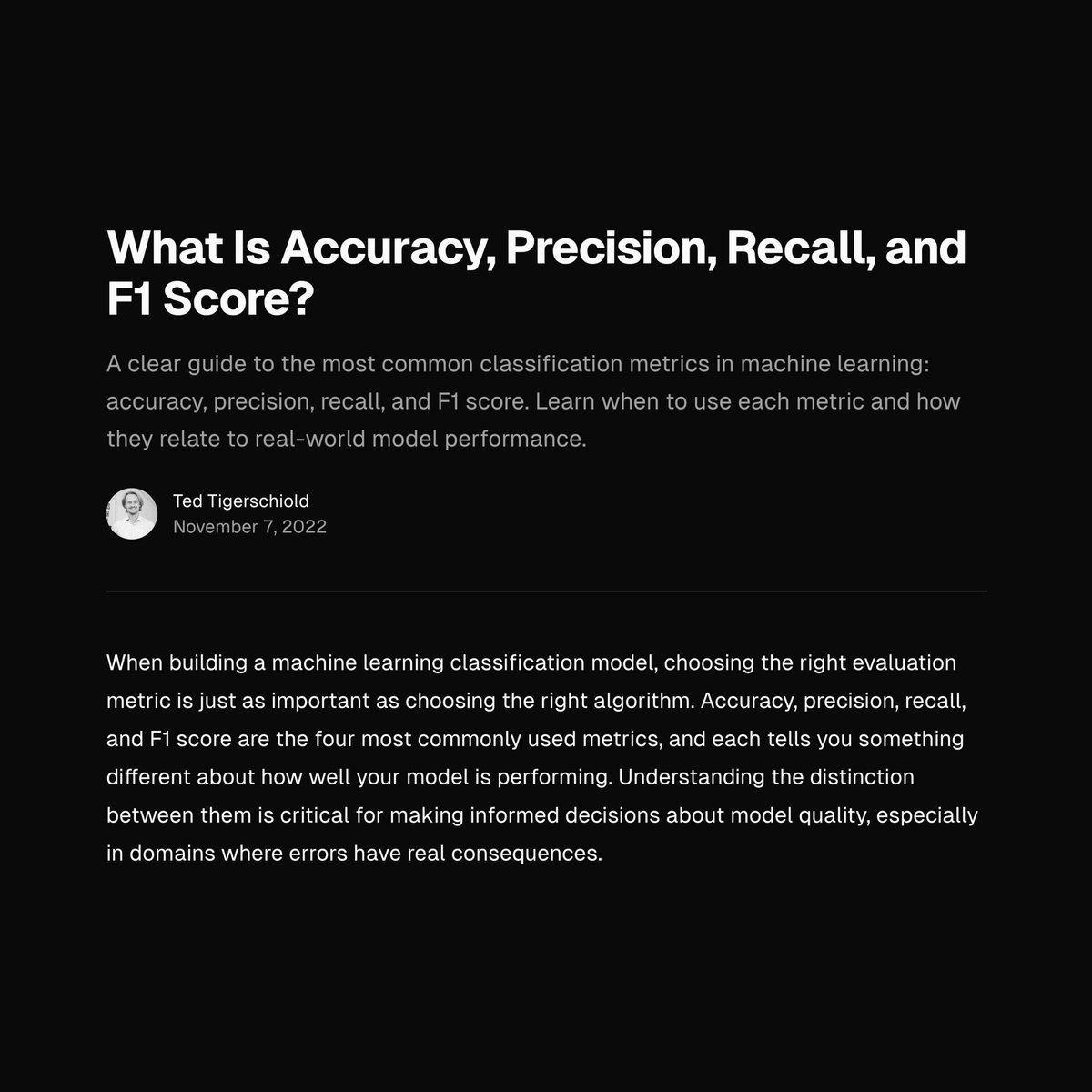
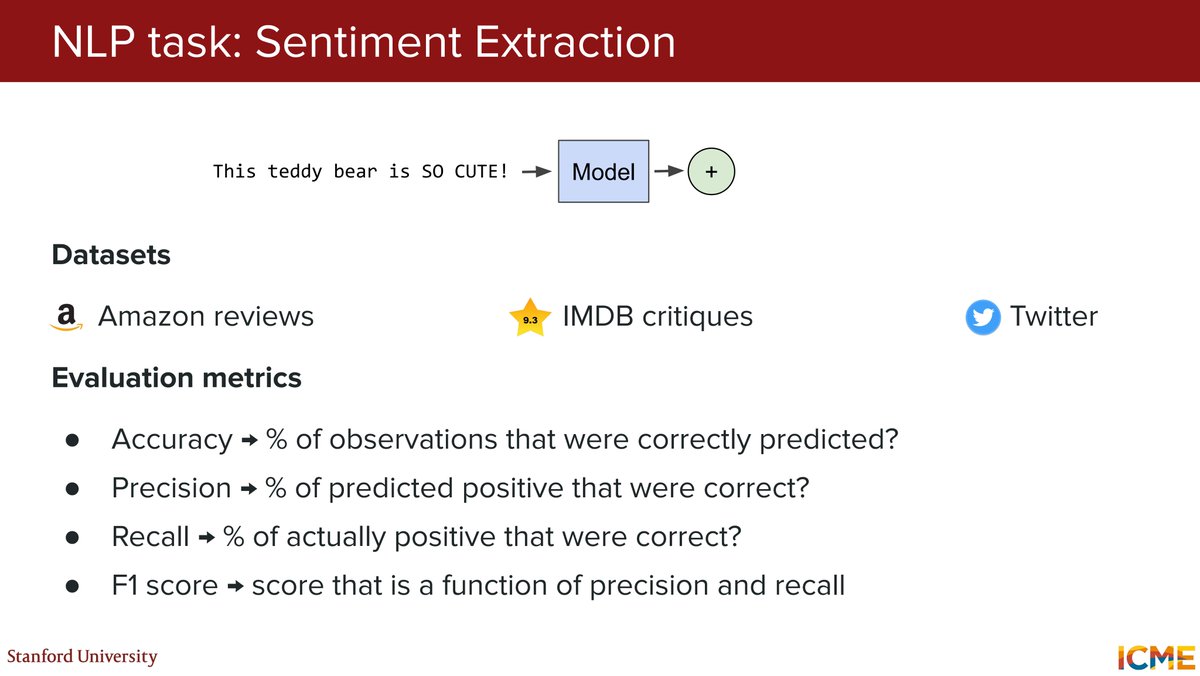
The first lecture in this course introduces four key metrics for model evaluation
1. Accuracy
2. Precision
3. Recall
4. F1 Score
This blog article covers all these with simplified examples; check it out.
https://t.co/HSuhakcMvH
Believe it or not-4
यह वी. कामकोटि हैं आईआईटी मद्रास के निदेशक।15 जनवरी 2025 को चेन्नई में एक गोशाला में दिए गए भाषण इन्होंने उदाहरण दिया कि जिसने तेज बुखार में गोमूत्र पीकर 15 मिनट में ठीक हो जाता है।
केवल इतना नहीं इन्होंने कहा कि गोमूत्र में एंटी-बैक्टीरियल, एंटी-फंगल और पाचन संबंधी गुण हैं, जो IBS जैसी समस्याओं में भी फायदेमंद हो सकता है।
खैर खबर यह नहीं है। खबर यह है कि यह भाषण देने वाले कामकोटि प्रधानमंत्री द्वारा पेपर लीक के बाद परीक्षा प्रणाली में सुधार के लिए बनाई गई टास्क फोर्स का हिस्सा हैं।




![techNmak's tweet photo. This might be one of the best Deep Learning playlists for serious learners.
It’s MiniTorch by Sasha Rush.
You build a small Torch-like framework yourself and learn what sits underneath the APIs we normally call without thinking much about them.
The playlist covers:
➡️ Numerical derivatives
➡️ Autodifferentiation
➡️ Computation graphs
➡️ Chain rule
➡️ Backpropagation
➡️ Neural networks
➡️ Tensors
➡️ Tensor functions
➡️ Shapes
➡️ Gradients
➡️ Tensor puzzles
➡️ GPU puzzles
The full MiniTorch course goes further into broadcasting, parallel tensor operations, matrix multiplication, CUDA, convolutions, pooling, softmax, dropout, CNNs, MNIST and sentiment classification.
You’re also writing the implementation, running tests and debugging it as you go. That is what makes this useful.
MiniTorch was developed for the Machine Learning Engineering course at Cornell Tech.
If you already know some Python and want to build stronger Deep Learning fundamentals, save this one.
[ Playlist and GitHub in comments ]](https://pbs.twimg.com/media/HQJ3Ejca8AANGjh.jpg)