we're opening up more roles, hiring remote or in person in London 🇬🇧, building some very cool open source stuff and working on hard/medium/easy problems (we have them all). DM me and please share 🙏
Considering a new job role 👀? We've just opened up new engineering positions and would love to hear from you if you are a:
→ Support Engineer
→ Senior Backend Engineer
Apply below ↓
After a few months surfing in Sri Lanka, playing badminton in Malaysia and living on a farm in Cornwall..
I'm starting a new job tomorrow and it's the most excited I've been for a new job:
- I was a customer of theirs and love the product
- Have been friends with the team for years
- The whole team is really talented and really nice
- I'll be in-person in London
- it's a devtool
They're growing really fast already but my job is gonna be to help increase that slope
pic related: I gatecrashed their offsite in Lisbon last week 😆
One particularly crazy side-quest related to this @PlanetScale migration (and there were many) was tracking down a very obscure bug in PgBouncer, that only reproduced under a very specific set of circumstances:
- prisma client
- using the rust query engine
- with prisma otel turned on (🤯)
- connecting to PlanetScale through one of their dedicated PgBouncer instances on the writer instance, which is the only path that routes through two PgBouncers before hitting the database
It took a couple of days just to track it down. We ended up working around the bug by building a way for us to switch the prisma client to using the pg adapter (which skipped the rust engine for query execution), but only for certain queries (switching everything at once to using the pg adapter was too risky).
Luckily that worked and unlocked the migration. A few days later the reproduction actually led to a PgBouncer fix by an engineer at PlanetScale: (https://t.co/q1aeqsD5d2)
This summer we upgraded our 56TB Postgres database with (almost) no downtime.
And we moved all new runs to @planetscale Metal.
This post covers everything we did and everything we learned along the way.
https://t.co/OIHOf91xpY
We spent the last 6 months building our take on a chat agent SDK. It’s open source and uses the stateful compute that powers our existing tasks and workflows. https://t.co/NCJbh9ujVN
@samlambert Yup we pay for enterprise support and it’s been weeks since we’ve heard back from them. The promise of their service is so compelling, they just need to deliver
On 22-23 June our us-east-1 and eu-central-1 regions had periods of downtime and the overall incident lasted 18 hours.
This falls way short of the reliability we aim for. I’m really sorry to all our customers, who will be receiving credits for that period and more.
What happened, why it took so long to recover, and what we’re changing (starting from yesterday): https://t.co/FfB4yhXtJD
https://t.co/EAT6n7xgeL lets developers add AI agents to their products with a simple SDK, handling execution, long-running workflows, and reliability so they don't have to. Over 90% of their usage now comes from agent workflows, and they recently announced their $16M Series A led by Standard Capital.
In this episode of Founder Firesides, co-founders @mattaitken and @maverickdotdev sat down with YC's @koomen to talk about three versions of the product before finding product market fit, how building async infrastructure for two years accidentally put them in the perfect position for the agent era, and why they think the future of computing is programmatic checkpoint and restore — freezing and resuming compute on demand.
Bolto is a single platform that provides AI-native recruiting, HR and payroll in the same product, from YC S23.
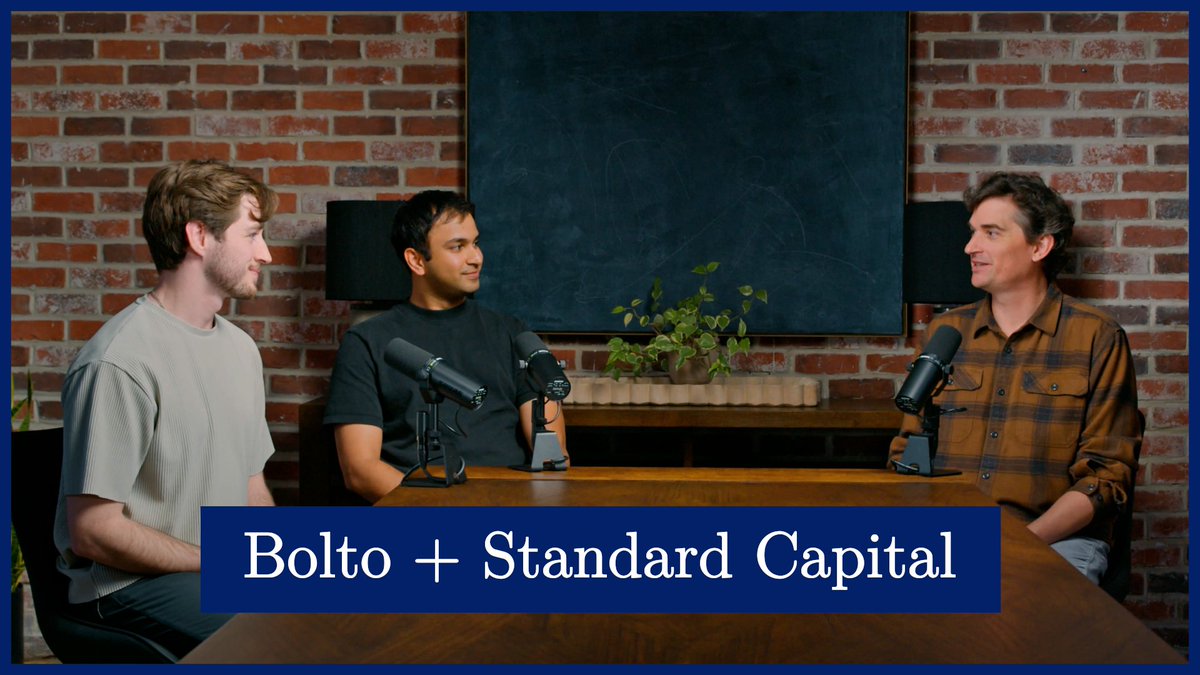
I just posted an interview with @mrinalsingh02 and @jakeatbolto, the founders of @boltohq, about their recent $ 12M Series A from @Standard_Cap.
Link below