Earth appears as a tiny blue-white point from the Martian surface, while Mars shines as a bright reddish star in our night sky. Two neighboring worlds, each seeing the other as just a distant light across millions of kilometers.
On July 15 2026, NASA selected 41 commercial technology projects for development, all targeting critical engineering challenges for future Moon and Mars missions.
The full list reveals how different living in space actually is from living on Earth.
Selected projects include:
POWER
• Microreactor nuclear power systems for lunar night (14 Earth days of darkness)
• Ultra-lightweight solar concentrators for locations where sunlight is weak
DUST MITIGATION
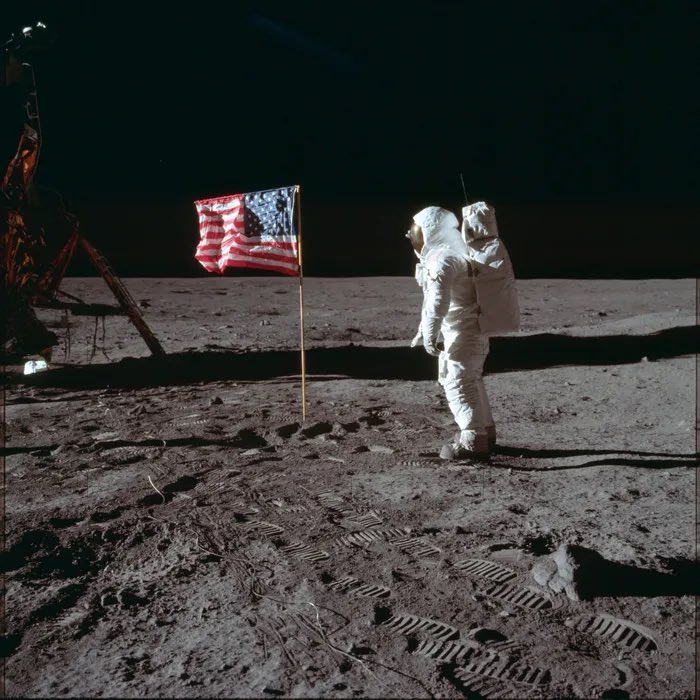
• Lunar regolith (Moon dust) is 10× more abrasive than sandpaper and electrostatically charged
• It destroyed Apollo equipment within hours
• Multiple projects targeting passive and active dust removal from spacesuits, solar panels, and equipment
IN-SITU RESOURCE UTILIZATION (ISRU)
• Converting lunar ice into oxygen and hydrogen propellant
• Using Martian CO₂ to produce methane fuel (Sabatier reaction)
• Turning urine and wastewater into concrete-like construction material using urea as a binder
THERMAL MANAGEMENT
• Radiators that work in the Moon's 120°C daytime / -170°C nighttime swing
• Insulation systems that outperform anything available on Earth
COMMUNICATIONS
• Delay-tolerant networking for Mars (24-minute signal delay means real-time communication is impossible)
The engineering challenges of living on another world aren't about propulsion or launch.
They're about water, dust, power, heat, and biology.
The Moon is 384,000 km away.
Every kilogram we don't have to launch from Earth saves approximately $10,000.
The goal isn't to bring Earth to space.
It's to make space a place where humans can live with what's there.
Popping water balloons in space! Without gravity, surface tension pulls the bulk of the water together again into new blobs, even after the energy release from breaking the skin!
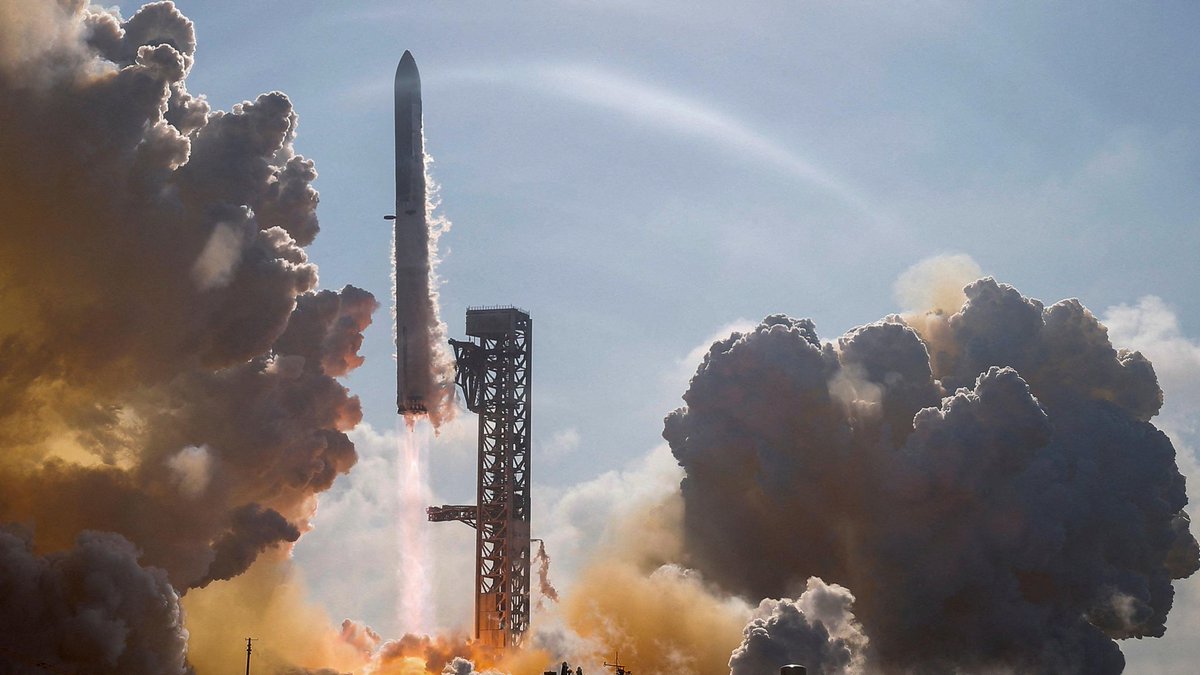
Pretty clear from this shot that @SpaceX knows where we are going! Congrats on getting Flight 13 underway. Excited for what will be learned from this mission. When Starship comes online, its capabilities will be game-changing, not least of which will be ensuring we never give up the Moon again!
Starship suborbital launch No. 2 of 2026 🇺🇸🚀⭐️🛳️
IFT 13 | SpaceX | July 24 | 2245 UTC
@SpaceX to launch the 13th Starship suborbital test flight with it's redesigned V3 Starship S40 + V3 Superheavy booster B20, 2nd launch from the new redesigned Pad 2 at @StarbaseTX, Texas.
In addition to the mission targets of the first V3 flight, it will carry 20 functional next-gen V3 @Starlink 🛰️s instead of dummies, demonstrating solar array deployment, testing the Starlink-to-Starlink Laserlink connection, and ground station communication.
Today a coronal mass ejection launched from the Sun towards Earth and the northern flank is expected to impact us around July 28th. Here is the awesome visualizer used: https://t.co/iOubmqzDZI
Thermal protection tiles used on reusable spacecraft are so low density, and low conduction that it's possible to carefully handle a tile moments after it comes out of the furnace - as demonstrated by @dominickmatthew while visiting @NASAAmes Thermal Protection Materials lab
🪐 NASA has shared a time-lapse of the encounter between the Psyche spacecraft and Mars!
The video is composed of images captured by Psyche’s cameras during the flyby itself and afterward.
Some things our Psyche spacecraft picked up during its brief visit to Mars in May:
- 1000 MPH speed boost
- 3-degree trajectory adjustment
- Science data
- Lots of pictures!
On this day in 1975, a U.S. Apollo spacecraft and USSR Soyuz spacecraft docked during the first joint venture in space between the United States and the Soviet Union: the Apollo-Soyuz Test Project.
🖼️: Artist rendering of the ASTP docking
NASA astronaut Anil Menon launches to space aboard Soyuz from the historic Baikonur Cosmodrome in Kazakhstan as his wife Anna and their two children watch ❤️❤️