#Review🚨
Read how genotype and phenotype co-evolve during cancer progression with insights from single-cell multimodal technologies and phylogenetic approaches, revealing vulnerabilities in mutant clones.
@TamaraPrietoF@FrancoIzzo85@landau_lab
📖👇
https://t.co/wyvfHVp3e9
Amazing new work by @JShendure and coworkers uses a clever application of prime editing called DNA Typewriter to trace the lineage of a developing mouse from zygote to middle of day 14 at a single-cell level. See Jay’s beautiful tweetorial:
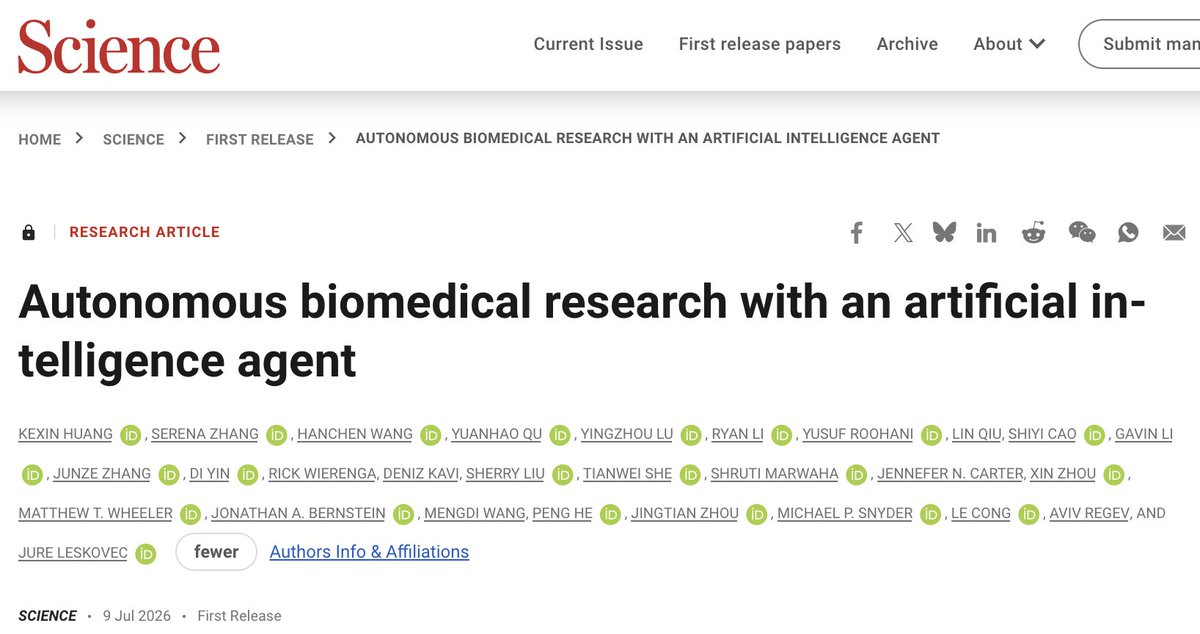
Today, we're excited to share that Biomni is published in @ScienceMagazine.
Biomedical research is still fragmented, manual, and difficult to scale. In this work, we introduce Biomni - the first general-purpose biomedical AI agent with an integrated biology environment that can reason, plan, and execute end-to-end scientific workflows.
We show that, with the right environment and harness, AI can automate large-scale omics analyses, orchestrate laboratory robotics, optimize molecular properties, and even train new AI models for biology.
We also introduce a reinforcement learning recipe for continually improving biomedical AI agents, enabling open-source models to achieve frontier-level performance.
It's surreal to look back. We started the Biomni project in early 2024, when agentic AI was still nascent. It is exciting to see tens of thousands of biologists collaborating with agents every day to accelerate science.
Try Biomni: https://t.co/Pzm8TVlkNA
Read more: https://t.co/pRstxzPKDi
This work is not possible without this truly inter-disciplinary team: @serena2z@hcwww_@YuanhaoQ Minta Lu, Ryan Li, @yusufroohani Lin Qiu @shiyi_c98 Gavin Junze Di @rickwierenga@kavi_deniz Sherry @TianweiShe Shruti Jennefer Xin Zhou @MWheelerMD Jon Bernstein @MengdiWang10@PengHeAtlas@zhou_jingtian@SnyderShot@lecong Aviv Regev @jure@StanfordAILab@genentech@phylo_bio@arcinstitute@UW@berkeley_ai@RetroBio_@tamarindbio@Princeton@UCSF
Excited to share that our work on the Aristotelian Representation Hypothesis ⬇️ has been accepted at #ICML!
Big shoutout to @FabianGroger and @ShuoWen18 👏
We'll also be presenting another #ICML paper on causal discovery from large-scale interventional data, preprint coming 🔜
🧪 Introducing POPPER: an AI agent that automates hypothesis validation by sequentially designing and executing falsification experiments with statistical rigor.
🔥POPPER matched PhD-level scientists on complex bio hypothesis validation - while reducing time by 10-fold!
🧵👇
1/ Modelling cellular changes across diverse cohorts reflects the full spectrum of human biology and advances inclusive healthcare.
inVAE, our generative model achieves this by accurately identifying cell states.
A collaboration bw @sangerinstitute@HelmholtzMunich@SCICambridge
Macrophages do a whole lot more. They are a major subunit of basically all tissues. They protect the brain from damage, regulate thermogenesis in adipose tissue, and are electrically coupled to cardiomyocytes in the heart. They are the immune system's ultimate Swiss Army knife!
Excited to be awarded a Leo Foundation Grant @LEOFondet to study the impact of ageing on epidermal cell fate plasticity. We cannot wait to get started!
Did you know that not all newly forming tumours persist long-term? If you are intrigued to know what determines the survival of early tumours, check out our latest preprint! @SCICambridge, @PDN_Cambridge. Work led by @GSkrupskelyte and @ @J_E_Rojo 🧵1/8
https://t.co/URP3UNhnzB
Our lab, in collaboration with partners from @genentech, @sanofi, @gsk, @pfizer, @sangerinstitute, and @emblebi, has been awarded £2M by @OpenTargets to generate novel perturbation data across multiple disease models and develop large generative models to facilitate the discovery of drug targets. As part of the first wave of hires, I am looking for candidates for two machine learning-focused positions at different levels (Predoc, Postdoc) and one computational biologist. The positions available are:
1. Machine Learning Scientist (Phd required, Senior Postdoc): https://t.co/O49r8TR43c
2. Machine Learning Scientist (Postdoc, Predoc (Msc)): https://t.co/7rVQkWPJgp
3. Computational Biologist and Applied ML (Postdoc): https://t.co/LBqJFvnNQA
deadline 3.07.24
Are you interested in developing hypotheses and methods? For the curious and motivated, we are looking for a computational postdoc to join our rapidly expanding organoid team with @Muzz_Haniffa at the @sangerinstitute
Deadline 21/06, please share! 🙌🏾 https://t.co/FAwgxxDXBF
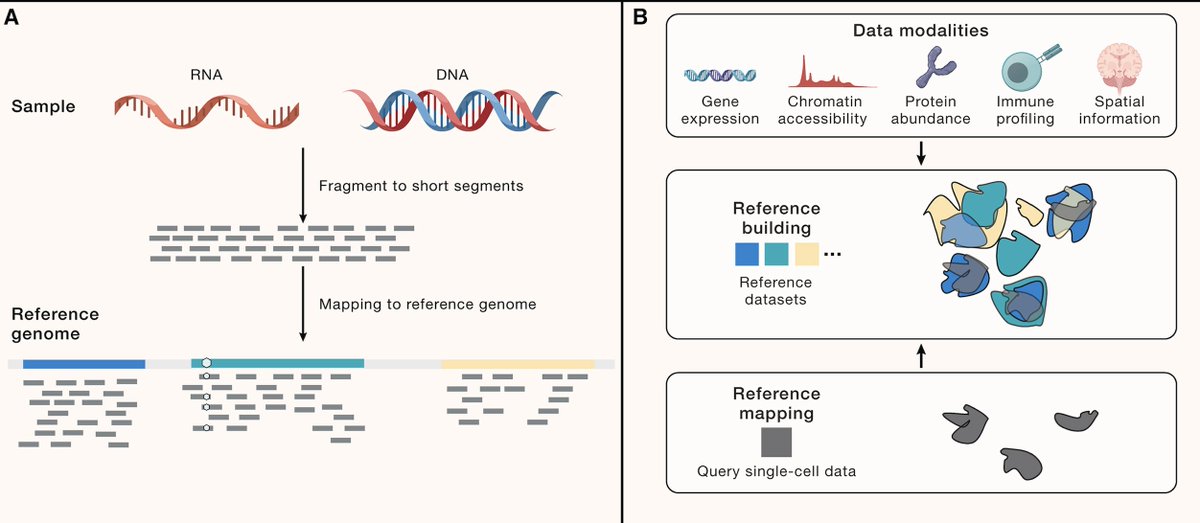
Computational methods have enabled the creation of large-scale single-cell atlases, akin to reference genomes, but these are costly and complex to build. Our perspective at @CellCellPress, alongside @YUHANHAO2, @satijalab, and @fabian_theis, discusses how the reference mapping paradigm maps new data onto existing atlases to integrate datasets across health states, perturbations, modalities, and species. This approach promises to automate single-cell data analysis, reducing reliance on manual, labor-intensive processes.
read here: https://t.co/QDV7Ah5Lcd
Nice correlation between massively parallel reporter assays (MPRAs) and mouse enhancer assays and great neurodev enhancer catalog. Great work and collaboration from @michaelkosicki, @DianneLaboy, @LenPennacchio and many others. https://t.co/2WPs8UAP60
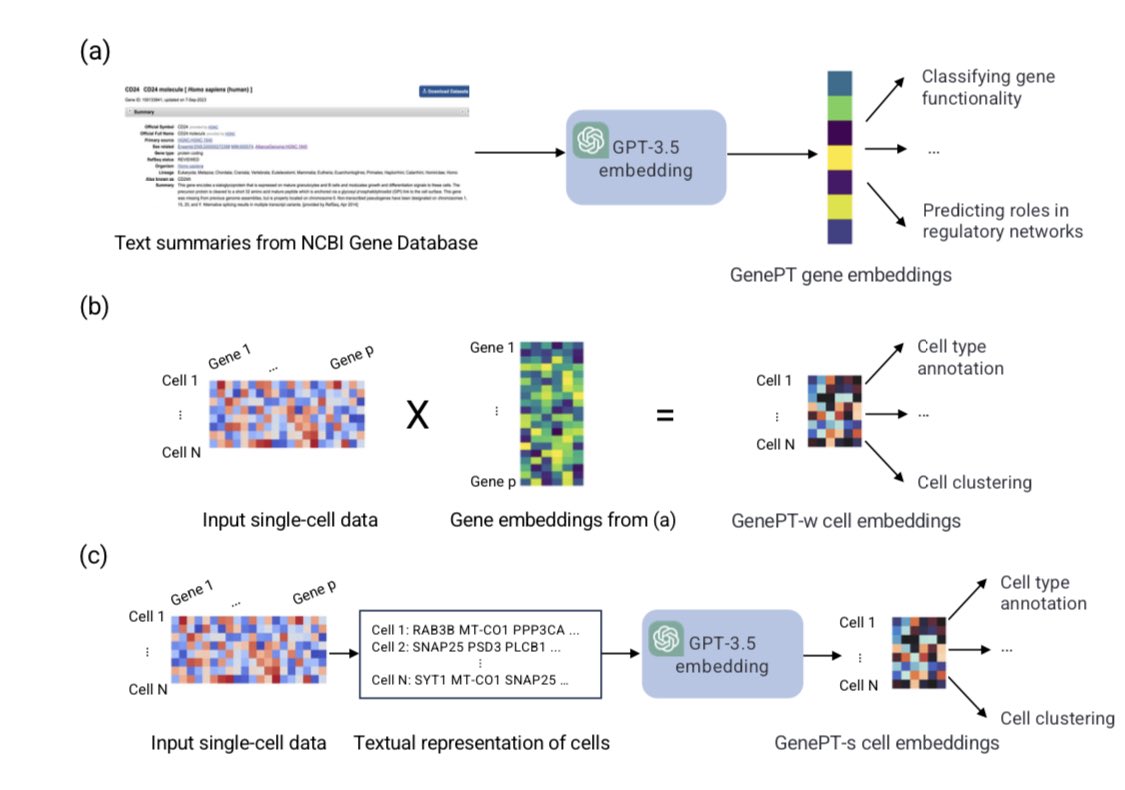
A new single-cell foundation model, directly using textual embeddings from ChatGPT for gene and cell representations from @james_y_zou , I guess we can call this one scGPT :) I like the idea a lot, simple and innovative. https://t.co/Kq9znLe4yI
Apart from a #postdoc, we are also looking for a Research Technician/Lab Manager with experience in cell-culture/epigenetics. Please DM or email to apply. Official advertisement is coming soon.
#AcademicTwitter#AcademicChatter