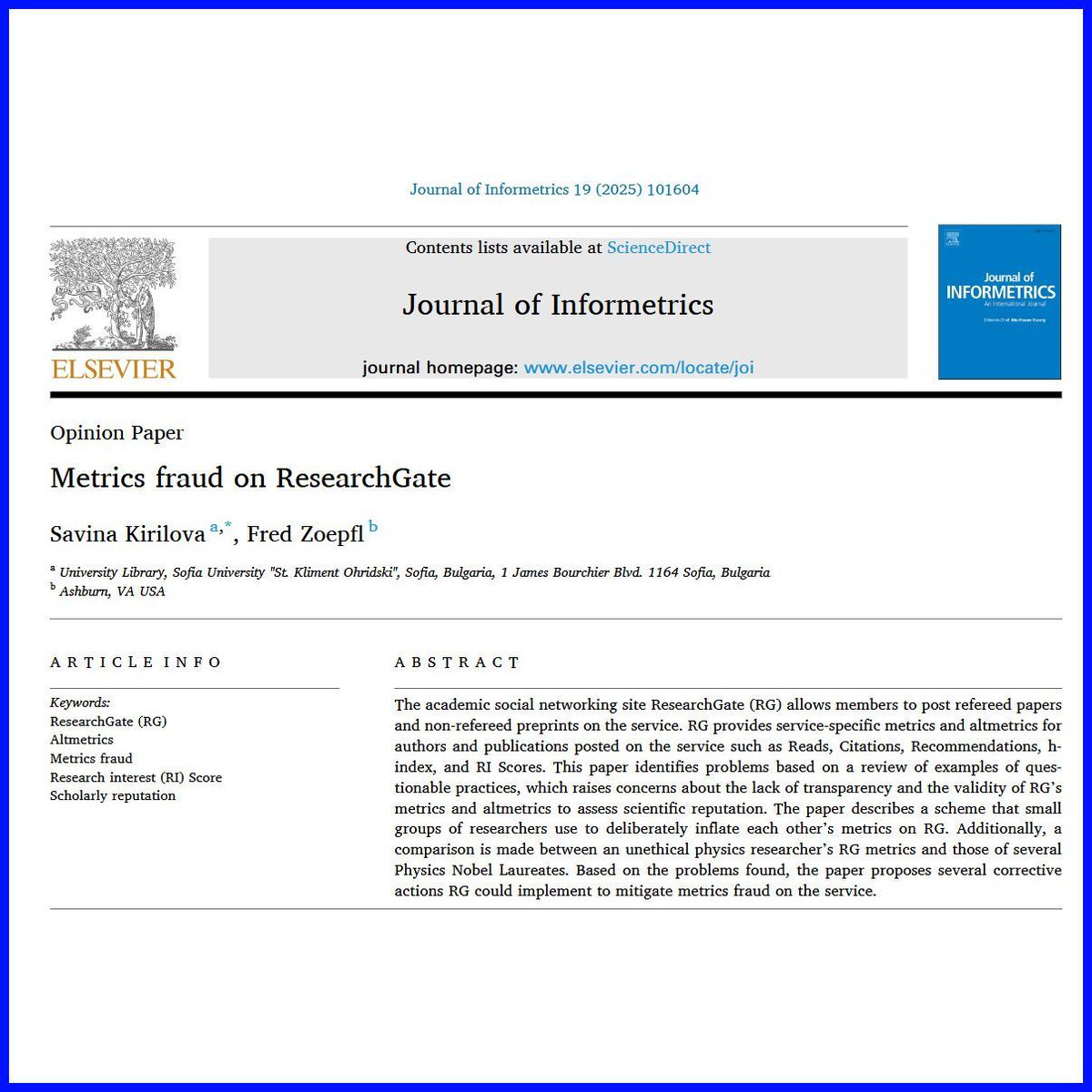
This guy is off the rails.
Nature is a company. Its priority is revenue.
Over the past decade it has aggressively expanded into China, opening six offices there, including its two principal offices in Beijing and Shanghai. It is building a business around serving the Chinese scientific market. The Chinese system loves metrics, and Nature knows how to create and monetize them. They are products it sells.
So of course it publishes rankings built on publication and citation metrics that elevate Chinese universities alongside Western institutions that Chinese scientists have historically looked up to. Those metrics are heavily gamed and align with the interests of Nature’s largest growth markets.
Then guys like this turn around and use this propaganda as objective evidence that America has lost scientific leadership.
Publication metrics and rankings go from deeply flawed to unquestionable truth the moment they support a preferred political narrative.
As someone who partially grew up among European elite kids like him, this reminds me just how incredibly hollow some of them are.
For a quick background, I went to one of the poshest high schools in France (Janson de Sailly, for those who know) and, afterwards, to what was at the time - and probably still is - the most expensive undergraduate school in Europe (EHL in Lausanne, Switzerland).
Needless to say, many of my classmates were from unbelievably privileged backgrounds. Just in my classroom in Lausanne I had the son of a (very famous) Russian oligarch, the son of Italy's largest real estate developer and the son of Spain's largest real estate developer (funnily, the latter two were flat mates).
Another classmate of mine came from the richest family in Naples, Italy and - while we were at school - his father (known in Naples under the nickname "Il Sultano") got arrested for having bribed half of Naples's city council - which, if you know Naples, ought to tell you something.
These were the kids I was doing group projects on business ethics with (literally) 😅
Anyhow, my story, and probably my luck, was that - before going to high school in Paris - I was raised in very normal public schools in the South of France where my friends were anything but wealthy. Their parents were farmers and everyday workers.
Which means - and I'd come to realize this was very important in life - that it was easy for me to understand how big a mistake it is to see money as identity and meaning - and to confuse someone's net worth with their actual worth.
What really struck me at the time was the contrast with my "poor" classmates of earlier in my life. They couldn't define themselves by what they had - by definition - and this forced them to reach deeper for their identity: their skills, knowledge, humor, etc.
Rich kids can skip that entire process, and the tragedy is that most of them do: they reach for the readymade identity that money provides. I remember being incredibly frustrated by many of my classmates, like "ok, I get it, your dad is rich and you own a lot of nice things but who are YOU, what else is there?" The answer, more often than not, was nothing.
To be fair, there were exceptions. One of my classmates I was most impressed by came from one of Zurich's wealthiest families (which, if you know Zurich, means insanely wealthy) yet he was almost OCD in not showing he had money: driving the shittiest car imaginable, living in a small studio, etc. He was very intellectual, very contrarian, and clearly at war with the idea that his family's wealth ought to define who he was.
I only discovered who he actually was when I started my first company and he approached me to invest: to discuss the investment I went to one of his family homes, which it turned out was a literal palatial castle on the shores of Geneva lake. The guy had decided to live in a small rundown studio when he literally had a castle sitting empty a 5-min drive away.
THAT I was impressed by: it's easy to see that money isn't meaning when you don't have any. To see it when you have more than almost anyone - when everyone around you is organized around the opposite assumption - is much harder. But to actually live it, to choose the studio when you have the castle keys in your pockets - with no audience to applaud you for that - that shows real depth.
At the end of the day, I think, the real distinction isn't between rich and poor but between people who exist from the inside out and people who exist from the outside in.
Wealth just happens to make it incredibly easy to be the latter, to skip the work of becoming someone and settle for a borrowed identity that glitters from the outside but is hollow all the way through. A Potemkin village identity.
This is actually a real societal issue, and magnified by social media (with idiotic posts like this one 👇): the more "outside in" folks out there, the less people with genuine internal anchors, the more fragile everything becomes.
When you think about it, everything that genuinely matters in a society is built by people who think for themselves: they take the world in, pass it through something genuinely their own, and give back something that didn't exist before: an idea, a conviction, a stand.
Every reform, every invention, every act of moral courage in history came from someone with an internal anchor strong enough to resist the current. Remove those people and all you have left is the current.
This isn't new, by the way. Most ancient traditions warn against exactly this, from the Bible (the golden calf story) to Confucius, who built his entire ethics around the distinction between the exemplary person (the Junzi, 君子) - oriented around internal cultivation and righteousness - and the petty person (Xiaoren, 小人), oriented around profit and gain. The junzi builds himself from the inside, the xiaoren chases what's outside.
So please, do not make the mistake of being impressed by wealthy people flaunting their wealth. Don't focus on the glitter, focus on the hollowness it's trying to hide.
The social sciences rely heavily on statistics, yet the level of rigor in the analysis is often not where it should be. At the other extreme, one can study fields like physics or chemistry and never deal with statistics at all, because the work is grounded in natural laws and their logical extensions - no one questions their rigor. Biology sits in between. It is rooted in natural laws but involves enough interacting variables and uncertainty that statistical reasoning is necessary.
Both extremes are flawed in studying biology: reducing everything to simple models ignores complexity, while relying entirely on statistics ignores mechanism. We see this play out in practice. In genetics and some areas of AI-driven biology, large datasets and statistical associations are often treated as sufficient, even when the underlying mechanisms are unclear. On the other side, there are models in reductionist biology that extrapolate from simplified assumptions but fail to account for the many uncontrolled variables in real biological systems.
The result in both cases is overconfidence - either in correlations without understanding, or in models that are too simplified to capture reality. Both sides are also quick to dismiss the other: statisticians often downplay mechanism, while mechanistic biologists overlook weak or sloppy statistical analysis because they believe the mechanism is clear. At minimum, each side should acknowledge the other’s perspective rather than dismissing it outright which they usually do.
Just wanted to share this.
2 years to publish a paper. More than 15 emails asking status, 6 days to publish online. 3 days to have the invoice.
@SpringerNature@OIntegridadEsp@isidroaguillo
https://t.co/90x6GuJwlE
The vast majority over discoveries are low hanging fruit when they are made. The key to scientific progress is progressively making more fruit low-hanging. One of the deep problems we have in science is that we reward the people who pick the fruit rather than the ones who lower the branches.
Biology papers be like "The nucleus is part of the cell and contains a lot of DNA. Polycomb Repressive Complex 2 (PRC2)-mediated deposition of H3K27me3 establishes domains of facultative heterochromatin, silencing gene expression in a developmentally regulated manner."
Sci-Hub and Library Genesis has been defined in the literature as 'Black Open Access' model. In the last few months I've been working on a paper, where I explain that Sci-Hub is actually 'Red Open Access' while Library Genesis can be understood as a subtype of 'Green Open Access'.
The preprint is available here: https://t.co/i3lLSRcsqg commentaries and criticisms are welcome. You can send them to me by email.
The picture with Sci-Hub's statistics comes from that paper. The number of PDF downloads from Sci-Hub per month, 2016-2023. Surprisingly, the usage of the website only increased after 2020, and that is only counting statistics from original website, not even counting numerous Sci-Hub mirrors!
seriously struggling to comprehend the total and utter detachment from reality one must have to think that a PhD thesis about the description of smell in the English literature will be "one of the most influential theses of the 21st century"
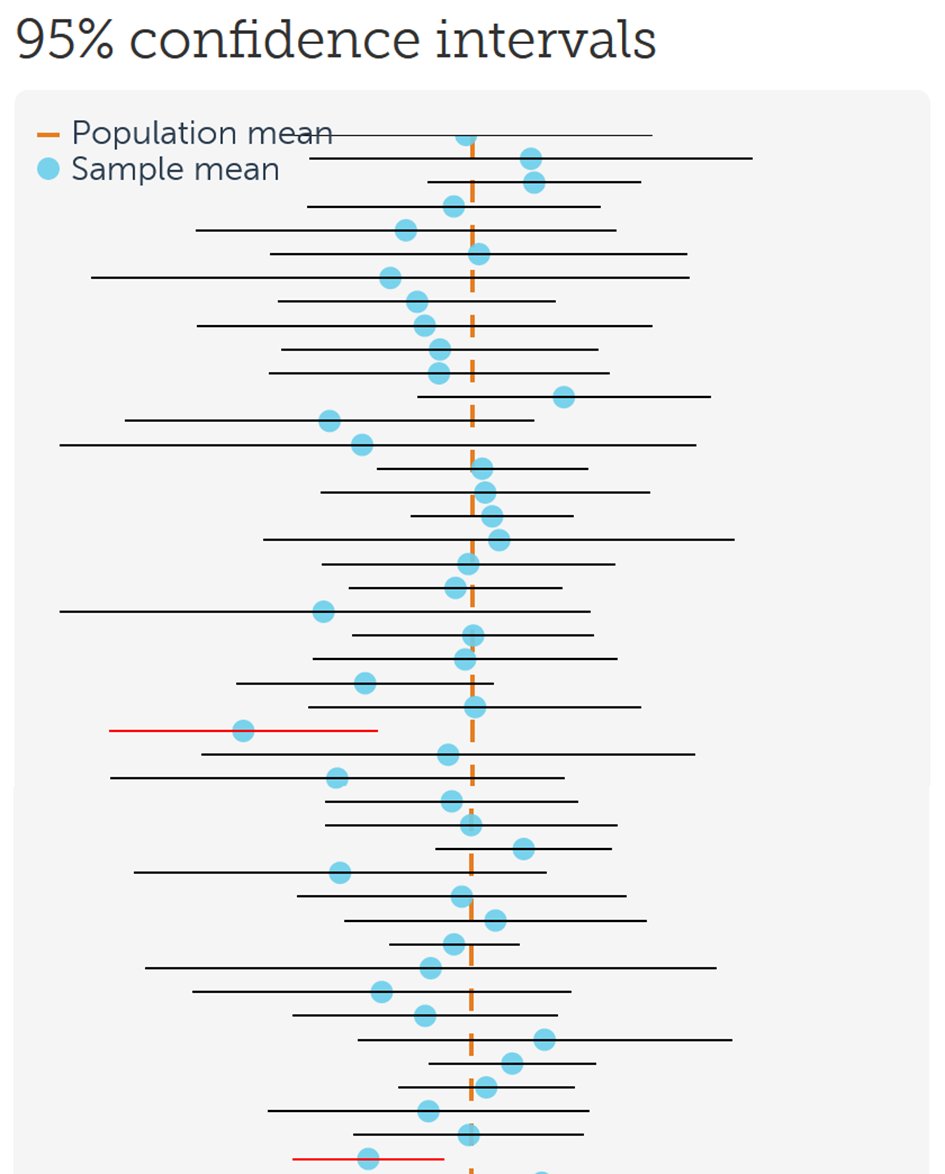
Confidence intervals are confusing intervals. The reason is because they tell us something about what happens across many confidence intervals, not in any single confidence interval. In the long run, 95% of 95% CI contain a population parameter. 1/n
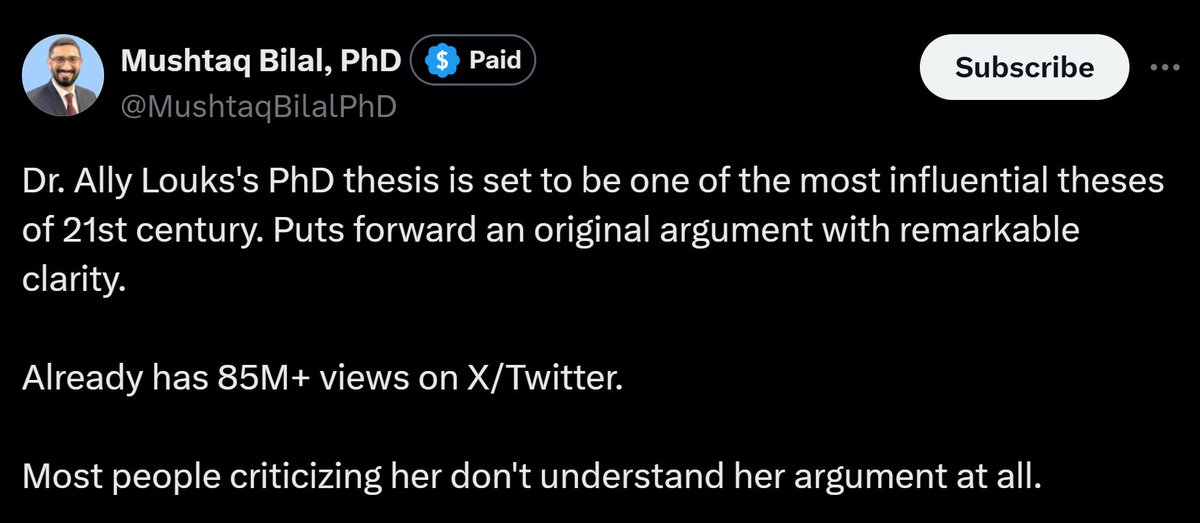
Dr. Ally Louks's PhD thesis is set to be one of the most influential theses of 21st century. Puts forward an original argument with remarkable clarity.
Already has 85M+ views on X/Twitter.
Most people criticizing her don't understand her argument at all.
I have a PhD in literary studies, and in this thread, we'll do a close reading of her abstract to understand her argument in simple English.
Here's a simple thing @VivekGRamaswamy@elonmusk and @DOGE could do to slash science bureaucracy, save billions of dollars *and* make science work better for the public - place the results of all Federally funded research in the public domain.