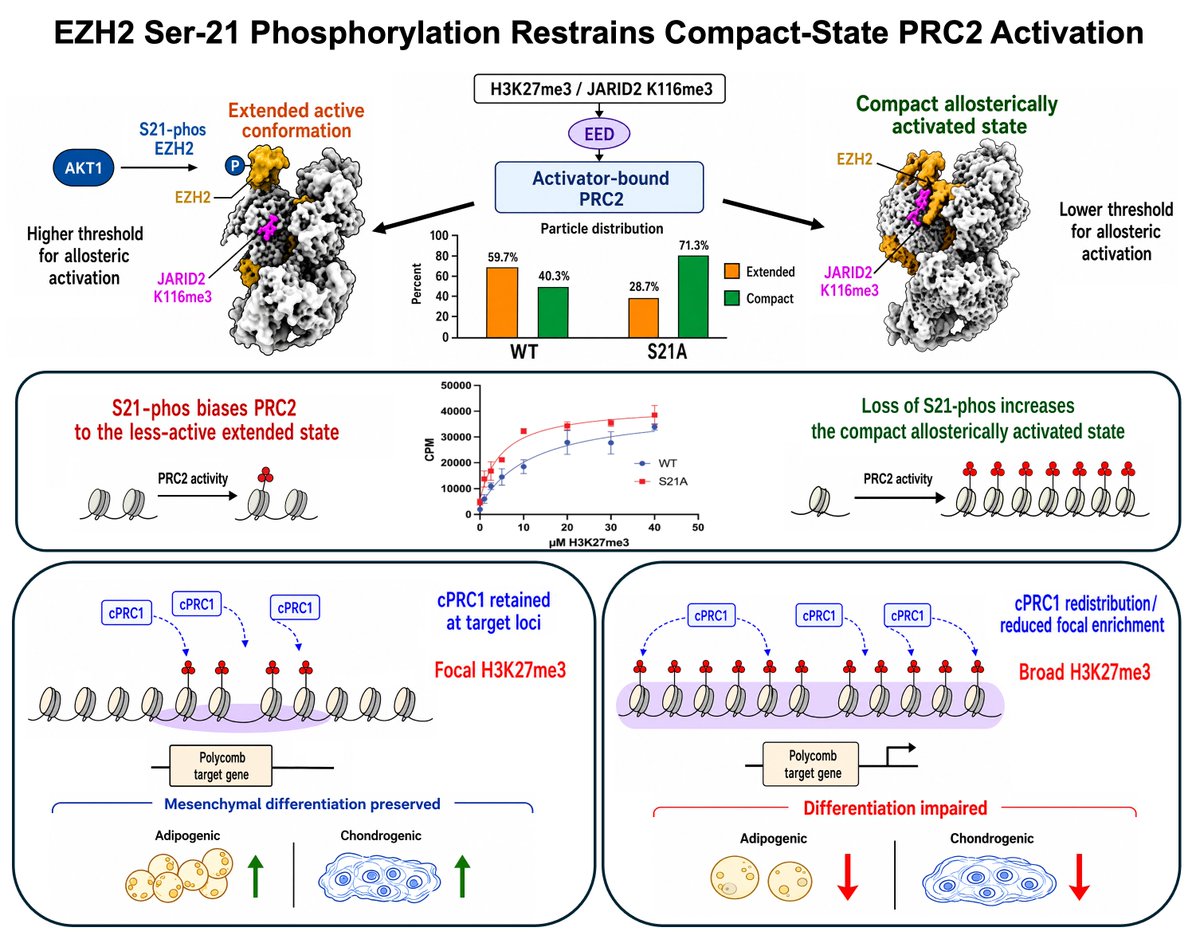
How do cells tune PRC2 allostery? We find EZH2 Ser21-phos restrains PRC2 adoption of the compact active state. Loss of this restraint promotes H3K27me3, redistributes cPRC1, and impairs differentiation. New bioRxiv with @vignesh_k757 & Ben Garcia lab! https://t.co/ZF5gOGI3x0
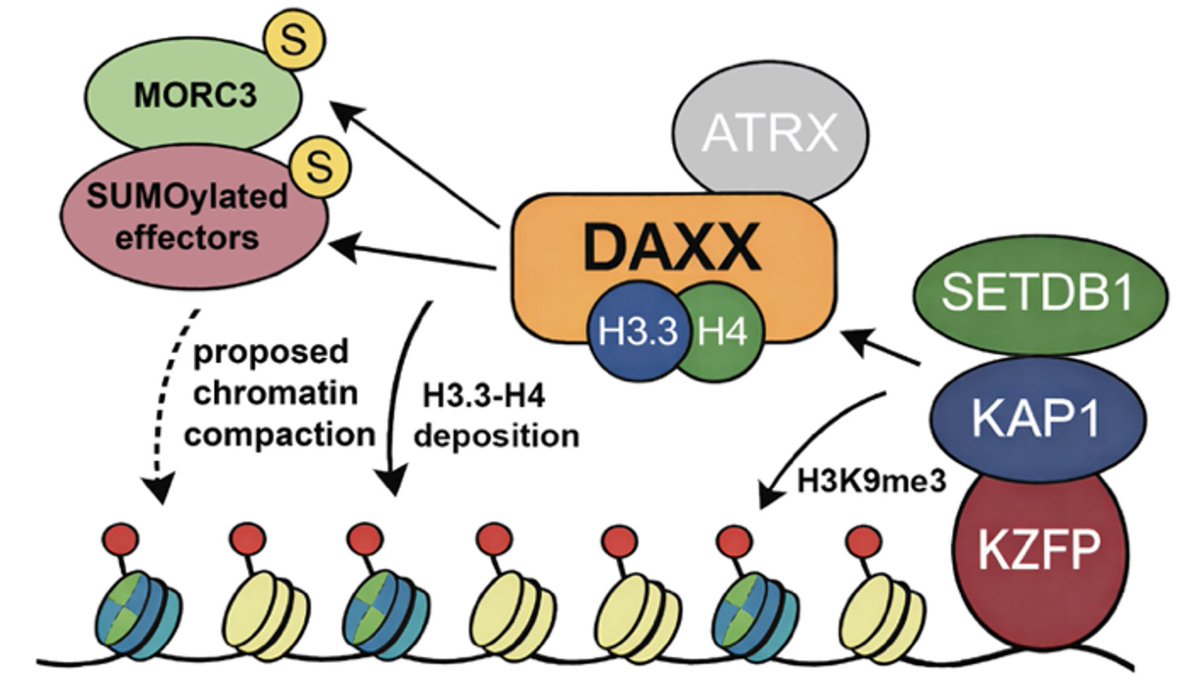
New preprint from our lab! An H3.3 knockout does two things at once: it removes H3.3 from chromatin and destabilizes DAXX. We disentangle those functions and find that DAXX-mediated H3.3 deposition can be uncoupled from ERV silencing.
https://t.co/VvCD7CWmja
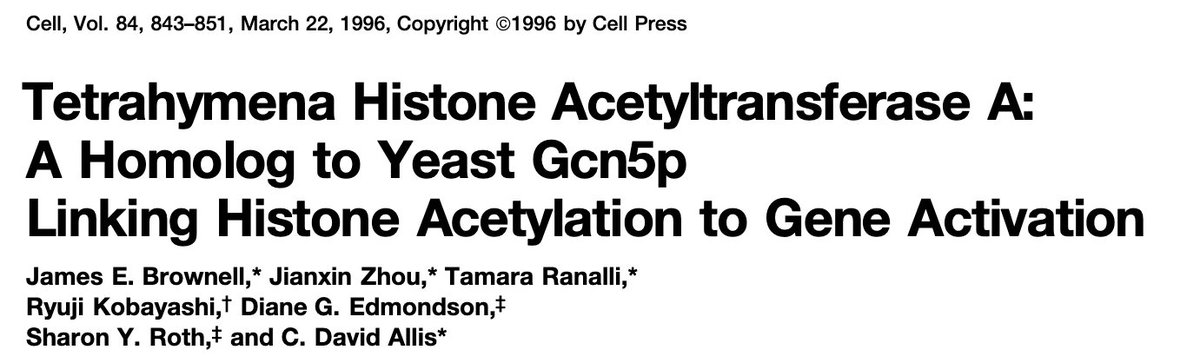
Happy 30th birthday to this paper published March 22, 1996, one of the foundational studies in chromatin biology. Brownell et al. linked a transcription-associated Tetrahymena HAT to yeast Gcn5p, providing a biochemical link for chromatin modification to gene activation.
Sam Krabbenhoft, @thePeterLewis & @harrisonflylab use fruit flies to study pediatric diffuse midline glioma. A new #GENETICS study identifies genetic pathways that could guide targeted therapies—showing the power of model organisms in cancer research: https://t.co/Q3mJsQrroc
We are excited to share our new preprint demonstrating that nucleic acid interactions with SUZ12 constrain PRC2 activity, establishing a kinetic buffer essential for targeted gene silencing and revealing vulnerabilities in diffuse midline gliomas.
https://t.co/4TYHUgQEgd
Happy Polycomb Day (3/27)! Today we celebrate H3K27me3- Polycomb’s quiet mark of repression, where gene silencing is not neglect, but a deliberate act of identity.
Today in @Nature we share our back-to-back stories with @nzhenguw revealing chemical-genetic convergence between a molecular glue & E3 ligase cancer mutations. 1/6
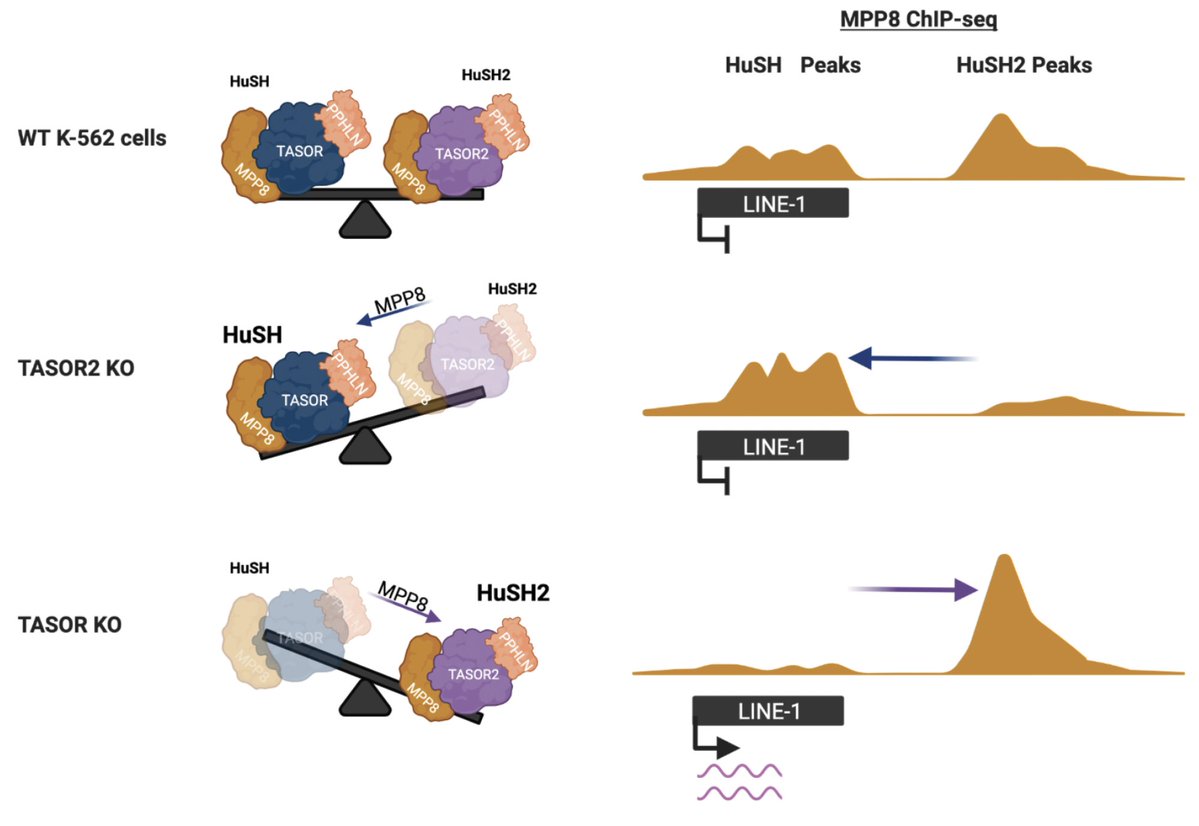
The HuSH complex silences retrotransposable elements. We identify HuSH2, centered on TASOR2, targeting KRAB-ZNFs and interferon genes, balancing retrotransposon silencing and immune regulation. https://t.co/d8SmcuBzHD
The HuSH complex silences retrotransposons in vertebrates. Our latest manuscript introduces HuSH2 and delves into the fascinating interplay of two paralogous HuSH complexes in governing LINE-1 silencing. Credits to @Zena_Jen and @aechristenson. https://t.co/NMA3kzqHV2.
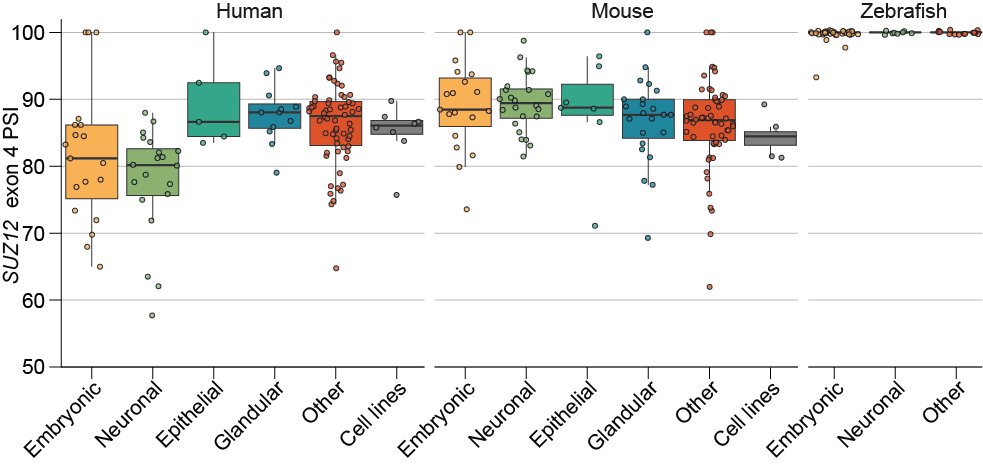
How conserved is this AS event?
Evolutionary analysis shows that SUZ12 exon 4 skipping appeared in placental mammals while it behaves as a constitutive exon (always included) in all other vertebrates REGARDLESS of the tissue/cell type!
🐘🐮🐭🏃 (skipping)
🦈🐠🐔🦘(inclusion)
3/9
Hello grad program community! I'm interested to learn about your experiences with graduate program interviews and recruiting this year. Were they conducted in-person together, or were the interviews held online followed by in-person recruiting? Please share your insights! :)
Excited to share in @nchembio our work revealing a repressive histone methylation ceiling using drug addiction mutations, & how we can exploit it as a vulnerability in EZH2-mut lymphoma. Big thanks to Hui Si, @AllyFreedy, @liaulab team, & @StephenKissler!
https://t.co/htLiWgAgF3
I would like to share with you our new work on the identification of the first bona fide 'reader' of #histone H3K79 methylation, which has been a mystery since the discovery of this modification in 2002.
https://t.co/xPfNz2VQTg
today online in @ScienceMagazine
It is with heavy hearts that we announce the passing of our beloved colleague and friend, C. David Allis. Aside from his groundbreaking contributions to biomedical science, David will be remembered for his warmth, humility, and relentless optimism.
Enhancer–promoter interactions and transcription are largely maintained upon acute loss of CTCF, cohesin, WAPL or YY1 | https://t.co/1wcikKP2rM | @NatureGenet | #chromatin#epigenome#3dgenome