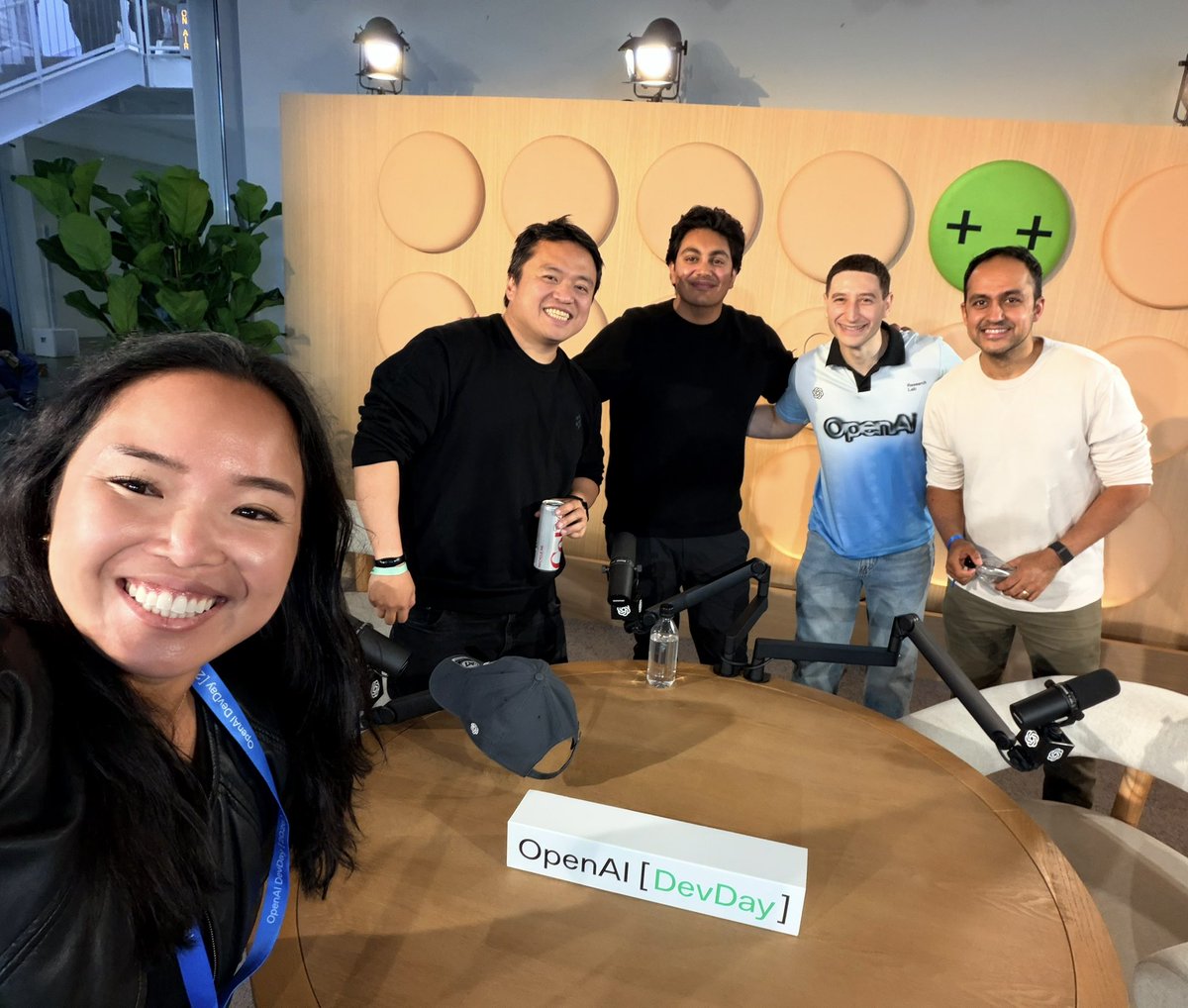
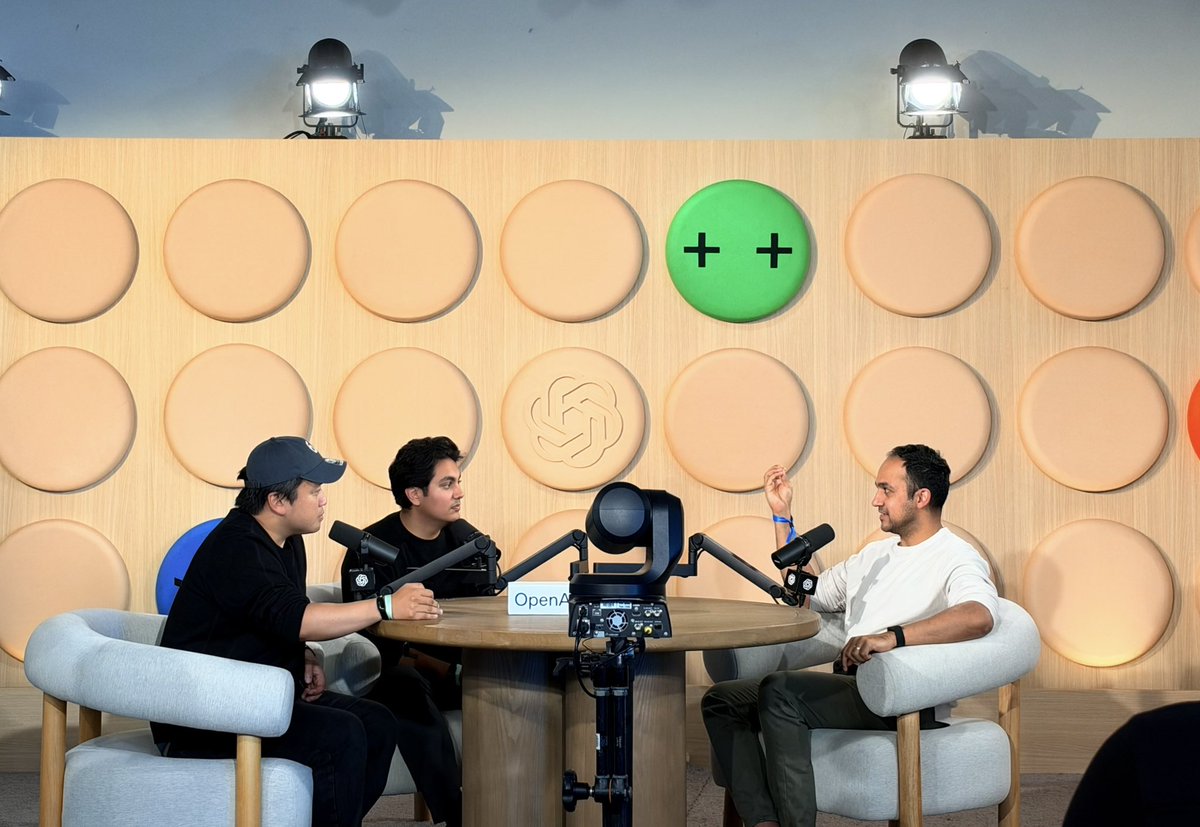
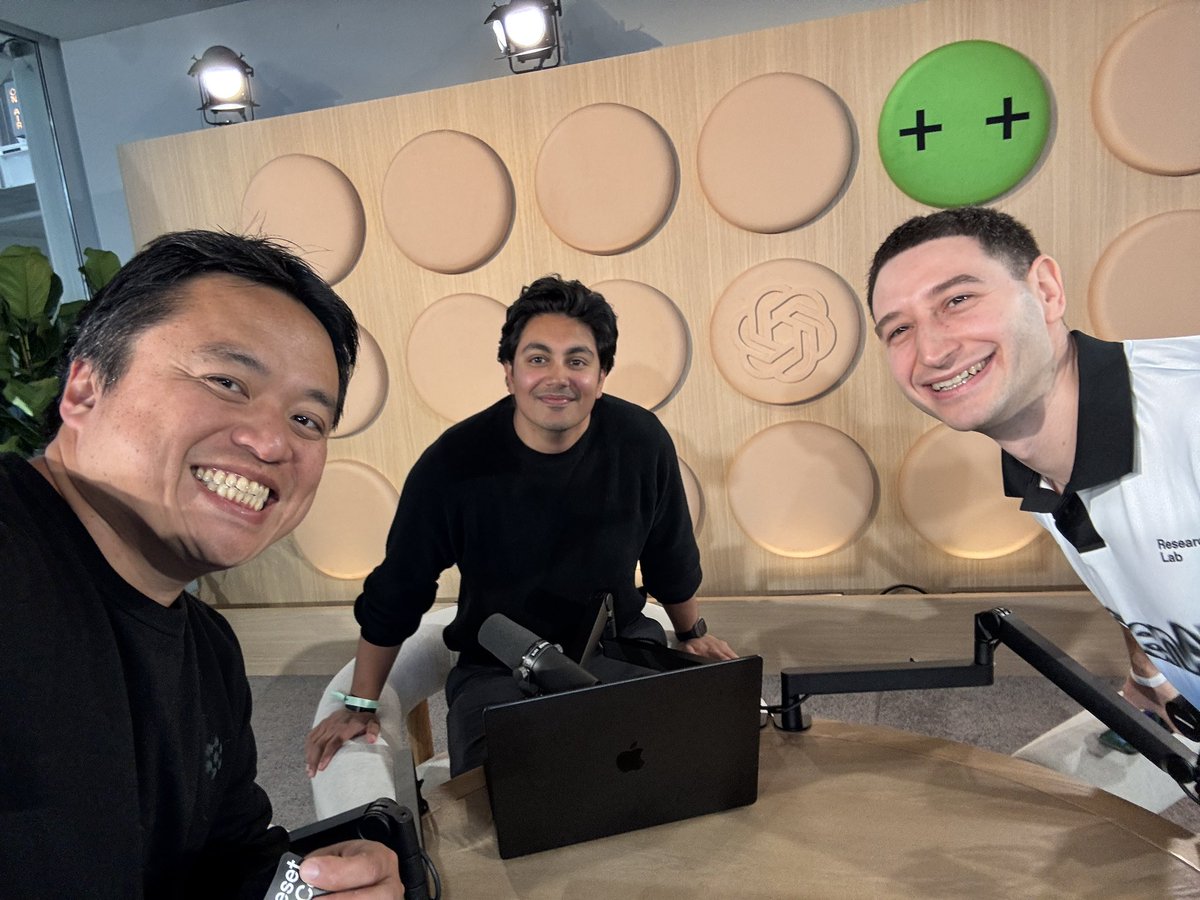
for friends of @latentspacepod we are gonna be asking all your burning Dots, Sol 6.1, CUA, and Decisions API questions for @AriX and @nikunjhanda 🔜 at the gateway pavilion on a few mins, come by!
Everyone asks: why World Labs × AMD?
The bigger story people are missing: world models are becoming a computational primitive, esp for robotics 🌎 AMD sees the next stack forming.
I first met @drfeifei and @theworldlabs team in 2024, when world models still felt like a new lane.
At NeurIPS that year, the team pulled up some of their earliest demos at a party. Everyone crowded around the screen. It felt like a first glimpse of something new ✨.
Still, it was a bold bet at a time when most of the industry was racing to scale LLM.
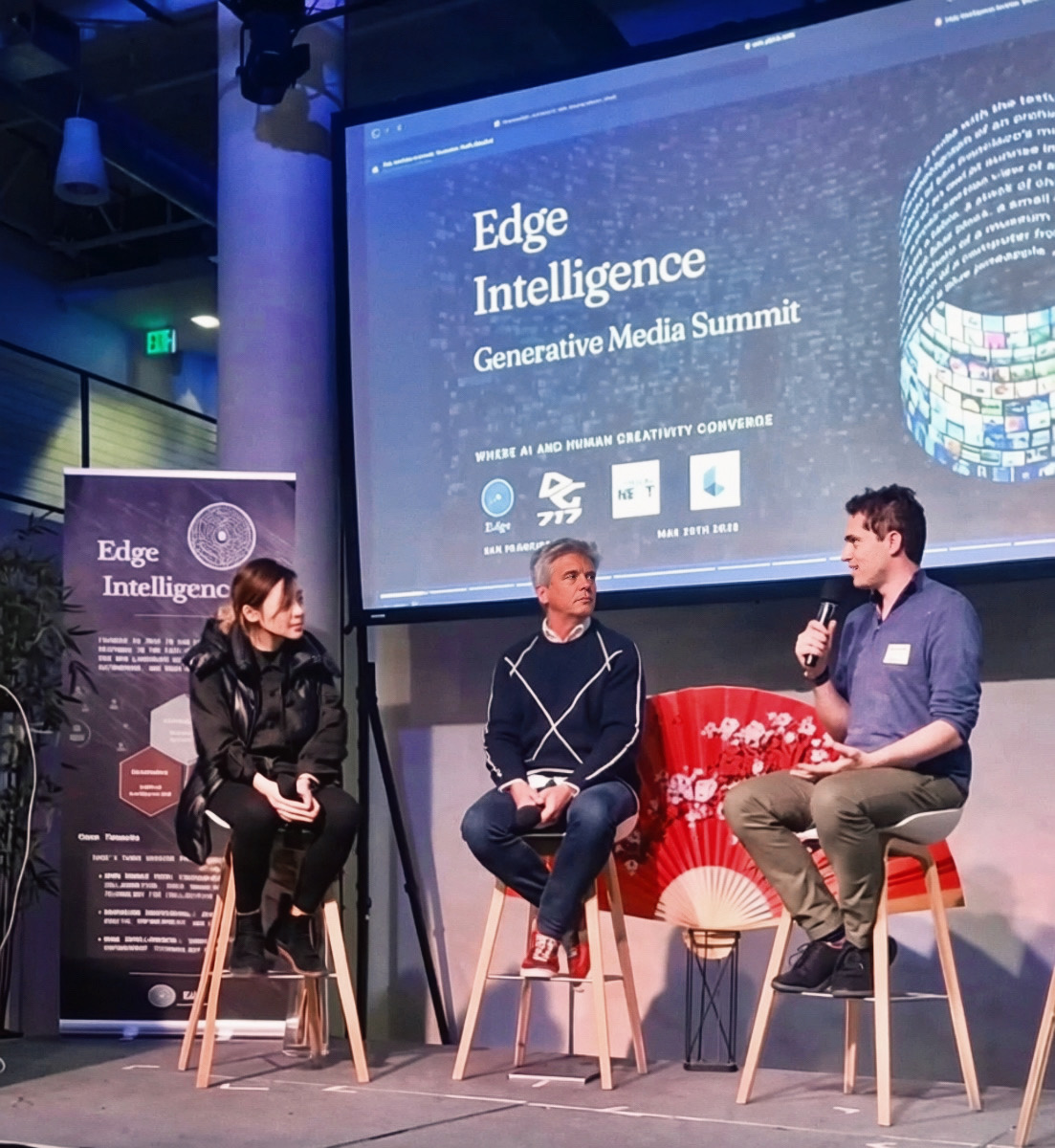
But the team stayed firm on the vision. @chlassner was among the first to support my Generative Media Conference. He called what was coming “Content 3.0”: from content we consume → worlds we interact with.
Now that arc is going one step further: those worlds are becoming environments for machines to learn and act in. 🦾
Content → Worlds → Simulation → Action.
What started as a model category is becoming infrastructure for physical intelligence.
World Labs saw the opening: a chance to help shape that infrastructure. Its recent acquisition of robotics startup SceniX was a clear move in that direction.
Congrats to @drfeifei, @jcjohnss, @BenMildenhall, @chlassner, and everyone who helped build World Labs along the way. 🎊 What a journey!
Worthwhile interview from @trq212 on @latentspacepod
Practical Tips:
1) We're moving from a single-player game to multiplayer.
Use Artifacts more.
They're shared memory context for teammates, other threads, and subagents.
How?
Just ask claude to make it into an artifact.
2) "Explain using the big picture in few words" is shockingly more useful than reading through piles of text.
try the plugin `/eli5` it's basically this.
3) Your "unknown unknowns" are the bottleneck. The fix is to try more things and develop intuition & taste:
"To have taste, you have to eat. You have to try a lot of things, iterate, figure out what you want and like, and build a vocabulary for the domain. Then your prompt can bring all of that together." paraphrasing @jxnlco
ClusterMAX 3.0: The Industry Standard GPU Cloud Rating System Returns
In gory detail: reliability, performance, support, pricing
—and, of course, security—
in our most thorough analysis of GPU cloud providers globally
https://t.co/PYQ5uFpvor
the right way to use model capabilities is not to ship 10x more features to prod
it's to spend more time understanding your users, trying experiments, building prototypes, learning about things you don't understand so that you can ship things that actually work
Jev and the System One Model: RLCD, intelligence/$, reliable AI, & the end of chat-first AI https://t.co/H2bZXCENyW
@typesafeai CEO @CompleteSkeptic explains why AI can solve extraordinarily hard problems yet still fail to automate basic work, why Jev is built for reliable decisions inside software instead of chat, why TypeSafe rejects public benchmarks and refusals at the API layer, why data and the right task matter more than brute-force compute, how System One Models could reshape coding agents and software, and why even with $1 billion he wouldn’t pre-train a model from scratch.
NVIDIA is continuing to push throughput, and I think that makes sense. We need more tokens, and we need them cheaper. But what used to feel fast at 100 to 200 tokens per second is quickly becoming the new batch mode.
I spoke with @swyx on @latentspacepod about how expectations for inference speed are changing.
still think this is/was one of the best takes of the year @eisokant with @swyx and @vibhuuuus on @latentspacepod
very much aligned with the thesis - build your own agent infrastructure.
https://t.co/wGGiUAumzb
give the agent an isolated sandbox with a thin set of tools and workflows, and the ability to write and execute code. Keep the harness thin.