🧵Epigenetics require the coordinated interplay of diverse proteins and mechanisms. To systematically explore this, we invented the COMBINE platform to quantify the effect of >50,000 pairs🧦of long epigenetic effectors on endogenous human transcription https://t.co/6IHrGiw8O6
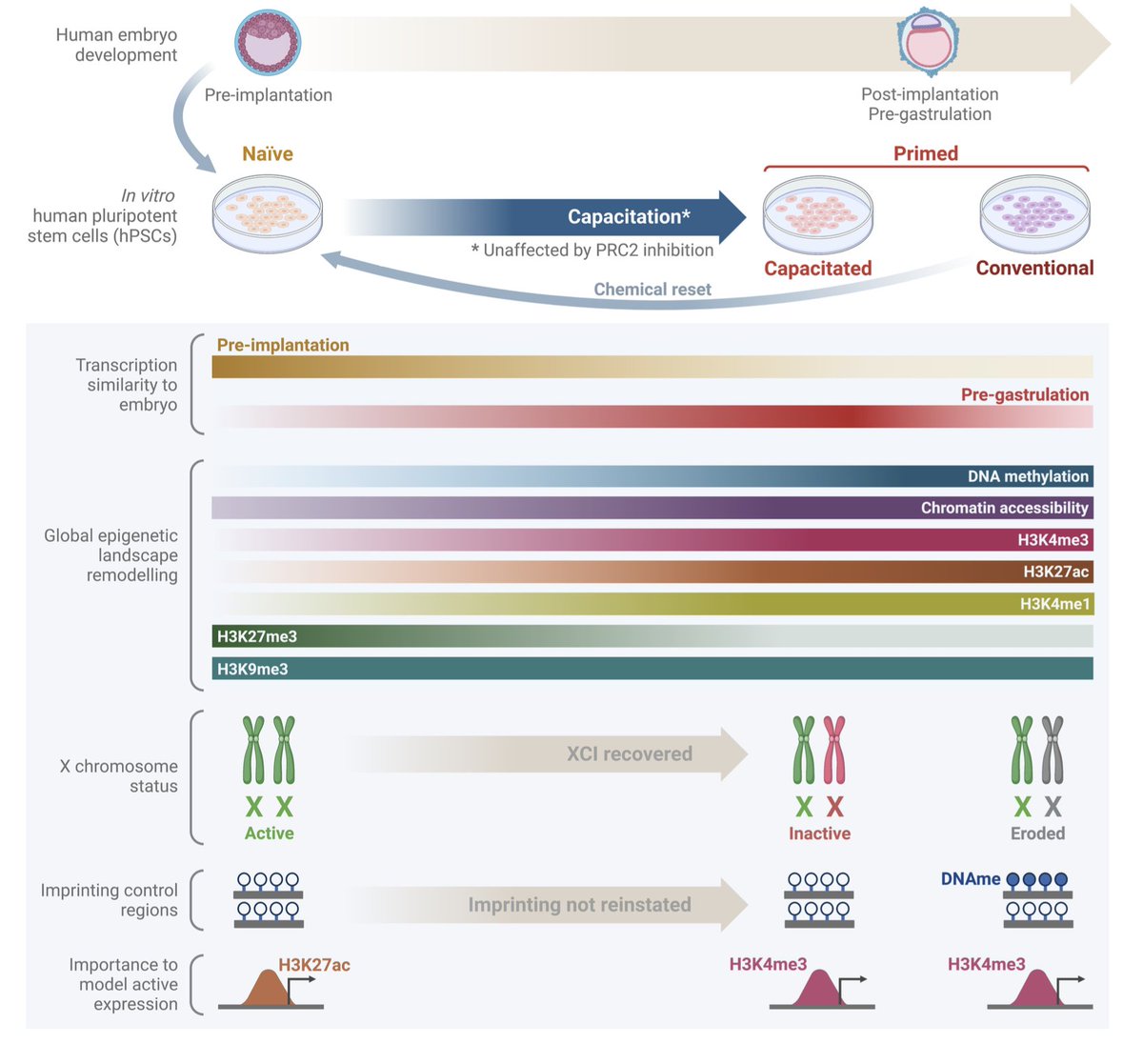
How do #stemcells integrate information to make fate decisions? Check out our latest preprint where we find that growth factors regulate the mechano-osmotic state of the #nucleus and #chromatin to determine whether to retain or exit #pluripotency🧵👇https://t.co/CB1vIDUFbX
Loss of gene expression can compromise cellular fitness. In the case of such haploinsufficiency, replacement of the gene supplementation could rescue cell health. But what if you need a very precise dosage? Try ComMAND! 🧵 (1/n)
Link: https://t.co/VhyQdYRvLG
"The maximal lifespan [of people and 347 mammalian species] is strongly associated with an epigenetic signature that is largely independent of sex, body mass, calorie restriction, or other lifestyle factors"
@ScienceAdvances
https://t.co/kk7DgGcbwr @prof_horvath and colleagues
Glad that our sequence model of promoters in human genome is now published in @ScienceMagazine. Check out the paper for a deep dive into the sequence basis of transcription initiation at the basepair level: https://t.co/gA08yaJLVp
Delivering and expressing a gene in cells is usually a messy (heterogeneous) process. The messiness interferes with research and applications such as gene therapy.
In two new papers, we introduce a toolbox of synthetic miRNA-based control circuits that enable more precise, gene dosage-invariant gene expression, and show how they improve a mouse model of Rett syndrome gene therapy:
https://t.co/zWVohTzLgG ,led by @RongrongDu123 and @MichaelJAFlynn
https://t.co/PXDxSyQpKU , led by @MichaelJAFlynn and Acacia Mayfield, in collaboration with Viviana Gradinaru.
Facing challenges with data harmonization on EPICv2? Our latest preprint introduces mLiftOver, designed for data conversion between HM27/HM450/EPIC and EPICv2, including support for the new MSA array! Details here: https://t.co/21Wx8tgpn4 #genomics#bioinformatics
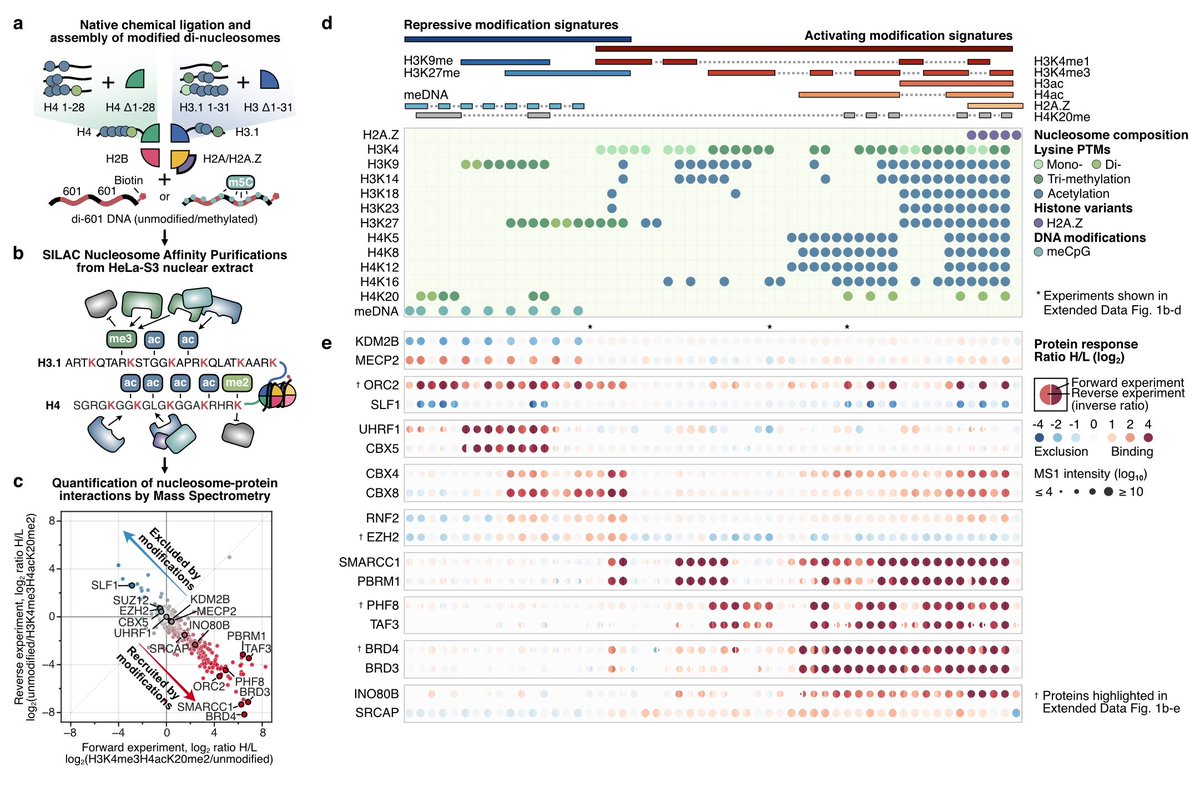
Excited to see our paper "Decoding Chromatin States by Proteomic Profiling of Nucleosome Readers" out in @Nature!
https://t.co/vqva7OikoA
Explore our data on how epigenetic modifications modulate protein binding to chromatin with MARCS https://t.co/b5FIzQYHNm
Details below 👇
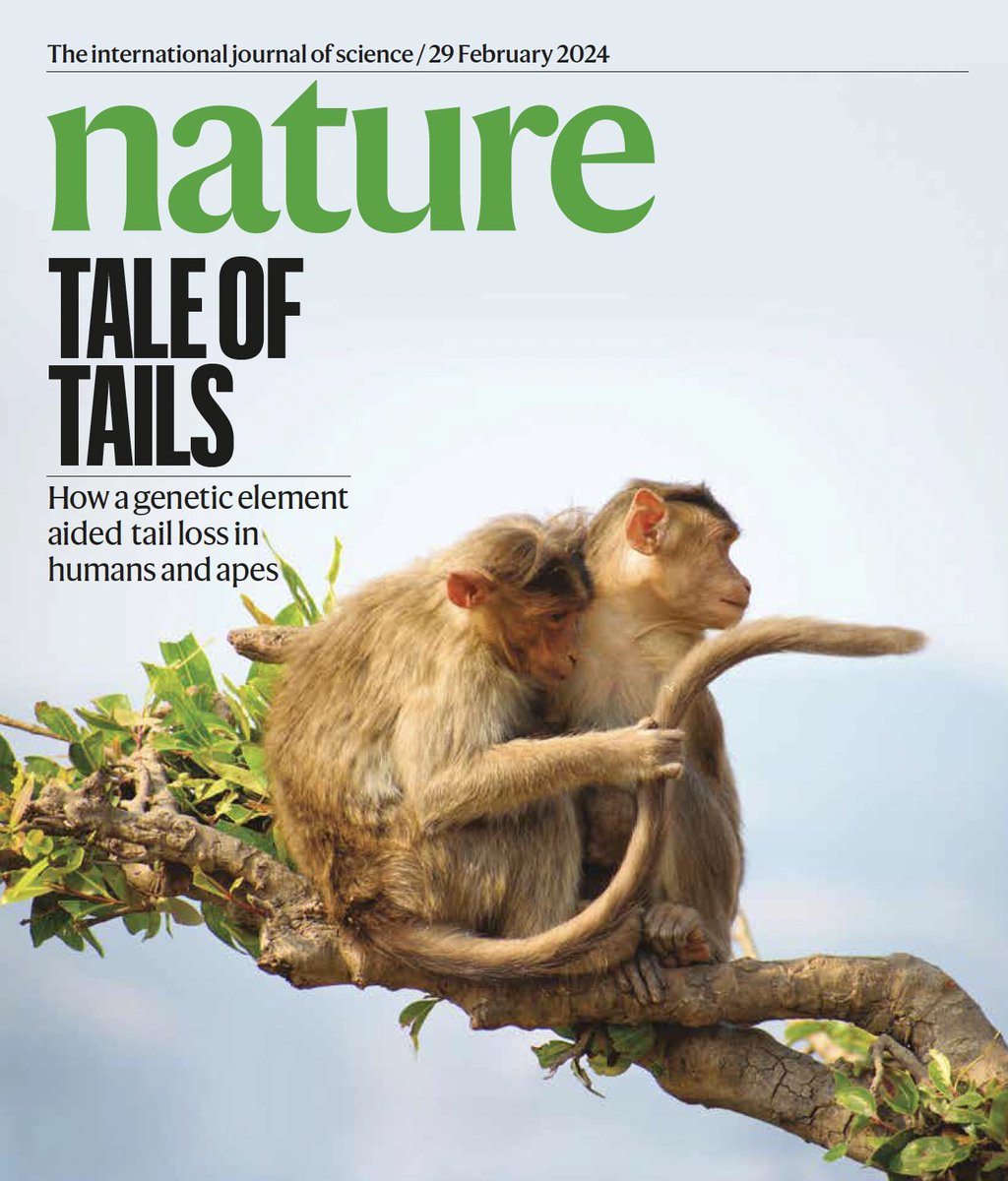
How did we lose our tail? A simple question.. but it wasn't really asked before! We discovered a plausible scenario for the genetic mechanism that led to tail loss. Amazing that such a big change may have been caused by such a small genetic event. https://t.co/0ZR8aH23PJ @BoXia7
Is DNA all you need?
In new work, we report Evo, a genomic foundation model that learns across the fundamental languages of biology: DNA, RNA, and proteins. Evo is capable of both prediction tasks and generative design, from molecular to whole genome scale.
🔬 Exciting News! Our manuscript, "scGPT: toward building a foundation model for single-cell multi-omics using generative AI" is now finally published in Nature Methods (@NatureMethods) 🎉 !!!
(Re-)Introducing scGPT: A transformative foundation model engineered for single-cell omics analysis. Developed through the analysis of over 33 million human cells, scGPT sets a new benchmark for application versatility, offering both fine-tuning and zero-shot capabilities.
Since its preprint in May 2023, scGPT has significantly impacted the field, evidenced by 13K+ installations, 600+ GitHub stars 🌟, and 40+ citations before its official publication!
scGPT has been validated by numerous benchmark studies as a leading foundation model in single-cell analysis. Its pre-trained embeddings extend its utility beyond single-cell studies, enhancing a variety of downstream tasks including protein enrichment and genetic perturbation predictions.
Some key updates lately:
---Expanded zero-shot applications for efficient reference mapping and integration, now with CellXGene census integration.
---Advanced perturbation analysis capabilities, including genome-scale perturb-seq data analysis and bulk sequencing data generalization.
---Upgraded scGPT package, offering versatile model loading compatible with PyTorch and flash-attn, for both GPU and CPU.
---Cloud-based scGPT applications for reference mapping, cell annotation, and gene regulatory network inference are available on https://t.co/IaaPv7EaTB.
---Integration with Hugging Face for easier model training.
Limitations:
scGPT is an early foray into foundation models for single-cell omics, facing challenges like limited zero-shot learning in some tasks, pretraining constraints, data quality issues, and evaluation limitations. See our Supplementary Notes for details.
🚀 Future Work?
Short-Term Goals:
1. Releasing a Mouse Model for broader analysis.
2. Developing a comprehensive evaluation suite for foundation models in single-cell analysis.
3. Creating a foundation model for single-cell spatial omics.
4. Enhancing zero-shot capacity by integrating scGPT with RAG (e.g., knowledge graphs).
Long-Term Goals:
1. Expanding scGPT for comprehensive single-cell multi-omics analysis.
2. Developing an in-silico perturbation model for predicting genetic perturbation effects.
3. Merging scGPT with multi-modal genomic sequence models for a deeper understanding of cell biology.
📚 Access the paper on Nature Methods: https://t.co/4YCTQymxiA
🔬Preprint in Bioarixv: https://t.co/qyxVGkypaC
💻 All our codes/data/weights are open source: https://t.co/13n0bJvgT2
Wholehearted congratulations to all the authors, especially the two co-first authors, Haotian (@HAOTIANCUI1 ) and Chloe (@chloexwang1), who are really the emerging superstars in AI and biology!
@VectorInst@pmcc_ai@UofTCompSci@UofT_LMP@UHN@UofT
#scGPT #GenerativeAI #AI4Science #Combio #opensource
Very excited to share two papers published today in @CellCellPress describing stem cell plasticity in CRC. (1/22)
https://t.co/jQxR7PCwh7
https://t.co/P9QaEsqkko
🚨New Preprint🚨 In this study, we set out to determine how the de novo DNA methylation program impacts the 3D cis regulatory landscape. Comments welcome! Here's a thread detailing our study's key findings (1/12) https://t.co/UHElRVJTzC
1/ My work on epigenetic memory with @leonidmirny, @osmanovicdino1 is out @ScienceMagazine!
https://t.co/KCr7GR4Hmd
How can *stable* memory be encoded in patterns of *dynamic* epigenetic marks? We find 3D folding of genome can stabilize memory, if 3 ingredients are present...
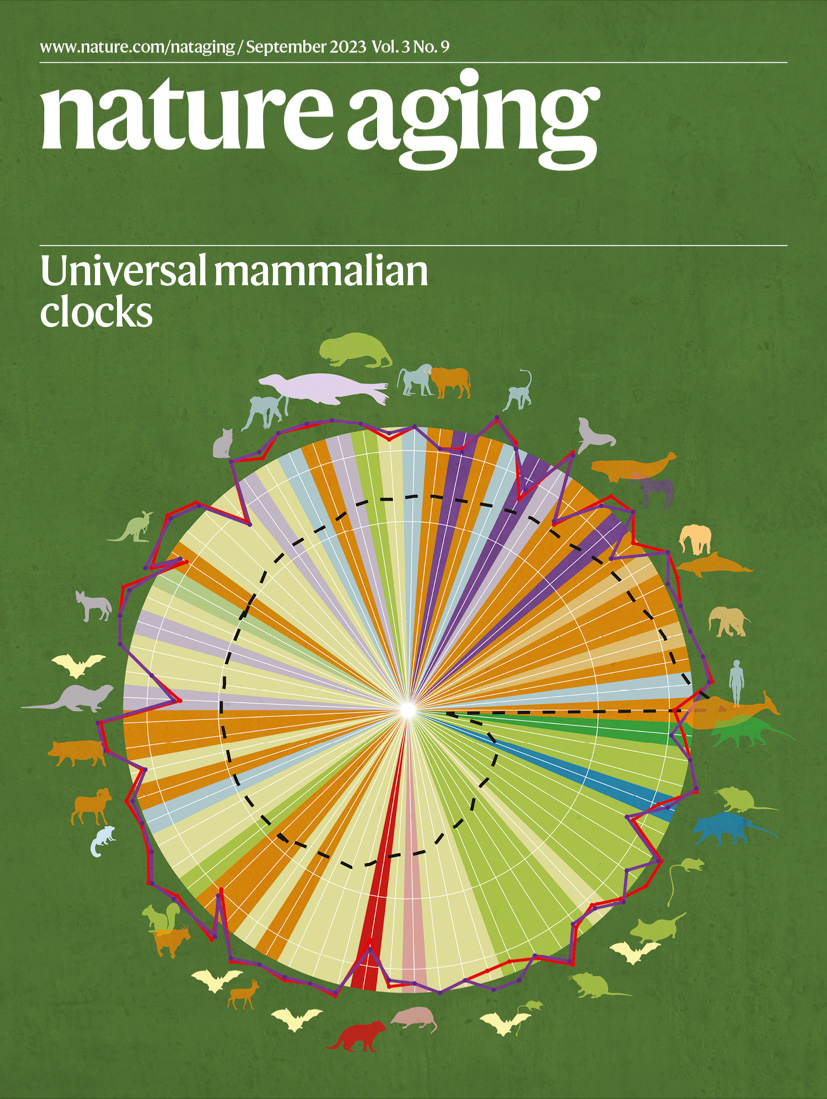
🗞️Our September issue is out! Read about #mitophagy and #urolithinA, how #lysosome tubulation mediates starvation-induced longevity, #platelet factors in #cognition and much more. 🎨 Image courtesy of Ake Lu and Steve Horvath. https://t.co/309iChf7b7





![EricTopol's tweet photo. "The maximal lifespan [of people and 347 mammalian species] is strongly associated with an epigenetic signature that is largely independent of sex, body mass, calorie restriction, or other lifestyle factors"
@ScienceAdvances
https://t.co/kk7DgGcbwr @prof_horvath and colleagues](https://pbs.twimg.com/media/GPfVWYwaIAEJvWQ.jpg)