A plasmid toolbox for the easy autodisplay of recombinant proteins and its optimization
"a toolbox of 81 plasmids, accessible by Addgene, facilitates tailor-made surface display of proteins in bacteria"
https://t.co/1cCKiDPA50
I am humbled and honored to serve our research community that is committed to making advancements in #cancer prevention, detection, treatment, and survivorship. I look forward to advancing our mission to #endcancer by building upon our core strength in translational research.
🚨We are recruiting! Looking for a passionate post-doc who can take the lead on some new projects in the lab 🔬 see below for details! @UTMDAnderson
https://t.co/FW4rYUBRln
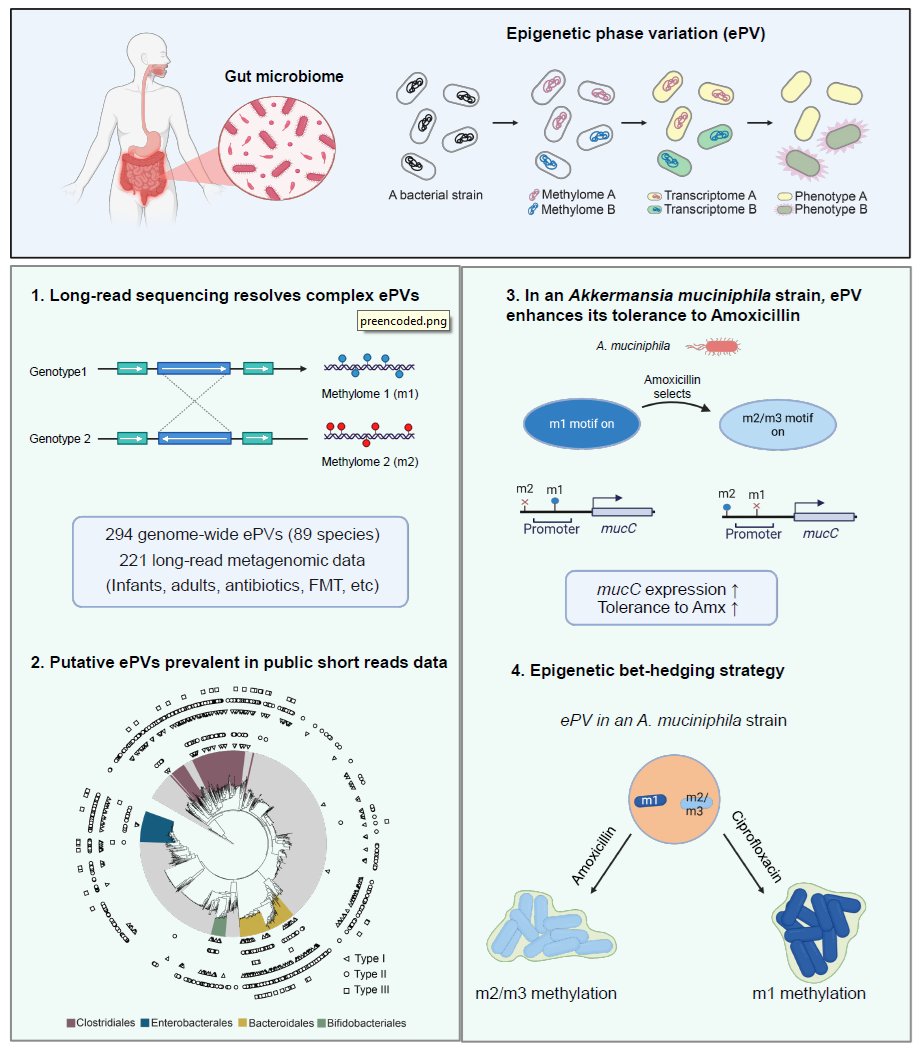
How do bacteria hedge their bets 🎲 in your gut? Our paper is out today in @cellhostmicrobe
A baby received a routine course of amoxicillin. In that infant's #gut 💩, we could see something remarkable, already present **before** the antibiotic arrived: a single strain 🦠 of #Akkermansia muciniphila was already running a quiet experiment. A small subpopulation, 1%, had certain genes switched on that the rest of the population did not. #Importantly, no changes in DNA sequence, yet some genes turned on or off through chemical marks on the DNA. Under antibiotic pressure, that 1% minority expanded and took over. When the antibiotic changed, the population would shift in the opposite direction.
This is #epigenetic #bet-#hedging: bacteria preemptively diversifying into distinct subpopulations so that when uncertain stress comes next, some fraction is already prepared. Our paper presents the first systematic study of this phenomenon across the human gut microbiome, spanning 2,345 metagenomic samples and over 1,300 bacterial species.
#Akkermansia is one of the most studied next-generation probiotics, implicated in metabolic health and cancer immunotherapy response. We were genuinely surprised by its complexity: even within a single strain of Akkermansia, the level of #epigenetic #heterogeneity was striking: many coexisting subpopulations, each with different genes switched on, potentially responding differently to the same environment. Our findings suggest we need to study it at a much deeper level, understanding its #within-strain epigenetic diversity may be key to maximizing its therapeutic potential.
Thanks to #longread #metagenomic sequencing (both #pacbio and #nanopore), which can simultaneously read DNA sequence and methylation at single-molecule resolution. We hope this paper helps make the case for bringing long-read approaches into microbiome research more broadly.
Special 👏 to our first author @Fannimi2001, for his creativity, perseverance and rigor over this entire journey. Science like this does not happen without people who stay committed to a hard problem for the long haul.
Also big thanks to Katerina Junker, @Yujie_L, @fanyu48696214, Yangmei Li, Wanjin Qiao, @Xue_Song__Zhang, @MagdalenaKsi, Edward Mead, @_Alan_T who helped Mi consistently in this journey.
Very much grateful to our collaborators: @lauren282012 at the University of Victoria, @valdi001 at Duke University, Martin Blaser at Rutgers University and my colleague @jiang_wenyan at @SinaiGenetics. This work was truly a team effort!
LINK: https://t.co/8NzOxKYHup
#epigenetics
#microbiome
#antibiotics
#probiotics
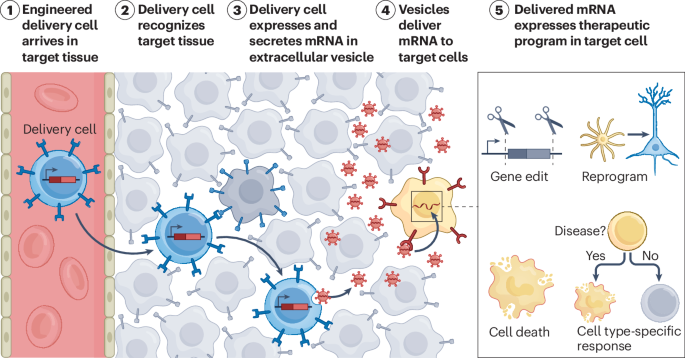
🚨What if we could reliably program macrophage polarization state?🚨
https://t.co/6qGxuHptQq
Macrophages are highly plastic immune cells that perform critical functions by polarizing into distinct cellular states. The polarization state of macrophages can substantially influences the progression of cancers, infections, and autoimmunity. (1/11)
Pancreatic cancer research just had a breakthrough moment. KRAS-targeting drugs and mRNA vaccines are extending survival in ways we haven't seen in decades. The @Perlmutter_CC is already running trials to bring these advances to patients.
Dr. Anirban Maitra (@Aiims1742)
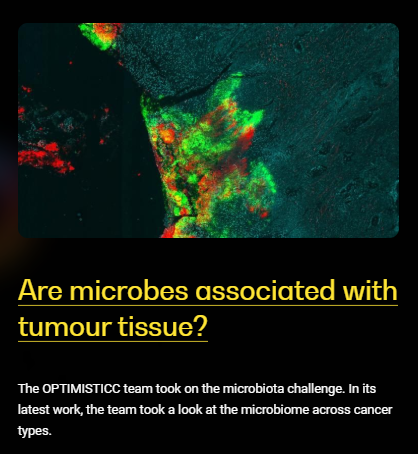
Collaboration is key to tackling cancer’s biggest challenges, and a new paper from team OPTIMISTICC, published today in @CellCellPress, is a clear example of collaboration in practice by the Cancer Grand Challenges community.
The study, made possible through joint working with team PROSPECT who are addressing the early-onset cancer challenge, shows that tumour-resident microbes are largely confined to cancers of the orodigestive tract, where biodiversity is greater than previously understood.
Together, the teams have generated a powerful new resource and analytic pipeline, opening up fresh opportunities to understand how microbes interact with cancer.
We spoke with Future Leader and first author @abdohlman, and Co-Team Lead, Matthew Meyerson (@DanaFarber, @harvardmed and the @broadinstitute) about the findings and the opportunities this pipeline and vast resource present for the future.
👉 Read more here: https://t.co/HeIElvZxE9
1/ Excited to share our new paper in Science: “Toward life with a 19-amino acid alphabet through generative artificial intelligence design.” @ColumbiaSysBio@ColumbiaBME@Columbia
https://t.co/ZT3Ygw9tiG 🦠🧬🛠️🖥️💥
Dearest gentle reader, we are delighted to announce a new story from our lab published in @Nature describing how a meal's systemic metabolic changes are interpreted by your immune system to enhance adaptive immunity. A thread 1/ https://t.co/zACqCLxDMU
Deeply grateful to Peggy and Carl Sewell for their visionary $10M gift and their trust in our mission. With this transformative support, we are building a new scientific frontier at @UTMDAnderson to decode the "language" of cancer. https://t.co/Z7THMXadc1
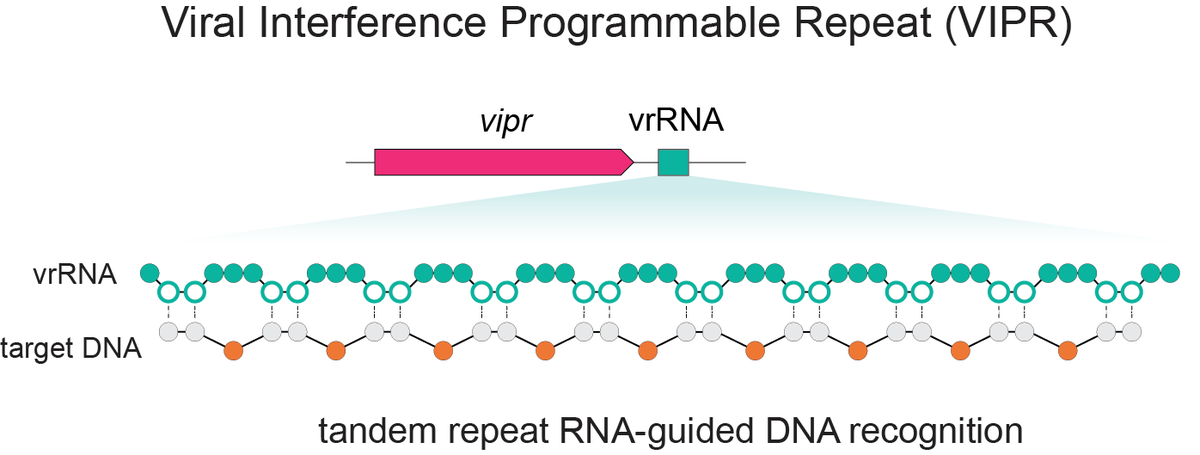
Excited to share our discovery of a new programmable RNA-guided DNA-targeting system hiding inside bacteriophages that predates CRISPR.
We call it VIPR (Viral Interference Programmable Repeat), and it uses an entirely new logic to find its targets.
Thread + link below.
Immune cells continually detect, engulf, and destroy invasive microbes and cancer cells.
This process, called phagocytosis, is carried out by macrophages that must distinguish between proengulfment signals and inhibitory (“don’t-eat-me”) warnings. Cluster of differentiation 47 (CD47), a cell-surface receptor, is the archetypal don’t-eat-me signal. Many cancers upregulate CD47 expression to escape phagocytosis, and CD47 blockade promotes phagocytosis of cancer cells in mice.
However, CD47 blockers have not shown clinical benefits in patients with acute myeloid leukemia (AML), an aggressive cancer of blood immune cells. This discrepancy has raised the possibility that the molecular programs that inhibit phagocytosis differ between mice and humans.
In a new Science study, researchers report that the mechanisms that control macrophage function in human and mouse cells are indeed different. They also identify cluster of differentiation 43 (CD43) as a potential target for human AML treatment.
Learn more in a new #SciencePerspective: https://t.co/3wfJd4CFgC
Alongside @AChakrabortyPhD and @BoudkerLab, we disentangled mysterious allosteric inhibition mechanism of an old SLC1A1-selective inhibitor. We made some new analogs with better anti-ccRCC activity. Like GPRCs, think outside the orthosteric site for SLCs! https://t.co/wlGN7PwhiG
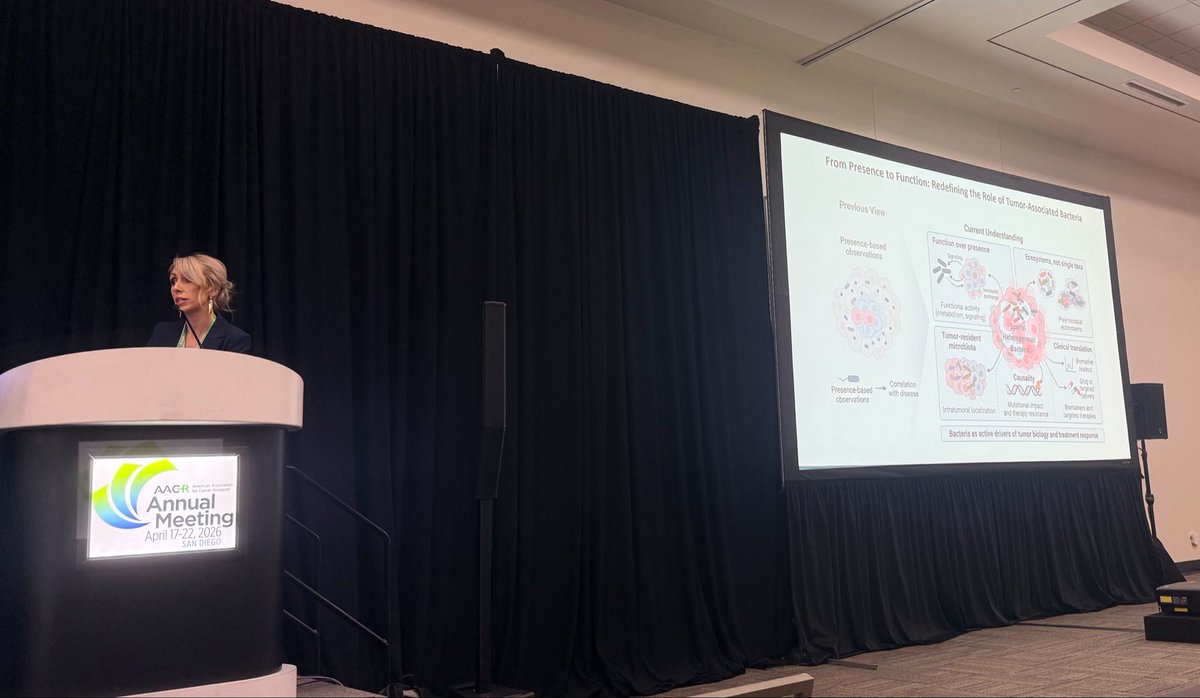
The relationship between the tumor microenvironment and tumor-infiltrating microbes is bidirectional in colorectal cancer; each affects the other, our Dr. Susan Bullman said at #AACR26. How they do so may help us create new clinical interventions. Learn more: https://t.co/NklvzW82BY @BullmanLab #EndCancer
Congratulations, @JenWargoMD, on your election as a Fellow of the @AACR Academy. This honor reflects the extraordinary impact of your work and exemplifies the rigorous, collaborative, and patient-centered science that defines @UTMDAnderson. #EndCancer