Spending the day at NeurIPS AI4Health workshop focusing on mental health papers.
Lots of papers around mental health: suicide prevention, psychosis, PTSD, addiction recovery, ADHD, companionship, therapy, etc.
Yesterday, we had a meetup of mental health researchers in AI (photo below).
Here are the posters I'm most interested in today:
* Suicide Prevention Oral: Uncovering Intervention Opportunities for Suicide Prevention with Language Model Assistants @ https://t.co/ccPVUQSnk9
* Using LLM-as-a-Judge/Jury to Advance Scalable, Clinically-Validated Safety Evaluations of Model Responses to Users Demonstrating Psychosis @ https://t.co/Ae1iBzzHID
* Modeling PTSD Trajectories with Conditional SVAEs and Synthetic Data Generation: Data-Efficient Prediction and Outcome-Specific Explainability
@ https://t.co/IGqrM7T4Uq
* ChatThero: An LLM-Supported Chatbot for Behavior Change and Therapeutic Support in Addiction Recovery
@ https://t.co/OzkgQCdc3u
* Position: AI Will Transform Neuropsychology Through Mental Health Digital Twins for Dynamic Mental Health Care, Especially for ADHD @ https://t.co/etbM5lm2Zh
* Demo: An Agentic Multi-Persona Generative AI System for Mental Health Companionship
@ https://t.co/jj80hDMKQm
* FedMentor: Domain-Aware Differential Privacy for Heterogeneous Federated LLMs in Mental Health
@ https://t.co/I8qutoiAbQ
* Mind the Gap: Aligning Knowledge Bases with User Needs to Enhance Mental Health Retrieval
@ https://t.co/oarSogaSHk
* The Biased Oracle: Assessing LLMs’ Understandability and Empathy in Medical Diagnoses
@ https://t.co/U08mleZ3VF
* Demo: PeerCoPilot: A Language Model-Powered Assistant for Behavioral Health Organizations
@ https://t.co/7yA7JhfQY7
Demos:
* Demo: H2AI – A Framework for Experiential Learning and De-Risking Generative AI in Healthcare
@ https://t.co/7UEPLp6Kfx
* Demo: Can Visual Stimulation Enhance Reminiscence-Therapy Chatbot?
@ https://t.co/2xwcZEzrOk
* Physician Perceptions of Large Language Models in Clinical Practice: A Mixed-Methods Survey Study
@ https://t.co/N2ReAsTvXo
* Balancing Safety and Helpfulness in Healthcare AI Assistants through Iterative Preference Alignment
@ https://t.co/gYV1LARID2
* Faithful or Just Plausible? Evaluating Faithfulness for Medical Reasoning in Closed-Source LLMs
@ https://t.co/i4QyE9V8vF
* Shallow Robustness, Deep Vulnerabilities: Multi-Turn Evaluation of Medical LLMs
@ https://t.co/Bgh9KUv8wc
Phase 2 of SEA-VL has started! 🚀If you are keen to improve AI for Southeast Asia and want to get co-authorship on a paper at one of the top NLP conferences, please consider contributing! Both non-technical and technical contributions are welcome :-)
🌏 Join SEA-VL Phase 2 – Help Build a Vision-Language Model for Southeast Asia!
We’re thrilled to announce the launch of SEA-VL Phase 2, a global community initiative to build VLMs that truly understands SEA—its languages, cultures, and visual richness.🧵(1/x)
#nlproc#seacrowd
SEA-VL: Building AI That Understands Southeast Asia 🇧🇳🇰🇭🇹🇱🇮🇩🇱🇦🇲🇾🇲🇲🇵🇭🇸🇬🇹🇭🇻🇳
We just released SEA-VL, the largest vision-language dataset tailored for SEA’s diverse culture.
📜 arXiv: https://t.co/LaTOr291x2
🤗 Data: https://t.co/eklung8rJx
Check the thread 🧵
"Move 37" is the word-of-day - it's when an AI, trained via the trial-and-error process of reinforcement learning, discovers actions that are new, surprising, and secretly brilliant even to expert humans. It is a magical, just slightly unnerving, emergent phenomenon only achievable by large-scale reinforcement learning. You can't get there by expert imitation. It's when AlphaGo played move 37 in Game 2 against Lee Sedol, a weird move that was estimated to only have 1 in 10,000 chance to be played by a human, but one that was creative and brilliant in retrospect, leading to a win in that game.
We've seen Move 37 in a closed, game-like environment like Go, but with the latest crop of "thinking" LLM models (e.g. OpenAI-o1, DeepSeek-R1, Gemini 2.0 Flash Thinking), we are seeing the first very early glimmers of things like it in open world domains. The models discover, in the process of trying to solve many diverse math/code/etc. problems, strategies that resemble the internal monologue of humans, which are very hard (/impossible) to directly program into the models. I call these "cognitive strategies" - things like approaching a problem from different angles, trying out different ideas, finding analogies, backtracking, re-examining, etc. Weird as it sounds, it's plausible that LLMs can discover better ways of thinking, of solving problems, of connecting ideas across disciplines, and do so in a way we will find surprising, puzzling, but creative and brilliant in retrospect. It could get plenty weirder too - it's plausible (even likely, if it's done well) that the optimization invents its own language that is inscrutable to us, but that is more efficient or effective at problem solving. The weirdness of reinforcement learning is in principle unbounded.
I don't think we've seen equivalents of Move 37 yet. I don't know what it will look like. I think we're still quite early and that there is a lot of work ahead, both engineering and research. But the technology feels on track to find them.
https://t.co/JCxTdKpuzv
📢Call for Abstracts is open! #DMHW2025
Are you a researcher/practitioner of digital mental health? Submit your abstract on topics like:
-Artificial Intelligence & Machine Learning
-VR & AR in mental health
-Ethics in digital mental health... and more https://t.co/RnCv0G1qT4
⭐️ We're going to launch Grassroots Science, a year-long ambitious, massive-scale, fully open-source initiative aimed at developing multilingual LLMs aligned to diverse and inclusive human preferences in Feb 2025.
🌐 Check our website: https://t.co/ycGSWQ1ZJc and be sure to complete the interest form if you'd like to participate.
☄️ This global collaboration was initiated and organized by members of SEACrowd @sealpworkshop, @MasakhaneNLP, @ai4bharat, @RojakNLP, and past collaborators of @BigscienceW, etc. Our mission is to establish an initiative where grassroots can work together in high-profile projects.
We are excited to see what we can achieve together!
#NLProc #GrassrootsScience
Thank you to early initiators who efficiently helped kick off the project!
@gentaiscool@yong_zhengxin@ruochenz_@ljvmiranda@AlhamFikri, including our grassroots community partners @davlanade, @HolyLovenia and @prajdabre1 and all future collaborators!
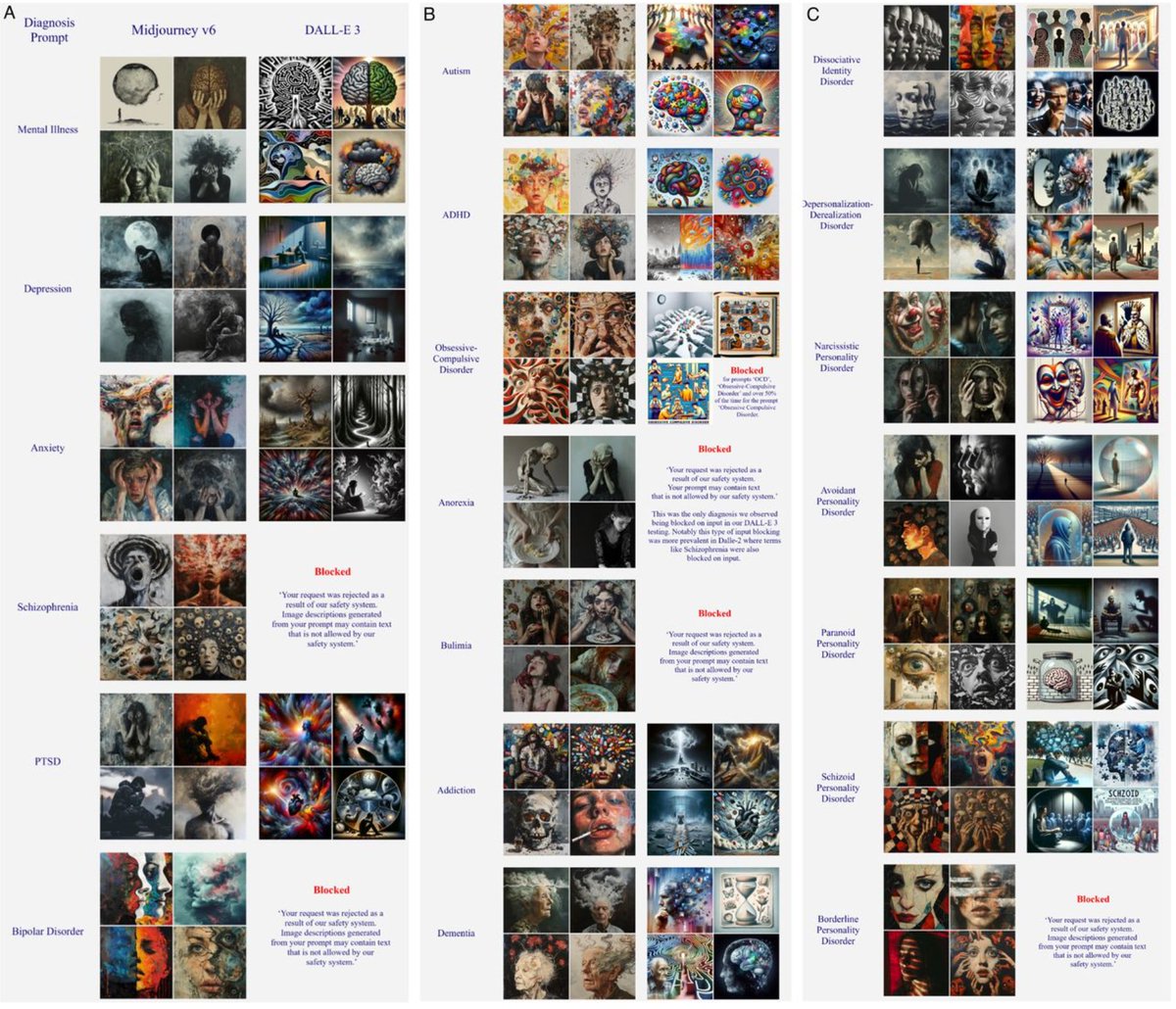
AI has many benefits for healthcare, but exploring AI image generation for #mentalhealth is a good reminder these systems still contain harmful biases and do not actually understand. Our team's newest paper in @BMJMentalHealth (free) explores: https://t.co/EBb5BeZChi
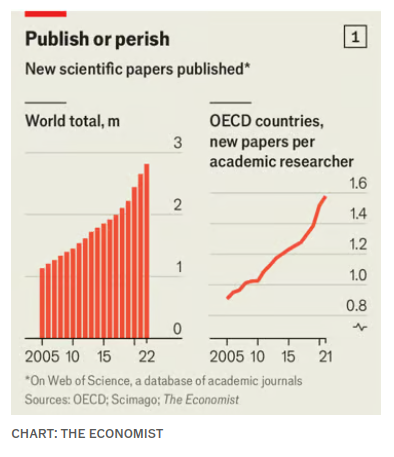
We churn out more & more papers *per scientist*, at an increasing pace, in a rapidly changing publication landscape.
Why? How? Want to make sense of this?
In a new paper just published in Quantitative Science Studies we dive in & look for answers.
https://t.co/GoCYtL1Snp
CLPsych 2025 is happening 🎉 and will be collocated with NAACL. The first Call for Papers is out. Please consider submitting and help us spread the word. https://t.co/TUTU7yLW49
In this 📢 NEW PUB 📢, @neurosamuel and I trace how machine learning and AI researchers frame the problem of spurious correlations through ways that deviate from the statistical definition of the problem. Follow this thread to find out more... 1/n
https://t.co/T8M63s6NTp
Following our SEACrowd project, we’re thrilled to announce SEA-VL, a open-source initiative aimed at creating high-quality vision-language datasets for Southeast Asian languages! Join us to help develop a culturally SEA VLM! 🌏
https://t.co/YEAgPcCbUS
🚨 SEA NLP BoF Alert
Don't forget to join us in-person for the Birds-of-A-Feather session @emnlpmeeting.
🗓️Tuesday Nov 12
16:00 - 17:30 Southeast Asian NLP (Convention Center Level 2)
📢 We will announce the next collaboration project for SEACrowd and don't forget to join and participate!
#NLProc #SEACrowd
cc co-organizers: @AlhamFikri@ruochenz_@jcblaisecruz
Remember a few years ago when Kaiser Permanente offered #mentalhealth apps to all its patients? How did it go? What happened? Today some of those results are out in @jmirpub on how clinicians engaged/offered them to eligible patients (n=335,250): https://t.co/xjRYj4sRmG
SEACrowd's publication has been accepted at #EMNLP2024! 🚀
"SEACrowd: A Multilingual Multimodal Data Hub and Benchmark Suite for Southeast Asian Languages" (https://t.co/Kg79yjdQLw)
This is a major leap for AI research in SEA, and we owe it to our amazing community of 100+! 💪
🥳 SEACrowd Catalogue has been accepted to EMNLP 2024 main! Amazing collaborative work by 60+ co-authors
This is also a great milestone for our SEA NLP community!
Paper: https://t.co/L0CXXlc2te
Our catalog: https://t.co/lz2dKtyTB6
Neuroscience needs research engineers, but orgs are not ready for this. I agree wholeheartedly with Gaelle and Olivier.
1. RSEs should be inside of a ladder/org where they can learn from each other. A lone RSE in a lab is a recipe for isolation, skill atrophy, low mobility. 1/
This is a great scholarship, for those who need it most, to fund Masters/Doctorates in Maths/Stats.
If you are interested in doing a DPhil/PhD with me, this scholarship can fund your studies.
Interested? See some thoughts on our research and how to apply:
https://t.co/DnX0IgfInl
Today Sam Altman and I published a piece in TIME sharing our vision for how AI-driven personalized behavior change can transform healthcare and announcing the launch of Thrive AI Health, a new company funded by the OpenAI Startup Fund and Thrive Global, which will be devoted to building an AI health coach. The company’s mission is to use AI to democratize access to expert-level health coaching to improve health outcomes and address growing health inequities.
As @sama and I write, AI could go well beyond efficiency and optimization to something much more fundamental: improving both our health spans and lifespans.
With AI-driven personalized behavior change, we have the chance to finally reverse the trend lines on chronic diseases like diabetes and cardiovascular diseases, which are directly related to daily behaviors but not distributed equally across demographics.
DeCarlos Love — a brilliant product leader passionate about improving health outcomes — has left Google to become Thrive AI Health’s CEO, and I’m very much looking forward to working with him. And The Alice L. Walton Foundation is joining us as a strategic investor to help us scale our impact to underserved communities and reduce health inequities.
AI has become central to @Thrive's mission to improve health and productivity outcomes, and I’m incredibly passionate about the opportunity to leverage AI to deliver hyper-personalized behavior change across the five key behaviors that Thrive focuses on and that govern our health: sleep, food, movement, stress management and connection. The AI health coach will be embedded in Thrive’s behavior change platform and we look forward to bringing this innovative offering to the market.
Read more in @TIME: https://t.co/6YXEYGHWsE