(1/7) New paper out in @theAGU Journal of Geophysical Research: Solid Earth with @zross_ @MossKhoshmanesh @escochran @terremateo and Jean-Philippe Avouac. We describe the mechanics of the 2020 Westmorland earthquake swarm as detailed in this thread.
https://t.co/MvSACvdjqw
*****Dataset Alert******** EaDAR-Lab@VT
Public-domain InSAR-/GNSS-based Vertical Land Motion along the world's coasts. Peer-reviewed and can be used for academic and non-academic applications. Download and enjoy :)
https://t.co/8lxwZi2Ufb
In #NOLA for #AGU21, and will present my work with @zross_ @MossKhoshmanesh @escochran and Jean-Philippe on what we have learned thus far about the mechanics of the 2020 Westmorland earthquake swarm using seismic, sub-daily GPS, and InSAR.
Please see our new paper led by @sonamfutisherpa. We mapped Iran’s 2019 flood extent and exposure mapping using @Sentinel1a. At least 22 states flooded >15% and ~11 million people were exposed to flood. Well-done Sonam! #Flooding#Iran
https://t.co/x2UalioAav
Postdoc position(s) in my lab @vtgeosciences. We are from 7 nationalities, f/m, and all colors, we love doing good science and our lab has a breakroom with an espresso machine 😉 if you want to become part of our team, drop me an email with your CV.
https://t.co/s7fko8P9fv #jobs
Please check out our paper, led by @guang_zhai
We show that poroelastic stresses caused by shallow injection, induce deep seismicity in West Texas without any obvious hydraulic communication.
https://t.co/bvrB51Cwmj
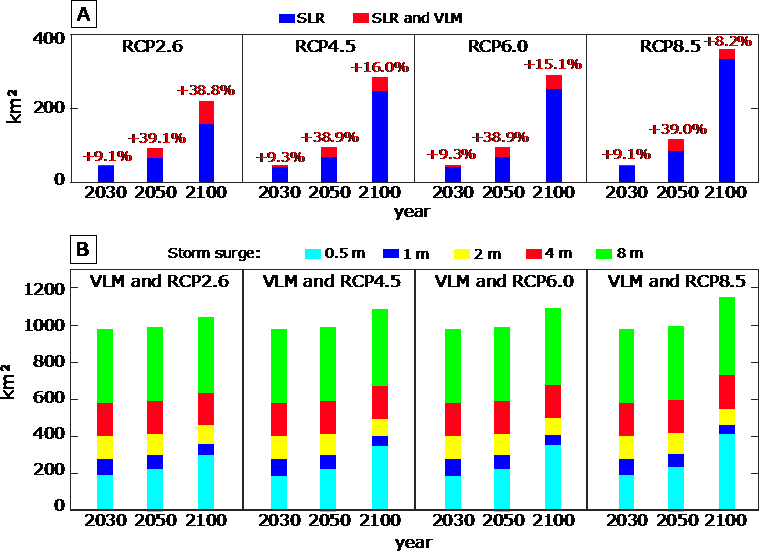
Please see our paper led by @emmecubed at @NASAJPL, assessing future flooding hazards to Houston, Texas.
Subsidence increases the hazard by up to 39% and a combination of storm surge, subsidence, and the SLR can affect an area up to 1,156 km2 by 2100.
https://t.co/pBXmBUedIQ
Happy to see our IEEE-TGRS paper finally came out! 🎉🎉🎉
Deep gratitude goes to my co-authors Mi Jiang @GeoMoKh and Xiao Cheng.
Please check it!
"Time Series Phase Unwrapping Based on Graph Theory and Compressed Sensing"
https://t.co/05Tye5KGzN
Please check out our new paper in @JGREarthSurface where we infer the subsurface geometry, volume, and strength of >100 slow-moving landslides in California with data from the NASA/JPL UAVSAR. Work with Adam Booth, @Mongulator, and @EricFielding .
https://t.co/TYI5UmILm9
📣 It's finally out! In this review, we examine the interplay between long-term tectonics and short-term seismicity, and how this interplay controls the building of the #Himalaya >>> @Caltech@EOS_SG@ISTE_UNIL@unil
https://t.co/bUWuEKHUob
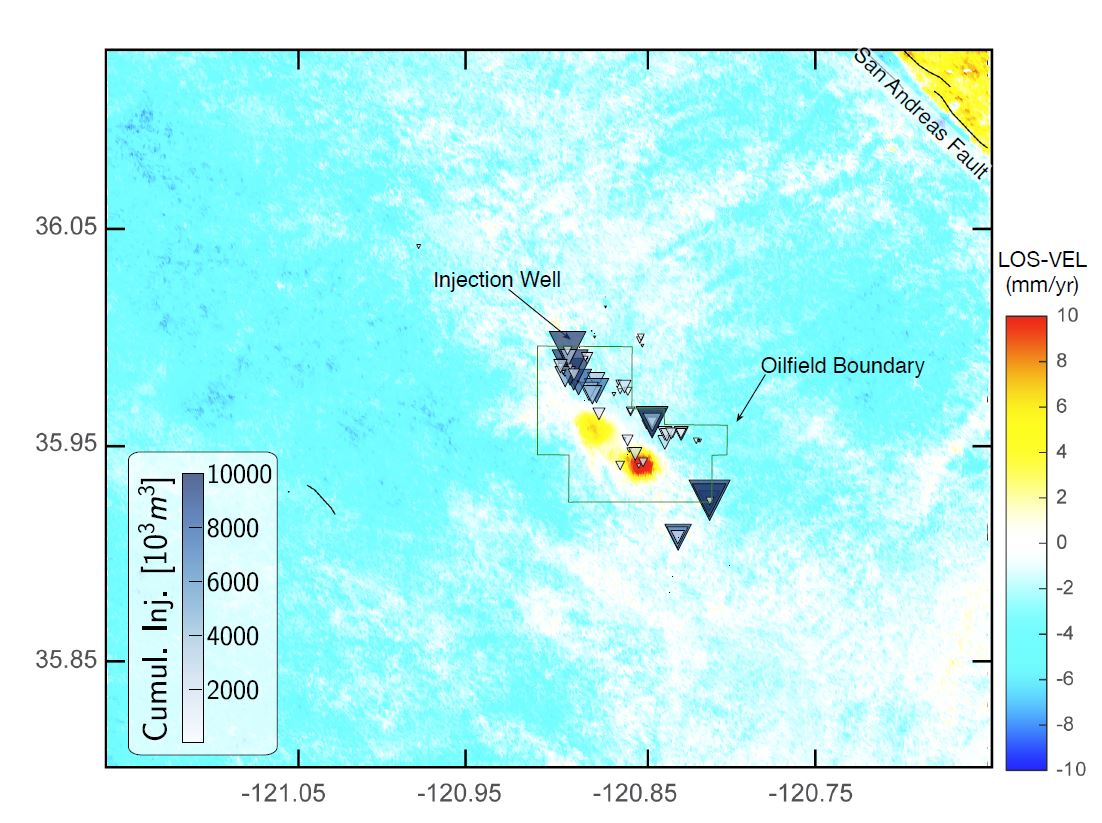
Interested in relating induced seismicity to wastewater injection? Check out our latest open-access paper in GRL
@guang_zhai@shirzaei
https://t.co/yxaikQ8Ohj
https://t.co/2GgzJq8KdA
#2020 Mentone earthquake, West Texas
Check out our #AGU2020 poster on #landslide creep monitoring and modeling using InSAR time series. I'll be live on Mon Dec 14, 7am - 3pm PST to discuss our findings and future directions of this work.
https://t.co/PBSReiqJBI
Please see our paper in @nature, we synthesize the current state of knowledge in coastal subsidence and discuss progressive approach to mitigate flooding hazards due to RSL rise. Thanks to Freymueller, Tornqvist, Galloway, @diatomdura, @DeltaSubsidence
https://t.co/IJ7uUFb8ZO
A unique observation of surface deformation and seismicity associated with fluid injection in california. See our new paper in SRL with Thomas Goebel at UM
https://t.co/2tfVsYlg3k
New GRL paper lead by @ChelseaPScott with Steve Delong (@USGS): impressive characterization of aseismic deformation using differential topography https://t.co/nB8QnnYt0N
Check out our new paper on tectonic fault creep along the Central #SanAndreasFault measured from InSAR, topographic differencing, and surface fractures. @cataclasite@shirzaei@SESEASU@SCEC
https://t.co/lThkEL6hFs
Please see our new paper in JGR, where we describe a new method for predicting fissures and cracks due to aquifer system compaction in central valley, California.
Congrats @grace_carlson1 @susannawerth @chandraphyctc
https://t.co/3A1fu4B1FL
New #openaccess paper @ScienceAdvances with Lifeng Wang "Excitation of San Andreas tremors by thermal instabilities below the seismogenic zone" https://t.co/b5UD94CRNO shows how slow-slip events and tremors may emerge as thermo-mechanical instabilities @USC_earth